

⚡ Savannah Cat at a Glance: Key Specifications & Benchmarks
| Scientific Classification | Leptailurus serval x Felis catus (Interspecific hybrid cat breed) |
| Breed Origin & Development | United States (First kitten born April 7, 1986; bred by Judee Frank) |
| Adult Body Weight | F1–F2: 14 to 25+ lbs (6.4 to 11.3+ kg); F3–F5: 10 to 18 lbs (4.5 to 8.2 kg) |
| Signature Anatomy | Extremely long legs, tall upright ears with ocelli, and 8-foot vertical leap |
| Coat Architecture | Short, dense spotted coat with bold solid black or dark brown spots |
| Generational Classification | F1 (50% Serval) to F5+ (SBT domestic purebred standard) |
| Average Lifespan | 14 to 20 years under specialized carnivore nutrition and veterinary care |
| Homestead Living Fit | Enclosed farmhouse or secure outdoor catio; formidable vermin predator |
The Savannah cat stands as one of the most exotic, athletic, and magnificent feline creations in modern history. Created by crossing the wild African Serval (Leptailurus serval)—a long-legged wildcat native to the sub-Saharan savannah—with domestic felines, the Savannah blends the wild spotted beauty and extraordinary athletic leaping power of an African predator with the devoted companionship of a domestic cat. Practical hands-on husbandry ensures consistent results when raising Savannah Cat.
For homesteaders and rural property owners exploring our feline breed and homestead cat care guides, the Savannah presents an extraordinary housemate. With vertical leaping prowess surpassing eight feet from a standstill, a passion for swimming in water, and intense dog-like intelligence that allows them to learn walking on a leash, the Savannah redefines domestic feline companionship. Early intervention at the first sign of lethargy protects overall Savannah Cat flock or herd health.
Understanding the generational classification is critical. F1 and F2 generations possess 25% to 50% wild Serval blood, displaying massive size (often exceeding 20 pounds) and wild behavioral intensity. Later generations (F4 and F5 SBT), which are legally classified as domestic cats in most jurisdictions, retain the wild spots and long-legged elegance while exhibiting sweet, manageable domestic dispositions.
However, rural caretakers must understand their extreme prey drive and physical energy. Savannahs possess formidable hunting reflexes that can quickly eradicate mice, rats, and snakes, but will also target domestic poultry or pet birds if not strictly managed within secure, enclosed facilities. Structured culling and biosecurity protocols strengthen Savannah Cat genetic quality.
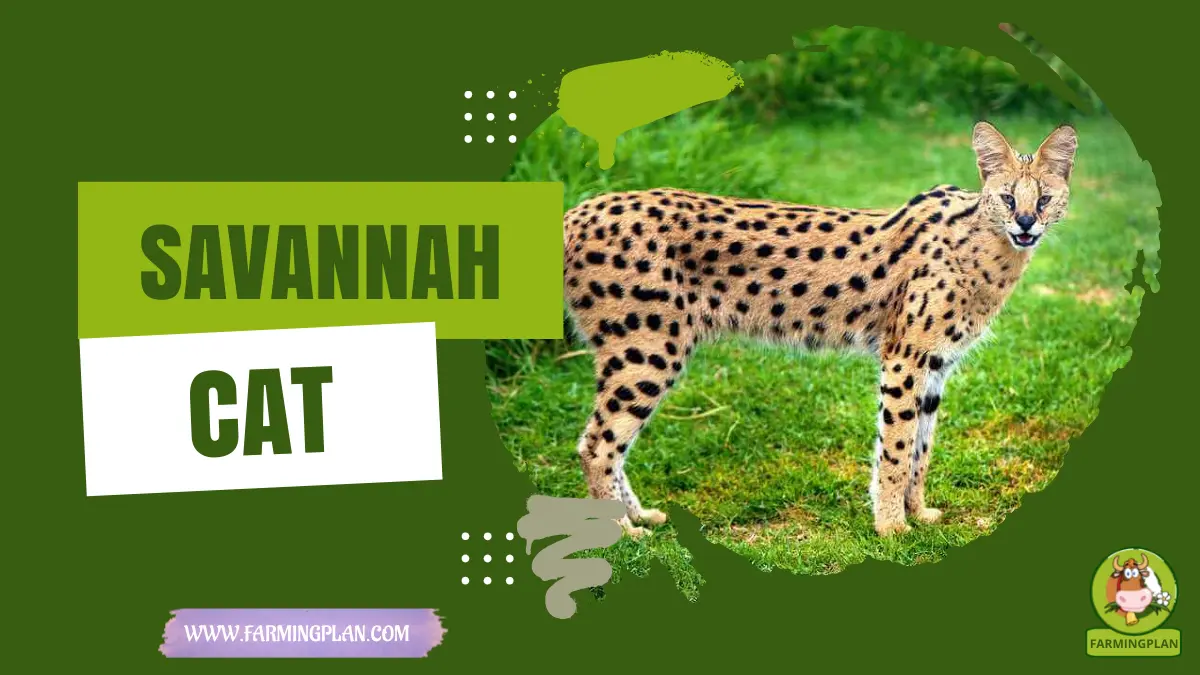
Physical Characteristics & Breed Standards
The International Cat Association (TICA) standard calls for a tall, slender, and graceful cat with exceptionally long legs, long neck, and striking dark spots that echo the African Serval. The body is long and tubular with the hindquarters carried slightly higher than the prominent withers.
Ocelli Markings & The Spotted Coat
The head forms a modified wedge with distinct contours. The ears are strikingly large, set high on the skull, with wide bases and rounded tips. On the back of each ear is the iconic “ocelli” marking—a bright central light band bordered by black, mimicking false eye spots that deter rear ambushes in the wild. Maintaining clean feeders and sanitized equipment supports sustainable Savannah Cat care.
The coat is short to medium, with a slightly coarse guard hair layer overlying a soft undercoat. Bold, solid black or dark brown spots cover the body cleanly without rosetting or swirling. Permitted colors include Brown Spotted Tabby, Silver Spotted Tabby, Black Smoke, and solid Black.
⚡ Savannah Cat Performance & Production Matrix
| Generational Class | Wild Serval Percentage | Adult Weight Range | Homestead & Catio Management Level |
|---|---|---|---|
| F1 Generation | 50% to 75% African Serval | Males: 18–25+ lbs | Females: 14–19 lbs | Specialized outdoor enclosure; high raw diet; permits |
| F2 Generation | 25% to 35% African Serval | Males: 16–22 lbs | Females: 12–16 lbs | Large secure catio; high vertical jumping; raw diet |
| F3 Generation | 12.5% to 18% African Serval | Males: 14–18 lbs | Females: 10–14 lbs | Active farmhouse companion; exceptional mouser |
| F4 / F5 SBT Domestic | 5% to 10% African Serval | Males: 12–16 lbs | Females: 9–13 lbs | Full domestic legal status; dog-friendly; playful |
Breed History, Heritage & TICA Recognition
On April 7, 1986, Bengal breeder Judee Frank in Pennsylvania mated a 30-pound male African Serval to an 8-pound seal point Siamese domestic queen. The resulting singleton female kitten—christened “Savannah”—exhibited striking cheetah-like spots and exceptional size, inspiring the breed’s name. Consistent daily observation helps keepers spot early changes in Savannah Cat health and behavior.
Patrick Kelley and legendary breeder Joyce Sroufe of A1Savannahs recognized the extraordinary potential of this cross, dedicating years to establishing a viable breeding program. Sroufe succeeded in breeding multiple fertile generation males, presenting the first Savannahs to TICA board meetings in 1996.
TICA officially accepted the Savannah into its championship registry in 2012 for F4 generation and later (SBT – Stud Book Traditional). Today, the Savannah is admired globally for its wild appearance combined with affectionate, trainable domestic behavior. Clean housing, fresh water, and balanced nutrition remain essential for Savannah Cat productivity.
Prospective rural owners must verify state and municipal wildlife regulations before acquisition, as several US states (such as New York, California, and Georgia) enforce specific restrictions or permit requirements for early-generation (F1–F3) hybrids.
Housing, Catio Engineering & High-Jump Containment
Housing a Savannah requires specialized containment planning. An athletic adult Savannah can clear an 8-foot vertical fence from a standstill without a running start. Standard garden fencing or low enclosures are completely ineffective. Tracking feed intake and body condition supports long-term Savannah Cat performance.
Catio Construction & Water Features
Early-generation (F1–F2) Savannahs require a dedicated outdoor enclosure constructed with heavy 12-gauge welded wire mesh with an enclosed wire roof. Install wide climbing ramps, elevated shelves reaching 8 to 10 feet, and a sturdy outdoor shelter heated to 65°F during winter.
Many Savannahs have an intense fascination with water, inheriting the Serval’s habit of hunting frogs and fish in marshland. Provide a shallow plastic wading pool or running water stream in their catio where they can splash and play with floating toys. Following biosecurity best practices reduces disease risk in any Savannah Cat operation.
Never permit a Savannah to roam outdoors unsupervised. Their exotic appearance makes them targets for theft, while their high hunting drive can cause conflicts with neighboring farm livestock or domestic barn cats.
Nutritional Requirements, Daily Rations & Raw Diet Protocols
Because the Savannah carries wild Serval genetics, their digestive system requires a nutrient-dense, high-protein feeding regimen. Early-generation cats especially thrive on raw or lightly cooked whole-prey diets. Seasonal adjustments to shelter and diet keep Savannah Cat thriving year-round.
Whole-Prey Feeding & Grain-Free Nutrition
Feed adult Savannahs a high-grade carnivore diet supplying 42% to 48% crude protein and 18% to 22% crude fat on a dry matter basis. Incorporate balanced raw poultry (chicken necks, turkey, quail) or commercial raw frozen rations fortified with taurine, calcium, and essential amino acids. For broader feline dietary principles, review our exotic feline nutritional management guide. Proper record-keeping makes breeding and culling decisions easier for Savannah Cat keepers.
Avoid commercial kibbles containing corn, wheat, soy, or grain byproducts, which cause chronic intestinal inflammation, loose stools, and pancreatic stress in hybrid felines.
Supply fresh, circulating water continuously. High-moisture raw and wet diets support kidney function, helping flush concentrated minerals through their long urinary tract. Providing adequate space and ventilation prevents common stress issues in Savannah Cat.
Health Management, Genetic Screening & Anesthesia Care
The Savannah is an exceptionally robust, athletic animal with high hybrid vigor, but veterinary care requires specific medical awareness.
Ketamine Sensitivity & Pyruvate Kinase Deficiency
Veterinarians treating Savannah cats must avoid using injectable ketamine anesthesia, as hybrid felines can experience severe idiosyncratic adverse reactions, respiratory arrest, or fatal hypothermia. Isoflurane or sevoflurane gas anesthesia is the approved standard. Understanding breed-specific traits helps maximize Savannah Cat longevity and output.
Pyruvate Kinase Deficiency (PK-Def) and Progressive Retinal Atrophy (PRA) must be screened via DNA testing to ensure clean breeding stock. Review official clinical care standards via the American Veterinary Medical Association (AVMA) Feline Clinical Guidelines.
Maintain monthly veterinarian-approved topical flea, tick, and heartworm preventatives, especially if the cat spends daily hours in outdoor screened catios. Routine preventive care saves time and lowers veterinary costs for Savannah Cat.
Breeding Challenges, Male Hybrid Sterility & Offspring Care
Breeding Savannah cats is notoriously complex and resource-intensive due to biological reproductive barriers between wild Servals and domestic felines.
Haldane’s Rule & Kitten Development
Under Haldane’s Rule of hybrid genetics, the heterogametic sex (the male) is sterile in interspecific crosses. Consequently, male Savannah cats are completely sterile through the F1, F2, F3, and often F4 generations. Only F5 and later males are consistently fertile, requiring breeders to use outcross domestic toms in early generations. Matching forage or ration quality to life stage optimizes Savannah Cat growth.
Gestation spans 66 to 75 days for early generations depending on wild blood percentage. Litters are small, averaging 2 to 4 kittens. Wean onto high-protein growth wet and raw food at 5 weeks. For comparative hybrid breeding insights, review our Chausie jungle cat hybrid care guide.
Kittens should remain with the queen until at least 12 to 14 weeks of age to ensure full behavioral socialization and complete core vaccinations before rehoming. Gradual dietary transitions protect digestive stability in Savannah Cat.
US Ownership Budget & Annual Maintenance Costs
Acquiring and maintaining a Savannah cat involves substantial financial commitment, particularly for early generations. Below is a detailed annual expenditure outline.
⚡ Estimated Annual Budget & Maintenance Costs (USD)
| Expense Category | Estimated Annual Cost Range (USD) | Cost Management Recommendation |
|---|---|---|
| Kitten Purchase / Generation Status | F1–F2: $4,000–$15,000 | F4–F5: $1,500–$3,500 | Source from TICA-registered catteries providing documented genetic panels |
| Premium Raw & High-Meat Nutrition | $600.00 – $1,200.00 annual | Buy commercial raw frozen poultry rations in bulk cases directly from distributors |
| Heavy-Duty Catio & High Furniture | $500.00 – $2,500.00 (One-time) | Build custom heavy welded-wire catios utilizing farm lumber and shade cloth |
| Veterinary Care & Preventatives | $300.00 – $650.00 annual | Ensure attending veterinarian is experienced with hybrid feline anesthesia protocols |
| Toys, Heavy Litter & Harness Gear | $150.00 – $300.00 annual | Invest in sturdy walking jackets and heavy natural clumping litter |
🐈 Savannah Cat Daily Nutrition & Care Calculator
Calculate daily metabolizable calories (kcal), dry/wet food portions, clean water intake (fl oz), litter box minimums, and monthly care cost for your Savannah Cat.
Frequently Asked Questions (FAQ)
How high can a Savannah cat jump?
An athletic adult Savannah cat can jump up to 8 feet (2.5 meters) vertically from a standing position. Their long legs and powerful hindquarter muscularity allow them to clear high doors, refrigerator tops, and standard outdoor fences with negligible effort.
Are Savannah cats legal to own in all US states?
No, Savannah cats are not legal everywhere. Certain states (including New York, Georgia, Hawaii, and Rhode Island) and specific municipalities restrict or prohibit early-generation (F1–F3) hybrids. F4 and F5 generations are classified as domestic and are legal in most areas.
What does F1, F2, and F3 mean in Savannah cats?
The ‘F’ stands for Filial generation. An F1 has an African Serval parent (50% wild blood). An F2 has a Serval grandparent (25% wild blood). An F3 has a Serval great-grandparent (12.5% wild blood). Later generations (F4–F5) have lower percentages and domestic temperaments.
Do Savannah cats get along with dogs?
Yes, Savannah cats frequently bond exceptionally well with friendly, dog-safe farm dogs. Their bold, confident nature and high play drive mean they rarely run away in panic, often engaging dogs in games of tag and sharing sleeping perches peacefully.
What is the average lifespan of a Savannah cat?
With appropriate high-protein carnivore nutrition, regular veterinary care, and secure indoor/catio living, a Savannah cat enjoys an average lifespan of 14 to 20 years, retaining their athletic vigor and playful curiosity well into their senior years.
Expert Verdict & Next Steps
The Savannah cat represents an extraordinary fusion of wild African beauty, unmatched athletic agility, and dog-like companion devotion. For active rural homesteaders who can provide secure catio containment, high-protein nutrition, and daily interactive engagement, the Savannah is an unforgettable companion. Selecting healthy foundation stock is the cornerstone of successful Savannah Cat management.
Before purchasing a kitten, check local wildlife ownership regulations and partner with a reputable TICA-registered cattery providing written genetic health clearances. Prepare tall cat trees and interactive water features. For additional wild hybrid insights, explore our guide on the Serengeti companion cat breed.
📚Agricultural Reference & Scientific Citations
Standards and physiological data referenced in this guide comply with USDA Animal and Plant Health Inspection Service (APHIS), American Veterinary Medical Association (AVMA), and the FAO Domestic Animal Diversity Information System.


