

⚡ Malay Chicken at a Glance: Key Specifications & Benchmarks
| Scientific Classification | Gallus gallus domesticus (Ancient Asian Hard-Feathered Gamefowl) |
| Breed Origin & Ancestry | Malay Peninsula, India, and Southeast Asia; recognized since antiquity |
| Mature Cock Weight Range | 9.0 to 11.0 lbs (4.1 to 5.0 kg) |
| Mature Hen Weight Range | 7.0 to 9.0 lbs (3.2 to 4.1 kg) |
| Standing Vertical Height | Up to 30 to 36 inches (76 to 91 cm) when standing fully erect |
| Comb & Head Structure | Broad skull with heavy brow ridges, cruel expression, and walnut/strawberry comb |
| Annual Egg Production | 70 to 120 medium tinted/brown eggs during seasonal spring cycles |
| Average Expected Lifespan | 8 to 12 years under sound predator protection and balanced feeding |
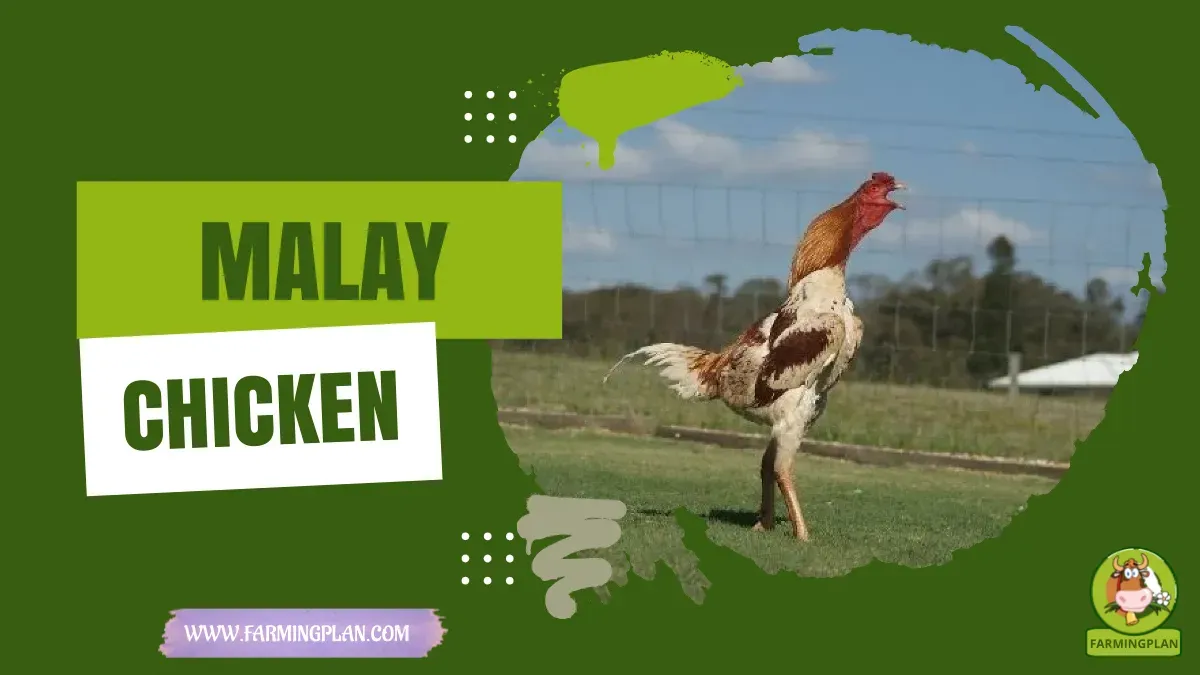
The Malay chicken is an awe-inspiring, ancient giant among domestic poultry, celebrated as one of the tallest and most physically imposing chicken breeds in agricultural history. Standing fully erect at up to 36 inches in height, this towering Asian gamefowl exhibits an extraordinary prehistoric silhouette characterized by long muscular legs, an elongated neck, and an intimidating, fierce raptorial expression. Consistent daily observation helps keepers spot early changes in Malay Chicken health and behavior.
Originating across the Malay Peninsula, northern India, and Southeast Asia, the Malay descended from the massive wild giant junglefowl (Gallus giganteus). In our dedicated poultry and heritage chicken guides, poultry fanciers admire the breed for its clean hard feathering, broad bone density, and profound historical role in revolutionizing Western poultry genetics. Clean housing, fresh water, and balanced nutrition remain essential for Malay Chicken productivity.
When sea captains imported Malay game fowl to Britain and North America during the 1830s, their colossal stature created widespread sensations in early poultry exhibitions. Breeders quickly recognized that crossing Malays with European landrace chickens injected immense frame size, heavy breast fleshing, and vigorous hardiness, laying the foundation for modern utility breeds like the Cornish and Rhode Island Red. Tracking feed intake and body condition supports long-term Malay Chicken performance.
Despite their stern, cruel facial expression, captive Malays are surprisingly calm and trusting toward human handlers. However, mature stags retain fierce territorial intolerance toward other roosters, demanding specialized management and spacious individual breeding quarters on homesteads.
Physical Characteristics & APA Breed Standards
The American Poultry Association (APA) admitted the Malay to the Standard of Perfection in 1883 in the Oriental Game class. The standard demands an upright, reaching stance with an unbroken profile of power, devoid of soft down or loose feathering. Following biosecurity best practices reduces disease risk in any Malay Chicken operation.
The Three Curves Standard, Strawberry Comb & Hard Feathering
The defining visual hallmark of an exhibition Malay is the “Three Curves” profile. When viewed in profile, the bird displays three distinct, flowing convex arcs: the first curve formed by the neck, the second by the arch of the back, and the third by the downward sweep of the tail. Standard tail carriage is low and sloping, carried below horizontal. Seasonal adjustments to shelter and diet keep Malay Chicken thriving year-round.
The head is broad and serpentine, featuring projecting overhanging eyebrow ridges that shade pearl-yellow or pale eyes, imparting a predatory, cruel gaze. The comb is a small, hard, low-set strawberry or walnut comb sitting firmly over the beak. Wattles and earlobes are rudimentary or virtually absent, leaving exposed bare red throat skin.
Plumage is extremely short, narrow, and hard, fitting tightly against the frame like a coat of armor. The breast is so broad and muscular that feathering does not completely cover the keel, exposing a bare patch of vibrant red skin known as the “keel spot.” Shanks are thick, muscular, and rich yellow with prominent scales. Proper record-keeping makes breeding and culling decisions easier for Malay Chicken keepers.
⚡ Oriental Gamefowl Breeds: Conformation & Stance Comparison
| Breed Parameter | Malay Chicken | Shamo (O-Shamo) | Asil (Aseel) |
|---|---|---|---|
| Standing Height | 30 to 36 inches (76 to 91 cm) | 28 to 32 inches (71 to 81 cm) | 20 to 24 inches (51 to 61 cm) |
| Back Profile | Arched convex (“Three Curves”) | Straight, sloping steeply downward | Short, flat, and very broad |
| Comb Type | Low strawberry or walnut comb | Triple pea comb | Small, firm pea or cushion comb |
| Mature Cock Weight | 9.0 to 11.0 lbs (4.1 to 5.0 kg) | 8.5 to 11.5 lbs (3.9 to 5.2 kg) | 5.5 to 7.0 lbs (2.5 to 3.2 kg) |
| Temperament with Humans | Calm, docile, easily handled | Dignified, calm, fearless | Highly bonded to handler; spirited |
Breed History, Colonial Importation & Genetic Influence
The Malay traces back thousands of years across Southeast Asia, where ancient rulers and villagers bred gamefowl for ceremonial sport and status. European travelers first encountered these towering birds along the shipping lanes of the Malacca Strait during the seventeenth century. Providing adequate space and ventilation prevents common stress issues in Malay Chicken.
In the early 1800s, British merchants shipped breeding trios to England. Their enormous bone structure transformed poultry breeding, which was previously dominated by lightweight Mediterranean and European landrace breeds. The Malay became the foundational ancestor of the modern broiler industry through its genetic contribution to the Indian Game (Cornish) fowl. Understanding breed-specific traits helps maximize Malay Chicken longevity and output.
In the United States, Malays were imported to Massachusetts and Rhode Island ports, where poultrymen crossed them with Cochin and Java chickens to develop vigorous winter-laying farm utility breeds. The breed’s heavy breast musculature fundamentally reshaped commercial meat standards.
Today, the Malay is preserved by specialized exhibition breeders who appreciate its ancient lineage and sculptured beauty. The Livestock Conservancy lists the breed as a rare heritage treasure deserving active genetic preservation. Routine preventive care saves time and lowers veterinary costs for Malay Chicken.
Coop Engineering, Tall Roosts & Cold Sensitivity
Because Malays stand nearly three feet tall and carry very short, sparse feathering, standard commercial chicken coops are completely inadequate for their physical dimensions. Matching forage or ration quality to life stage optimizes Malay Chicken growth.
Doorway Heights, Roost Widths & Winter Drafts
Construct coop pop-doors at least 24 inches high and 16 inches wide so towering stags can pass through comfortably without scraping their backs or bruising comb tissue. Ceiling heights inside coop houses should measure at least 6 to 7 feet.
Roosting bars must be engineered specifically for heavy gamefowl. Position roosts 18 to 24 inches above the floor, and use broad 2×4 lumber with the 4-inch wide side facing up. Flat, wide perches allow heavy birds to rest their breastbones and cover their toes with breast feathers during cold weather. Gradual dietary transitions protect digestive stability in Malay Chicken.
Their tight, hard plumage offers minimal thermal insulation against sub-freezing temperatures. Provide fully insulated, draft-free winter coops with deep dry pine shavings. Apply petroleum jelly to bare red throat skin and wattles during severe frost to prevent painful frostbite. Selecting healthy foundation stock is the cornerstone of successful Malay Chicken management.
Nutritional Requirements & Muscular Skeletal Support
Growing a 30-inch, 10-pound game bird requires substantial dietary protein and balanced bioavailable minerals to support massive bone density and prevent leg weakness. Good predator-proofing and dry bedding safeguard Malay Chicken comfort in harsh weather.
High-Protein Pellets, Whole Grains & Calcium Minerals
Supply a premium commercial game bird or poultry grower ration formulated with 18% to 22% crude protein for growing chicks and maintenance adults. Working stags consume approximately 5 to 6 ounces of feed daily, enriched with Canadian field peas, whole wheat, and coarse yellow corn. Review feeding schedules in our homestead livestock feed guide.
Incorporate daily mineral supplements containing calcium carbonate, dicalcium phosphate, and trace minerals. Massive, heavy-boned birds can develop slipped tendons or perosis if juvenile rations lack adequate manganese, choline, and riboflavin. Monitoring water quality and mineral balance directly benefits Malay Chicken vitality.
Provide coarse granite grit and crushed oyster shells free-choice in separate dispensers. Hard gamefowl gizzards require sharp granite grit to grind whole corn grains effectively. Practical hands-on husbandry ensures consistent results when raising Malay Chicken.
Health Management, Shank Care & Disease Prevention
Malays are naturally robust, long-lived birds with high vigor. However, their physical mass makes them prone to foot ailments and joint abrasions.
Scaly Leg Mites, Bumblefoot & Marek’s Vaccination
Their large yellow shanks and broad scales are prone to scaly leg mites (Knemidokoptes mutans). Coat legs monthly with mineral oil or vegetable oil to smother mites and maintain smooth, clean shank scales. Early intervention at the first sign of lethargy protects overall Malay Chicken flock or herd health.
Inspect footpads regularly for bumblefoot (ulcerative pododermatitis) caused by jumping down from high perches onto hard surfaces. Keep coop bedding deep and soft with clean wood shavings or straw. Structured culling and biosecurity protocols strengthen Malay Chicken genetic quality.
Vaccinate all day-old chicks against Marek’s Disease at the hatchery, and maintain biosecurity protocols compliant with guidelines from the USDA National Poultry Improvement Plan (NPIP) to protect your flock from respiratory epidemics. Maintaining clean feeders and sanitized equipment supports sustainable Malay Chicken care.
Breeding Management, Broodiness & Chick Rearing
Malay hens are seasonal layers, producing 70 to 120 medium brown or tinted eggs primarily between February and June. While not prolific layers, they possess strong maternal instincts.
Breeding Pens, Heavy Hens & Incubator Hatching
Due to their immense weight, broody Malay hens frequently crush delicate eggs when turning them in the nest. Experienced breeders recommend collecting eggs daily and utilizing reliable artificial incubators or light foster broody hens (such as Silkies or game bantams) for incubation. Consistent daily observation helps keepers spot early changes in Malay Chicken health and behavior.
Maintain a breeding ratio of one stag to two or three hens in spacious breeding pens. Stags are gentle with their own hens but fiercely territorial toward outside birds. Provide private, secluded nest boxes measuring 16×16 inches positioned at floor level. Clean housing, fresh water, and balanced nutrition remain essential for Malay Chicken productivity.
Chicks hatch after 21 days and grow rapidly in bone length, appearing awkwardly leggy during their first four months. Fledge young stags into individual bachelor pens around 5 months to prevent fighting injuries. For comparative heritage poultry management, read our husbandry guide on the Hawaiian Goose.
US Ownership Budget & Annual Maintenance Costs
Budgeting for a breeding trio of Malay chickens involves modest initial stock investments alongside customized tall coop construction and high-protein nutrition. Tracking feed intake and body condition supports long-term Malay Chicken performance.
⚡ Estimated Annual Budget & Maintenance Costs (USD)
| Expense Category | Estimated Annual Cost Range (USD) | Management Strategy |
|---|---|---|
| Breeding Trio (1 Cock, 2 Hens) | $120.00 – $300.00 initial purchase | Acquire from APA-licensed exhibition gamefowl breeders with verified pedigree strains |
| Tall Predator-Proof Coop & Run | $350.00 – $750.00 setup | Construct 7-foot ceiling coop with 24-inch doorways, low wide 2×4 perches, and welded wire run |
| High-Protein Poultry Feed & Grains | $180.00 – $280.00 per year | Purchase commercial 20% game bird feed sacks supplemented with wheat, corn, and field peas |
| Shank Oil, Bedding & Parasite Dust | $45.00 – $80.00 per year | Maintain mineral oil for leg scales, kiln-dried pine shavings, and diatomaceous earth |
| Granite Grit & Oyster Shell Minerals | $25.00 – $45.00 per year | Provide free-choice poultry mineral grit in heavy wall-mounted hopper cups |
| Veterinary First Aid & Electrolytes | $35.00 – $70.00 per year | Keep wound spray, poultry vitamins, electrolytes, and broad-spectrum dewormers |
🐔 Malay Chicken Flock Feed & Egg Yield Calculator
Estimate daily layer feed (lbs), monthly 50-lb feed bags, coop and run requirements, and expected weekly fresh egg yield for your Malay Chicken flock.
Frequently Asked Questions (FAQ)
How tall does a Malay chicken get?
A mature Malay rooster can reach 30 to 36 inches (76 to 91 cm) in height when standing fully erect, making it one of the tallest domestic chicken breeds in the world.
Are Malay chickens aggressive toward people?
No, Malay chickens are generally calm, docile, and trusting with human caretakers, though mature roosters are fiercely aggressive toward other roosters and need separate housing.
How many eggs do Malay hens lay per year?
Malay hens are seasonal layers, producing approximately 70 to 120 medium brown or tinted eggs annually, primarily during spring and early summer breeding months.
Can Malay chickens tolerate cold winter weather?
Because their plumage is very short, hard, and sparse, Malays are sensitive to cold and require well-insulated, draft-free coops with wide perches during freezing winters.
What are the ‘Three Curves’ in a Malay chicken?
The Three Curves refer to the distinct convex outlines of the neck, back, and tail when viewed in profile, representing the defining breed standard for exhibition judging.
Expert Verdict & Next Steps
The Malay chicken is a living prehistoric sculpture that brings ancient majesty and historical significance to any poultry yard. With proper tall coop design, winter shelter, and high-protein nutrition, this towering Asian gamefowl offers endless fascination for dedicated poultry enthusiasts. Following biosecurity best practices reduces disease risk in any Malay Chicken operation.
Acquire breeding stock from reputable APA exhibition breeders who preserve authentic body curves and skull breadth. For comparative heritage poultry meat options, explore our profile on the Giant Runt pigeon. If you are balancing utility output and herd resilience, take a look at our Annaberger Haubenstrupphuhn Chicken reference guide.
📚Agricultural Reference & Scientific Citations
Standards and physiological data referenced in this guide comply with American Poultry Association (APA), The Livestock Conservancy, and USDA APHIS Avian Biosecurity Standards.


