

⚡ Hawaiian Goose (Nene) at a Glance: Key Specifications & Benchmarks
| Scientific Classification | Branta sandvicensis (Family Anatidae Endemic Waterfowl) |
| Native Geographic Distribution | Hawaiian Archipelago (Kauai, Maui, Hawaii Island, Molokai) |
| Mature Gander Weight Range | 4.2 to 5.6 lbs (1.9 to 2.5 kg) |
| Mature Goose Weight Range | 3.5 to 4.8 lbs (1.6 to 2.2 kg) |
| Body Length & Wingspan | Length: 21 to 26 in (53 to 66 cm); Wingspan: 44 to 48 in (112 to 122 cm) |
| Feet & Toe Morphology | Reduced webbing with padded clawed toes adapted for volcanic lava terrain |
| Conservation Legal Status | Threatened (US Endangered Species Act); State Bird of Hawaii |
| Average Expected Lifespan | 15 to 25+ years in managed avicultural and sanctuary environments |
The Hawaiian Goose, known natively throughout the Hawaiian archipelago as the Nene (pronounced “nay-nay”), represents one of the world’s most triumphant wildlife conservation and avicultural recovery stories. Officially designated as the state bird of Hawaii in 1957, this land-adapted waterfowl evolved directly from ancestral Canada geese that colonized the volcanic islands approximately 500,000 years ago. Following biosecurity best practices reduces disease risk in any Hawaiian Goose operation.
Isolated across Pacific volcanic slopes, the Nene underwent remarkable evolutionary transformations. Unlike conventional wetland geese, the Hawaiian Goose adapted to rugged, terrestrial environments, shedding substantial foot webbing in favor of strong, padded clawed toes capable of scaling treacherous jagged lava flows. In our dedicated waterfowl and poultry husbandry guides, aviculturists celebrate the Nene as a living marvel of island biogeography.
By the 1950s, habitat destruction, hunting, and invasive mammalian predators (including mongooses, feral pigs, and feral cats) drove the wild population to near-extinction, leaving fewer than thirty living individuals. Decades of intensive captive breeding spearheaded by pioneering conservationist Sir Peter Scott and the Wildfowl & Wetlands Trust successfully returned thousands of captive-reared birds to protected sanctuaries. Seasonal adjustments to shelter and diet keep Hawaiian Goose thriving year-round.
Today, legal possession and avicultural care of the Hawaiian Goose remain strictly regulated under federal and state wildlife laws. Authorized sanctuaries, educational facilities, and licensed wildlife breeders manage this magnificent species under rigorous biosecurity protocols designed to ensure its perpetual survival.
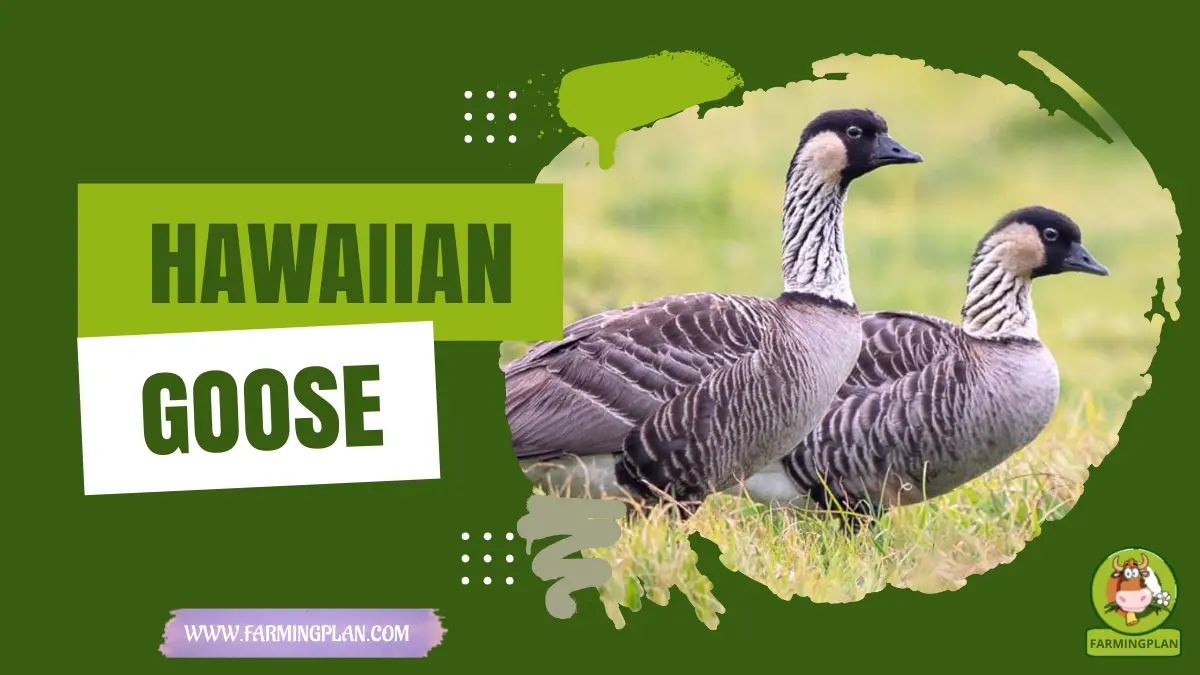
Physical Characteristics & Volcanic Adaptations
The Hawaiian Goose is a medium-sized, elegant waterfowl displaying distinct morphological adaptations for life on oceanic volcanic highlands. Both sexes exhibit similar plumage coloration, though mature ganders are approximately ten to fifteen percent larger and heavier than mature geese.
Plumage Furrows, Foot Webbing Reduction & Vocalizations
The Nene features a black head and hindneck, contrasted by pale yellowish-buff cheeks and neck sides. The neck plumage displays striking diagonal black and buff feather furrows that reveal dark black skin beneath when the bird extends its neck. The body plumage is a sophisticated warm gray-brown, delicately barred with crisp white feather margins. Proper record-keeping makes breeding and culling decisions easier for Hawaiian Goose keepers.
The most profound physical adaptation lies in the feet. While aquatic waterfowl feature complete swimming webs, the Nene’s webbing is reduced by nearly half. The footpads are thick, leathery, and cushioned, armed with robust claws that grip sharp basalt rocks without sustaining cuts or lacerations.
Their vocal repertoire is quiet and musical compared to the loud honking of migratory waterfowl. The common contact call is a gentle, two-syllable “nay-nay” murmur from which their indigenous name originates, paired with a deeper, resonant trumpet call used by ganders during breeding territorial defense. Providing adequate space and ventilation prevents common stress issues in Hawaiian Goose.
⚡ Nene vs. Canada Goose: Morphological & Ecological Comparison
| Biological Parameter | Hawaiian Goose (Nene) | Canada Goose (B. canadensis) |
|---|---|---|
| Primary Habitat | Volcanic lava plains, high alpine shrublands, golf greens | Freshwater lakes, marshes, agricultural grain fields |
| Foot Webbing Development | Reduced (40% to 50% webbing); heavily padded soles | Complete 100% swimming webbing between forward digits |
| Flight & Migration Style | Non-migratory; sedentary local elevational movements | Long-distance seasonal continental migratory flyer |
| Mature Adult Weight | 3.5 to 5.6 lbs (1.6 to 2.5 kg) | 7.0 to 14.0+ lbs (3.2 to 6.4+ kg) depending on subspecies |
| Nesting Season Window | Autumn to Winter (October to March) | Spring (March to May) |
Evolutionary History, Island Colonization & Near-Extinction
Genetic analysis reveals that migratory Canada geese blown off-course during winter storms colonized Hawaii shortly after the emergence of the youngest volcanic islands. Once established, these pioneers diversified into several distinct waterfowl species, including the flightless giant Hawaiian goose (Branta hyporhosticta), which vanished after human arrival.
The Nene survived by occupying rugged alpine scrublands between 3,000 and 8,000 feet elevation on Mauna Loa and Haleakala. However, Polynesian settlement and subsequent European colonization introduced devastating mammalian competitors, including rats, pigs, goats, and the small Indian mongoose, which preyed relentlessly on ground-nesting geese.
By 1952, the global population plummeted to approximately thirty wild birds. The species was rescued through visionary international aviculture. Herbert Shipman preserved a private breeding flock in Keaau, providing breeding stock for Sir Peter Scott’s Slimbridge Wildfowl Trust in Gloucestershire, England, where hundreds of goslings were successfully hatched and repatriated. Understanding breed-specific traits helps maximize Hawaiian Goose longevity and output.
Thanks to ongoing predator management and captive releases on Kauai, Maui, and Hawaii Island, the wild population has recovered to over 3,500 individuals, leading to its downlisting from Endangered to Threatened under the US Endangered Species Act.
Housing, Pen Engineering & Predator-Proof Enclosures
Because Nene evolved without native terrestrial mammalian predators, they lack instinctive flight reflexes when confronted by domestic dogs, feral cats, or mongooses. Enclosure construction must provide absolute predator exclusion. Routine preventive care saves time and lowers veterinary costs for Hawaiian Goose.
Sanctuary Dimensions, Fencing Aprons & Grazing Lawns
Authorized avicultural pens require at least 1,000 square feet of securely fenced outdoor turf per breeding pair. Use 6-foot heavy chain-link or 1-inch galvanized woven wire fencing equipped with a 2-foot outward-facing buried wire apron to block burrowing predators like mongooses and dogs.
Provide open, manicured grass lawns sown with tender forage grasses such as Bermuda grass, kikuyu, and white clover. Nene are terrestrial grazing herbivores that spend upwards of eight hours daily clipping green shoots.
Unlike diving ducks, Hawaiian Geese do not require deep swimming lakes. A shallow, gently sloping concrete bathing pool or rubber stock pond measuring 12 to 18 inches deep allows birds to wash plumage and mate comfortably without drowning risks. Matching forage or ration quality to life stage optimizes Hawaiian Goose growth.
Nutritional Requirements & Grazing Herbivore Diets
The digestive physiology of the Hawaiian Goose is adapted for processing fibrous grasses, native berries, and succulent alpine vegetation rather than heavy grain carbohydrates.
Commercial Waterfowl Pellets, Forage & Berry Supplements
Maintain a maintenance diet consisting of a specialized commercial waterfowl pellet containing 15% to 17% crude protein and low fat. Active breeding adults require increased protein during egg production, supplemented with oyster shell grit. Explore balanced flock feeding fundamentals in our homestead livestock feed formulation guide.
Supplement captive rations daily with fresh native fruits and greens, including ohelo berries, pūkiawe, mountain blueberries, dandelion greens, and romaine lettuce. Never feed bread, crackers, or processed snack foods, which induce severe crop impaction and angel wing feather deformities. Gradual dietary transitions protect digestive stability in Hawaiian Goose.
Provide clean drinking water in automatic shallow fountains separate from swimming pools to prevent bacterial contamination. Replace drinking water daily and scrub dispensers with sanitizing solution. Smallholders comparing closely related stock can also review our detailed German Laying Goose guide.
Health Management, Avian Malaria & Parasite Control
Isolated island evolution leaves the Nene exceptionally vulnerable to introduced continental pathogens and mosquito-borne blood parasites. Selecting healthy foundation stock is the cornerstone of successful Hawaiian Goose management.
Avian Pox, Toxoplasmosis & Gizzard Worms
Avian Pox virus and avian malaria, transmitted by introduced Culex quinquefasciatus mosquitoes, cause crusty nodular lesions around eyes and beaks. Screen captive night shelters with fine insect mesh in low-elevation pens to reduce mosquito exposure.
Feral cats present a catastrophic disease vector through Toxoplasma gondii. Oocysts shed in cat feces contaminate grazing grass, causing fatal acute toxoplasmosis in foraging geese. Strict cat trapping around goose perimeters is mandatory.
Routinely screen flock droppings for gizzard worms (Amidostomum) and coccidiosis. Maintain veterinary biosecurity protocols established by the United States Fish and Wildlife Service to safeguard captive breeding colonies. Good predator-proofing and dry bedding safeguard Hawaiian Goose comfort in harsh weather.
Breeding Biology, Autumn Nesting & Gosling Care
The Hawaiian Goose features a unique breeding cycle among waterfowl, nesting primarily during subtropical autumn and winter months (October through March) to align with rainy-season grass flushes.
Monogamous Pair Bonds, Clutch Incubation & Imprinting
Nene form lifelong monogamous pair bonds. Courtship occurs on land or in shallow water, accompanied by mutual neck dip displays and soft purring vocalizations. The goose constructs a simple ground scrape lined with down feathers beneath protective shrubs. Monitoring water quality and mineral balance directly benefits Hawaiian Goose vitality.
A typical clutch consists of 3 to 5 large, creamy white eggs laid at 48-hour intervals. The goose incubates the clutch alone for 29 to 32 days, while the gander stands vigilant guard within several yards to repel approaching intruders.
Newly hatched goslings are precocial, foraging for tender grass shoots within 24 hours under parental guidance. Fledging occurs between 10 and 14 weeks of age. Goslings imprint strongly on parents and remain with the family unit throughout their first year. For comparisons with domestic waterfowl production, review our guide on the Silver Appleyard duck.
Permitted Avicultural Budget & Management Costs
Operating a federally permitted conservation avicultural facility for Hawaiian Geese involves capital investments in predator-proof fencing, grazing acreage, and specialized avian veterinary oversight. Practical hands-on husbandry ensures consistent results when raising Hawaiian Goose.
⚡ Estimated Annual Sanctuary Budget & Care Costs (USD)
| Expense Category | Estimated Annual Cost Range (USD) | Management Strategy |
|---|---|---|
| Predator-Proof Fenced Pen Setup | $1,500.00 – $3,500.00 setup | Install 6-foot galvanized chain link with anti-dig underground aprons and predator hotwires |
| Turfgrass Establishment & Mowing | $300.00 – $650.00 per year | Overseed grazing lawns with nutritious clover, bermuda grass, and irrigated forage plots |
| Commercial Waterfowl Pellets & Greens | $450.00 – $750.00 per year | Purchase extruded commercial 16% waterfowl maintenance rations alongside fresh produce |
| Shallow Concrete Pool & Water Lines | $400.00 – $850.00 setup | Pour 12-inch deep sloped concrete bathing pools equipped with quick-drain PVC valves |
| Avian Veterinary Oversight & Fecal Tests | $350.00 – $650.00 per year | Annual health exams, fecal floatations, deworming, and USFWS permit documentation |
| Rodent, Mongoose & Cat Trapping Grid | $150.00 – $300.00 per year | Maintain automated humane multi-catch traps along perimeter enclosure fence lines |
🦆 Hawaiian Goose Flock Feed & Water Intake Calculator
Estimate daily balanced feed (lbs), fresh drinking/rinsing water requirements (Gal), indoor shelter, and monthly 50-lb feed bags for your Hawaiian Goose flock.
Frequently Asked Questions (FAQ)
Can an individual legally keep a Hawaiian Goose as a private pet?
No, the Hawaiian Goose is a federally protected species under the US Endangered Species Act and state laws. Ownership is restricted to authorized sanctuaries and conservation programs.
Why do Hawaiian Geese have less foot webbing than other geese?
The Nene evolved to walk across dry, jagged volcanic lava fields and alpine highlands rather than swim, developing padded, semi-webbed feet with strong gripping claws.
What do Hawaiian Geese eat in the wild?
Hawaiian Geese are herbivorous grazers that feed primarily on native grasses, succulent leaves, flower blossoms, and wild berries, particularly alpine ohelo berries.
How many eggs does a female Nene lay per clutch?
A female Nene typically lays a clutch of 3 to 5 eggs during the autumn and winter months, incubating them for approximately 30 days while the male stands guard.
Why is the Hawaiian Goose called the Nene?
The bird gets its Hawaiian name Nene from its gentle, two-syllable conversational vocalization that sounds like a quiet nay-nay murmur between foraging family members.
Expert Verdict & Next Steps
The Hawaiian Goose is a remarkable symbol of international conservation cooperation, demonstrating how coordinated aviculture and rigorous habitat management can pull a critically endangered species back from the brink of extinction.
Conservation managers and educators must continue supporting predator control and native habitat restoration across the Hawaiian Islands. For heritage poultry and avian husbandry options for small farms, explore our breed review of the Archangel heritage pigeon.
📚Agricultural Reference & Scientific Citations
Standards and physiological data referenced in this guide comply with American Poultry Association (APA), The Livestock Conservancy, and USDA APHIS Avian Biosecurity Standards.


