

⚡ Highflyer Pigeon at a Glance: Key Specifications & Benchmarks
| Scientific Classification | Columba livia domestica (High-Altitude Aerial Performer Columbid) |
| Breed Origin & Heritage | Central & Eastern Europe (Budapest, Vienna & Serbian regional breeds) |
| Mature Adult Cock Weight | 9.5 to 12.0 oz (269 to 340 g) |
| Mature Adult Hen Weight | 8.5 to 11.0 oz (241 to 312 g) |
| Flight Ceiling Altitude | Pinpoint cloud altitude (3,000 to 5,000 ft above ground level) |
| Flight Kit Formation | Tight flock of 10 to 25 birds flying disciplined synchronized orbits |
| Daily Flight Duration | 3 to 6 hours continuous soaring on calm sunny days |
| Primary Agricultural Purpose | High-altitude flight competition, aerial preservation, aviary hobby |
The Highflyer pigeon represents an elite class of performing columbids celebrated for their ability to soar to breathtaking atmospheric altitudes. Developed through centuries of dedicated avicultural tradition across Central and Eastern Europe, highflying breeds like the Budapest, Vienna, and Serbian Highflyers were selected for one master trait: ascending rapidly into the upper sky and maintaining disciplined kit formation until they become invisible pinpoints to the naked eye. Proper record-keeping makes breeding and culling decisions easier for Highflyer Pigeon keepers.
In our comprehensive pigeon and aviary guides, seasoned flight masters explain that managing Highflyers demands specialized training discipline. Unlike racing homers that travel cross-country or rollers that somersault downward, Highflyers utilize ascending thermal currents to circle directly above their home loft. Their specialized wing architecture and streamlined anatomy enable hours of effortless soaring with minimal muscular fatigue. Providing adequate space and ventilation prevents common stress issues in Highflyer Pigeon.
Reaching altitudes known among fanciers as “the vanish” (altitudes where birds can only be tracked through high-powered field binoculars) requires careful behavioral conditioning. Highflyers must possess intense flock cohesion, resisting the urge to scatter or drift away on high winds. They maintain synchronized orbits for three to six hours before descending smoothly in response to handler landing signals. Understanding breed-specific traits helps maximize Highflyer Pigeon longevity and output.
For modern aviculturalists and homesteaders, cultivating Highflyer pigeons offers a thrilling blend of aerial performance and living heritage. These birds are alert, energetic, and exceptionally loyal to their home loft. Their compact size and modest dietary requirements make them well-suited for urban and rural aviaries, providing daily sky spectacles that captivate bird lovers of all ages. Routine preventive care saves time and lowers veterinary costs for Highflyer Pigeon.
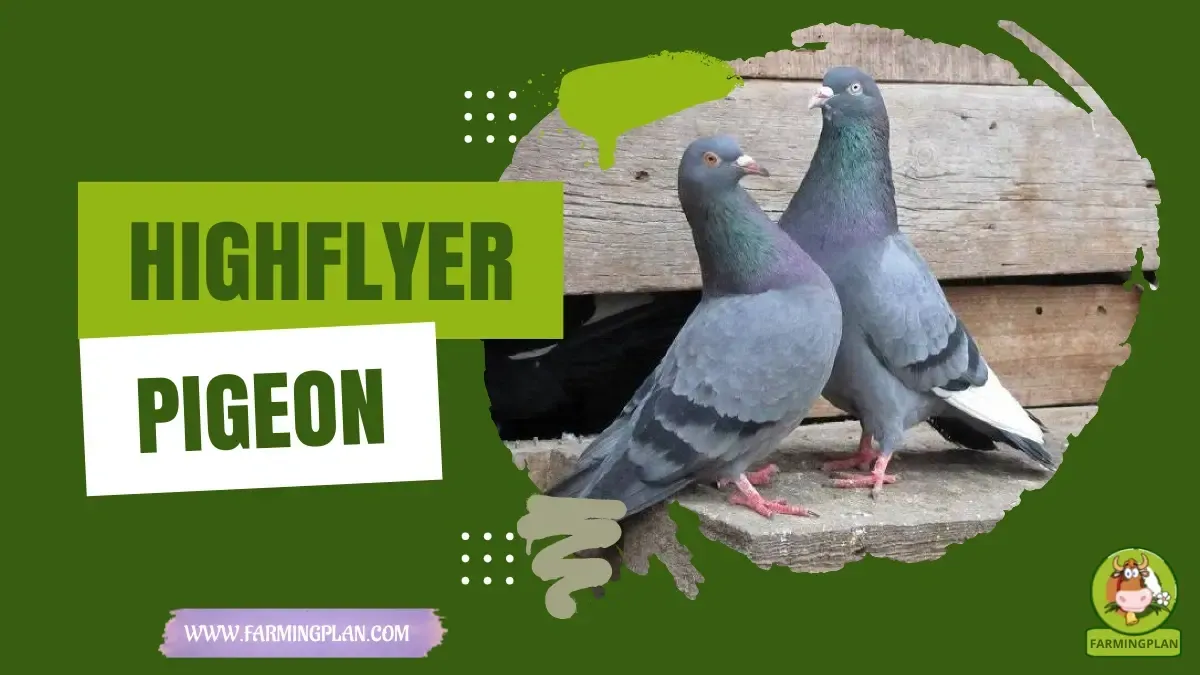
Physical Characteristics & Breed Standards
European and North American standards evaluate Highflyers on aerodynamic elegance and athletic vigor. Physical proportions must support extended flight in thin, cold air at high altitudes without compromising structural balance.
Skeletal Frame, Wing Span & Muscle Structure
Highflyers are small to medium-sized birds, with cocks weighing 10 to 12 ounces and hens averaging 9 to 11 ounces. The body is slender and streamlined, tapering smoothly from a firm, well-rounded chest to a tight tail. The keel bone is moderately deep and straight, densely covered by dark, vascularized flight muscle fibers. Matching forage or ration quality to life stage optimizes Highflyer Pigeon growth.
Wings are long, powerful, and broad across the primaries, providing immense surface lift that enables birds to ride thermals with minimal flapping. When folded, the wing flights rest cleanly over the tail without crossing. The tail is narrow, compact, and held firmly in line with the back to minimize aerodynamic drag. Gradual dietary transitions protect digestive stability in Highflyer Pigeon.
Head Structure, Eye Sign & Plumage Textures
The skull is neatly curved, with some regional breeds like the Budapest Highflyer displaying a distinctive broad forehead and large, expressive eyes set within prominent flesh-colored ceres. Iris color varies from clean pearl to rich bull-dark depending on plumage variety. Selecting healthy foundation stock is the cornerstone of successful Highflyer Pigeon management.
Plumage is remarkably dense, hard, and powdery, forming an impermeable barrier against cold winds encountered several thousand feet above ground. Plumage colors range from self whites and storks to grizzles, checks, and striking bar patterns, with unfeathered, bright coral-red shanks and agile toes. Good predator-proofing and dry bedding safeguard Highflyer Pigeon comfort in harsh weather.
⚡ Highflyer Pigeon Performance & Production Matrix
| Performance Benchmark | High-Altitude Flight Standard | Breeding Loft Standard |
|---|---|---|
| Mature Cock Weight | 10.0 to 11.5 oz (283 to 326 g) | 10.5 to 12.0 oz (298 to 340 g) |
| Mature Hen Weight | 9.0 to 10.2 oz (255 to 289 g) | 9.5 to 11.0 oz (269 to 312 g) |
| Flight Altitude Ceiling | Pinpoint or invisible vanish altitude | Moderate circling ceiling |
| Continuous Flight Time | 4 to 6 hours active soaring | 2 to 3 hours routine flight |
| Kit Discipline & Trapping | Immediate response within 2 minutes | Calm aviary handling |
| Annual Squab Production | 8 to 12 performance prospects | 10 to 14 robust squabs |
Breed History, Heritage & North American Development
Highflyers trace their ancestry back through centuries of European avicultural selection. In the Austro-Hungarian Empire during the late 1800s, fanciers in Budapest, Vienna, and Prague developed competitive flying unions that celebrated high-altitude endurance. Fanciers timed flights from city watchtowers, awarding trophies to kits that remained aloft longest at maximum altitude.
The Budapest Highflyer, developed by the Poltl brothers in the 1870s, achieved international fame for its extreme high-altitude performance and distinctive cranial profile. Parallel traditions in Serbia, Poland, and Ukraine yielded distinct regional strains, each adapted to local wind currents and climatic conditions. Monitoring water quality and mineral balance directly benefits Highflyer Pigeon vitality.
During the twentieth century, European immigrants transported foundation Highflyer bloodlines to North America. Specialty clubs were formed to sponsor official high-flying competitions, where certified judges log altitude changes and flight duration from dawn onward. Today, Highflyers maintain a devoted international following among fanciers dedicated to athletic avian performance. Practical hands-on husbandry ensures consistent results when raising Highflyer Pigeon.
Housing, Shelter Dimensions & Winter Hardiness
Highflyer lofts require thoughtful interior design to manage kit training and protect birds from aerial predators like hawks and falcons. Lofts should be positioned with an unobstructed view of the sky, free from tall trees or utility wires that predators use as hunting perches. Early intervention at the first sign of lethargy protects overall Highflyer Pigeon flock or herd health.
The interior should be divided into a flying kit compartment equipped with individual V-perches or box perches measuring 8 inches wide by 6 inches deep, alongside a separate breeding section for mated pairs. Proper stocking density allocates roughly 4 square feet of floor space per bird to maintain immaculate feather shields.
Highflyers possess exceptional winter resilience. Having originated in continental European regions with harsh winters, they handle sub-zero temperatures easily when sheltered from drafts. Maintain dry floor bedding using kiln-dried pine shavings or coarse builder’s sand, ensuring steady ridge ventilation to disperse moisture and ammonia. Structured culling and biosecurity protocols strengthen Highflyer Pigeon genetic quality.
Nutritional Requirements, Daily Rations & Feeding Protocols
Feeding Highflyers requires precise calibration to maintain lean athletic body mass. Overfeeding causes birds to become heavy and unwilling to soar, while underfeeding leads to physical exhaustion and kit abandonment during prolonged flights. Maintaining clean feeders and sanitized equipment supports sustainable Highflyer Pigeon care.
During active flight training, a maintenance diet containing 12 to 13 percent crude protein is ideal. A balanced mix consists of 40 percent clean white wheat, 25 percent barley, 20 percent red milo, 10 percent small Canadian peas, and 5 percent safflower seed. The high carbohydrate content provides sustained glycogen reserves for hours of continuous soaring. Consistent daily observation helps keepers spot early changes in Highflyer Pigeon health and behavior.
Unlike heavy utility squab breeds such as the Mondaine pigeon that consume large volumes of protein pellets, Highflyers require measured grain portions of roughly 25 to 28 grams per bird daily. Feed immediately following flight training, ensuring fresh water, insoluble granite grit, and calcium supplements are available daily. Clean housing, fresh water, and balanced nutrition remain essential for Highflyer Pigeon productivity.
Health Management, Common Diseases & Biosecurity Standards
Because Highflyers spend extensive hours in open skies, maintaining pristine respiratory health is essential. According to biosecurity guidelines published by the USDA APHIS Avian Health division, establishing clean loft protocols prevents exposure to infectious pathogens carried by wild birds.
Respiratory infections like ornithosis and mycoplasma severely impair oxygen absorption at high altitudes, causing birds to drop out of kit formation. Scrape perches weekly, keep litter bone-dry, and ensure continuous cross-ventilation to prevent dust and airborne pathogens from irritating sensitive air sacs. Tracking feed intake and body condition supports long-term Highflyer Pigeon performance.
Annual vaccination against pigeon paramyxovirus (PMV-1) is mandatory for all performing kits. Inoculate young birds at 4 to 6 weeks of age, followed by an annual booster. Routine preventative treatments for canker (trichomoniasis) and internal parasites before the breeding season ensure squabs develop strong natural immunity. Following biosecurity best practices reduces disease risk in any Highflyer Pigeon operation.
Breeding Management, Incubation & Brooding Offspring
Breeding Highflyers requires strict selection based on flight records. Only birds that demonstrate high-altitude soaring, strong homing loyalty, and prompt trapping responses should be selected for the breeding pen. Indiscriminate pairing quickly degrades kit cohesion. Seasonal adjustments to shelter and diet keep Highflyer Pigeon thriving year-round.
Pairs bond closely and share incubation duties over a 17 to 19-day cycle. Both parents produce nutrient-rich crop milk to brood squabs during their first ten days. Comparing flight mechanics with endurance varieties like the Flying Tippler pigeon reveals that Highflyers rely more on thermal soaring than continuous wing flapping. Proper record-keeping makes breeding and culling decisions easier for Highflyer Pigeon keepers.
Band squabs with seamless 7 mm or 8 mm aluminum leg rings between 7 and 9 days of age. Wean youngsters at 26 to 28 days into a dedicated young bird kit box. Begin trap training immediately so fledglings learn to enter the loft upon hearing the feed call before their strong flight instincts develop.
US Ownership Budget & Annual Maintenance Costs
Highflyer keeping is an economical avicultural hobby. Because the birds are light and consume measured grain portions, ongoing operating expenses remain modest throughout the entire year. Providing adequate space and ventilation prevents common stress issues in Highflyer Pigeon.
Foundation stock from established European or North American high-flying strains typically costs between 50 and 125 dollars per pair. Feed expenses for an active kit loft of 25 to 30 birds average between 280 and 420 dollars annually when purchasing clean grain in bulk bags. Understanding breed-specific traits helps maximize Highflyer Pigeon longevity and output.
⚡ Estimated Annual Budget & Maintenance Costs (USD)
| Expense Category | Annual Cost Range (USD) | Management Notes & Specifications |
|---|---|---|
| High-Altitude Flight Grain Mixes | $290 – $430 | Clean 13% protein seed blends (50-lb sacks) |
| Mineral Grit, Charcoal & Tonics | $40 – $70 | Insoluble granite grit, oyster shell & vitamins |
| Loft Bedding & Aviary Disinfectants | $50 – $85 | Kiln-dried pine shavings & virucidal sprays |
| Preventative Vaccines & Canker Care | $60 – $110 | PMV-1 vaccines, canker treatments & dewormers |
| Club Registration & Seamless Bands | $35 – $65 | Official leg bands & flying union dues |
| Trap Hardware & Predator Proofing | $65 – $140 | Drop trap bobs, wire netting & hardware upkeep |
| Total Annual Operating Budget | $540 – $900 | Estimated for an active kit loft of 25 to 30 birds |
🕊️ Highflyer Pigeon Loft & Grain Mix Calculator
Estimate daily grain ration (lbs), mineral grit, monthly 50-lb feed bags, and minimum indoor loft and outdoor aviary space (sq ft) for your Highflyer Pigeon loft.
Frequently Asked Questions (FAQ)
How high do Highflyer pigeons actually fly?
Highflyer pigeons routinely fly at altitudes between 3,000 and 5,000 feet above ground level. At these heights, known as pinpoint or vanish altitude, the birds appear as tiny specks or become completely invisible to the naked eye.
What is the difference between a Tippler and a Highflyer?
While Flying Tipplers focus on maximum time in the air (flying 15 to 22+ hours at moderate heights), Highflyers specialize in rapid vertical ascent and high-altitude soaring, typically flying for 3 to 6 hours at extreme pinpoint altitudes.
Do Highflyer pigeons tumble or roll in the air?
No, true Highflyers do not roll or tumble. They are bred strictly for smooth aerodynamic soaring and sustained kit formation. Any bird that somersaults or breaks kit formation is removed from competitive high-flying lines.
How do handlers call Highflyers down from high altitudes?
Handlers train Highflyers to recognize visual landing signals, such as releasing tame white dropper pigeons on the landing board or shaking a grain feed can. Seeing the droppers signals to the flock that it is safe to spiral downward and trap.
How long do Highflyer pigeons live?
In a clean, predator-proof loft with balanced grain nutrition and regular veterinary care, Highflyer pigeons routinely live 10 to 14 years. Top performers often produce vigorous young well past eight years of age.
Expert Verdict & Next Steps for Highflyer Pigeon Keepers
The Highflyer pigeon provides one of the purest and most awe-inspiring spectacles in the avicultural hobby. Achieving mastery with this breed requires disciplined feed control, patient kit training, and selective breeding that reinforces high soaring ceilings and disciplined trapping. Fanciers who dedicate themselves to these principles are rewarded with hours of breathtaking flight right above their homes. Routine preventive care saves time and lowers veterinary costs for Highflyer Pigeon.
To deepen your understanding of dynamic performing pigeons, explore regional tumbling varieties like the Galatz Roller pigeon to compare soaring styles across different European traditions. Connect with recognized high-flying unions, obtain healthy foundation stock, and build a secure loft to begin your high-altitude journey today.
📚Agricultural Reference & Scientific Citations
High-altitude performance standards, veterinary biosecurity protocols, and pedigree management cited in this guide adhere to verified standards from the USDA Animal and Plant Health Inspection Service, the American Poultry Association, and European highflying columbid federations.


