

⚡ Tumbler Pigeon at a Glance: Key Specifications & Benchmarks
| Scientific Classification | Columba livia domestica (Acrobatic Tumbling Columbid Family) |
| Breed Origin & Heritage | Ancient Persia & Middle East (Spread globally over centuries) |
| Mature Adult Cock Weight | 10.0 to 13.0 oz (283 to 369 g) |
| Mature Adult Hen Weight | 9.0 to 11.5 oz (255 to 326 g) |
| Acrobatic Motion Standard | Individual backward somersaults performed mid-flight in kit |
| Flight Formation Style | Compact circling kits flying at medium to high altitudes |
| Daily Flight Training Window | 30 to 45 minutes daily kit flight on controlled feed schedule |
| Primary Agricultural Purpose | Aerial performance flying, exhibition judging, aviary hobby |
The Tumbler pigeon encompasses one of the oldest, most diverse, and beloved families of domestic columbids in the world. Originating thousands of years ago in ancient Persia and Central Asia, the ancestral tumbler was bred for its fascinating instinct to execute backward somersaults while airborne. Over centuries of selective breeding, aviculturists across Europe, Asia, and North America transformed this ancient performer into dozens of specialized flying and exhibition varieties. Clean housing, fresh water, and balanced nutrition remain essential for Tumbler Pigeon productivity.
In our comprehensive pigeon and aviary guides, seasoned aviculturalists explain that the Tumbler family forms the genetic foundation for all modern performing roller and tumbler breeds. While some specialized descendants like rollers execute deep vertical spins, classic flying tumblers perform single or double backward flips, recovering their flight path instantly to continue circling with the flock. This agile maneuverability makes observing a tumbler kit in full flight an exhilarating experience. Tracking feed intake and body condition supports long-term Tumbler Pigeon performance.
Beyond their aerial gymnastics, Tumbler pigeons are cherished for their gentle temperament, manageable size, and lively curiosity. Birds adapt readily to both urban backyard lofts and spacious farm aviaries. Their compact bodies and efficient metabolism allow them to thrive on standard whole-grain rations, while their attentive parenting instincts make breeding them straightforward for beginners.
For homesteaders and bird enthusiasts, maintaining a flock of Tumbler pigeons provides endless daily entertainment and a living connection to avian history. The breed’s wide array of recognized colors, crest styles, and feather patterns ensures every keeper can discover a strain that matches their personal aesthetic. With basic predator protection and clean housing, Tumblers reward their stewards with years of aerial beauty. Following biosecurity best practices reduces disease risk in any Tumbler Pigeon operation.
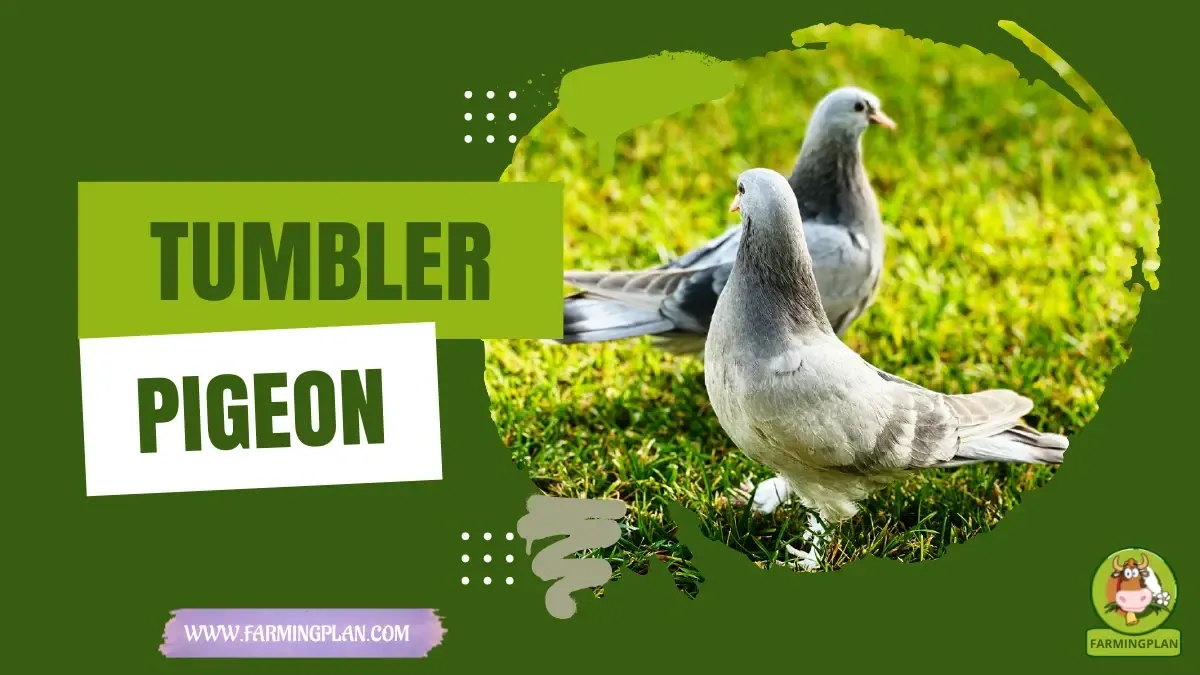
Physical Characteristics & Breed Standards
While regional tumbler varieties exhibit unique features, general standards maintained by the National Pigeon Association evaluate tumblers on compact muscularity, symmetrical balance, and athletic agility. Seasonal adjustments to shelter and diet keep Tumbler Pigeon thriving year-round.
Body Frame, Breast Musculature & Keel Alignment
The body is compact, cobby, and medium in size, with cocks weighing 10 to 13 ounces and hens averaging 9 to 11.5 ounces. The breast is wide, deeply rounded, and carried boldly forward. The keel bone is medium in length, straight, and well-covered by firm, lean flight muscles.
Wings are strong, broad, and held tightly against the body, with flight feathers resting cleanly over the tail without crossing. The tail is short, narrow, and tightly gathered, measuring no more than one and a half feathers wide when the bird is perched calmly in its pen. Proper record-keeping makes breeding and culling decisions easier for Tumbler Pigeon keepers.
Cranial Conformation, Crests & Plumage Patterns
The head is neatly rounded with an unbroken curve extending from the beak tip over the skull. Depending on the variety, birds may be plain-headed or carry neat shell crests at the back of the skull. The beak is medium in length and stout, set cleanly into the forehead with smooth, powdery white wattles. Providing adequate space and ventilation prevents common stress issues in Tumbler Pigeon.
Eyes are bright, expressive pearl or dark bull, bordered by fine, smooth ceres. Plumage is dense, smooth, and tight-fitting, occurring in solid self colors, checks, bars, grizzles, and striking pied patterns like baldheads and saddles. Shanks and toes are typically clean and bright coral-red.
⚡ Tumbler Pigeon Performance & Production Matrix
| Performance Benchmark | Flying Kit Standard | Exhibition Show Standard |
|---|---|---|
| Mature Cock Weight | 10.5 to 12.5 oz (298 to 354 g) | 11.0 to 13.0 oz (312 to 369 g) |
| Mature Hen Weight | 9.5 to 11.0 oz (269 to 312 g) | 10.0 to 11.5 oz (283 to 326 g) |
| Tumbling Somersault Count | 1 to 3 crisp backward flips mid-flight | Bench stance evaluation |
| Kit Flight Duration | 30 to 50 minutes disciplined kit | Aviary exercise flight |
| Trapping Responsiveness | Immediate entry within 60 seconds | Calm, docile handling |
| Annual Squab Production | 8 to 12 flying prospects | 8 to 12 show-quality squabs |
Breed History, Heritage & North American Development
The Tumbler pigeon represents one of the ancient cornerstones of domestic aviculture. Historical records from ancient Persia, India, and China describe performing tumbler pigeons kept in royal aviaries for their aerial somersaults over two thousand years ago. Understanding breed-specific traits helps maximize Tumbler Pigeon longevity and output.
Through Silk Road trade routes and maritime commerce, tumblers spread into Europe during the Middle Ages. In Britain, Germany, Denmark, and the Netherlands, fanciers developed specialized national breeds such as the English Flying Tumbler, Danish Tumbler, and West of England Tumbler. These birds became central to working-class leisure, with fanciers flying kits over towns and countryside allotments. Routine preventive care saves time and lowers veterinary costs for Tumbler Pigeon.
In North America, European immigrants introduced tumbler stock during the nineteenth and early twentieth centuries. Fanciers formed national specialty clubs under the National Pigeon Association, codifying standards for both performing flying kits and show-bench exhibition birds. Today, the Tumbler pigeon remains one of the most widely kept and versatile columbid breeds in the United States.
Housing, Shelter Dimensions & Winter Hardiness
Tumbler lofts should be designed to support kit training discipline and maintain pristine plumage. Lofts should be elevated off the ground to prevent moisture buildup and exclude burrowing pests like rats and mice. Matching forage or ration quality to life stage optimizes Tumbler Pigeon growth.
The loft interior should provide at least 4 square feet of floor space per adult bird, divided into a flying kit section and a breeding compartment. Flying birds should be provided with individual box perches measuring 8 inches wide by 6 inches deep to prevent bickering. Breeding pens should measure at least 24 inches wide by 14 inches deep with dual nest bowls.
Tumblers are remarkably winter hardy. Their compact bodies and dense, powdery plumage provide natural insulation down to sub-zero temperatures as long as the loft remains dry and free from drafts. Maintain clean, dry bedding using kiln-dried pine shavings or coarse builder’s sand, ensuring continuous cross-ventilation to remove dust and humidity. Gradual dietary transitions protect digestive stability in Tumbler Pigeon.
Nutritional Requirements, Daily Rations & Feeding Protocols
Feeding Tumbler pigeons requires controlled management to maintain athletic lightness. Overfed birds become heavy and reluctant to fly, while underfed birds lack the stamina to complete kit maneuvers. Selecting healthy foundation stock is the cornerstone of successful Tumbler Pigeon management.
A balanced flying ration should provide 13 to 14 percent crude protein. An optimal grain mixture consists of 35 percent red wheat, 25 percent milo, 20 percent Canadian field peas, 10 percent barley, and 10 percent safflower seed. During the autumn molt, increase protein to 16 percent to support dense feather regrowth.
When comparing nutritional needs with heavy utility breeds like the Carneau pigeon, Tumblers require measured daily portions of approximately 25 to 30 grams per adult bird. Feed immediately following daily flight exercise, ensuring clean mineral grit, crushed oyster shell, and fresh drinking water are available at all times. Good predator-proofing and dry bedding safeguard Tumbler Pigeon comfort in harsh weather.
Health Management, Common Diseases & Biosecurity Standards
Performing birds that fly in open airspace face regular exposure to environmental pathogens. According to biosecurity advisories published by the USDA APHIS Avian Health division, maintaining strict sanitary perimeters protects domestic lofts from infectious avian diseases. Monitoring water quality and mineral balance directly benefits Tumbler Pigeon vitality.
Respiratory infections like mycoplasma and ornithosis reduce lung capacity, causing birds to drop out of kit formation prematurely. Scrape perches weekly, keep litter bone-dry, and ensure continuous cross-ventilation to prevent dust and airborne pathogens from irritating sensitive air sacs.
Annual vaccination against pigeon paramyxovirus (PMV-1) is mandatory for all performing kits. In addition, routine preventative treatments for canker (trichomoniasis) and internal roundworms before pairing breeders in spring ensure parents rear healthy, vigorous squabs. Practical hands-on husbandry ensures consistent results when raising Tumbler Pigeon.
Breeding Management, Incubation & Brooding Offspring
Breeding Tumblers is straightforward and rewarding. Monogamous pairs bond deeply and share the 17 to 19-day incubation period, with both parents producing rich crop milk to nourish newly hatched squabs during their first ten days. Early intervention at the first sign of lethargy protects overall Tumbler Pigeon flock or herd health.
When selecting breeding pairs, prioritize birds that exhibit smooth backward somersaults and disciplined kit flying. Fanciers often house tumblers alongside close relatives like the Birmingham Roller pigeon to compare tumbling dynamics across different strains.
Fit squabs with seamless 8 mm NPA aluminum leg bands between 7 and 9 days of age. Wean young birds at 28 days directly into a dedicated young bird kit box, where they learn to enter through the bobs upon hearing the feed rattle. Structured culling and biosecurity protocols strengthen Tumbler Pigeon genetic quality.
US Ownership Budget & Annual Maintenance Costs
Maintaining a loft of Tumbler pigeons is an economical and practical avicultural pursuit. Because tumblers are compact birds with moderate grain consumption, operating expenses remain very modest throughout the entire year. Maintaining clean feeders and sanitized equipment supports sustainable Tumbler Pigeon care.
Acquiring quality breeding stock from established NPA breeders typically ranges from 45 to 100 dollars per pair. Feed expenses for an active kit loft of 25 to 30 birds average between 280 and 420 dollars annually when purchasing clean grain in bulk bags.
⚡ Estimated Annual Budget & Maintenance Costs (USD)
| Expense Category | Annual Cost Range (USD) | Management Notes & Specifications |
|---|---|---|
| Flight & Breeding Grain Rations | $290 – $430 | Clean 14% protein seed blends (50-lb sacks) |
| Mineral Grit, Charcoal & Tonics | $40 – $70 | Insoluble red stone grit, oyster shell & vitamins |
| Loft Bedding & Aviary Sanitizers | $50 – $85 | Kiln-dried pine shavings & virucidal sprays |
| Preventative Vaccines & Canker Care | $60 – $110 | PMV-1 vaccines, canker treatments & dewormers |
| NPA Registration & Seamless Bands | $35 – $65 | Official leg bands & annual club dues |
| Trap Hardware & Wire Upkeep | $65 – $140 | Drop trap bobs, wire netting & hardware upkeep |
| Total Annual Operating Budget | $540 – $900 | Estimated for an active kit loft of 25 to 30 birds |
🕊️ Tumbler Pigeon Loft & Grain Mix Calculator
Estimate daily grain ration (lbs), mineral grit, monthly 50-lb feed bags, and minimum indoor loft and outdoor aviary space (sq ft) for your Tumbler Pigeon loft.
Frequently Asked Questions (FAQ)
What is the difference between a Tumbler and a Roller pigeon?
While both breeds perform backward somersaults, Tumblers execute individual flips (one or two backward somersaults) while maintaining their flight path. Rollers, by contrast, execute rapid continuous spins, descending vertically for 10 to 30 feet in a tight ball.
Why do Tumbler pigeons tumble in the air?
Tumbling is an innate neurological motor pattern that was selectively developed and amplified through centuries of breeding. It causes the bird to momentarily execute backward flips mid-flight, recovering smoothly without losing altitude or flight direction.
Are Tumbler pigeons good for beginner bird keepers?
Yes, Tumbler pigeons are ideal for beginners due to their hardy constitution, docile nature, and manageable size. They adapt well to simple lofts, breed reliably, and respond quickly to feed training and loft trapping routines.
How many years do Tumbler pigeons live?
In a clean, dry, predator-proof loft with balanced grain nutrition and regular veterinary vaccinations, Tumbler pigeons routinely live 10 to 14 years. Top breeding pairs often produce healthy offspring well past eight years of age.
Can Tumbler pigeons fly away or get lost?
Unlike homing pigeons that navigate across unfamiliar territories, Tumblers fly in tight circling kits directly above their home loft. As long as they are properly feed-trained to enter the trap on command, they rarely get lost.
Expert Verdict & Next Steps for Tumbler Pigeon Keepers
The Tumbler pigeon represents an enduring classic of the avicultural world, uniting ancient genetic heritage with joyful aerial acrobatics and gentle companionship. Success with this charming breed requires disciplined feed management, consistent kit exercise, and a clean, predator-proof loft. Keepers who maintain these simple routines enjoy years of aerial beauty right above their backyard. Consistent daily observation helps keepers spot early changes in Tumbler Pigeon health and behavior.
To further explore acrobatic performers, compare tumbling styles with specialized regional breeds like the Russian Tumbler pigeon to appreciate the diverse heritage of European flying varieties. Join national pigeon associations, connect with experienced mentors, and construct a secure loft to begin your tumbler keeping adventure today.
📚Agricultural Reference & Scientific Citations
Conformation benchmarks, veterinary biosecurity standards, and nutritional requirements cited in this guide adhere to verified standards from the USDA Animal and Plant Health Inspection Service, the American Poultry Association, and national columbid fancy registries.


