

⚡ Birmingham Roller Pigeon at a Glance: Key Specifications & Benchmarks
| Scientific Classification | Columba livia domestica (Performing Aerial Tumbler Columbid) |
| Breed Origin & Heritage | Birmingham and Black Country, England (Mid-19th Century) |
| Mature Adult Cock Weight | 10.5 to 13.5 oz (298 to 383 g) |
| Mature Adult Hen Weight | 9.5 to 12.0 oz (269 to 340 g) |
| Flight Kit Formation Standard | Compact flock of 15 to 20 birds flying tight synchronized circles |
| Aerial Roll Frequency & Depth | Rapid backward somersaults spinning 10 to 30 feet in a tight ball |
| Daily Flight Training Schedule | 30 to 45 minutes daily kit release on strict feeding discipline |
| Primary Agricultural Purpose | Kit competition flying, genetic acrobatics preservation, loft hobby |
The Birmingham Roller pigeon stands as the undisputed champion of aerial acrobatic performance in the avicultural world. Developed during the industrial nineteenth century in the Black Country of England, this dynamic columbid was selectively bred for its innate ability to perform rapid, backward somersaults during sustained high-altitude flight. Unlike show pigeons judged on static perches, the true merit of a Birmingham Roller is displayed high against the open sky. Following biosecurity best practices reduces disease risk in any Birmingham Roller Pigeon operation.
In our comprehensive pigeon and aviary guides, performance flying enthusiasts emphasize that managing Birmingham Rollers requires exceptional husbandry discipline. The breed relies on a delicate balance between aerodynamic lightness and muscular stamina. Fanciers across North America organize competitive flying kits through the National Birmingham Roller Club (NBRC), scoring flocks on the depth, speed, and simultaneous timing of their aerial spins. Seasonal adjustments to shelter and diet keep Birmingham Roller Pigeon thriving year-round.
What distinguishes a true Birmingham Roller from ordinary tumblers is the quality of the spin. A champion roller executes its backward rolls so rapidly that the individual bird blurs into a spinning sphere or disc, descending vertically for twenty to thirty feet before snapping out cleanly and rejoining the flock. This extraordinary motor pattern is genetically inherited, requiring selective breeding to preserve precision and prevent dangerous over-rolling. Proper record-keeping makes breeding and culling decisions easier for Birmingham Roller Pigeon keepers.
Homesteaders and urban aviculturalists appreciate the Birmingham Roller for its manageable size, alert demeanor, and intense loyalty to the home loft. The daily release of a well-drilled kit of fifteen to twenty birds provides an unforgettable visual spectacle. However, cultivating high-scoring aerial acrobatics demands structured training routines and rigorous predator protection against raptors. Providing adequate space and ventilation prevents common stress issues in Birmingham Roller Pigeon.
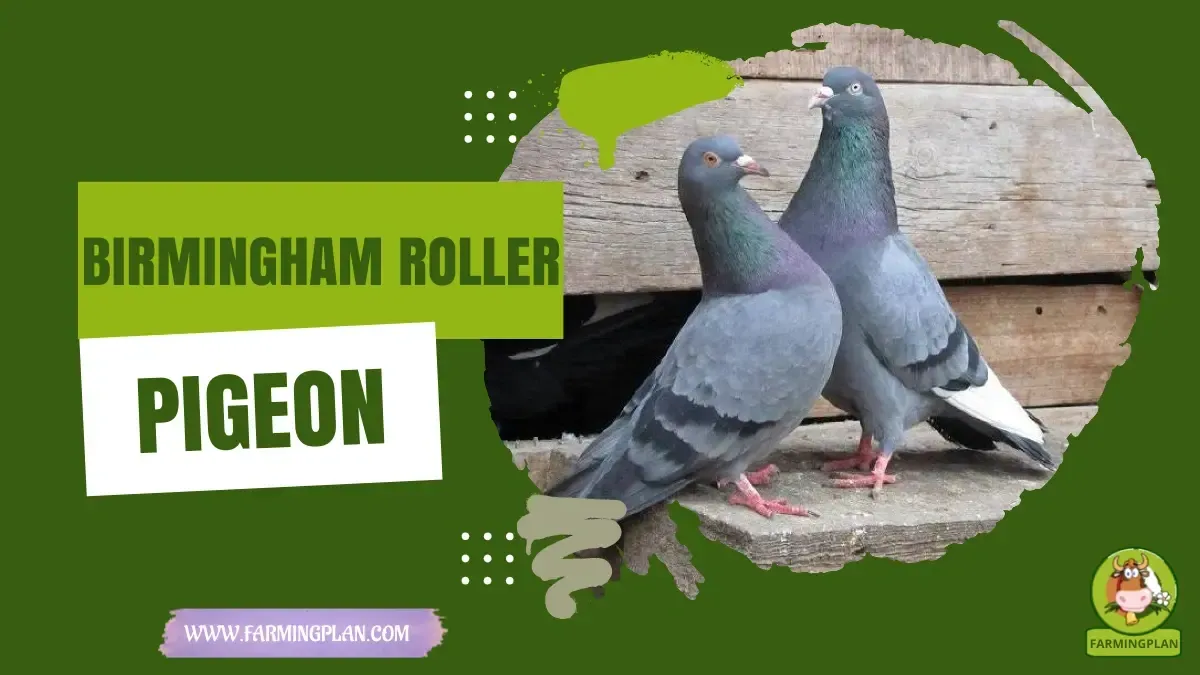
Physical Characteristics & Breed Standards
NBRC performance standards prioritize functional anatomy over cosmetic feather colors. The physical structure of a Birmingham Roller must support explosive aerial maneuvers, rapid wing beats, and instantaneous recovery during vertical descents. Understanding breed-specific traits helps maximize Birmingham Roller Pigeon longevity and output.
Body Conformation, Keel Balance & Wing Structure
The body is compact, cobby, and medium in size, tapering cleanly from a full chest to a slender vent. The keel bone should be straight, medium in depth, and well-covered by firm, lean pectoral muscle. Excessive body fat severely impedes rotation speed and causes birds to drop clumsily toward the ground. Routine preventive care saves time and lowers veterinary costs for Birmingham Roller Pigeon.
The wings are moderately short and broad, featuring thick feather quills that generate powerful lift. When folded at rest, the wing flights rest cleanly over the tail feathers without crossing. The tail should be tightly gathered, measuring no more than one and a half feathers wide when the bird is perched calmly in its box.
Plumage Variations, Eye Color & Stance
Birmingham Rollers display a vibrant kaleidoscope of plumage colors, including self reds, rich blacks, dun, yellow, almond, and tortoiseshell grizzle. Marked varieties such as baldheads, badges, and saddles are highly prized among traditional fanciers. Matching forage or ration quality to life stage optimizes Birmingham Roller Pigeon growth.
The eye should be bright pearl or white, bordered by a fine, flesh-colored cere that indicates vigorous health. The beak is medium in length and slender, set into a neatly rounded skull. Stance is alert and semi-erect, with clean unfeathered coral-red shanks and strong toes that grip perches securely. Gradual dietary transitions protect digestive stability in Birmingham Roller Pigeon.
⚡ Birmingham Roller Pigeon Performance & Production Matrix
| Performance Benchmark | Elite Flying Kit Standard | Breeding Stock Standard |
|---|---|---|
| Mature Cock Weight | 11.0 to 12.5 oz (312 to 354 g) | 11.5 to 13.5 oz (326 to 383 g) |
| Mature Hen Weight | 10.0 to 11.5 oz (283 to 326 g) | 10.5 to 12.0 oz (298 to 340 g) |
| Kit Flight Duration | 35 to 50 minutes sustained flight | Moderate aviary exercise |
| Roll Depth & Velocity | 15 to 25 ft tight vertical spin | Genetic spinning verification |
| Synchronized Turn Rate | 5 or more birds rolling simultaneously | Steady familial line performance |
| Annual Squab Production | 8 to 12 competition prospects | 10 to 14 healthy squabs |
Breed History, Heritage & North American Development
The lineage of the Birmingham Roller traces back to the industrial heartland of central England during the mid-nineteenth century. Factory workers and coal miners in Birmingham, Dudley, and Walsall crossbred early Dutch Tumblers with localized flying breeds to create a bird that performed aerial gymnastics directly over their backyard allotments. Selecting healthy foundation stock is the cornerstone of successful Birmingham Roller Pigeon management.
Master breeders, notably William H. Pensom, refined the genetic mechanics of the roll during the early 1900s. Pensom established the famous J.L. Graham and Pensom family strains, emphasizing that true rollers must roll straight down like a spinning ball rather than tumbling lazily end-over-end. Pensom later emigrated to California, bringing his legendary foundation stock to North America. Good predator-proofing and dry bedding safeguard Birmingham Roller Pigeon comfort in harsh weather.
The establishment of the National Birmingham Roller Club in the United States propelled the breed into national prominence. American fanciers developed standardized kit competitions where judges travel directly to lofts to score 20-bird kits on synchronized turns. Today, the Birmingham Roller represents one of the most widely cultivated performing avian breeds across the globe. Monitoring water quality and mineral balance directly benefits Birmingham Roller Pigeon vitality.
Housing, Shelter Dimensions & Winter Hardiness
Housing for performing rollers differs significantly from standard breeding lofts. To manage flight motivation and prevent excessive resting, flying kits are housed in specialized kit boxes or divided compartments that discourage pairing and territorial nesting. Practical hands-on husbandry ensures consistent results when raising Birmingham Roller Pigeon.
A kit box housing twenty flying rollers should provide individual box perches measuring 8 inches wide by 6 inches deep. These compact dimensions keep the birds quiet and rested between daily training sorties. Breeding pairs, by contrast, require double-nest breeding pens measuring at least 24 inches wide by 16 inches deep with ample space for two nesting bowls.
Birmingham Rollers exhibit remarkable cold hardiness, thriving in unheated Midwestern lofts down to zero degrees Fahrenheit as long as dampness and wind drafts are eliminated. Adequate roof ventilation combined with dry pine shavings on the floor maintains pristine respiratory air quality throughout severe winter months. Early intervention at the first sign of lethargy protects overall Birmingham Roller Pigeon flock or herd health.
Nutritional Requirements, Daily Rations & Feeding Protocols
Feeding a performing roller kit is an exact art known as feed control. Rollers must never be fed free-choice from open hoppers. An overfed roller carries heavy fat reserves that turn graceful aerial spins into fatal ground collisions, while an undernourished bird lacks the energy to fly in tight kit formation. Structured culling and biosecurity protocols strengthen Birmingham Roller Pigeon genetic quality.
Unlike heavy utility squab breeds such as the Carneau pigeon, flying rollers require a high-carbohydrate, moderate-protein diet. A premier kit mix contains 40 percent clean hard wheat, 30 percent red milo, 15 percent small Canadian peas, 10 percent barley, and 5 percent safflower seed. The total crude protein should average 12 to 13 percent during active flying periods. Maintaining clean feeders and sanitized equipment supports sustainable Birmingham Roller Pigeon care.
Feed should be measured strictly at roughly one level tablespoon (25 to 30 grams) per bird per day, administered thirty minutes after the daily training flight. Provide fresh water fortified with electrolytes and probiotics, along with insoluble granite grit and crushed oyster shell in separate mineral cups. Consistent daily observation helps keepers spot early changes in Birmingham Roller Pigeon health and behavior.
Health Management, Common Diseases & Biosecurity Standards
Performing birds that fly daily in open airspace face regular exposure to wild birds and airborne pathogens. Biosecurity guidelines published by the USDA APHIS Avian Health division emphasize that establishing strict sanitary perimeters protects domestic flocks from infectious Newcastle disease and avian influenza. Clean housing, fresh water, and balanced nutrition remain essential for Birmingham Roller Pigeon productivity.
Respiratory infections caused by Mycoplasma and chlamydia pose severe risks to flying kits, reducing lung capacity and causing birds to drop out of kit formation prematurely. Keep lofts spotless, scrape perches twice weekly, and maintain optimal airflow to minimize ammonia buildup and dust accumulation. Tracking feed intake and body condition supports long-term Birmingham Roller Pigeon performance.
Annual vaccination against pigeon paramyxovirus (PMV-1) is mandatory for all flying birds. In addition, routine seasonal treatments for canker (trichomoniasis), coccidiosis, and internal roundworms ensure that young birds develop robust immune systems before entering demanding flight conditioning programs.
Breeding Management, Incubation & Brooding Offspring
Breeding Birmingham Rollers requires rigorous performance testing. Only birds that have proven their aerial spinning ability, kit discipline, and stable recovery in the air should be graduated into the breeding loft. Mating untried birds rapidly dilutes the rolling gene. Following biosecurity best practices reduces disease risk in any Birmingham Roller Pigeon operation.
Breeding pairs share incubation of their two chalk-white eggs over a 17 to 19-day incubation cycle. Both parents secrete nutrient-dense crop milk to brood squabs during the first week post-hatch. Breeders often cross-reference genetics with close acrobatic relatives like the Roller pigeon family to maintain genetic diversity while fixing desirable spin speed. Seasonal adjustments to shelter and diet keep Birmingham Roller Pigeon thriving year-round.
Squabs should be fitted with official seamless NBRC aluminum leg bands between 6 and 9 days of age. Wean young rollers at 28 to 30 days of age into a separate young bird kit box, where they learn to enter through the bobs and trap inside immediately upon hearing the feed rattle. Proper record-keeping makes breeding and culling decisions easier for Birmingham Roller Pigeon keepers.
US Ownership Budget & Annual Maintenance Costs
Maintaining a competition kit of Birmingham Rollers is an economical avicultural pursuit. Because rollers are compact birds that consume moderate feed rations, operational expenses remain remarkably low compared to larger livestock or exotic aviary collections. Providing adequate space and ventilation prevents common stress issues in Birmingham Roller Pigeon.
Foundation performance stock from reputable NBRC master flyers ranges from 50 to 150 dollars per mated pair. Annual feed for a flock of thirty flying rollers and six breeding pairs averages 300 to 450 dollars when purchasing clean grain in bulk bags. Understanding breed-specific traits helps maximize Birmingham Roller Pigeon longevity and output.
⚡ Estimated Annual Budget & Maintenance Costs (USD)
| Expense Category | Annual Cost Range (USD) | Management Notes & Specifications |
|---|---|---|
| Flight & Breeding Grain Mixes | $320 – $480 | Clean 13% protein grain blends (50-lb sacks) |
| Mineral Grit, Charcoal & Vitamins | $45 – $75 | Insoluble red grit, calcium oyster shell & trace minerals |
| Loft Bedding & Disinfectants | $55 – $95 | Kiln-dried pine shavings & aviary virucidal sprays |
| Preventative Vaccines & Dewormers | $65 – $120 | PMV-1 vaccine, canker and worm control protocols |
| NBRC Club Dues & Contest Bands | $40 – $70 | Official competition leg bands & annual membership |
| Flypen Netting & Hardware Upkeep | $75 – $180 | Predator-proof hardware cloth and trap maintenance |
| Total Annual Operating Budget | $600 – $1,020 | Estimated for a working loft of 35 to 40 birds |
🕊️ Birmingham Roller Pigeon Loft & Grain Mix Calculator
Estimate daily grain ration (lbs), mineral grit, monthly 50-lb feed bags, and minimum indoor loft and outdoor aviary space (sq ft) for your Birmingham Roller Pigeon loft.
Frequently Asked Questions (FAQ)
What causes Birmingham Roller pigeons to roll in the air?
Rolling is an innate neurological behavior selectively amplified through generations of breeding. It causes the bird to execute rapid, backward somersaults mid-flight. When refined through careful breeding, it produces a controlled, vertical spinning disc without harming the pigeon.
What is a roll-down in Birmingham Rollers?
A roll-down occurs when a pigeon fails to pull out of its backward roll and collides with the ground. Responsible breeders immediately remove persistent roll-downs from their breeding lines to preserve safe, controlled flight genetics that pull out cleanly at safe altitudes.
How many birds make up a standard competition roller kit?
In official NBRC fly competitions, a standard flying kit consists of 15 to 20 birds released together. Judges award points based on how many birds roll simultaneously in synchronized turns of five or more birds within a twenty-minute scoring window.
How often should Birmingham Rollers be flown?
Flying kits should be released once daily, preferably in the morning or late afternoon, for 30 to 45 minutes. Daily disciplined flying maintains muscular tone, keeps the kit tight, and prevents birds from wandering or landing on neighborhood roofs.
How long do Birmingham Roller pigeons live?
With clean loft conditions, predator-proof housing, and proper veterinary care, Birmingham Rollers live an average of 10 to 14 years. Top breeding cocks and hens frequently produce vigorous offspring well past eight years of age.
Expert Verdict & Next Steps for Birmingham Roller Keepers
The Birmingham Roller pigeon offers one of the most thrilling and rewarding experiences in modern aviculture. Mastering this breed requires disciplined feed management, consistent kit conditioning, and selective breeding that prioritizes spinning depth alongside safe recovery. Keepers who commit to these principles witness aerial ballet that has captivated avian enthusiasts for over a century. Routine preventive care saves time and lowers veterinary costs for Birmingham Roller Pigeon.
To deepen your understanding of aerial tumbling performance, explore related flying varieties like the Parlor Roller pigeon to compare ground-based tumbling with high-flying kit acrobatics. Connect with local NBRC clubs, acquire proven breeding stock from seasoned mentors, and build a secure loft to begin your flying journey today.
📚Agricultural Reference & Scientific Citations
Flight performance standards, veterinary biosecurity protocols, and pedigree management cited in this guide adhere to verified publications from the USDA Animal and Plant Health Inspection Service, the American Poultry Association, and the National Birmingham Roller Club.


