

⚡ Connemara Pony at a Glance: Key Specifications & Benchmarks
| Scientific Classification | Equus caballus (Native Irish coastal sport pony landrace) |
| Native Region & Studbook | County Galway, Ireland (Governed by Connemara Pony Breeders Society) |
| Height Range at Withers | 12.2 to 14.2 hands (50 to 58 inches / 128 to 148 cm) |
| Mature Body Weight | 750 to 1,050 lbs (340 to 476 kg) depending on bone density |
| Primary Coat Colors | Grey, dun, bay, brown, black, chestnut, roan, and palomino |
| Performance Aptitude | Exceptional show jumping, eventing, dressage, and endurance trekking |
| Average Lifespan | 25 to 32+ years with proper pasture management and dental care |
| Homestead Grazing Efficiency | Thrives on native roughage, dense fescues, and low-sugar forage |
The Connemara Pony represents one of the finest versatile equine breeds in existence today. Hailing from the windswept, rocky bogs and rugged Atlantic coastline of County Galway in western Ireland, this hardy breed evolved under harsh environmental pressures, developing surefooted agility, dense bone structure, and calm intelligence. Monitoring water quality and mineral balance directly benefits Connemara Pony vitality.
On American homesteads and equine operations, the Connemara bridges the gap between child-safe mount and high-performance sport horse. For farm operators exploring our equine breed and horse management guides, the Connemara offers exceptional feed efficiency, robust hooves, and versatile utility across riding, driving, and farm chores.
Unlike fragile warmblood breeds that demand high-energy grain concentrates and frequent orthopedic maintenance, the Connemara maintains sound physical conditioning on native pasture grasses and quality meadow hay. Their deep ribcage and strong loins allow them to carry adult riders effortlessly despite their compact pony stature. Practical hands-on husbandry ensures consistent results when raising Connemara Pony.
However, homestead managers must understand the metabolic risks tied to their thrifty genetic evolution. On lush American spring pastures, Connemara ponies easily absorb excess non-structural carbohydrates, predisposing them to equine metabolic syndrome and pasture-associated laminitis if grazing is not strictly managed.
Physical Characteristics & Breed Standards
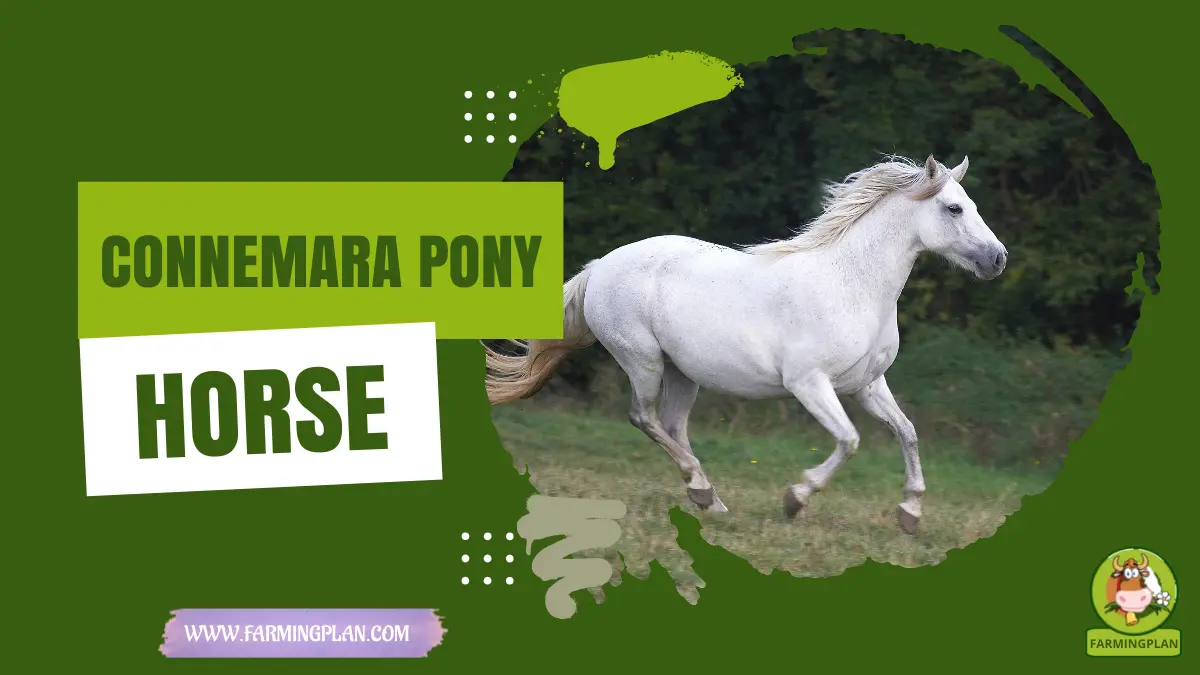
The Connemara Pony Breeders Society (CPBS) standard specifies a compact, well-balanced pony with substance, deep girth, and clean rectangular proportions. The head is refined with a broad forehead, large expressive dark eyes, and small, alert ears, joining cleanly into a well-arched, muscular neck set into sloping shoulders. Early intervention at the first sign of lethargy protects overall Connemara Pony flock or herd health.
Skeletal Conformation & Cannon Bone Density
A hallmark of the Connemara is exceptional bone density. Mature ponies must exhibit 7 to 8 inches of clean, flat cannon bone circumference below the knee, supported by short pasterns and hard, round, dark hooves that rarely require metal shoes under light homestead work. The back is short and muscular, leading to powerful hindquarters with a well-developed croup. To evaluate alternative bloodlines and practical management routines, check our Caspian Horse overview.
Movement is ground-covering, free, and straight without high knee action, providing maximum forward propulsion with minimal energy expenditure. Grey is the predominant coat color, followed by classic dun with primitive markings, rich bays, browns, and occasional blacks or chestnuts. Piebald and skewbald patterns are strictly prohibited in the studbook. Structured culling and biosecurity protocols strengthen Connemara Pony genetic quality.
⚡ Connemara Pony Performance & Production Matrix
| Color Class | Mature Height Range | Hoof & Bone Index | Homestead & Equestrian Utility |
|---|---|---|---|
| Dapple / Flea-Bitten Grey | 13.2 to 14.2 hands (54–58 in) | 7.5 to 8.2 in cannon circumference | Exceptional stadium jumping & cross-country eventing |
| Dun (with Dorsal Stripe) | 13.0 to 14.2 hands (52–58 in) | Dense, hard black hooves; high durability | Rugged trail riding, pack work & light farm driving |
| Bay / Dark Brown | 13.1 to 14.2 hands (53–58 in) | Clean joints; dense tendon sheath | Pony Club mount, endurance trekking & dressage |
| Palomino & Chestnut | 12.3 to 14.0 hands (51–56 in) | Refined bone; agile articulation | Youth equitation, pleasure driving & family hacking |
Breed History, Heritage & North American Development
The roots of the Connemara reach back to ancient Celtic ponies brought to Ireland thousands of years ago. Local lore recounts that when Spanish Armada warships wrecked along the Galway coast in 1588, fine Andalusian and Arabian stallions swam ashore, crossing with native marsh mares to infuse refined heads, stamina, and agility into the indigenous stock.
Throughout the 18th and 19th centuries, tenant farmers across the Connemara region depended entirely on these versatile equines. Ponies hauled heavy panniers of peat from boglands, dragged seaweed to fertilize rocky potato patches, carted whole families to village churches, and carried local farmers over treacherous stone walls. Maintaining clean feeders and sanitized equipment supports sustainable Connemara Pony care.
In 1923, local horsemen formed the Connemara Pony Breeders Society in Clifden, establishing rigorous inspection criteria to preserve the authentic type while carefully introducing limited Thoroughbred and Hackney blood to increase stature. In North America, the American Connemara Pony Society (ACPS) was founded in 1956, championing the breed across equestrian circuits.
Today, Connemara crosses—particularly Connemara-Thoroughbred sport horse crosses—are celebrated worldwide for outperforming warmbloods in Olympic-level three-day eventing, proving the enduring quality of their Irish heritage. Consistent daily observation helps keepers spot early changes in Connemara Pony health and behavior.
Pasture Management, Barn Sizing & Climate Hardiness
Forged by Atlantic gales and peat bogs, the Connemara possesses outstanding weather hardiness. They develop thick, protective double winter coats capable of repelling heavy rain and sleet, enabling them to winter outdoors comfortably in USDA Plant Hardiness Zones 4 through 8 provided they have access to a dry three-sided run-in shed.
Shelter Dimensions & Mud Management
For stalled ponies, standard 10×10 foot or 10×12 foot box stalls provide ample room for rest. Stall floors should feature compacted road-base topped with interlocking rubber mats and 4 inches of kiln-dried pine shavings. Ensure adequate roof ridge ventilation to keep stable air dry and prevent respiratory dust irritation. Clean housing, fresh water, and balanced nutrition remain essential for Connemara Pony productivity.
Paddock fencing should stand 4.5 to 5 feet high using heavy wooden post-and-rail, three-strand electrified poly-braid, or non-climb horse mesh. Never use barbed wire, as ponies reaching for grass under fencelines can suffer severe coronet band or tendon lacerations.
Because Connemaras evolved in wet peat terrains, their hooves tolerate damp ground relatively well. However, persistent standing in manure-laden mud will cause bacterial thrush in the hoof frogs. Establish gravel sacrifice paddocks during spring mud seasons to protect delicate pastures from hoof pugging.
Nutritional Requirements, Daily Forage & Feeding Protocols
The Connemara is the quintessential “easy keeper.” Their evolutionary digestive tract extracts maximum caloric and mineral efficiency from fibrous, coarse forage. Overfeeding high-starch grain concentrates represents the single greatest management hazard for this breed. Tracking feed intake and body condition supports long-term Connemara Pony performance.
Dry Matter Forage Intake & Grazing Muzzles
Feed adult ponies 1.5% to 2.0% of their body weight in dry forage daily (approximately 14 to 18 lbs of hay for an 850-lb pony). Prioritize mature, late-cut orchard grass, timothy, or meadow hay with non-structural carbohydrate (NSC) levels strictly below 10% to 12%. For broader equine nutrition guidelines, consult our performance riding horse nutritional management guide.
On lush spring pastures rich in fructans, equip ponies with grazing muzzles or restrict pasture turnout to dry lots for up to 18 hours daily. Supplement forage with a low-intake ration balancer pellet (1 to 1.5 lbs daily) to supply essential amino acids (lysine, methionine), copper, zinc, and vitamin E without unwanted calories. Following biosecurity best practices reduces disease risk in any Connemara Pony operation.
Provide continuous access to fresh water warmed to at least 45°F during winter to prevent impaction colic. Free-choice white salt blocks must be accessible in paddocks year-round to balance cellular electrolyte ratios.
Health Management, Hoof Care & Biosecurity Standards
While celebrated for robust constitution, the Connemara possesses one critical hereditary condition that every prospective breeder and owner must identify through modern genomic testing. Seasonal adjustments to shelter and diet keep Connemara Pony thriving year-round.
Hoof Wall Separation Disease (HWSD)
Hoof Wall Separation Disease (HWSD) is an autosomal recessive genetic disorder causing the dorsal hoof wall to fracture, peel, and separate from the underlying laminae, leaving affected ponies unable to bear weight without chronic lameness. DNA testing is mandatory for all breeding ponies registered through the CPBS and ACPS; carriers (N/HWSD) must only be bred to verified homozygous clear (N/N) mates.
Routine hoof maintenance requires trimming by a skilled farrier every 5 to 7 weeks to maintain balanced hoof-pastern axis alignment. Review preventative healthcare protocols through the USDA APHIS Equine Infectious Disease Center to ensure core vaccinations against Rabies, Tetanus, West Nile Virus, and EEE/WEE remain fully updated. Proper record-keeping makes breeding and culling decisions easier for Connemara Pony keepers.
Implement targeted deworming protocols using fecal egg count (FEC) testing twice annually, administering anthelmintics only to moderate and high egg-shedding individuals to combat emerging cyathostomin drug resistance.
Breeding Management, Foaling & Offspring Training
Connemara mares are celebrated for exceptional fertility, easy foaling, and generous milk production. Maiden mares should reach 3 to 4 years of age before entering the breeding shed to ensure complete pelvic development. Providing adequate space and ventilation prevents common stress issues in Connemara Pony.
Gestation Milestones & Foal Weaning
Gestation averages 338 to 344 days. Prepare a spacious, deeply bedded 12×14 foot foaling stall sanitized with an organic iodine solution. Connemara foals are remarkably vigorous, typically standing within 45 minutes and nursing enthusiastically within 90 minutes post-delivery.
Begin gentle halter imprinting and hoof handling within the first 48 hours of life. Their tractable, willing temperament responds quickly to calm, consistent pressure-and-release training methods. For comparative equine breeding and youngstock care, review our walking horse breeding and gaited care guide. Understanding breed-specific traits helps maximize Connemara Pony longevity and output.
Wean foals gradually between 5 and 6 months of age, maintaining them on high-forage diets supplemented with ration balancers to support steady bone growth without triggering developmental orthopedic diseases (DOD) or epiphysitis.
US Ownership Budget & Annual Maintenance Costs
Managing an equine companion requires planning for acquisition fees, regular forage procurement, farrier care, bi-annual dental floating, and emergency medical reserves. Below is a realistic annual expenditure outline for an adult Connemara pony. Routine preventive care saves time and lowers veterinary costs for Connemara Pony.
⚡ Estimated Annual Budget & Maintenance Costs (USD)
| Expense Category | Estimated Annual Cost Range (USD) | Cost Management Recommendation |
|---|---|---|
| Pony Purchase / Quality Registered Stock | $5,000.00 – $15,000.00 (One-time) | Demand HWSD DNA verification and a veterinary pre-purchase exam |
| Quality Hay & Ration Balancer | $1,100.00 – $1,800.00 annual | Buy tested low-sugar meadow hay in summer barn lots directly off fields |
| Farrier Services (Trimming Every 6 Weeks) | $360.00 – $600.00 annual | Maintain strong barefoot hooves; apply remedial boots for rough gravel trail riding |
| Veterinary Care, Vaccines & Dental Float | $450.00 – $850.00 annual | Enroll in barn wellness clinics to split veterinary call fees with neighbors |
| Pasture Fencing, Bedding & Tack Maintenance | $300.00 – $650.00 annual | Utilize rotational strip grazing with electric poly-tape to extend pasture yield |
🧮 Connemara Pony Daily Feed & Hay Intake Calculator
Calculate recommended daily dry grass hay (lbs), clean water intake, and estimated monthly forage costs tailored specifically for your Connemara Pony.
Frequently Asked Questions (FAQ)
Can an adult ride a Connemara Pony safely?
Yes, adult riders can easily ride a Connemara Pony. Their compact rectangular body, deep heart girth, and thick cannon bones provide substantial weight-carrying ability, comfortably supporting adult riders weighing up to 160 to 180 pounds without spinal strain.
What is Hoof Wall Separation Disease (HWSD) in Connemaras?
HWSD is an inherited genetic disease specific to Connemara ponies that prevents normal keratin bonding in the hoof wall, causing the outer hoof to split and peel away. A simple DNA test accurately identifies clear, carrier, and affected horses before breeding.
Are Connemara ponies prone to laminitis on rich grass?
Yes, Connemara ponies evolved in poor bog habitats and are extreme easy keepers. When placed on lush pastures high in simple sugars, they easily develop obesity and laminitis. Restrict grazing access using muzzles or dry sacrifice lots during spring flushes.
Do Connemara ponies make good jumpers?
Connemara ponies are world-renowned for their exceptional jumping ability. They possess tremendous natural power, scope, and agility over obstacles, regularly competing against and beating larger warmblood horses in stadium show jumping and eventing.
How long do Connemara ponies typically live?
With appropriate forage nutrition, diligent farrier care, and regular dental floating, Connemara ponies are exceptionally long-lived, frequently remaining sound and active riding companions well into their late 20s and early 30s.
Expert Verdict & Next Steps
The Connemara Pony stands as an unrivaled showcase of natural equine hardiness, superior athletic versatility, and level-headed temperament. Whether serving as a reliable youth jumper, a dependable adult trail mount, or an economical farm utility partner, the Connemara delivers extraordinary value on low input costs.
Before purchasing a pony, always verify HWSD genomic status through the American Connemara Pony Society and commission an equine veterinary pre-purchase exam. Establish dry lot rotational systems to manage metabolic health. For more gaited and riding companion insights, see our guide on heritage carriage and riding horse care.
📚Agricultural Reference & Scientific Citations
Standards and physiological data referenced in this guide comply with USDA Animal and Plant Health Inspection Service (APHIS), American Veterinary Medical Association (AVMA), and the FAO Domestic Animal Diversity Information System.


