

⚡ Plantation Walking Horse at a Glance: Key Specifications & Benchmarks
| Scientific Classification | Equus caballus (Naturally Smooth-Gaited Saddle Equine) |
| Breed Origin & Heritage | Southern United States (Developed on plantation estates, 19th Century) |
| Mature Height Range | 14.3 to 16.2 Hands (59 to 66 inches at withers) |
| Mature Body Weight | 950 to 1,200 lbs (430 to 545 kg) |
| Signature 4-Beat Gaits | Flat-foot walk, running walk & rocking-chair canter |
| Daily Forage Requirement | 1.8% to 2.2% body weight quality grass hay & pasture |
| Pasture & Paddock Stocking | 1.5 to 2 acres per horse on managed rotational pasture |
| Primary Agricultural Purpose | Trail riding, working farm inspection, pleasure driving & show |
The Plantation Walking Horse represents one of North America’s finest equine achievements, blending silky four-beat lateral gaits with noble presence and gentle intelligence. Developed on southern plantation estates during the nineteenth century, this versatile horse was bred to carry plantation overseers, country physicians, and estate owners comfortably across hundreds of acres of rough farmland without rider fatigue. Tracking feed intake and body condition supports long-term Plantation Walking Horse performance.
In our comprehensive equine and horse husbandry guides, gaited horse specialists explain that the Plantation Horse forms the natural foundation of the modern Tennessee Walking Horse. Unlike show horses fitted with heavy padded shoes and artificial action devices, true plantation horses perform their signature gaits barefoot or with light, flat keg shoes. Their movement is completely natural, characterized by an energetic overstride and rhythmic nodding of the head. Following biosecurity best practices reduces disease risk in any Plantation Walking Horse operation.
What makes riding a Plantation Walking Horse unforgettable is the gliding flat-foot walk and running walk. In these distinctive gaits, the horse moves its legs in an unbroken four-beat lateral sequence, placing each foot independently. Because three feet remain in contact with the ground at all times, the horse eliminates the jarring vertical bounce of a conventional trot, allowing riders to sit motionless in the saddle for hours.
Beyond their smooth gaits, Plantation Horses are renowned for their sensible, people-loving disposition. They possess calm temperaments that make them trustworthy companions on rugged wilderness trails, family homesteads, and recreational driving routes. Their robust constitution and easy-keeper metabolism allow them to thrive on quality forage with minimal supplemental grain. Seasonal adjustments to shelter and diet keep Plantation Walking Horse thriving year-round.
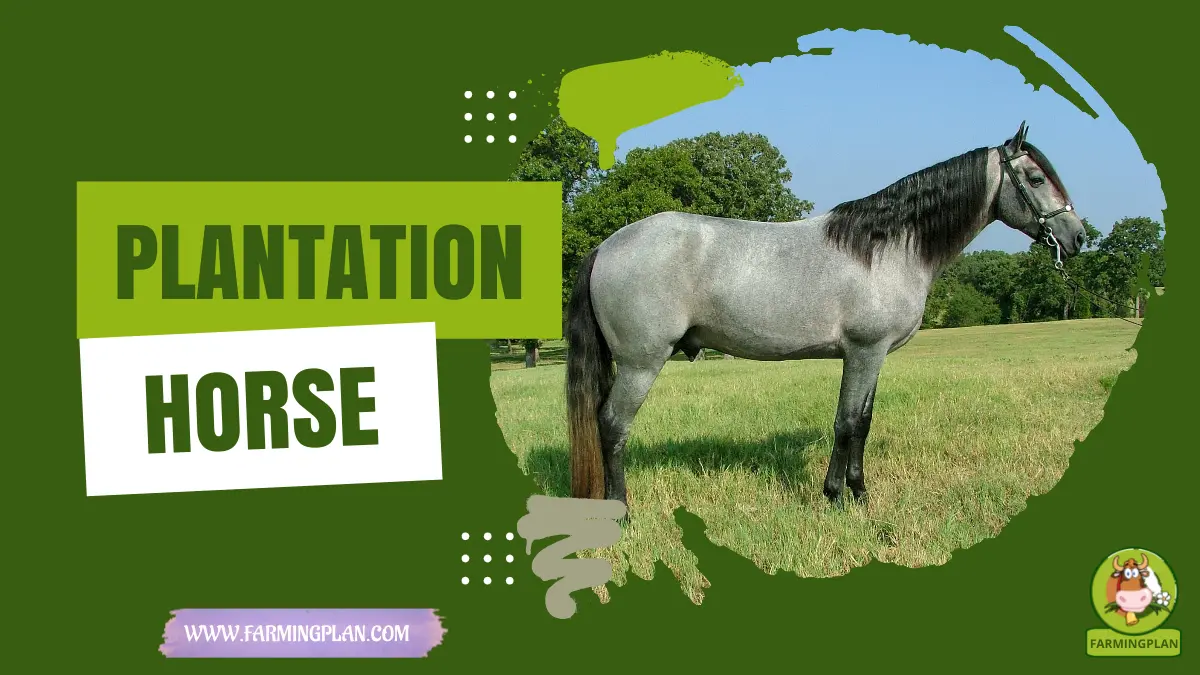
Physical Characteristics & Breed Standards
The Plantation Walking Horse combines athletic substance with refined symmetry. Breed registries evaluate horses on structural correctness, sloping shoulder angles, and natural four-beat movement free from artificial manipulation.
Height, Muscular Frame & Conformation Balance
Mature horses stand between 14.3 and 16.2 hands (59 to 66 inches) at the withers and weigh between 950 and 1,200 pounds. The body is well-muscled with a deep heart girth, well-sprung ribs, and a moderately short back that transitions into strong, sloping hindquarters. A deep shoulder angle of roughly 45 degrees allows the front legs to reach forward with generous extension. Proper record-keeping makes breeding and culling decisions easier for Plantation Walking Horse keepers.
The neck is long, gracefully arched, and set high on the shoulder, giving the horse an alert, proud carriage. The legs are clean, sturdy, and free from coarseness, with well-defined tendons, medium-length sloping pasterns that absorb concussion, and dense, hard hooves that resist cracking on rocky trails.
Head Profile, Eye Expression & Coat Colors
The head is handsome, medium in size, and cleanly chiseled, with large, intelligent eyes and alert, sensitive ears. The profile is straight or slightly convex, with large nostrils that expand during vigorous exercise. Providing adequate space and ventilation prevents common stress issues in Plantation Walking Horse.
Plantation Walking Horses occur in every equine coat color, including black, chestnut, bay, brown, gray, palomino, buckskin, and roan. Pinto and spotted patterns are also common and celebrated. Mane and tail hair is typically thick, flowing, and carried naturally without surgical alteration.
⚡ Plantation Walking Horse Conformation & Performance Matrix
| Performance Benchmark | Pleasure & Trail Standard | Plantation Show Standard |
|---|---|---|
| Height at Withers | 14.3 to 16.0 Hands (59 to 64 in) | 15.1 to 16.2 Hands (61 to 66 in) |
| Mature Body Weight | 950 to 1,150 lbs | 1,050 to 1,200 lbs |
| Flat-Foot Walk Speed | 4 to 7 miles per hour | 5 to 8 miles per hour |
| Running Walk Speed | 8 to 12 miles per hour | 10 to 14 miles per hour |
| Overstride Length | 6 to 18 inches past forefoot | 12 to 24 inches dramatic track |
| Shoeing Standard | Barefoot or light flat keg shoes | Plantation flat shoe (max 1.5 in width) |
Breed History, Heritage & North American Development
The origins of the Plantation Walking Horse are rooted in the agricultural expansion of the American South during the eighteenth and nineteenth centuries. Settlers in Tennessee, Kentucky, and Virginia required an all-purpose mount that could work farm implements by day and transport family members to town in comfort. Understanding breed-specific traits helps maximize Plantation Walking Horse longevity and output.
Breeders crossed easy-gaited Canadian Pacers and Narragansett Pacers with imported English Thoroughbreds, Standardbreds, Morgan horses, and American Saddlebreds. The pivotal moment occurred in 1886 with the birth of Black Allan, a trotting-bred stallion that preferred to amble. Black Allan passed his remarkable four-beat running walk consistently to his offspring, becoming the recognized foundation sire of the Tennessee Walking Horse.
While the modern show ring diverged toward exaggerated action, traditional breeders preserved the natural plantation horse under organizations like the Plantation Walking Horse Association and the National Walking Horse Association. Today, plantation enthusiasts champion sound, humane horsemanship, celebrating the horse as a premier pleasure and endurance mount. Routine preventive care saves time and lowers veterinary costs for Plantation Walking Horse.
Housing, Pasture Dimensions & Winter Hardiness
Plantation Horses thrive in natural pasture environments supplemented by shelter. An optimal paddock setup provides at least 1.5 to 2 acres of well-maintained grass pasture per horse, enclosed with safe board, post-and-rail, or electrified high-tensile wire fencing.
Barn stalls should measure at least 12 by 12 feet, providing generous headroom and non-slip rubber flooring covered with dust-free kiln-dried pine shavings. For pastured horses, a three-sided run-in shed positioned away from prevailing winds offers adequate shelter during heavy rain, snow, or summer heat. Matching forage or ration quality to life stage optimizes Plantation Walking Horse growth.
Plantation Horses exhibit strong winter hardiness. When provided with unlimited grass hay to generate internal digestive warmth and access to unfrozen water via heated troughs, they maintain body condition comfortably in sub-zero temperatures. Blanketing is generally unnecessary for healthy horses with unclipped winter coats unless freezing rain persists. Gradual dietary transitions protect digestive stability in Plantation Walking Horse.
Nutritional Requirements, Daily Rations & Feeding Protocols
Plantation Horses are generally easy keepers that utilize forage efficiently. Feeding programs should center on clean, high-quality grass hay, such as timothy, orchard grass, or mixed clover pasture, rather than heavy sweet feeds that trigger metabolic disorders.
A 1,100-pound horse in light to moderate trail work requires approximately 20 to 24 pounds of forage daily (roughly 2 percent of its body weight). A concentrated ration balancer fed at one to two pounds daily provides essential amino acids, vitamins, and minerals without excess starch. Free-choice white salt blocks and clean, fresh water must remain accessible at all times. Selecting healthy foundation stock is the cornerstone of successful Plantation Walking Horse management.
When comparing gaited horse nutrition with smooth-gaited South American breeds like the Mangalarga Marchador horse, both breeds require disciplined grazing management on lush spring pastures. Restricting access during peak sugar hours using grazing muzzles prevents insulin resistance and painful laminitis.
Health Management, Common Diseases & Biosecurity Standards
Maintaining long-term equine soundness requires routine preventive veterinary care. The American Association of Equine Practitioners (AAEP) outlines annual core vaccination guidelines to protect horses against tetanus, Eastern and Western equine encephalomyelitis, West Nile virus, and rabies. Good predator-proofing and dry bedding safeguard Plantation Walking Horse comfort in harsh weather.
Hoof care is vital for gaited horses. A skilled farrier should trim hooves every six to eight weeks, maintaining natural balance and a low heel angle that supports the horse’s natural overstride. Routine dental exams and teeth floating every twelve months ensure efficient feed chewing and comfort under the bridle.
Manage internal parasites using strategic fecal egg counts rather than indiscriminate chemical deworming. In addition, practicing biosecurity protocols recommended by USDA Animal Health prevents the introduction of respiratory herpesvirus and strangles during trail rides and regional gatherings. Monitoring water quality and mineral balance directly benefits Plantation Walking Horse vitality.
Breeding Management, Foaling & Offspring Development
Breeding Plantation Horses focuses on preserving natural gaited talent, structural straightness, and cooperative temperament. Mares typically reach breeding maturity between three and four years of age, carrying foals through an eleven-month (340-day) gestation period.
Foals are born with the innate ability to perform the four-beat walk, frequently exhibiting the running walk alongside their dams within hours of birth. Comparing gaited genetics with distinctive breeds like the Spotted Saddle Horse demonstrates how selective breeding stabilizes the DMRT3 “gait keeper” mutation across generations. Practical hands-on husbandry ensures consistent results when raising Plantation Walking Horse.
Wean foals between five and six months of age into safe nursery paddocks with companion weanlings. Early halter breaking, gentle handling, and exposure to trail obstacles establish calm confidence before formal saddle training begins at three to four years of age.
US Ownership Budget & Annual Maintenance Costs
Owning a Plantation Walking Horse requires careful annual financial planning. While purchasing a sound, trained trail gelding ranges from 3,500 to 8,000 dollars, ongoing maintenance costs represent the primary financial commitment. Early intervention at the first sign of lethargy protects overall Plantation Walking Horse flock or herd health.
For an owner keeping a horse on their own farm, annual basic upkeep typically ranges from 2,500 to 4,500 dollars. Boarding at a commercial facility increases annual expenses to 5,000 to 9,000 dollars depending on regional stall rates.
⚡ Estimated Annual Budget & Maintenance Costs (USD)
| Expense Category | Annual Cost Range (USD) | Management Notes & Specifications |
|---|---|---|
| Quality Grass Hay & Pasture Management | $1,200 – $2,000 | Timothy / orchard grass hay (20-25 lbs/day) |
| Ration Balancer & Salt Minerals | $300 – $550 | Concentrated vitamin balancer & salt blocks |
| Routine Farrier Care (Trims / Keg Shoes) | $360 – $720 | Trimming every 6 to 8 weeks ($50 trim / $120 shoes) |
| Veterinary Core Vaccines & Coggins | $350 – $650 | Annual 5-way vaccine, rabies, Coggins & float |
| Deworming & Fecal Egg Count Tests | $60 – $120 | Targeted fecal tests and strategic paste dewormers |
| Tack Maintenance & Fly Control | $200 – $450 | Leather conditioning, fly spray & seasonal masks |
| Total Annual Operating Budget | $2,470 – $4,490 | Estimated for one horse on home private pasture |
🧮 Plantation Walking Horse Daily Feed & Hay Intake Calculator
Calculate recommended daily dry grass hay (lbs), clean water intake, and estimated monthly forage costs tailored specifically for your Plantation Walking Horse.
Frequently Asked Questions (FAQ)
What is the difference between a Plantation Horse and a Tennessee Walker?
The Plantation Walking Horse is the traditional, naturally gaited ancestor of the Tennessee Walking Horse. Plantation horses perform smooth four-beat gaits barefoot or in light flat shoes on natural trails, unlike performance show horses fitted with heavy padded stacks.
Does a Plantation Walking Horse trot?
No, true Plantation Walking Horses do not perform a standard two-beat diagonal trot. Instead, they move in an inherited four-beat lateral sequence (flat walk and running walk) that eliminates the vertical bounce of a trot, providing an exceptionally smooth ride.
Are Plantation Walking Horses good for beginner riders?
Yes, Plantation Horses make outstanding mounts for beginners, seniors, and riders with back or joint pain. Their smooth, non-jarring gaits and calm, willing temperaments inspire confidence on trail rides and around the homestead.
How fast is the running walk of a Plantation Horse?
A Plantation Horse performs the running walk at speeds between 8 and 12 miles per hour. During this gait, the hind foot overstrides the front hoof print by 6 to 18 inches, accompanied by a rhythmic nodding of the head in time with the footfalls.
How many years do Plantation Walking Horses live?
With proper forage nutrition, routine hoof trimming, and preventive veterinary care, Plantation Walking Horses typically live 25 to 30 years. Many individuals remain sound, active pleasure trail mounts well into their late twenties.
Expert Verdict & Next Steps for Plantation Horse Keepers
The Plantation Walking Horse remains one of America’s greatest equine treasures, offering unmatched comfort, endurance, and quiet companionship. Caring for this noble breed requires balanced forage management, regular barefoot or flat-shod farrier trimming, and humane, understanding horsemanship. Riders who partner with a plantation horse enjoy miles of gliding comfort across the American countryside. Structured culling and biosecurity protocols strengthen Plantation Walking Horse genetic quality.
To further explore versatile riding and pleasure breeds, compare riding qualities with versatile companions like the Versatile Riding Horse to appreciate different equine conformations. Connect with natural gaited horse associations, test ride proven trail mounts with professional mentors, and establish a well-fenced pasture to begin your gaited horsemanship adventure.
📚Agricultural Reference & Scientific Citations
Conformation benchmarks, veterinary biosecurity protocols, and nutritional guidelines cited in this guide adhere to standards from the American Association of Equine Practitioners, the USDA Animal Health Division, and the Tennessee Walking Horse Breeders’ and Exhibitors’ Association.


