

⚡ Caspian Horse at a Glance: Key Specifications & Benchmarks
| Scientific Classification | Equus caballus (Ancient Iranian Pre-Arabian Ancestral Landrace) |
| Height at Withers | 10.0 to 12.2 hands (102 to 127 cm); true miniature horse proportions |
| Mature Body Weight | 400 to 600 lbs (180 to 270 kg); light, athletic bone substance |
| Conformation Anatomy | Horse conformation in miniature; refined head, slender cannon bones |
| Recognized Coat Colors | Bay, chestnut, gray, black, brown; occasionally roan; no pinto |
| Conservation Status | Critically endangered heritage breed; fewer than 2,000 worldwide |
| Primary Equestrian Utility | Elite junior show jumping, combined driving, rare breed preservation |
| Temperament & Spirit | Intelligent, fearless, extraordinarily gentle, highly affectionate |
The Caspian horse is an archaeological miracle of the equine kingdom. Believed to have been extinct for over a thousand years, this ancient royal horse of the Persian Empire was rediscovered in 1965 along the remote southern shores of the Caspian Sea in northern Iran, astonishing paleontologists and equestrians worldwide. Practical hands-on husbandry ensures consistent results when raising Caspian Horse.
Significantly, the Caspian is not a pony; it is a true miniature horse. While typical ponies possess heavy bone, thick necks, and short legs, the Caspian exhibits the refined skeletal proportions, high withers, slim cannon bones, and dished facial profile of an Arabian horse scaled down to eleven hands. As explored across our equine and horse management hub, anatomical research confirms the Caspian as the ancestral progenitor of modern hot-blooded equines.
Despite their petite scale, Caspians possess astonishing jumping power, easily clearing fences up to four feet high with natural scope and bravery. Their gentle disposition makes them supreme junior mounts for young riders and elite driving horses for adults. This definitive manual provides vital guidelines on pasture nutrition, hoof maintenance, stud preservation, and pediatric veterinary care for American owners.
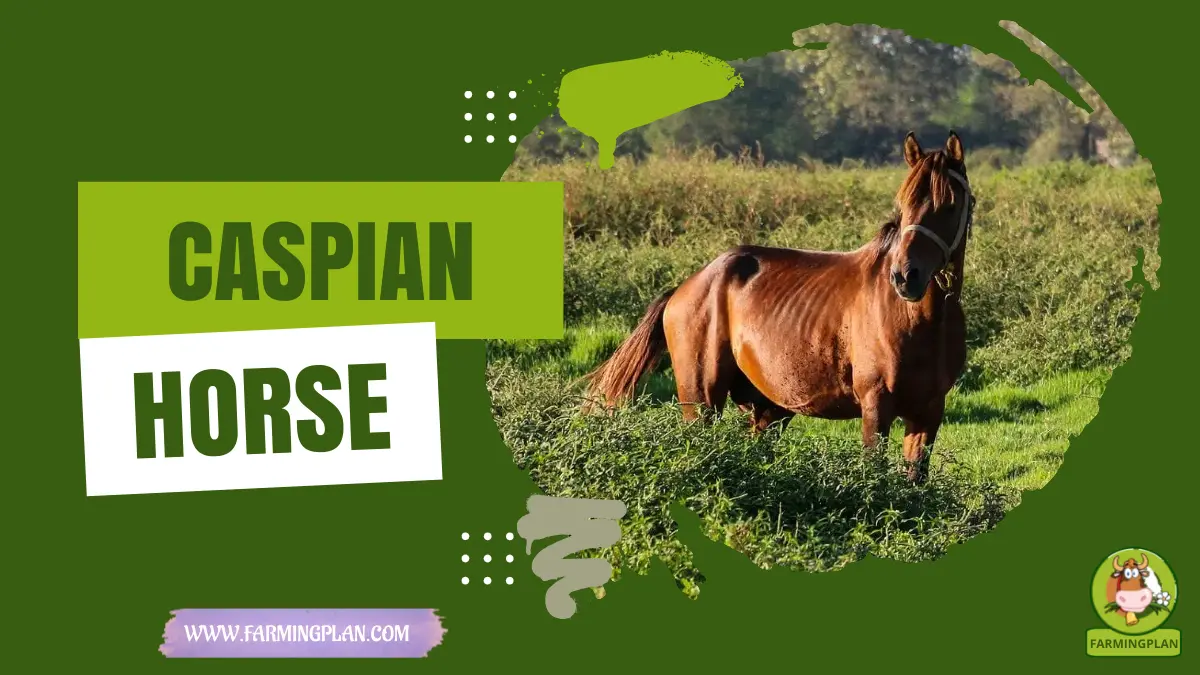
Physical Characteristics & Breed Standards
The Caspian Horse Society of the Americas (CHSA) and the International Caspian Society maintain rigorous breed standards to protect the ancient anatomical type discovered by Louise Firouz. The breed exhibits distinct skeletal markers that set it apart from all other domestic equines.
Anatomical Distinctions & Cranial Architecture
The head is short, fine, and exquisitely chiseled, featuring large, dark, prominent eyes set low on the face. A unique breed marker is the pronounced “vaulted” forehead—a convex rise of the parietal bones between the ears. The ears are very short, finely pointed, and tipped inward. The nostrils are large, low-set, and capable of extreme dilation during exertion. Early intervention at the first sign of lethargy protects overall Caspian Horse flock or herd health.
The neck is graceful, arched, and set high into well-sloped shoulders. The withers are prominent and well-defined, leading to a straight, strong back and a level croup with a high-set, flowing tail. The legs are remarkably clean, slender, and dense-boned, with oval hooves of exceptionally tough horn that rarely chip or require iron shoes.
Size Benchmarks & Recognized Coat Colors
Caspian horses stand between 10.0 and 12.2 hands (102 to 127 cm) at the withers and weigh between 400 and 600 pounds. Recognized coat colors include all shades of bay, chestnut, gray, black, and brown. White markings on the face and legs are permitted, but broken pinto patterns (tobiano, overo) are strictly disqualified from registration.
⚡ Caspian Horse Performance & Production Matrix
| Performance Parameter | Standard Breed Benchmark | Show Jumping Target | Management Challenge |
|---|---|---|---|
| Height at Withers | 10.0–12.2 hands (102–127 cm) | Ideal junior athletic mount scale | Finding small, properly fitted saddles |
| Jumping Scope | Clears 3.5 to 4.0 feet with ease | Tremendous bascule over fences | Over-jumping leading to rider loss |
| Hoof Toughness | Dense, oval, flint-hard sole | Completely barefoot performance | Excessive dryness on sandy summer pastures |
| Genetic Purity Index | Confirmed DNA microsatellite profile | Maintains ancient Persian bone type | Limited global breeding stallion pool |
| Feed Conversion Ratio | Thrives on sparse native grass hay | Lean athletic racing condition | Insulin resistance if overfed grain |
Breed History, Heritage & North American Development
Archaeological evidence confirms that the Caspian horse existed over 5,000 years ago in ancient Mesopotamia and Persia. Bas-relief stone carvings at Persepolis dating to the 6th century BC depict tiny, refined royal horses pulling the royal chariots of King Darius the Great, matching the modern Caspian’s skeleton down to the extra parietal bone suture.
Following the fall of the Persian Empire and the Islamic conquest, the royal mini-horses were believed lost to history. However, in 1965, American-born equestrian Louise Firouz, while searching for small riding mounts for a children’s riding school in Tehran, discovered small, aristocratic horses working as cart-pullers in coastal villages along the Caspian Sea. Structured culling and biosecurity protocols strengthen Caspian Horse genetic quality.
Firouz recognized their unique ancient conformation and founded the Norouzabad Research Center. British osteologists and blood-typing geneticists confirmed that these equines were not stunted ponies, but living representatives of an ancestral wild horse subtype. Foundation stock was exported to the UK and later to the United States before political turmoil in Iran closed export routes.
Today, the Caspian horse is listed as critically endangered by The Livestock Conservancy and the Rare Breeds Survival Trust. With approximately 2,000 registered individuals worldwide, North American breeders work cooperatively through the Caspian Horse Society of the Americas to expand purebred breeding studs and safeguard genetic health.
Housing, Shelter Dimensions & Winter Hardiness
Caspian horses are hardy, social herd animals that thrive in open outdoor pasture systems. Confining them to small, dark box stalls leads to behavioral frustration, as their energetic minds require movement, visual stimulation, and equine companionship.
Pasture Layout & Fencing Specifications
Provide at least 1.0 acre of rotational pasture per Caspian horse. A three-sided run-in shed measuring 10×12 feet provides ample shelter for a bonded pair. Shelter floors should be elevated, well-drained, and bedded with clean wood shavings or dry straw during severe winter storms. Maintaining clean feeders and sanitized equipment supports sustainable Caspian Horse care.
Fencing must be engineered to account for their extraordinary jumping ability. Despite standing under 12 hands tall, an athletic Caspian can easily leap over standard 40-inch pony fencing if startled or motivated. Install post-and-rail, no-climb diamond mesh, or multi-strand polymer electric fencing standing at least 48 to 52 inches high.
In winter, Caspians grow a dense, fine winter coat with a soft underlayer that protects them comfortably down to 0°F (-18°C) without blankets, provided they have shelter from freezing winds. In summer, their thin skin and large nostrils allow rapid heat dissipation, making them exceptionally tolerant of hot, humid Southern climates.
Nutritional Requirements, Daily Rations & Feeding Protocols
Evolving along the scrubby coastal foothills of the Alborz Mountains, the Caspian horse possesses an exceptionally thrifty metabolism. Feeding them rich alfalfa hay or high-calorie sweet feeds will quickly result in obesity, cresty neck development, and laminitis.
Low-Sugar Forage & Mineral Balance
The foundation of the Caspian diet must be clean, mature grass hay (timothy, coastal bermuda, or orchard grass) fed at 1.5% to 2.0% of body weight daily (6 to 10 lbs per horse). Forage management principles for native equines can be cross-referenced with our Dartmoor Pony grazing guide.
Supplement with a low-intake, low-calorie ration balancer pellet (0.5 to 0.75 lb daily) to provide essential copper, zinc, selenium, and vitamin E without surplus starches. Never feed molasses-sweetened grain concentrates unless the horse is engaged in intensive competitive jumping training. Consistent daily observation helps keepers spot early changes in Caspian Horse health and behavior.
Ensure continuous access to fresh drinking water and a plain white salt block. During rapid spring pasture growth, restrict grazing during mid-day sugar spikes using grazing muzzles or dry paddock turnout.
Health Management, Common Diseases & Biosecurity Standards
The Caspian horse boasts exceptional constitutional soundness, with rare breed surveys reporting low rates of colic and degenerative joint disease. However, their small global population demands strict genetic oversight and routine preventive veterinary care.
Hoof Maintenance, Parasite Control & Biosecurity
Caspian hooves are oval, dense, and naturally resistant to wear. Maintain a regular 6- to 8-week barefoot trimming schedule to preserve correct coronary band angles and prevent flaring. Iron horseshoes are rarely necessary unless the horse is driving on asphalt pavement.
Administer annual core vaccinations including Tetanus toxoid, Rabies, West Nile Virus, and Eastern/Western Encephalomyelitis. Perform quantitative fecal egg counts (FEC) every spring and autumn to implement targeted deworming against small strongyles. Review national equine biosecurity standards published by the USDA APHIS Equine Health Center. Clean housing, fresh water, and balanced nutrition remain essential for Caspian Horse productivity.
Schedule annual dental examinations. Because of their refined Arabian-like skull, check for sharp enamel points or retained deciduous caps that could interfere with bit acceptance during riding.
Breeding Management, Incubation & Offspring Care
Breeding Caspian horses is a vital conservation mission. Because the North American gene pool descends from a limited number of foundation animals imported in the 1970s and 1990s, breeders utilize computerized kinship analysis to minimize inbreeding coefficients.
Gestation Care & Foal Milestones
Gestation averages 330 to 340 days. Caspian mares are celebrated for easy, unassisted deliveries and generous milk production. New foals weigh approximately 30 to 45 pounds at birth and are remarkably precocious, galloping around pastures within hours. Compare ancient Asian horse genetics with the Indian Kathiawari Horse breed profile. Breeders interested in comparing housing, diet, and productivity traits should see our Sorraia Horse husbandry guide.
Begin gentle imprint handling during the first week. Teach foals to lead politely, stand quietly for farrier hoof lifting, and load onto trailers. Their high intelligence and desire to please make training a joy. Tracking feed intake and body condition supports long-term Caspian Horse performance.
Wean foals between 5 and 6 months into group pasture turnout with peers. Although small, Caspians mature at the same rate as standard horses; light groundwork can begin at age 2, but ridden work under saddle should wait until 3.5 to 4 years when skeletal growth plates fuse completely.
US Ownership Budget & Annual Maintenance Costs
Due to their status as an endangered heritage breed, registered Caspian horses carry premium purchase prices that reflect conservation value and pedigree purity. Registered breeding stock and trained junior show jumpers range from $3,500 to $8,500, with imported bloodlines commanding $10,000 to $15,000.
⚡ Estimated Annual Budget & Maintenance Costs (USD)
| Expense Category | Estimated Annual Cost Range (USD) | Operational Cost Efficiency Strategy |
|---|---|---|
| Registered Caspian Horse | $3,500.00 – $8,500.00 initial asset | Connect with certified CHSA preservation breeders |
| Quality Grass Hay Rations | $450.00 – $850.00 per horse | Petite body mass results in 50% lower hay expenses than horses |
| Ration Balancer & Salt Minerals | $120.00 – $220.00 per horse | Feed concentrated nutrient pellets to avoid grain waste |
| Barefoot Farrier Trims (6–8 Wks) | $280.00 – $480.00 per horse | Maintain natural barefoot balance; iron shoes are unnecessary |
| Veterinary, Vaccinations & Dental | $300.00 – $600.00 annual wellness | Enroll in preventative clinic wellness packages to bundle care |
🧮 Caspian Horse Daily Feed & Hay Intake Calculator
Calculate recommended daily dry grass hay (lbs), clean water intake, and estimated monthly forage costs tailored specifically for your Caspian Horse.
Frequently Asked Questions (FAQ)
Is the Caspian horse a horse or a pony?
The Caspian is scientifically classified as a horse, not a pony. Despite its small height (10.0 to 12.2 hands), it possesses the refined bone structure, slender legs, vaulted forehead, and proportionate conformation of a miniature horse rather than the heavy bone of a pony.
How rare is the Caspian horse?
The Caspian horse is critically endangered, with fewer than 2,000 registered individuals surviving worldwide. The Caspian Horse Society of the Americas works closely with international registries to preserve pure bloodlines.
Can adult riders ride a Caspian horse?
Caspians are small equines primarily suited for junior riders weighing under 100 to 110 pounds. However, small adults frequently drive Caspians in harness, where they excel in combined driving competitions.
How high can a Caspian horse jump?
Caspians possess extraordinary natural jumping scope and bascule, frequently clearing obstacle fences 3.5 to 4.0 feet high with ease, making them premier mounts in competitive pony show jumping.
Do Caspian horses need shoes?
Most Caspian horses are kept completely barefoot. Their small, dense, oval hooves evolved on rocky mountain terrain in northern Iran, producing exceptionally tough horn that rarely chips or cracks on natural trails.
Expert Verdict & Next Steps
The Caspian horse is a breathtaking living link to antiquity, uniting the aristocratic nobility of the ancient Persian royal courts with remarkable jumping agility and an extraordinarily gentle spirit. For families seeking an elite, trustworthy jumping partner for talented youth, the Caspian has no peer.
By investing in disciplined low-sugar nutrition, proper fencing, and rare breed conservation stewardship, owners contribute directly to saving one of the world’s most historic equines from extinction. To explore broader agricultural livestock models and enterprise setups, explore our farm livestock husbandry and enterprise guide.
📚Agricultural Reference & Scientific Citations
Standards and physiological data referenced in this guide comply with USDA Animal and Plant Health Inspection Service (APHIS), American Veterinary Medical Association (AVMA), and the FAO Domestic Animal Diversity Information System.


