

⚡ Dartmoor Pony at a Glance: Key Specifications & Benchmarks
| Scientific Classification | Equus caballus (British Mountain and Moorland Native Breed) |
| Height Benchmark | Strict maximum of 12.2 hands (127 cm / 50 inches) at withers |
| Mature Body Weight | 450 to 650 lbs (200 to 295 kg); compact sturdy bone structure |
| Recognized Coat Colors | Bay, brown, black, gray, chestnut, roan; piebald and skewbald rejected |
| Hoof & Leg Structure | Dense flint-hard hooves, short flat cannon bones, clean fetlocks |
| Average Lifespan | 25 to 30+ years; celebrated for robust vitality and soundness |
| Primary Equestrian Roles | First ridden pony for children, family driving, conservation grazing |
| Temperament & Trainability | Sensible, gentle, reliable, patient, highly empathetic with youth |
The Dartmoor Pony is one of the nine venerable native Mountain and Moorland equine breeds of the British Isles. Forged by centuries of fierce Atlantic gales, driving rains, and granite tors in southwestern England’s Dartmoor National Park, this rugged yet gentle pony is revered worldwide as the gold standard child’s riding mount. Consistent daily observation helps keepers spot early changes in Dartmoor Pony health and behavior.
Unlike flighty sport ponies or delicate warmblood stock featured across our equine and horse management hub, the Dartmoor evolved exceptional common sense and spatial awareness. Living on treacherous granite bogs taught the breed to place every hoof with precision, creating a safe, surefooted ride that instills confidence in young equestrians.
Beyond the show ring, the Dartmoor Pony plays an invaluable role in environmental conservation grazing, consuming tough moorland scrub, gorse, and invasive bracken that cattle and sheep bypass. This comprehensive husbandry guide covers pasture nutrition, laminitis prevention, saddle fitting, and breeding management for American horse owners.
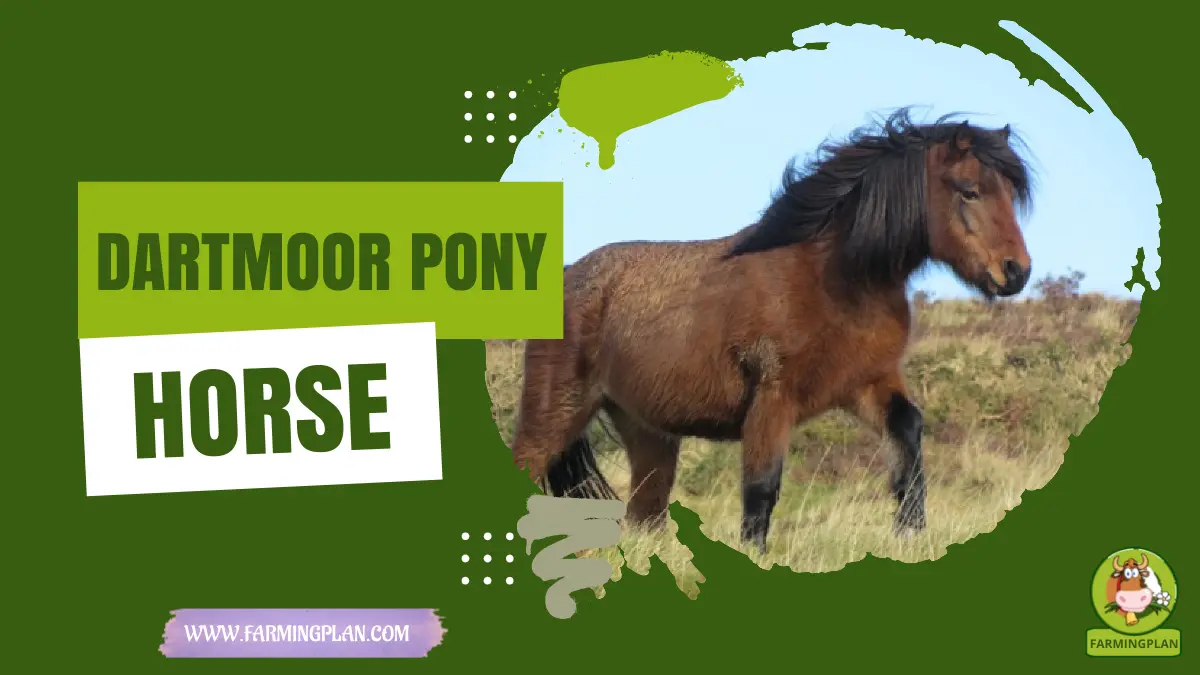
Physical Characteristics & Breed Standards
The Dartmoor Pony Society (DPS) establishes clear conformation benchmarks designed to maintain the breed’s functional hardiness, athletic balance, and gentle expression. Despite its pony stature, the Dartmoor possesses the bone and substance of a small horse. Clean housing, fresh water, and balanced nutrition remain essential for Dartmoor Pony productivity.
Conformation Standards & Movement Dynamics
The head is small and well-chiseled, with large, gentle eyes and small, alert ears set on a throatlatch that allows free airway flexion. The neck is medium in length and muscular, blending cleanly into well-sloped shoulders that produce a low, daisy-cutting trot without exaggerated knee action.
The chest is deep and moderately wide, providing ample heart and lung capacity. The back is short and strong, joining seamlessly to a well-muscled loin and rounded croup with a high-set, flowing tail. The limbs feature short, dense cannon bones, prominent flat knees, and exceptionally hard, dark hooves that rarely require iron shoes.
Size Benchmarks & Recognized Coat Colors
The maximum official height permitted by breed standards is 12.2 hands (127 cm), with mature body mass ranging from 450 to 650 pounds. Recognized coat colors include solid bay, brown, black, gray, chestnut, and roan. Broken pinto patterns (piebald and skewbald) and excessive white markings above the fetlocks are strictly disqualified from registration. Tracking feed intake and body condition supports long-term Dartmoor Pony performance.
⚡ Dartmoor Pony Performance & Production Matrix
| Performance Parameter | Standard Breed Benchmark | Show Ring Objective | Management Challenge |
|---|---|---|---|
| Height at Withers | Strict max 12.2 hands (127 cm) | Balanced proportion under saddle | Outgrowing young riders quickly |
| Gait Quality | Smooth, low, daisy-cutting stride | Rhythmic, comfortable ground coverage | Stiffness if confined to small stalls |
| Hoof Toughness | Flint-hard, cupped sole | Natural barefoot performance | Cracking on dry summer baked paddocks |
| Feed Efficiency | Thrives on coarse moorland roughage | Easy maintenance without grain | High susceptibility to spring pasture laminitis |
| Temperament Score | Calm, sensible, affectionate | Zero spooky or bolting tendencies | Requires firm, consistent boundary training |
Breed History, Heritage & North American Development
The Dartmoor Pony has inhabited the rugged granite moorlands of Devon in southwestern England since antiquity. The earliest written documentation appears in the 1012 AD will of Saxon nobleman Aelfwold, Bishop of Crediton, referencing herds of wild equines roaming the high moor.
For centuries, Dartmoor ponies served local tin miners, transporting heavy bags of crushed ore across rough peat tracks to coastal smelters. They also hauled peat fuel for village hearths and carried farmers across trackless bogs. When tin mining declined in the late 19th century, breeders recognized the need to preserve pure moorland bloodlines.
The Dartmoor Pony Society was formally established in 1899 to establish a closed studbook and protect native herds from indiscriminate crossbreeding with Shetland and Welsh ponies. During the mid-20th century, passionate North American breeders imported foundation stallions and mares, establishing the Dartmoor Pony Registry of America.
Today, the Dartmoor Pony is classified as an endangered heritage breed by the UK Rare Breeds Survival Trust (RBST) and The Livestock Conservancy. Conservation programs on Dartmoor work closely with national parks and international registries to maintain wild moor herds alongside registered domestic studs. Following biosecurity best practices reduces disease risk in any Dartmoor Pony operation.
Housing, Shelter Dimensions & Winter Hardiness
Dartmoor ponies are hardy native equines designed by nature to live outdoors. Housing them in warm, enclosed stables year-round causes coat abnormalities, respiratory issues, and stable vices. An open pasture layout with an accessible run-in shelter suits their physiology best.
Pasture Layout & Fencing Specifications
Provide at least 1.0 to 1.5 acres of pasture per pony under rotational management. A simple three-sided run-in shed measuring 10×12 feet provides ample shelter for a bonded pair. Bed shelter floors with dry straw or kiln-dried wood shavings during wet, freezing winter weather.
Fencing must be secure and low enough to contain small, agile ponies. Install post-and-rail, non-climb diamond-mesh horse wire, or multi-strand electric fencing standing 42 to 48 inches high. Ensure the bottom fence wire or rail is positioned 8 to 10 inches above the ground to prevent ponies from rolling under fences. Seasonal adjustments to shelter and diet keep Dartmoor Pony thriving year-round.
In autumn, Dartmoors grow a dense, dual-layer winter coat consisting of a thick, woolly undercoat and long, coarse guard hairs that shed rain like a thatched roof. They comfortably endure winter cold down to -10°F (-23°C) without blankets, provided they have wind protection and access to dry forage.
Nutritional Requirements, Daily Rations & Feeding Protocols
The digestive system of the Dartmoor Pony is adapted to extract maximum nutrition from fibrous, sparse moorland vegetation. Placing a Dartmoor on rich, clover-heavy pasture or feeding commercial sweet feeds results in rapid obesity, insulin resistance, and catastrophic laminitis.
Low-Calorie Forage & Laminitis Prevention
The daily diet must consist strictly of mature, low-sugar grass hay (timothy, meadow brome, or orchard grass) fed at 1.5% to 2.0% of body weight daily (7 to 12 lbs per pony). Soak hay in fresh water for 45 to 60 minutes before feeding if testing reveals Non-Structural Carbohydrates (NSC) exceeding 10%. Proper record-keeping makes breeding and culling decisions easier for Dartmoor Pony keepers.
Supply a concentrated, low-intake ration balancer pellet (0.5 to 1.0 lb daily) to provide essential copper, zinc, selenium, and vitamins without unwanted starches. Nutritional strategies for native UK breeds can be compared with the related Exmoor Pony grazing guide.
During the rapid spring grass flush, restrict pasture turnout using a grazing muzzle or confine ponies to a dry lot with clean hay. Ensure continuous access to clean, fresh water and a plain white mineral salt block year-round.
Health Management, Common Diseases & Biosecurity Standards
While genetically robust, Dartmoor ponies face health challenges related to domestic abundance. Preventative healthcare focuses on metabolic monitoring, dental maintenance, and seasonal parasite control.
Equine Metabolic Syndrome, PPID & Barefoot Hoof Care
Equine Metabolic Syndrome (EMS) and Pituitary Pars Intermedia Dysfunction (PPID / Cushing’s disease) are common in mature native ponies. Monitor the pony’s cresty neck score and fat deposits along the shoulders and tailhead. Blood testing for baseline insulin and ACTH allows early dietary or pergolide interventions. Providing adequate space and ventilation prevents common stress issues in Dartmoor Pony.
Maintain a strict barefoot trimming cycle every 6 to 8 weeks. Dartmoor hooves grow rapidly; routine rolling of the outer hoof wall (mustang roll) prevents chipping and flares. Review national equine biosecurity guidelines through the USDA APHIS Equine Health Portal. For additional husbandry benchmarks and feeding standards, explore our complete Ardennes Horse care guide.
Administer annual core vaccines including Tetanus, Rabies, Eastern/Western Encephalomyelitis, and West Nile Virus. Conduct quantitative fecal egg counts twice a year to target deworming treatments effectively against small strongyles.
Breeding Management, Incubation & Offspring Care
Dartmoor mares are celebrated for exceptional fertility, easy unassisted foaling, and devoted mothering instincts. On their native moors, mares successfully rear foals through harsh Atlantic spring storms with zero human intervention. Understanding breed-specific traits helps maximize Dartmoor Pony longevity and output.
Gestation & Early Foal Handling
Gestation averages 330 to 340 days. Maintain broodmares on clean grass hay and a ration balancer, avoiding over-conditioning in late pregnancy. Foaling typically occurs quickly on clean pasture or in an airy 12×12-foot foaling stall bedded with wheat straw.
Foals are precocious, standing and nursing within 45 minutes of birth. Early imprint training—including gentle handling of the ears, poll, and feet—capitalizes on the breed’s natural trust, creating cooperative juveniles. Compare native pony training dynamics with the Irish Connemara Pony breeding guide.
Wean foals between 5 and 6 months into group pasture turnout with other young stock. Pasture play develops bone mineral density, tendon flexibility, and social manners without putting premature strain on growing joints. Routine preventive care saves time and lowers veterinary costs for Dartmoor Pony.
US Ownership Budget & Annual Maintenance Costs
Because purebred Dartmoor ponies are rare in North America, registered breeding stock and well-trained children’s mounts command premium prices. Well-started riding ponies range from $4,500 to $12,000, while imported show champions can exceed $15,000.
⚡ Estimated Annual Budget & Maintenance Costs (USD)
| Expense Category | Estimated Annual Cost Range (USD) | Operational Cost Efficiency Strategy |
|---|---|---|
| Registered Dartmoor Pony Purchase | $4,500.00 – $12,000.00 initial asset | Source verified stock through the Dartmoor Pony Registry of America |
| Quality Grass Hay Rations | $500.00 – $950.00 per pony | Feed analyzed low-sugar grass hay to avoid costly vet treatments |
| Ration Balancer & Salt Supplements | $150.00 – $250.00 per pony | Use concentrated balancers fed at low daily ounces |
| Barefoot Farrier Trims (6–8 Wks) | $300.00 – $500.00 per pony | Maintain natural barefoot hooves; iron shoes are rarely needed |
| Veterinary, Vaccinations & Dental | $350.00 – $650.00 annual wellness | Group preventative farm calls with neighboring horse properties |
🧮 Dartmoor Pony Daily Feed & Hay Intake Calculator
Calculate recommended daily dry grass hay (lbs), clean water intake, and estimated monthly forage costs tailored specifically for your Dartmoor Pony.
Frequently Asked Questions (FAQ)
What is the maximum height of a Dartmoor Pony?
The official breed standard sets a strict maximum height of 12.2 hands (127 cm / 50 inches) at the withers. Any pony exceeding this height cannot be registered as a purebred Dartmoor in the main studbook.
Why are Dartmoor Ponies considered the best children’s pony?
Dartmoor ponies possess a remarkably calm, sensible, and patient temperament. Forged in rugged moorland terrain, they do not startle easily, place their feet with great care, and move with a smooth, low stride that keeps young riders secure.
What colors are accepted in registered Dartmoor Ponies?
Recognized colors include bay, brown, black, gray, chestnut, and roan. Broken pinto patterns like piebald and skewbald are strictly prohibited, as are excessive white markings on the face or above the fetlocks.
Are Dartmoor Ponies prone to laminitis?
Yes, like many native British moorland breeds, Dartmoor ponies are very efficient feed converters. Grazing on rich, lush spring pastures or consuming grain feeds can quickly induce equine metabolic syndrome and painful laminitis.
Do Dartmoor Ponies need winter blankets?
No, healthy unclipped Dartmoor ponies do not need blankets. They develop a dense, dual-layered winter coat with waterproof guard hairs that protects them comfortably down to -10°F (-23°C) as long as they have dry shelter.
Expert Verdict & Next Steps
The Dartmoor Pony stands as one of the world’s most trustworthy and versatile native equine breeds. Combining rugged physical hardiness with an impeccably gentle and empathetic spirit, this pony provides young riders with a safe, joyful introduction to equestrian sport.
By enforcing disciplined low-sugar forage management and maintaining regular barefoot hoof care, owners can look forward to decades of sound partnership. To discover comprehensive enterprise planning across diverse farm animal species, explore our parent sustainable livestock farming enterprise directory.
📚Agricultural Reference & Scientific Citations
Standards and physiological data referenced in this guide comply with USDA Animal and Plant Health Inspection Service (APHIS), American Veterinary Medical Association (AVMA), and the FAO Domestic Animal Diversity Information System.


