

⚡ Exmoor Pony at a Glance: Key Specifications & Benchmarks
| Scientific Name | Equus caballus (Primitive Mountain & Moorland Landrace) |
| Breed Origin | Exmoor National Park, Devon and Somerset, United Kingdom |
| Official Registry | Exmoor Pony Society (Established 1921) / Rare Breeds Survival Trust |
| Average Mature Height | 11.2 to 12.3 hands (46 to 51 inches / 117 to 130 cm) |
| Average Mature Weight | 700 to 800 lbs (315 to 365 kg) |
| Primary Working Roles | Conservation grazing, driving, family pleasure riding, rough pasture reclamation |
| Signature Markings | Mealy (pale oatmeal) muzzle, eye rings, belly; toad eye hooded eyelids |
| Conservation Status | Endangered / Priority Watchlist (Global breeding herd under 4,000 registered head) |
The Exmoor pony stands as one of the oldest, purest native equine landraces surviving in western Europe. Forged across millennia on the exposed, wind-scoured moorlands of southwest England, this primitive pony possesses exceptional physical resilience, thrifty metabolic efficiency, and instinctual herd social structures. While commercial breeders often overlook smaller stock in favor of modern warmbloods, knowledgeable pasture managers and smallholders recognize the Exmoor pony as a premier working partner for conservation grazing and sustainable acreage management. Exploring our complete directory of distinct horse breeds demonstrates how primitive heritage equines offer unique ecological and economic advantages over conventional domestic breeds. Early intervention at the first sign of lethargy protects overall Exmoor Pony flock or herd health.
Modern agricultural demands emphasize low-impact grazing, biological weed control, and hardy utility equines capable of thriving without resource-intensive indoor stabling. The Exmoor pony meets every one of these operational criteria with distinction. Their dense bone structure, dual-layered winter coat, and natural ability to convert coarse woody scrub into bodily conditioning allow them to thrive where modern pleasure horses falter. However, managing an Exmoor pony demands strict adherence to native forage protocols, proactive hoof balance, and intelligent handling methods tailored to an autonomous primitive mindset.
This comprehensive production manual details the technical breed standards, historical preservation lineage, nutritional boundaries, shelter guidelines, and veterinary protocols necessary to manage Exmoor ponies successfully. Whether you are establishing a dedicated conservation grazing herd or seeking an affectionate, sure-footed driving companion, understanding this breed’s physiological requirements ensures optimal long-term welfare and peak productivity on your homestead. Structured culling and biosecurity protocols strengthen Exmoor Pony genetic quality.
Physical Characteristics & Breed Standards
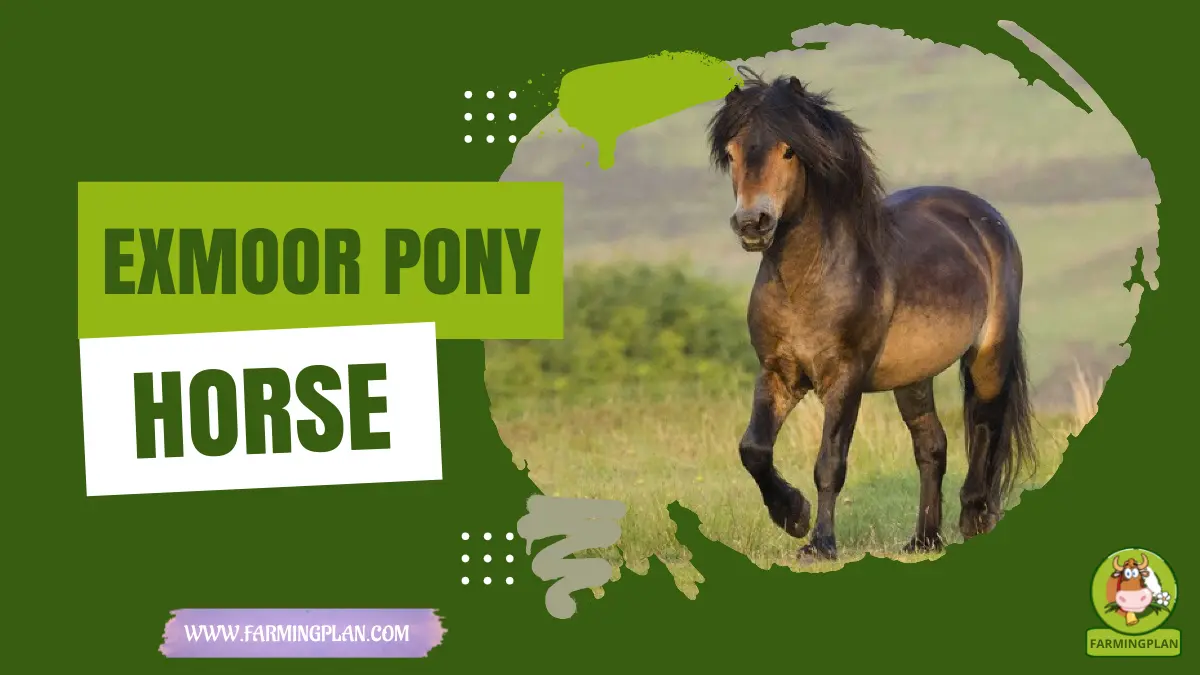
Physically, the Exmoor pony exhibits distinctive primitive morphological adaptations designed to withstand sub-zero wind chills, heavy rainfall, and rugged rocky terrain. Mature stallions and mares stand strictly between 11.2 and 12.3 hands high, exhibiting exceptional muscular width across the chest, depth through the heart girth, and compact, short back conformation. Their bone density is extraordinary, featuring flat, clean cannon bones measuring between 6.5 and 7.5 inches in circumference, supporting hooves of dense, slate-blue horn that rarely require metal shoeing under standard rural conditions.
A defining hallmark of the purebred Exmoor pony is its diagnostic coloration and primitive facial features. The breed coat is uniformly bay, brown, or dun with prominent mealy (pale oatmeal) pigmentation encircling the muzzle, eye rings, belly, and inner thighs. The eyes display a unique anatomical adaptation known as the ‘toad eye’—a prominent hooded upper eyelid that deflects wind-driven rain, sleet, and driving moorland snow. The mane and tail are coarse and thick, featuring a specialized fan of short waterproof hairs at the dock known as a tail thatch, which channels precipitation away from the sensitive perineal tissue. Maintaining clean feeders and sanitized equipment supports sustainable Exmoor Pony care.
Conformation Standards & Anatomical Structure
Movement in the Exmoor pony is characterized by a straight, low, and economical stride without exaggerated knee action, ensuring maximum energy conservation across uneven ground. Their movement provides remarkable stability over boggy soils and rocky inclines, minimizing the risk of soft tissue strain. Conformation evaluators penalize white markings of any kind; purebred Exmoors possess no white socks, blazes, or facial stars, preserving the pure genetic camouflage perfected through natural selection.
The head is neat, broad between the wide-set eyes, with clean jawlines and alert, short ears lined with dense protective hair. The neck is strong, crested in mature stallions, and set cleanly into powerful sloping shoulders that facilitate easy downhill navigation without jarring the rider or harness cart.
Size, Weight Benchmarks & Color Variations
Stallions typically reach 12.0 to 12.3 hands and weigh approximately 750 to 800 lbs, while mares measure 11.2 to 12.2 hands and weigh between 700 and 760 lbs. Despite their pony stature, their deep rib spring and broad chest give them the carrying power of horses several hands taller. Consistent daily observation helps keepers spot early changes in Exmoor Pony health and behavior.
Because their center of gravity is exceptionally low, Exmoors carry adult riders with balance and poise. Their weight-carrying efficiency rivals many larger horses, making them a practical choice for smallholders seeking capable riding and pack animals without high feed overhead.
⚡ Exmoor Pony Performance & Production Matrix
| Functional Benchmark | Operational Standard | Performance Metric | Practical Field Application |
|---|---|---|---|
| Conservation Grazing Efficiency | Consumes coarse gorse, heather, purple moor-grass | Superior (9.8/10) | Exceptional biological brush control without soil erosion or compaction. |
| Metabolic Feed Conversion | High-efficiency hindgut microbial fermentation | Elite (9.7/10) | Thrives on fibrous, low-NSC roughage; highly prone to obesity on lush clover. |
| Draft & Light Harness Work | Pulls 1.5 to 2.0x body weight in two-wheel cart | Strong (8.6/10) | Sturdy bone and low center of gravity make them outstanding family driving ponies. |
| Surefootedness & Rough Terrain | Navigates steep peat bogs and rocky scree | Superior (9.9/10) | Flawless foot placement and slate-blue horn resist chips and stone bruising. |
| Hoof Strength & Integrity | Natural barefooting on 6 to 8-week trim cycle | Superior (9.8/10) | Exceptionally dense horn rarely requires metal shoeing under normal homestead loads. |
| Cold & Moisture Resistance | Dual-coat with natural water-shedding oils | Superior (9.9/10) | Withstands sub-zero temps and torrential rain without artificial blankets. |
Breed History, Heritage & North American Development
The evolutionary lineage of the Exmoor pony traces directly back to the post-glacial wild horse populations that roamed the British Isles prior to the opening of the English Channel. Archaeological excavations across southern Britain have uncovered fossilized skeletal remains matching modern Exmoor dimensions dating back more than 10,000 years. Historical tax records from the Domesday Book of 1086 document running wild ponies across the Royal Forest of Exmoor, confirming centuries of continuous moorland occupancy under severe climate pressures. Clean housing, fresh water, and balanced nutrition remain essential for Exmoor Pony productivity.
During the early 19th century, privatization of the Royal Forest and subsequent crossbreeding programs threatened the integrity of the ancestral moorland stock. In response, local farming families, led by Sir Thomas Acland, established dedicated anchor herds to protect the pure native bloodlines from commercial dilution. The founding of the Exmoor Pony Society in 1921 established formal studbook registries and rigorous inspection standards. Today, researchers at USDA Agricultural Research Service emphasize how ancient equine landraces preserve vital genetic diversity against modern monoculture vulnerabilities.
World War II devastated the moorland herds, reducing the global purebred count to fewer than 50 breeding individuals as moorlands were converted to military training grounds. Dedicated preservationists collected the surviving foundation stock, implementing controlled breeding strategies that resurrected the breed without losing genetic vigor. Comparing these bloodlines with northern native breeds in our guide to the hardy Fell pony breed showcases how British mountain and moorland equines share remarkable constitutional hardiness.
Housing, Shelter Dimensions & Winter Hardiness
Housing and shelter design for Exmoor ponies should respect their evolutionary adaptation to open moorland environments. In temperate and cold climates, Exmoors thrive year-round on open pastures with access to a three-sided run-in shed oriented away from prevailing storm winds. Confinement inside heated, closed stables is counterproductive, as it disrupts their natural seasonal shedding cycles and exposes their lungs to airborne dust and ammonia. Tracking feed intake and body condition supports long-term Exmoor Pony performance.
Run-in shelters should provide at least 100 to 120 square feet of dry, covered space per pony, featuring well-drained stone-dust or packed clay flooring topped with dry straw or wood shavings. Adequate roof overhangs prevent wind-driven rain from soaking the bedding, ensuring the ponies have a dry lying area during prolonged winter downpours.
Spatial Density & Enclosure Engineering
Pasture layout requires durable, safe containment. High-tensile smooth wire, three-rail timber, or heavy-duty diamond mesh standing 48 to 52 inches high represents the standard barrier. Barbed wire is strictly unacceptable due to the risk of severe lacerations. If electric poly-tape is utilized, it must deliver a minimum shock of 5,000 volts, as the pony’s dense double winter coat acts as an effective insulator. Following biosecurity best practices reduces disease risk in any Exmoor Pony operation.
Run-off management around barn aprons, feeding stations, and high-traffic gates is vital. Installing geotextile fabric beneath crushed limestone prevents deep mud wallows, protecting the pony’s fetlock skin from equine pastern dermatitis (mud fever) and hoof thrush during wet seasonal periods.
Nutritional Requirements, Daily Rations & Feeding Protocols
Nutritional management of the Exmoor pony demands strict discipline centered on fibrous, low-non-structural-carbohydrate (NSC) forage. Evolving on sparse moorland vegetation consisting of heather, woody rush, coarse purple moor-grass, and gorse, the Exmoor developed a highly efficient hindgut microbial fermentation system designed to extract every calorie from fibrous roughage. Feeding rich alfalfa hay, sweet grain concentrates, or lush green clover pastures will quickly cause severe obesity, insulin dysregulation, and crippling laminitis.
Pasture managers must maintain adult Exmoors on clean, tested grass hay with an NSC level strictly below 10 percent, fed at 1.5 to 1.8 percent of body weight daily (approximately 11 to 14 lbs of dry matter for a 750-lb pony). During the spring flush and autumn green-up, pasture turnout must be restricted using grazing muzzles, dry lots, or track systems. Reviewing our comprehensive advice on essential equine care practices helps homesteaders design safe, low-sugar grazing routines. Seasonal adjustments to shelter and diet keep Exmoor Pony thriving year-round.
Crude Protein Benchmarks Across Life Stages
Because mature, low-sugar grass hay frequently lacks critical trace minerals, daily supplementation with a concentrated, grain-free ration balancer pellet is essential. This balancer must supply targeted zinc (300 to 400 mg), copper (100 to 150 mg), selenium, and natural vitamin E to support skin barrier resilience and hoof horn integrity. Agricultural extension specialists at Penn State Extension Equine Science confirm that balancing trace minerals on low-calorie forage diets prevents nutritional deficiencies without adding dangerous sugars.
Clean, fresh water must be accessible at all times, alongside free-choice loose white salt. Ponies often avoid licking compressed mineral blocks in cold weather, making loose salt feeders the preferred management choice on winter homesteads. Proper record-keeping makes breeding and culling decisions easier for Exmoor Pony keepers.
Health Management, Common Diseases & Biosecurity Standards
Health management protocols for Exmoor ponies center around metabolic vigilance, regular dental balancing, and preventative parasite control. Because Exmoors naturally store fat reserves behind their shoulders and along the crest of their neck to survive harsh winters, domestic pasture managers must perform monthly body condition scoring (BCS) using the Henneke scale. Maintaining ponies between a BCS of 4.5 and 5.5 is essential to prevent metabolic syndrome and laminitis.
Hoof care requires a regular barefoot trimming schedule every six to eight weeks. Although their slate-blue horn is exceptionally hard and slow-wearing, pasture confinement can cause toe flares, wall separation, or contracted heels if balance is not maintained. Trimming must preserve their natural low heel, short breakover, and strong functional frog, ensuring proper shock absorption across varying terrains.
Biosecurity Protocols & Veterinary Defenses
Parasite control should follow modern evidence-based veterinary protocols utilizing seasonal fecal egg counts (FEC) rather than arbitrary calendar deworming. Targeted anthelmintic administration prevents chemical drug resistance among cyathostomin populations while keeping parasite burdens below damaging clinical thresholds. Providing adequate space and ventilation prevents common stress issues in Exmoor Pony.
Annual vaccinations against tetanus, Eastern and Western equine encephalomyelitis (EEE/WEE), West Nile virus, and rabies should be administered according to American Association of Equine Practitioners (AAEP) guidelines. Routine annual dental floating removes sharp enamel points from molars, ensuring efficient mastication and comfortable bit acceptance in driving harness.
Breeding Management, Reproductive Cycles & Offspring Care
Breeding and genetic preservation of the Exmoor pony require meticulous record-keeping and strict adherence to breed society standards. Mares reach breeding maturity around three years of age, though reputable preservation breeders often delay initial breeding until four years to allow full musculoskeletal maturation. Exmoor mares are renowned for exceptional fertility, unassisted foaling, abundant milk production, and fierce maternal protective instincts, rarely requiring veterinary intervention during normal parturition. Understanding breed-specific traits helps maximize Exmoor Pony longevity and output.
Gestation averages 335 to 345 days. Broodmares should be maintained on high-fiber forage with balanced mineral supplementation throughout pregnancy, avoiding excess caloric intake during early and mid-gestation. In the final trimester, increasing protein intake through alfalfa chaff or a targeted mare-and-foal balancer supports rapid fetal growth without depositing dangerous visceral fat.
Foals stand and nurse within thirty to sixty minutes of birth, exhibiting rapid precocious motor development adapted for fleeing moorland predators. DNA parentage verification and inspection by breed society judges are required before foals receive official registration numbers.
Preservation programs utilize careful coefficient of inbreeding (COI) calculations to prevent genetic bottlenecks within localized herds. Stallion selection focuses on correct straight limbs, true mealy markings, docile temperament, and verified parentage. For breeders interested in hardy feral stock, reviewing our profile on the coastal Chincoteague pony provides fascinating parallels in wild island adaptation. Routine preventive care saves time and lowers veterinary costs for Exmoor Pony.
US Ownership Budget & Annual Maintenance Costs
Establishing an operational homestead budget for the Exmoor Pony requires balancing initial infrastructure capital with predictable recurring annual maintenance expenses. Sourcing certified foundation stock, constructing predator-resistant housing, and investing in high-quality nutrition protects your long-term agricultural investment.
The comprehensive cost model below details typical initial investments alongside recurring annual expenses for maintaining healthy, productive Exmoor Pony stock on American acreage. Matching forage or ration quality to life stage optimizes Exmoor Pony growth.
💰 Estimated Annual Budget & Maintenance Costs (USD)
| Budget Category | Item Description & Scope | Initial Capital Outlay | Annual Recurring Expense |
|---|---|---|---|
| Foundation Breeding Stock | Registered purebred filly or young gelding | $2,500 – $5,500 | $0 |
| Three-Sided Run-In Shelter | 12×16 ft timber shed with stone-dust pad | $2,000 – $3,500 | $150 / yr |
| Low-Sugar Tested Grass Hay | 2.0 to 2.5 tons per head annual consumption | $0 | $550 – $750 / yr |
| Ration Balancer & Minerals | Fortified low-calorie balancer, salt, E-vitamins | $0 | $280 – $360 / yr |
| Veterinary & Core Vaccines | Annual AAEP core shots, Coggins, dental float | $0 | $300 – $450 / yr |
| Barefoot Farrier Trimming | Trimming every 6 to 8 weeks (7 trims annually) | $0 | $350 – $490 / yr |
| Fencing & Paddock Maintenance | Smooth tensile wire, timber posts, solar energizer | $1,200 – $2,200 | $120 / yr |
🧮 Exmoor Pony Daily Feed & Hay Intake Calculator
Calculate recommended daily dry grass hay (lbs), clean water intake, and estimated monthly forage costs tailored specifically for your Exmoor Pony.
Frequently Asked Questions (FAQ)
How much weight can an Exmoor pony comfortably carry?
Due to their deep heart girth, compact back, and dense cannon bone structure, an adult Exmoor pony can comfortably carry a balanced adult rider weighing up to 160 to 170 lbs (72 to 77 kg), representing approximately 20 to 22 percent of their body weight, provided the saddle fits correctly.
Why do Exmoor ponies have a mealy muzzle and toad eyes?
These primitive features are evolutionary survival adaptations. The mealy oatmeal coloration provides natural camouflage across moorland grasses, while the hooded toad eye contains a fleshy upper lid fold that deflects wind-driven rain, snow, and hail away from the cornea.
Can Exmoor ponies live outside year-round without horse blankets?
Yes. Exmoor ponies possess a specialized double-layered winter coat that produces natural water-repellent oils, alongside an insulating underfur. Blanketing is generally unnecessary and can flatten the coat fibers, impairing their natural thermoregulation, unless the pony is aged or sick.
What is the primary health risk for domestic Exmoor ponies?
Equine metabolic syndrome (EMS) leading to laminitis is the primary health risk. Because their metabolism is adapted to sparse moorland roughage, grazing lush clover pastures or consuming sweet cereal grains causes rapid obesity, hyperinsulinemia, and life-threatening hoof inflammation.
Expert Verdict & Next Steps for US Homesteaders
The Exmoor pony represents a superior biological investment for conservation acreage, low-impact homesteading, and heritage equine stewardship. Their unmatched foraging efficiency allows land managers to reclaim overgrown brush, control invasive weeds, and restore biodiverse grassland ecosystems without chemical herbicides or heavy diesel machinery. As family driving ponies and companion animals, their calm disposition, rugged sound health, and thirty-year operational lifespan deliver exceptional long-term value.
Success with the Exmoor pony hinges on resisting the temptation to manage them like high-energy modern performance breeds. Restricting high-sugar pastures, maintaining bare hooves on structured trim schedules, and offering calm, respectful partnership will unlock the full working potential of this ancient British treasure. By welcoming an Exmoor pony to your acreage, you participate directly in the vital preservation of one of the world’s most endangered and resilient equine bloodlines.
📚Agricultural Reference & Scientific Citations
Standards and physiological data referenced in this guide comply with USDA Animal and Plant Health Inspection Service (APHIS), American Veterinary Medical Association (AVMA), and the FAO Domestic Animal Diversity Information System.


