

⚡ Fell Pony at a Glance: Key Specifications & Benchmarks
| Scientific Name | Equus caballus (British Mountain & Moorland Subtype) |
| Breed Origin | Cumbria and the Pennine Fells, Northern England |
| Breed Society | The Fell Pony Society (FPS, founded in 1918) |
| Conservation Status | At Risk / Threatened on Rare Breeds Survival Trust priority lists |
| Maximum Height Standard | 14.0 hands (56 inches / 142.2 cm); typically 13.0 to 14.0 hands |
| Average Mature Weight | 850 to 1,050 lbs (385 to 475 kg) |
| Permitted Colors | Black, brown, bay, and grey; chestnut and piebald are prohibited |
| Hallmark Conformation | Iron-hard blue hooves, silky lower-leg feathering, broad back, deep heart girth |
The Fell Pony is one of the oldest, hardiest, and most versatile native equine breeds of the British Isles. Forged by centuries of natural selection on the bleak, wind-swept moorlands and rocky crags of Cumbria and Westmorland in northern England, this ancient mountain and moorland cob descends from prehistoric wild British ponies crossed with heavy Roman cavalry mounts stationed along Hadrian’s Wall.
Historically utilized to haul heavy panniers of lead ore and slate from mountain mines to coastal ports, as well as shepherding hardy Swaledale sheep across treacherous fells, the modern Fell Pony is celebrated for its iron constitution, gentle docility, and incredible weight-carrying power. Deepen your native breed knowledge through our equine horses management and breed profile collection.
Despite standing under fourteen hands, the Fell Pony possesses the bone density, broad ribcage, and pulling leverage of a full-sized draft horse. They easily carry full-grown adult riders over rugged mountain trails, negotiate steep rocky passes without slipping, and pull carriages with high-stepping animation.
Their easy-keeping foraging efficiency, dense waterproof winter coats, and disease-resistant hooves make them exceptionally economical and rewarding partners for sustainable North American homesteads.
Physical Characteristics & Breed Standards
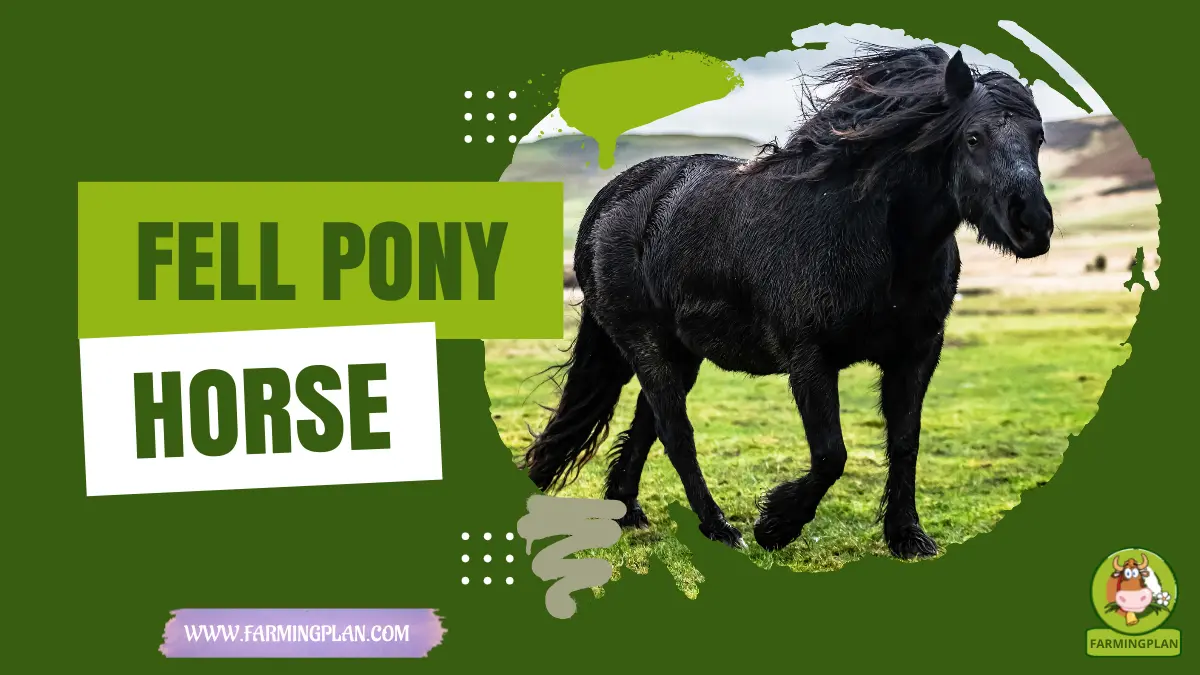
The Fell Pony displays a compact, sturdy, and powerfully muscled cob silhouette. The body is low-set and broad, featuring substantial flat bone, deep heart girth, and an unmistakable impression of quiet strength.
Breed standards mandate active, ground-covering gaits with high knee action and true hindquarter engagement, reflecting their historic duty of trotting over rocky moorland trails with heavy loads.
Conformation Standards & Anatomical Structure
The head is small, neat, and chiselled with a broad forehead, large kind eyes, and small alert ears. The neck is of moderate length, muscular and crested, flowing cleanly into well-sloped shoulders that provide excellent saddle placement.
The back is short, strong, and broad, leading into powerful loins and a rounded, sloping croup with a well-set tail. Legs are straight with clean, hard, flat bone (cannon bone measuring 8.0 to 9.0 inches), free from coarse roundness. Hooves are round, dense, blue-black horn with open heels and concave soles.
Silky feathering cascades from the fetlocks down over the hooves, protecting pastern joints from abrasive mountain rocks and coarse gorse shrubs.
Size, Weight Benchmarks & Color Variations
The official breed standard sets a strict maximum height of 14.0 hands (142.2 cm) at the withers, with most mature individuals measuring between 13.1 and 13.3 hands and weighing 850 to 1,050 lbs.
Solid black is the most common and iconic color, followed by dark brown, bay, and grey. White markings are strictly limited to a small white star on the forehead and white on the hind fetlocks.
The mane and tail are thick, long, and flowing, traditionally left unbraided to showcase natural weatherproofing.
⚡ Fell Pony Performance & Production Matrix
| Trait Benchmark | FPS Breed Standard Benchmark | Homestead / Riding Advantage | Husbandry Consideration |
|---|---|---|---|
| Withers Height | Maximum 14.0 hands | Easy mounting size with full adult carrying capacity | Requires pony/cob-sized harness, saddles, and blankets |
| Surefootedness | Iron-Hard Blue Hooves | Indestructible barefoot traction over wet rocks and mud | Requires regular 6-week farrier balance trimming |
| Mountain Hardiness | Extreme Weather Tolerance | Thrives outdoors in freezing rain and sub-zero snow | Needs shade and fly control during humid summer heat |
| Docile Temperament | 9.7 / 10 Steady & Intelligent | Safe, sensible mount for youth and nervous adults | Clever mind requires consistent, firm ground handling |
| Forage Efficiency | Superior ‘Easy Keeper’ | Thrives on rough pasture browse with minimal hay | Prone to obesity; avoid rich clover or alfalfa overfeeding |
Breed History, Heritage & North American Development
The Fell Pony shares a common ancestral heritage with the neighboring Dales Pony, evolving from native Celtic ponies inhabiting northern Britain prior to Roman colonization. Roman cavalry units based along Hadrian’s Wall introduced heavy Friesian and Iberian war horse blood, increasing the mountain ponies’ bone density and draft power.
During the Industrial Revolution, Fell Ponies served as indispensable ‘pack ponies,’ trotting in strings of thirty or forty animals hauling 220-pound panniers of lead ore, copper, and slate from remote mines down to coastal ports, returning with coal.
With the mechanization of mining and agriculture in the early twentieth century, native pony populations plummeted. In 1918, the Fell Pony Society was formed to preserve the purity of the mountain herds, establishing annual inspections on the Cumbria commons.
Today, the Fell Pony is recognized by the Rare Breeds Survival Trust and The Livestock Conservancy as a priority heritage breed, with dedicated breeding societies in the UK, Europe, and North America.
Housing, Shelter Dimensions & Winter Hardiness
Fell Ponies thrive in simple, open-air housing systems with access to spacious dry-lot paddocks. Confinement in stuffy, enclosed box stalls is contrary to their mountain heritage and can trigger stable vices.
A standard 10×12 foot or 12×12 foot box stall bedded with dust-screened pine shavings or clean straw provides ample shelter during veterinary recovery or foul weather.
Spatial Density & Enclosure Engineering
Pasture turnout is essential for physical suppleness and mental well-being. Provide at least one to two acres of grazing per pony, enclosed with safe wooden rail fencing, stone walls, or smooth polymer wire.
Avoid barbed wire, which can tangle luxurious manes and tails. Because Fell Ponies are adapted to freezing Cumbrian storms, their thick double coats protect them from sub-zero temperatures without blanketing, provided they have a dry run-in shed.
Keep paddock footing well-drained around gates and water troughs using crushed stone to protect pastern skin under feathering.
Nutritional Requirements, Daily Rations & Feeding Protocols
The Fell Pony is the quintessential ‘easy keeper’ adapted to survive on rough heather, sedges, and moorland grasses. Feeding rich, high-sugar feeds will quickly lead to equine metabolic syndrome, obesity, and laminitis.
Their baseline diet should consist entirely of mature, low-sugar grass hay (Timothy or native prairie grass) fed at 1.5% of body weight daily. For comparison with another rugged mountain breed, review our Haflinger horse care and feeding guide.
Crude Protein Benchmarks Across Life Stages
Working ponies in active trail or driving work require only a low-starch, high-protein ration balancer providing essential amino acids (lysine, methionine), copper, zinc, and selenium.
Supply free-choice plain white salt blocks and fresh water. Use grazing muzzles during spring grass flush periods to protect against pasture-induced founder.
Avoid feeding sweet feeds, apples, or molasses treats that cause rapid blood glucose surges.
Health Management, Common Diseases & Biosecurity Standards
Fell Ponies are celebrated for extraordinary soundness, tough hooves, and longevity, frequently living and working into their late twenties. However, breeders must manage **Foal Immunodeficiency Syndrome (FIS)**, an autosomal recessive fatal genetic condition once prevalent in the breed.
Thanks to modern DNA testing developed by the Animal Health Trust, carriers can be identified before mating, effectively eliminating FIS. Track equine health regulations through the USDA Animal and Plant Health Inspection Service (APHIS).
Biosecurity Protocols & Veterinary Defenses
Conduct FIS DNA testing on all breeding stock to ensure no carrier-to-carrier matings occur. Establish annual core vaccinations (rabies, tetanus, West Nile virus, EEE/WEE) and dental floating.
Maintain regular farrier trimming every six weeks. Fell Pony hooves are exceptionally dense, dark, and hard, thriving barefoot on rocky trails when properly balanced.
Inspect pastern skin under feathering regularly to prevent mud fever during extended rainy periods, applying protective barrier ointments as needed.
Breeding Management, FIS Screening & Foal Rearing
Breeding Fell Ponies requires strict adherence to FPS studbook rules and mandatory FIS DNA screening. Mating selections emphasize breed type, heavy flat bone, and calm, sensible temperaments.
Mares have a gestation period of 335 to 345 days, foaling easily and displaying protective, attentive maternal care. For related native British pony insights, explore our profile on the Chincoteague pony care and heritage guide.
Foals are born with dense coats and sturdy bone. Early imprint handling and quiet ground training establish respectful manners, teaching foals to lead quietly, stand tied, and lift their hooves without fuss.
Turn foals out in rolling, sloping pastures with other youngsters to promote natural balance, strong tendon development, and social herd hierarchy.
US Ownership Budget & Annual Maintenance Costs
Investing in a Fell Pony is an economical long-term equine commitment due to their low feed requirements, minimal veterinary issues, and barefoot hoof soundness.
The budget schedule below itemizes typical initial startup costs and recurring annual maintenance expenses for keeping a Fell Pony on a homestead.
💰 Estimated Annual Budget & Maintenance Costs (USD)
| Budget Category | Item Description & Scope | Initial Capital Outlay | Annual Recurring Expense |
|---|---|---|---|
| Registered Purebred Purchase | FPS registered pleasure gelding or classified breeding mare | $5,000 – $14,000 | $0.00 |
| Cob-Sized Tack & Harness | All-purpose cob saddle, bridle, driving harness, halters | $1,200 – $2,800 | $100 – $200 |
| Tested Grass Hay Rations | 3.0 tons of low-sugar Timothy or native grass hay | $0.00 | $800 – $1,300 |
| Ration Balancer & Minerals | Low-starch amino balancer, plain salt, vitamins | $0.00 | $300 – $550 |
| Barefoot Farrier Trimming | Routine 6-week balance trims (8 visits per year) | $0.00 | $400 – $700 |
| Veterinary Care & DNA Testing | Annual wellness exam, core vaccines, dental float, FIS DNA panel | $0.00 | $400 – $750 |
🧮 Fell Pony Daily Feed & Hay Intake Calculator
Calculate recommended daily dry grass hay (lbs), clean water intake, and estimated monthly forage costs tailored specifically for your Fell Pony.
Frequently Asked Questions (FAQ)
How much weight can a Fell Pony carry?
Despite measuring under 14 hands, a mature Fell Pony has dense bone and a broad back that easily carries adult riders up to 200–210 lbs, historically carrying 220-pound ore packs over mountain passes.
What is the difference between a Fell Pony and a Dales Pony?
Fell Ponies are slightly smaller (maximum 14.0 hands) and lighter than Dales Ponies (up to 14.2 hands). Fell Ponies originate on the western fells of Cumbria, while Dales Ponies originate on the eastern dales of Yorkshire.
What is Foal Immunodeficiency Syndrome (FIS)?
FIS is an inherited fatal genetic condition that prevents a foal from producing antibodies and red blood cells. Modern DNA testing identifies carriers, allowing breeders to completely prevent affected foals.
Are Fell Ponies good for children and beginners?
Yes. Fell Ponies possess exceptionally sensible, steady, and affectionate dispositions. They are patient mounts for children while possessing the strength and stamina to carry adults.
Can a Fell Pony be kept barefoot without shoes?
Yes, absolutely. Fell Ponies have famously tough, blue-black, dense hooves that resist chipping and wear naturally, allowing most trail and driving ponies to remain barefoot throughout their lives.
Expert Verdict & Next Steps for US Homesteaders
The Fell Pony is an authentic living treasure of the British uplands, uniting ancient mountain hardiness with honest working draft strength and an affectionate, trustworthy soul. For homesteaders and recreational riders seeking a versatile, easy-keeping partner that can ride, drive, and thrive on modest pasture, the Fell Pony stands supreme.
Before acquiring a pony, verify FPS registration papers and confirm FIS DNA clearances from both parents. Compare other versatile heritage breeds by exploring our guide on the Morgan horse care and versatility profile.
📚Agricultural Reference & Scientific Citations
Standards and physiological data referenced in this guide comply with USDA Animal and Plant Health Inspection Service (APHIS), American Veterinary Medical Association (AVMA), and the FAO Domestic Animal Diversity Information System.


