

⚡ Irish Sport Horse at a Glance: Key Specifications & Benchmarks
| Scientific Name | Equus caballus (Anglo-Irish Sport Subtype) |
| Breed Origin | Ireland (Centuries of crossbreeding Irish Draught with Thoroughbreds) |
| Official Studbook | Horse Sport Ireland (HSI, operating the Irish Sport Horse Studbook) |
| Average Mature Height | 16.0 to 17.2 hands (64 to 70 inches / 163 to 178 cm) |
| Average Mature Weight | 1,200 to 1,450 lbs (545 to 660 kg) |
| Primary Disciplines | Three-day eventing, grand prix show jumping, fox hunting, working hunter |
| WBFSH Ranking | Ranked #1 Eventing Studbook in the world for over two decades |
| Foundation Sires | Cruising, Clover Hill, King of Diamonds, Master Imp xx |
The Irish Sport Horse (ISH), historically called the Irish Hunter, is universally acknowledged as the most successful, courageous, and dominant three-day eventing breed in equestrian history. For more than two decades, the Irish Sport Horse Studbook has captured the coveted World Breeding Federation for Sport Horses (WBFSH) global number-one eventing ranking, proving its unmatched supremacy across Olympic cross-country courses and international grand prix arenas. Good predator-proofing and dry bedding safeguard Irish Sport Horse comfort in harsh weather.
Forged in the limestone-rich, emerald pastures of Ireland, the breed represents a legendary genetic formula: crossing the dense bone, calm common sense, and iron constitution of the native Irish Draught with the blazing galloping speed, athletic stamina, and refinement of the Thoroughbred. Deepen your sport horse management expertise through our comprehensive equine horses management and breed profile collection.
What sets the Irish Sport Horse apart on cross-country courses is heart and fifth-leg agility. When faced with massive solid obstacles, deep water drops, and uneven turf, an Irish horse calculates takeoff distances with calm intelligence, using its powerful Irish Draught hindquarters to power out of trouble safely.
Their brave, sensible, and generous dispositions make them beloved partners not only for elite Olympic competitors like William Fox-Pitt and Boyd Martin, but also for amateur foxhunters and adult amateur eventers nationwide.
Physical Characteristics & Breed Standards
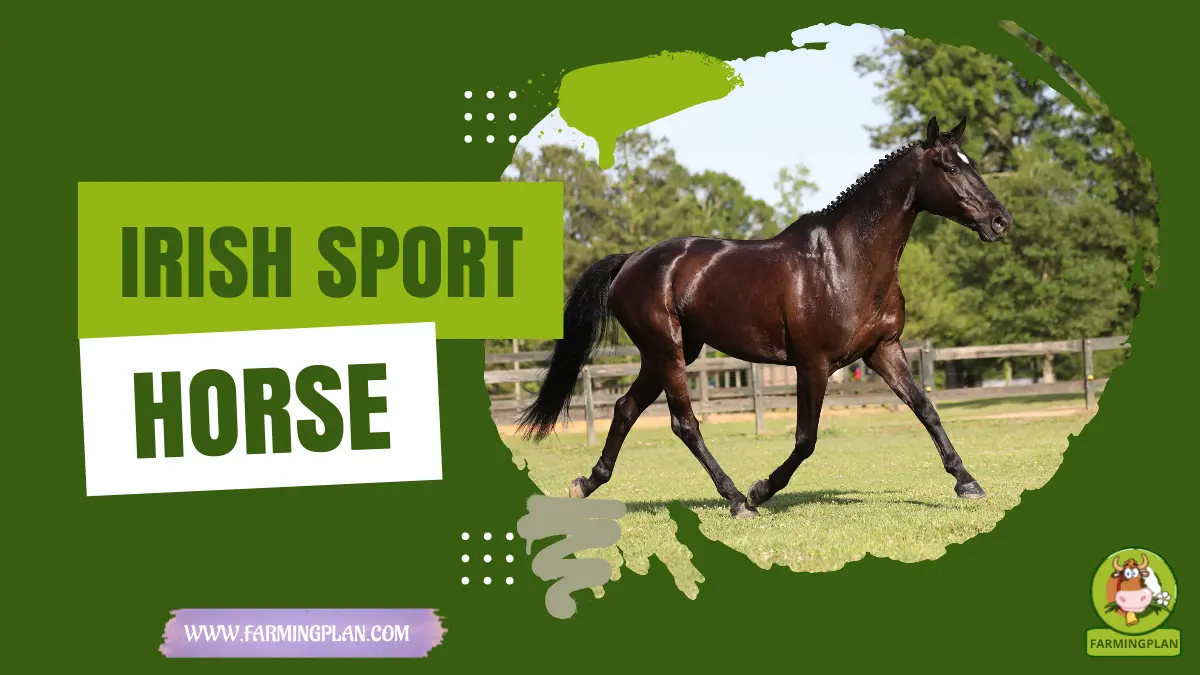
The Irish Sport Horse possesses an imposing, athletic silhouette defined by substantial bone, a deep chest, and powerful muscular quarters. The horse moves with ground-covering galloping stride, natural uphill balance, and exceptional bascule over fences.
Studbook classification judges prioritize clean bone, sloping pasterns, a strong loin connection, and a brave, intelligent eye that reflects athletic courage.
Conformation Standards & Anatomical Structure
The head is attractive and noble with a straight profile, large clear eyes radiating calm intelligence, and alert, well-set ears. The neck is long, muscular, and slightly arched, set cleanly into deep, sloping shoulders that facilitate expansive galloping reach.
The withers are prominent and well-defined, transitioning into a strong, compact back and exceptionally powerful loins. The croup is slightly sloping and well-muscled, anchoring massive propulsive thrust for jumping. Legs are straight with dense, clean, flat bone (cannon bone circumference of 8.5 to 10.0 inches) and tough, round hooves. Monitoring water quality and mineral balance directly benefits Irish Sport Horse vitality.
The chest is deep and broad, providing generous lung room for grueling four-star cross-country gallops in heavy footing.
Size, Weight Benchmarks & Color Variations
Most mature Irish Sport Horses stand between 16.0 and 17.2 hands at the withers, weighing 1,200 to 1,450 lbs.
Bay, chestnut, grey, and brown are the predominant coat colors, with black and pinto patterns appearing occasionally.
The overall physical impression is one of aristocratic power, substance, and athletic elasticity without coarseness or fragile light-boned weakness.
⚡ Irish Sport Horse Performance & Production Matrix
| Trait Benchmark | HSI Studbook Benchmark | Eventing / Farm Advantage | Husbandry Consideration |
|---|---|---|---|
| Withers Height | 16.0 – 17.2 hands | Expansive stride coverage across open cross-country terrain | Requires 12×14 foot box stalls and tall transport trailers |
| Cross-Country Heart | Legendary ‘Fifth Leg’ Agility | Calculates footing and clears complex obstacles safely | Requires consistent schooling to manage enthusiastic boldness |
| Jumping Bascule | Immense Scope & Clean Forelegs | Clears 1.40m–1.60m Olympic stadium show jumping fences | Needs high-quality arena footing to protect suspensory ligaments |
| Bone & Hoof Density | Irish Draught Bone (8.5–10 in) | Uncommon joint durability under punishing athletic impact | Maintain regular 5- to 6-week sport farrier shoeing schedule |
| Temperament Score | 9.6 / 10 Brave & Sensible | Level-headed under intense show buzzing stadium pressure | Thrives with confident, forward-thinking rider leadership |
Breed History, Heritage & North American Development
The origins of the Irish Sport Horse lie in the historic hunting shires of Ireland, where county gentlemen required athletic mounts capable of jumping massive stone walls, deep ditches, and boggy banks across rough terrain. Farmers bred their working Irish Draught mares to Thoroughbred race stallions.
The resulting crosses produced the world’s finest field hunters. In 1970, the Irish Horse Board (now Horse Sport Ireland) established the formal Irish Sport Horse Studbook, registering pedigree crosses and certifying performance stallions.
Legendary sires transformed the breed into an international legend. The Irish Draught sire King of Diamonds injected superhuman jumping power, while the Thoroughbred Master Imp xx provided blazing galloping speed. The famous grey stallion Cruising won multiple World Cup Grand Prix classes, proving ISH prowess against European warmbloods.
Today, Horse Sport Ireland coordinates international performance evaluations, exporting elite eventing and jumping athletes to Olympic teams worldwide. Practical hands-on husbandry ensures consistent results when raising Irish Sport Horse.
Housing, Shelter Dimensions & Winter Hardiness
Irish Sport Horses require clean, bright, well-ventilated stables designed for large, athletic competitors. Stalls should measure at least 12×14 feet or 14×14 feet with generous ten-foot ceilings.
Flooring should feature thick rubber mats over level concrete, bedded generously with dust-screened pine shavings or wheat straw. Clean stalls twice daily to protect respiratory health.
Spatial Density & Enclosure Engineering
Pasture turnout is vital for joint suppleness and mental well-being. Provide at least one to two acres of grazing pasture per horse, secured with safe wooden post-and-rail fencing or polymer rail.
Avoid barbed wire, which can easily slice athletic legs. In rainy or cold weather, Irish Sport Horses thrive outdoors when fitted with breathable, waterproof turnout blankets and given access to dry run-in sheds.
Maintain clean, gravel-drained paddock footing around water troughs and gates to prevent mud fever.
Nutritional Requirements, Daily Rations & Feeding Protocols
High-performance Irish Sport Horses require precision nutrition balancing energy, protein, and electrolytes to fuel rigorous conditioning gallops without causing gastrointestinal ulcers.
Feed high-grade grass hay (Timothy or Orchard mix) with moderate alfalfa content (15% to 20%) at 1.5% to 2.0% of body weight daily. Compare nutritional conditioning to other athletic sport breeds in our Thoroughbred horse athletic feeding guide.
Crude Protein Benchmarks Across Life Stages
Horses in active three-day eventing training require a low-starch, fat-supplemented performance concentrate (12% to 14% crude protein) containing beet pulp, soybean meal, flaxseed, and stabilized rice bran. Early intervention at the first sign of lethargy protects overall Irish Sport Horse flock or herd health.
Ensure constant access to clean, fresh water and free-choice cobalt-iodized salt blocks. Provide supplemental electrolytes following cross-country gallops to restore mineral balance.
Joint supplements containing glucosamine, chondroitin, and hyaluronic acid help protect articular cartilage under demanding jumping concussions.
Health Management, Common Diseases & Biosecurity Standards
Irish Sport Horses inherit the legendary soundness and heavy bone of the Irish Draught, resulting in lower rates of developmental orthopedic disease than many lighter warmblood breeds.
However, the grueling physical demands of international eventing require proactive veterinary care for tendon strains, suspensory desmitis, and foot abscesses. Track national equine biosecurity guidelines through the USDA Animal and Plant Health Inspection Service (APHIS).
Biosecurity Protocols & Veterinary Defenses
Establish an annual sports medicine wellness program with an equine veterinarian, including core vaccinations (rabies, tetanus, EEE/WEE, West Nile virus), dental floating, and targeted deworming.
Maintain professional sport farrier care on a strict five- to six-week cycle. Performance shoeing should support the heel and provide traction studs for cross-country turf courses.
Incorporate routine post-cross-country cold water icing and clay poultice wraps on lower legs to dissipate heat and minimize tendon inflammation.
Breeding Management, HSI Inspections & Foal Development
Horse Sport Ireland conducts rigorous stallion inspections, evaluating conformation, veterinary radiographs, loose jumping, and athletic movement before awarding approved breeding status. Structured culling and biosecurity protocols strengthen Irish Sport Horse genetic quality.
Mares have a gestation period of 335 to 345 days, foaling easily and displaying protective maternal devotion. For related British sport horse breeding perspectives, see our guide on the Danish Warmblood Olympic dressage and sport guide.
Foals should be raised in expansive, rolling herd pastures to encourage constant galloping, building dense bone mineralization, strong tendons, and confident social herd manners.
Early handling should include quiet leading, foot picking, and trailer loading manners, preparing the young sport horse for under-saddle training at three to four years of age.
US Ownership Budget & Annual Maintenance Costs
Investing in an Irish Sport Horse represents a premier commitment reflecting the breed’s world-leading eventing pedigree, competitive training demands, and sports medicine maintenance.
The budget schedule below itemizes typical acquisition investments and annual recurring operational expenses for managing an Irish Sport Horse.
💰 Estimated Annual Budget & Maintenance Costs (USD)
| Budget Category | Item Description & Scope | Initial Capital Outlay | Annual Recurring Expense |
|---|---|---|---|
| Competitive Sport Horse Purchase | HSI registered eventing prospect or seasoned competition mount | $15,000 – $55,000 | $0.00 |
| Cross-Country & Jumping Tack | Monoflap eventing saddle, jumping bridle, cross-country boots | $2,800 – $6,500 | $250 – $500 |
| Quality Forage & Hay Rations | 5.5 tons of tested Orchard/Timothy grass hay mix | $0.00 | $1,400 – $2,300 |
| Performance Concentrates & Joint Meds | Low-starch sport grain, flax oil, electrolytes, joint supplements | $0.00 | $650 – $1,200 |
| Professional Sport Farrier | Precision eventing shoeing with stud holes every 5–6 weeks | $0.00 | $1,200 – $2,400 |
| Sports Medicine & Veterinary Care | Annual vaccines, dental care, joint injections, Coggins, exams | $0.00 | $800 – $1,800 |
🧮 Irish Sport Horse Daily Feed & Hay Intake Calculator
Calculate recommended daily dry grass hay (lbs), clean water intake, and estimated monthly forage costs tailored specifically for your Irish Sport Horse.
Frequently Asked Questions (FAQ)
What is the breeding cross of an Irish Sport Horse?
The traditional Irish Sport Horse is produced by crossing a purebred Irish Draught with a Thoroughbred, combining the bone, calm temperament, and jumping power of the Draught with the speed and stamina of the Thoroughbred.
Why is the Irish Sport Horse ranked #1 in eventing?
The breed has dominated World Breeding Federation (WBFSH) eventing rankings for decades due to its extraordinary combination of galloping stamina, courageous cross-country ‘fifth leg’ agility, and scopey jumping power.
What is meant by an Irish horse having a ‘fifth leg’?
A ‘fifth leg’ is a traditional horseman’s term referring to an Irish horse’s uncanny natural balance, intelligence, and quick footwork that allows it to recover from awkward jumps or slippery turf without falling.
Are Irish Sport Horses suitable for amateur riders?
Yes. One of the greatest virtues inherited from the Irish Draught is a sensible, calm, and generous disposition, making Irish Sport Horses wonderful, forgiving mounts for adult amateurs.
How big does an Irish Sport Horse get?
Most Irish Sport Horses stand between 16.0 and 17.2 hands at the withers, weighing between 1,200 and 1,450 lbs, with smaller cobs measuring 15.2 hands.
Expert Verdict & Next Steps for US Homesteaders
The Irish Sport Horse is the undisputed king of three-day eventing and field hunting, uniting aristocratic Thoroughbred speed with rugged Irish Draught bone and an indomitable, courageous heart. For riders pursuing excellence over fences or across country, the Irish Sport Horse delivers the ultimate partnership.
Before purchasing an ISH, verify Horse Sport Ireland registration papers and conduct a thorough pre-purchase veterinary examination with flexions and radiographs. Compare other elite sport lineages by exploring our guide on the Swedish Warmblood dressage and jumping guide.
📚Agricultural Reference & Scientific Citations
Standards and physiological data referenced in this guide comply with USDA Animal and Plant Health Inspection Service (APHIS), American Veterinary Medical Association (AVMA), and the FAO Domestic Animal Diversity Information System.


