

⚡ Sorraia Horse at a Glance: Key Specifications & Benchmarks
| Scientific Name | Equus caballus (Ancient Iberian Primitive Subtype) |
| Historic Sanctuary | Sorraia River Basin (Coruche region, Portugal) |
| Discovered / Named By | Dr. Ruy d’Andrade in 1920 |
| Conservation Status | Critically Endangered (Fewer than 300 registered living individuals globally) |
| Average Mature Height | 14.1 to 14.3 hands (57 to 59 inches / 145 to 150 cm) |
| Average Mature Weight | 800 to 950 lbs (363 to 430 kg) |
| Exclusive Primitive Colors | Grullo (mouse dun / blue dun) and Baio (yellow dun) |
| Primitive Markings | Dorsal eel stripe, zebra leg barring, dark muzzle, bi-colored black/cream mane and tail |
The Sorraia horse is one of the rarest, oldest, and most genetically fascinating equine populations on the planet. Recognized by zoologists and geneticists as a direct living descendant of the wild tarpan-like equines depicted in Upper Paleolithic Iberian cave art over 20,000 years ago, this primitive survivor was rediscovered in 1920 by Portuguese zoologist and breeder Dr. Ruy d’Andrade grazing wild along the floodplains of the Sorraia River. Clean housing, fresh water, and balanced nutrition remain essential for Sorraia Horse productivity.
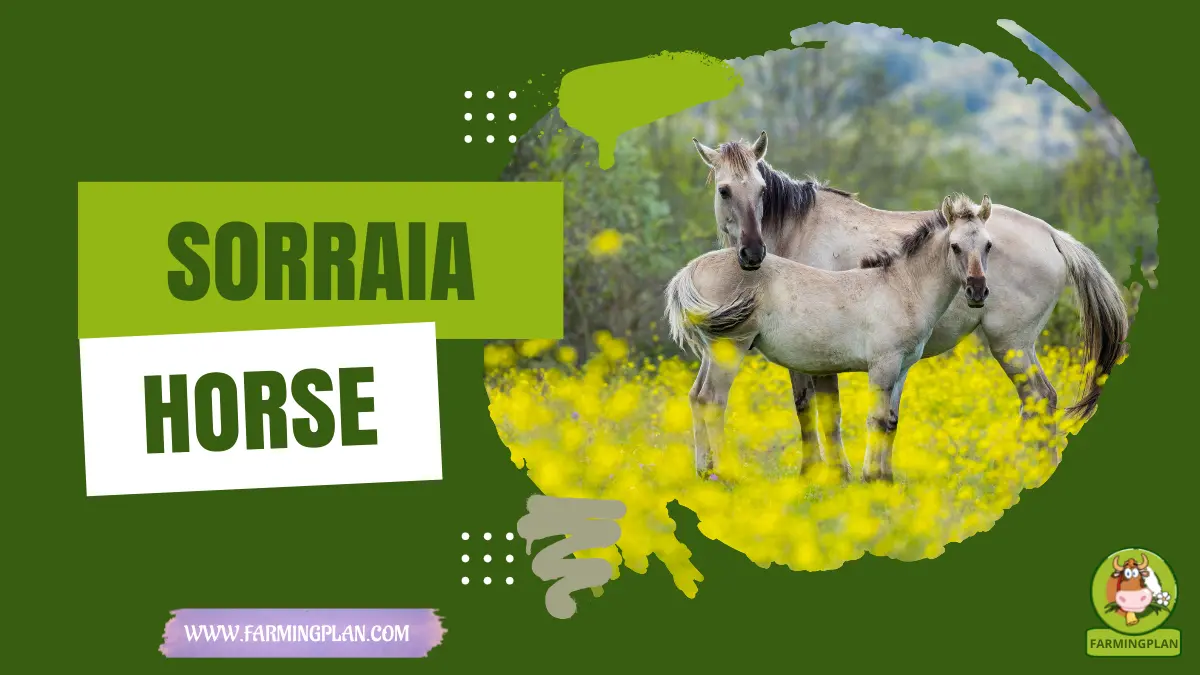
Defined by its exclusive grullo and dun coloration, striking zebra leg barring, bold dorsal eel stripe, and bi-colored mane, the Sorraia represents the ancient ancestral prototype of both the Andalusian and Lusitano breeds. Expand your equine preservation knowledge through our equine horses management and breed profile collection.
With fewer than 300 registered living individuals surviving worldwide, the Sorraia is in critical danger of extinction. Dedicated conservationists across Portugal, Germany, and North America maintain strict breeding reserves to protect this living fossil of prehistoric Europe.
Despite centuries of feral survival on thorny scrub brush, domesticated Sorraias display remarkable intelligence, surefooted agility, and deep loyalty to gentle handlers, making them capable working ranch horses and surefooted trail mounts. Tracking feed intake and body condition supports long-term Sorraia Horse performance.
Physical Characteristics & Breed Standards
The Sorraia horse possesses an unmistakable primitive silhouette that directly mirrors wild prehistoric equines. The body is compact, dry, and sinewy, built for extreme energy efficiency across arid, resource-scarce landscapes.
Evaluators look for unrefined primitive characteristics, including a long sub-convex head, light bone density paired with iron hardness, and deep chest proportions that reflect wild survival adaptations.
Conformation Standards & Anatomical Structure
The head is long and lean with a distinctly convex (Roman) profile, large almond-shaped eyes set high on the skull, and long, alert ears frequently edged in black with dark tips. The neck is medium-long, arched, and carried low to horizontal. Following biosecurity best practices reduces disease risk in any Sorraia Horse operation.
The withers are well-defined, transitioning into a straight, strong back and a sloping, narrow croup with a low tail-set. The chest is deep yet relatively narrow between the front legs, allowing agile zigzag movement through thorny brush. Legs are clean, dry, and flat-boned with tough, upright dark hooves.
The mane and tail are bi-colored, featuring light-colored outer guard hairs framing a dark central stripe, an ancient camouflage trait found in wild Przewalski horses.
Size, Weight Benchmarks & Color Variations
Mature Sorraias stand 14.1 to 14.3 hands at the withers, rarely exceeding 15.0 hands, weighing 800 to 950 lbs. Seasonal adjustments to shelter and diet keep Sorraia Horse thriving year-round.
Coat colors are strictly restricted to primitive dun variants: grullo (ash-grey or blue-dun) and baio (creamy yellow-dun). White markings on the face and legs are strictly prohibited in the studbook.
Primitive markings are mandatory: a dark black dorsal stripe running from poll to tail tip, dark face mask, zebra striping across knees and hocks, and horizontal barring across the withers.
⚡ Sorraia Horse Performance & Production Matrix
| Trait Benchmark | Sorraia Breed Standard | Homestead / Conservation Value | Care Consideration |
|---|---|---|---|
| Withers Height | 14.1 – 14.3 hands | Compact size with low nutritional maintenance footprint | Requires pony/cob-sized tack and equipment |
| Primitive Genetics | Homozygous Dun / Grullo | Direct living link to Upper Paleolithic Iberian horses | Zero white markings permitted in studbook registration |
| Forage Efficiency | Extreme Primitive Converter | Survives and thrives on rough pasture and brush browse | Severe risk of founder on improved, lush clover pastures |
| Hoof Hardness | Iron-Hard Upright Horn | Virtually indestructible barefoot durability on rocks | Requires regular 6-week trimming to prevent upright steepness |
| Conservation Status | Critically Endangered (Fewer than 300) | Vital genetic preservation and scientific research | Strict studbook pairing required to manage inbreeding |
Breed History, Heritage & North American Development
Paleontological excavations across Spain and Portugal demonstrate that primitive dun horses inhabited the Iberian Peninsula throughout the Pleistocene epoch, serving as vital hunting quarry for early human populations. Prehistoric cave paintings at Altamira and Escoural depict horses with Roman noses and striped coats identical to modern Sorraias. Proper record-keeping makes breeding and culling decisions easier for Sorraia Horse keepers.
Following the agricultural development of the Iberian Peninsula, these feral horses retreated to the remote, malaria-ridden floodplains of the Sorraia River basin in southern Portugal. In 1920, Dr. Ruy d’Andrade observed a small wild herd grazing thorny brush and recognized their primitive phenotypic purity.
D’Andrade established a foundation preservation herd at his Quinta do Brejo estate, collecting seven mares and four stallions to save the lineage. Modern DNA studies confirmed that Sorraias carry ancestral mitochondrial DNA haplotypes shared with primitive New World Mustangs, proving they accompanied early Spanish conquistadors to the Americas.
Today, the Sorraia Mustang Studbook in Germany and Portuguese preservation societies coordinate international conservation efforts to prevent genetic bottlenecks. Providing adequate space and ventilation prevents common stress issues in Sorraia Horse.
Housing, Shelter Dimensions & Winter Hardiness
Sorraia horses thrive best in semi-feral pasture reserves or spacious dry-lot paddocks with herd companionship. Confinement in enclosed, dark stalls is psychologically stressful for this wild-adapted primitive breed.
If stabling is necessary during veterinary recovery, provide large open-air pipe pens or 12×14 foot open-front stalls bedded with clean straw or wood shavings.
Spatial Density & Enclosure Engineering
Paddock fencing must be tall and durable. Sorraias possess incredible leaping agility and feral flight reflexes, easily clearing standard four-foot fences if panicked. Sturdy five- to six-foot wooden post-and-rail or non-climb wire fencing is essential. Understanding breed-specific traits helps maximize Sorraia Horse longevity and output.
Stocking density should allow ample grazing space, but pastures must consist of native, coarse prairie grasses rather than fertilized, sugar-rich dairy pastures. In variable weather, provide a three-sided run-in shed for shelter from rain.
Provide salt licks and natural mineral blocks in turnout paddocks to satisfy their natural urge to browse minerals.
Nutritional Requirements, Daily Rations & Feeding Protocols
The Sorraia horse possesses a hyper-efficient primitive digestive system designed to survive on woody shrubs, rushes, and coarse brush. Overfeeding rich, domestic horse feeds is toxic to their metabolism. Routine preventive care saves time and lowers veterinary costs for Sorraia Horse.
Their diet should consist exclusively of tested, mature grass hay (Timothy or coarse Bermuda) with low non-structural carbohydrates (NSC under 9%). Compare primitive equine feeding strategies to feral ponies in our Chincoteague pony care and nutrition guide.
Crude Protein Benchmarks Across Life Stages
Never feed grain, sweet feeds, or molasses to a Sorraia. A simple low-calorie ration balancer providing essential amino acids, copper, and zinc is all that is required to supplement poor-quality forage.
Provide clean, fresh water and free-choice white salt. During spring grass surges, strictly enforce dry-lot confinement or grazing muzzles to prevent catastrophic laminitis and founder. Matching forage or ration quality to life stage optimizes Sorraia Horse growth.
In winter, supply extra rough-stemmed grass hay to generate internal cecal fermentation heat without raising blood glucose levels.
Health Management, Common Diseases & Biosecurity Standards
Sorraias are exceptionally sound horses with naturally robust immune systems and iron legs that rarely suffer from soft-tissue sprains. However, domestic management presents two primary health threats: metabolic founder and genetic inbreeding depression.
Because the global population descends from a small foundation herd, genetic diversity must be monitored meticulously. Track equine wellness and disease surveillance through the USDA Animal and Plant Health Inspection Service (APHIS). Gradual dietary transitions protect digestive stability in Sorraia Horse.
Biosecurity Protocols & Veterinary Defenses
Establish an annual preventative health program with your equine veterinarian, including core vaccinations (rabies, tetanus, West Nile virus, EEE/WEE), dental floating, and targeted deworming based on fecal egg counts.
Farrier care should focus on natural barefoot trimming every six weeks. Sorraia hooves are naturally upright, dense, and concave; trimming must maintain natural balance without forcing unnatural low-heel angles.
Conduct routine body condition checks to ensure horses remain lean, between 4.5 and 5.0 on the Henneke scale. Selecting healthy foundation stock is the cornerstone of successful Sorraia Horse management.
Breeding Management, Conservation Genetics & Foal Rearing
Breeding Sorraias is an urgent international conservation mission managed by scientific studbooks. Matings are calculated using pedigree coefficients of relationship to maximize heterozygosity and preserve rare alleles.
Sorraia mares are fertile, easy-foaling mothers across their 335- to 345-day gestation period, fiercely defending their foals from perceived threats. For related Iberian breeding perspectives, review our profile on the Andalusian horse dressage standards and care.
Foals are born with pronounced zebra striping and dark dorsal bands. While naturally cautious and timid around strangers, patient imprint training and gentle handling produce deeply loyal, cooperative domestic partners. Good predator-proofing and dry bedding safeguard Sorraia Horse comfort in harsh weather.
Provide growing weanlings with spacious, sloping terrain to foster natural bone density and muscular agility.
US Ownership Budget & Annual Maintenance Costs
Acquiring a Sorraia horse is primarily an act of historical stewardship and conservation. While feed and farrier costs are remarkably low due to their primitive efficiency, acquisition and specialized genetic testing require dedicated funding.
The budget schedule below itemizes typical investments and annual operational expenses for maintaining a Sorraia horse in a conservation breeding program. Monitoring water quality and mineral balance directly benefits Sorraia Horse vitality.
💰 Estimated Annual Budget & Maintenance Costs (USD)
| Budget Category | Item Description & Scope | Initial Capital Outlay | Annual Recurring Expense |
|---|---|---|---|
| Conservation Breeding Stock | Registered purebred Sorraia mare, stallion, or conservation foal | $5,000 – $14,000 | $0.00 |
| Tack & Protective Gear | Cob-sized trail saddle, bridle, halter, leads, and sheets | $1,000 – $2,500 | $100 – $200 |
| Coarse Grass Hay Rations | 3.0 tons of low-sugar Timothy or native prairie grass hay | $0.00 | $800 – $1,300 |
| Ration Balancer & Minerals | Low-starch amino balancer, plain salt, copper/zinc supplements | $0.00 | $300 – $500 |
| Barefoot Farrier Trimming | Routine 6-week balance trims (8 visits per year) | $0.00 | $400 – $700 |
| Veterinary Care & DNA Profiling | Annual vaccines, dental float, fecal egg counts, genetic panels | $0.00 | $450 – $850 |
🧮 Sorraia Horse Daily Feed & Hay Intake Calculator
Calculate recommended daily dry grass hay (lbs), clean water intake, and estimated monthly forage costs tailored specifically for your Sorraia Horse.
Frequently Asked Questions (FAQ)
What is the origin of the Sorraia horse?
The Sorraia is an ancient primitive Iberian horse discovered living wild in the Sorraia River basin of Portugal in 1920 by Dr. Ruy d’Andrade, representing a direct living descendant of prehistoric European wild horses.
How many Sorraia horses exist in the world today?
The Sorraia is critically endangered, with fewer than 300 living individuals registered globally across small conservation herds in Portugal, Germany, and North America.
What colors do Sorraia horses come in?
Sorraias occur exclusively in primitive dun colors: grullo (ash-grey or blue-dun) and baio (yellow-dun), always featuring dark dorsal stripes, zebra-striped legs, and bi-colored manes with zero white markings.
Can a Sorraia horse be ridden under saddle?
Yes. When raised with gentle, patient handling, Sorraias are intelligent, calm, and surefooted riding horses that excel on rugged mountain trails and light ranch work.
Why are Sorraias prone to founder on farm pastures?
Sorraias evolved to survive on coarse, sparse brush. The high sugars in lush, fertilized domestic grass pastures easily trigger insulin spikes and metabolic laminitis, requiring dry-lot management.
Expert Verdict & Next Steps for US Homesteaders
The Sorraia horse is an irreplaceable living relic of prehistoric equestrian history. For conservationists and dedicated equestrians passionate about safeguarding rare heritage genetics, preserving a Sorraia is a noble and deeply rewarding endeavor.
Before acquiring a Sorraia, ensure you have secure dry-lot paddocks with low-sugar forage and consult registered studbook authorities. Compare other historic European breeds by exploring our guide on the Royal Dutch Friesian horse heritage profile.
📚Agricultural Reference & Scientific Citations
Standards and physiological data referenced in this guide comply with USDA Animal and Plant Health Inspection Service (APHIS), American Veterinary Medical Association (AVMA), and the FAO Domestic Animal Diversity Information System.


