

⚡ Peruvian Paso Horse at a Glance: Key Specifications & Benchmarks
| Scientific Classification | Equus caballus (South American Naturally Gaited Landrace) |
| Height at Withers | 14.1 to 15.2 hands (144 to 157 cm); refined medium frame |
| Mature Body Weight | 900 to 1,150 lbs (410 to 520 kg) |
| Signature Ambling Gaits | Paso llano (isometric 4-beat) and sobreandando (lateral 4-beat) |
| Unique Foreleg Motion | Término: fluid outward winging movement originating at the shoulder |
| Average Lifespan | 25 to 30+ years under attentive equestrian management |
| Core Behavioral Trait | Brío: controlled fiery energy and eager willingness under saddle |
| Primary Equestrian Utility | Ultra-smooth distance trail riding, parades, traditional exhibition |
The Peruvian Paso horse is celebrated across the equestrian world as the smoothest riding horse on earth. Bred in isolation for more than four centuries along the coastal valleys and desert haciendas of Peru, this magnificent equine combines natural four-beat ambling gaits with noble presence and animated leg action. Good predator-proofing and dry bedding safeguard Peruvian Paso Horse comfort in harsh weather.
Unlike trotting breeds or artificial gaited show horses examined across our equine and horse management hub, the Peruvian Paso inherits its gaits entirely through genetic programming. From the day of birth, foals move with the signature lateral four-beat footfall without ever requiring weighted shoes, action devices, or artificial training aids. Monitoring water quality and mineral balance directly benefits Peruvian Paso Horse vitality.
For trail riders seeking total comfort without vertical bouncing or lower-back jarring, the Peruvian Paso is an unmatched partner. Understanding their unique biomechanics, high metabolic efficiency, and spirited “brío” temperament is essential for successful ownership. This comprehensive manual details training, nutrition, and veterinary management for North American riders.
Physical Characteristics & Breed Standards
Breed standards maintained by the North American Peruvian Horse Association (NAPHA) emphasize harmonious balance, deep muscular conformation, and expressive Iberian heritage. Every anatomical feature supports the horse’s ability to maintain high collection and ground-skimming forward velocity. Practical hands-on husbandry ensures consistent results when raising Peruvian Paso Horse.
Conformation Standards & Término Mechanics
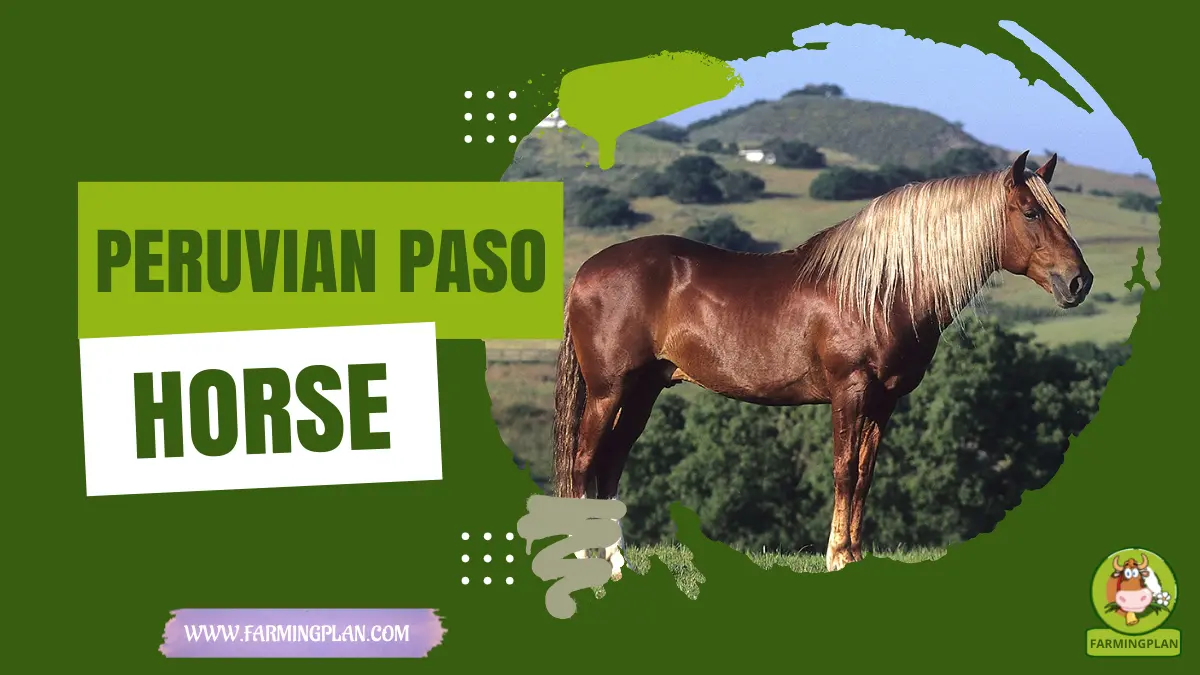
The head is medium-sized, refined, and aristocratic, displaying a straight or slightly convex profile, wide-set luminous eyes, and fine, mobile ears. The neck is arched, muscular, and set high into strong withers. The back is short, strong, and well-muscled, blending into a powerful, sloping croup with a low-set, tightly clamped tail. Early intervention at the first sign of lethargy protects overall Peruvian Paso Horse flock or herd health.
The chest is broad and deep, housing expansive cardiopulmonary reserves. The forelegs exhibit the signature “término”—a graceful outward swinging motion of the lower leg reminiscent of a swimmer’s arm stroke, originating from a loose, flexible shoulder. The hind legs feature strong hocks set slightly under the body, absorbing ground shocks and driving the four-beat gait.
Size Benchmarks & Recognized Coat Colors
Mature Peruvian Pasos stand between 14.1 and 15.2 hands (144 to 157 cm) at the withers and weigh between 900 and 1,150 pounds. Recognized coat colors include chestnut, bay, black, brown, gray, buckskin, palomino, and roan. Mane and tail hair is remarkably fine, abundant, and flowing, frequently reaching well below the knees and hocks. Structured culling and biosecurity protocols strengthen Peruvian Paso Horse genetic quality.
⚡ Peruvian Paso Horse Performance & Production Matrix
| Performance Parameter | Standard Breed Benchmark | Show Ring Target | Management Challenge |
|---|---|---|---|
| Paso Llano Cadence | Isometric 4-beat lateral rhythm | Zero vertical saddle bounce | Maintaining balance on steep descents |
| Término Leg Extension | Fluid outward sweep from shoulder | High symmetrical arc | Preventing interference on narrow trails |
| Brío Energy Level | High controlled willingness | Responsive to whisper aids | Anxiety under nervous or harsh riders |
| Hoof Angle & Horn Texture | Natural 50°–52° balanced angle | Barefoot sound on rocky footing | Prone to long toe / low heel if neglected |
| Forage Efficiency | Thrives on modest grass hay | Lean, muscular athletic tone | Susceptible to insulin resistance on grain |
Breed History, Heritage & North American Development
The Peruvian Paso descends from Iberian horses brought to the Americas by Spanish conquistadors during the 16th century, primarily the Spanish Jennet, Barb, and Andalusian. While horses in other regions were bred for draft work or racing gallops, Peruvian hacienda owners needed mounts capable of traveling across vast desert estates and rocky Andean foothills in total comfort. Maintaining clean feeders and sanitized equipment supports sustainable Peruvian Paso Horse care.
Peruvian breeders rigorously culled any equine that trotted. By selecting exclusively for horses that exhibited the completely smooth four-beat amble, breeders fixed the unique genetics of the paso llano. Because coastal Peru is bordered by the Pacific Ocean and towering mountains, the breed remained geographically isolated, preserving purity for four centuries.
Agrarian land reforms in Peru during the late 1960s threatened many historic hacienda breeding studs. Forward-thinking American horse enthusiasts recognized the crisis, importing foundation stallions and mares into California, Texas, and Oregon to safeguard the breed’s genetic future. Consistent daily observation helps keepers spot early changes in Peruvian Paso Horse health and behavior.
Today, the North American Peruvian Horse Association governs breeding inspections, youth divisions, and regional championships. The breed is declared an official Cultural Heritage of the Nation in Peru, with North American enthusiasts working in close partnership with Peruvian breeders to maintain traditional standards.
Housing, Shelter Dimensions & Winter Hardiness
Peruvian Pasos are hardy, social animals that thrive when provided daily turnout and natural herd interaction. Confining a high-energy gaited horse to a small stall leads to boredom, stall weaving, and muscular stiffness. Clean housing, fresh water, and balanced nutrition remain essential for Peruvian Paso Horse productivity.
Stall Design & Turnout Requirements
Standard box stalls should measure at least 12×12 feet, featuring solid wood kickboards up to 4.5 feet and open metal grillwork above to allow horses to see herdmates. Paddock turnout should provide at least 1.5 acres per horse under rotational grazing, surrounded by 48- to 54-inch non-climb diamond wire or smooth wood rail fencing. Tracking feed intake and body condition supports long-term Peruvian Paso Horse performance.
Although native to desert and coastal climates, Peruvian Pasos adapt well to cold North American winters, growing a dense, protective winter coat. They tolerate temperatures down to 0°F (-18°C) provided they have access to an open three-sided run-in shed (12×14 feet) bedded with dry straw or shavings.
In hot summer conditions, their thin skin and fine hair facilitate efficient heat dissipation through sweat. However, horses in arid southwestern regions require shaded loafing areas and daily electrolyte replenishment to prevent dehydration. Following biosecurity best practices reduces disease risk in any Peruvian Paso Horse operation.
Nutritional Requirements, Daily Rations & Feeding Protocols
Evolving on arid Peruvian coastal pastures, the Peruvian Paso has an exceptionally efficient metabolism. Feeding them high-starch commercial sweet feeds or lush clover pastures will quickly lead to obesity, cresty neck development, and laminitis. Seasonal adjustments to shelter and diet keep Peruvian Paso Horse thriving year-round.
Forage Guidelines & Low-Starch Feeding
The foundation of the Peruvian Paso diet is clean, mature grass hay (timothy, bermuda grass, or teff) fed at 1.5% to 2.0% of body weight daily (14 to 20 lbs per adult horse). Test hay to ensure Non-Structural Carbohydrates (NSC) remain below 11%.
Supply a concentrated, low-calorie ration balancer pellet (1.0 to 1.5 lbs daily) to provide bioavailable copper, zinc, selenium, and vitamin E without surplus calories. Compare nutritional approaches with the American Plantation Walking Horse guide. Proper record-keeping makes breeding and culling decisions easier for Peruvian Paso Horse keepers.
Provide continuous access to fresh drinking water and a loose white salt block. During strenuous trail rides across mountain elevations, supplement with water-soluble electrolytes to maintain electrolyte balance. Providing adequate space and ventilation prevents common stress issues in Peruvian Paso Horse.
Health Management, Common Diseases & Biosecurity Standards
While generally long-lived and sound, Peruvian Pasos have unique anatomical and genetic predispositions that require educated veterinary and farrier attention.
DSLD / ESPA Screening & Farrier Maintenance
Degenerative Suspensory Ligament Desmitis (DSLD), also known as Equine Systemic Proteoglycan Accumulation (ESPA), is an inherited condition recognized in Peruvian Pasos and several other breeds. It involves progressive degeneration of the suspensory ligaments in the lower limbs. Screen breeding stock carefully through veterinary ultrasound and avoid breeding horses showing dropped fetlocks or heat in ligament branches. Understanding breed-specific traits helps maximize Peruvian Paso Horse longevity and output.
Maintain a strict 5- to 6-week farrier trimming schedule. Because término swings the lower leg outward, farriers must never attempt to artificially straighten the gait by unbalancing the foot. Trim the hoof flat and true to its natural coronary band axis. Follow national health guidelines through the USDA APHIS Equine Disease Surveillance Program.
Administer annual core vaccinations against Tetanus, Rabies, West Nile Virus, and Sleeping Sickness. Perform semi-annual dental checks to rasp sharp molar hooks that interfere with the bit during collection. Routine preventive care saves time and lowers veterinary costs for Peruvian Paso Horse.
Breeding Management, Incubation & Offspring Care
Peruvian Paso mares are exceptional mothers with high conception rates and milk yields. Foals inherit the genetic drive to amble immediately, demonstrating the four-beat paso llano within hours of birth. To evaluate alternative bloodlines and practical management routines, check our Sorraia Horse overview. Matching forage or ration quality to life stage optimizes Peruvian Paso Horse growth.
Brío Development & Foal Training Protocols
Equine gestation averages 335 to 345 days. Broodmares foal easily in clean pasture shelters or 14×14-foot foaling stalls. New foals are lively, intelligent, and possess natural curiosity toward humans.
Trainers must cultivate “brío” through patient, respectful groundwork. Harsh reprimands or aggressive force ruin the sensitive spirit of a Peruvian Paso, causing stubbornness or defensive anxiety. Compare gaited breed handling with the Mangalarga Marchador horse guide. Gradual dietary transitions protect digestive stability in Peruvian Paso Horse.
Wean foals between 5 and 6 months into rolling pastures with peer companions. Do not start young horses under saddle until 3.5 to 4 years of age, ensuring complete growth plate closure in the spine and hocks. Selecting healthy foundation stock is the cornerstone of successful Peruvian Paso Horse management.
US Ownership Budget & Annual Maintenance Costs
Peruvian Pasos are moderately priced in the US gaited horse market. Well-started trail geldings range from $4,500 to $9,500, while breeding stock and championship show mounts command $12,000 to $25,000.
⚡ Estimated Annual Budget & Maintenance Costs (USD)
| Expense Category | Estimated Annual Cost Range (USD) | Operational Cost Efficiency Strategy |
|---|---|---|
| Peruvian Paso Horse Purchase | $4,500.00 – $14,000.00 initial asset | Acquire vetted trail horses from established NAPHA breeders |
| Quality Low-Sugar Grass Hay | $1,000.00 – $1,800.00 per horse | Source tested grass hay in bulk loads directly from farmers |
| Farrier Trimming (Every 6 Wks) | $400.00 – $700.00 per horse | Maintain natural barefoot balance to eliminate shoeing costs |
| Ration Balancer & Trace Salt | $250.00 – $450.00 per horse | Avoid sugary sweet feeds to reduce feed waste and metabolic vet visits |
| Veterinary, Vaccinations & Dental | $450.00 – $850.00 annual wellness | Enroll in preventative clinic wellness wellness plans |
🧮 Peruvian Paso Horse Daily Feed & Hay Intake Calculator
Calculate recommended daily dry grass hay (lbs), clean water intake, and estimated monthly forage costs tailored specifically for your Peruvian Paso Horse.
Frequently Asked Questions (FAQ)
What is the paso llano gait?
The paso llano is a completely natural, lateral four-beat ambling gait unique to the Peruvian Paso horse. Each foot strikes the ground independently in an isometric rhythm, completely eliminating vertical saddle bounce and providing an exceptionally smooth ride.
What does término mean in Peruvian Paso horses?
Término is the graceful, outward swinging motion of the front legs during movement, originating from the shoulder. It resembles the arm stroke of a swimmer and is a prized breed hallmark that does not cause physical lameness.
What is brío in the Peruvian Paso?
Brío is the Peruvian term describing the horse’s controlled fiery spirit, intense energy, and eager willingness to work cooperatively with its rider. A horse with true brío is sensitive, responsive, and completely manageable.
Do Peruvian Paso horses require special horseshoes?
No, Peruvian Pasos do not require weighted shoes or action devices. Their smooth gaits are 100% natural and inherited genetically. Many Peruvian Pasos perform exceptionally well completely barefoot on natural trails.
Can Peruvian Paso horses trot or canter?
Purebred Peruvian Pasos are genetically programmed to amble rather than trot. While they can perform a smooth, collected canter (galope), they instinctively default to their four-beat lateral gaits when traveling forward.
Expert Verdict & Next Steps
The Peruvian Paso horse is a masterpiece of equine genetic selection, offering an unmatched combination of smooth riding comfort, historic nobility, and spirited intelligence. For riders seeking relief from back pain or simply looking to enjoy the backcountry in supreme comfort, the Peruvian Paso has no equal. Good predator-proofing and dry bedding safeguard Peruvian Paso Horse comfort in harsh weather.
By respecting their sensitive nature, maintaining disciplined low-sugar nutrition, and honoring their unique biomechanics, horse owners will enjoy an extraordinary riding partnership. For broader operational management across farm livestock and equine operations, explore our farm livestock husbandry and enterprise guide.
📚Agricultural Reference & Scientific Citations
Standards and physiological data referenced in this guide comply with USDA Animal and Plant Health Inspection Service (APHIS), American Veterinary Medical Association (AVMA), and the FAO Domestic Animal Diversity Information System.


