

⚡ Birman Cat at a Glance: Key Specifications & Benchmarks
| Scientific Classification | Felis catus (Sacred Cat of Burma, refined in France) |
| Breed Recognition & Class | Championship status across CFA, TICA, and FIFe |
| Adult Body Weight | Males: 9 to 14 lbs (4.1 to 6.4 kg); Females: 6 to 10 lbs (2.7 to 4.5 kg) |
| Coat Architecture | Semi-long, silken texture with heavy neck ruff and minimal undercoat |
| Defining Marking Mandate | Symmetrical pure white gloves on front paws and laces on rear hocks |
| Temperament & Drive | Gentle, affectionate, docile, quiet, inquisitive, and companion-oriented |
| Average Lifespan | 14 to 18 years under attentive veterinary care and nutrition |
| Homestead Lifestyle Suitability | Indoor companion; peaceful coexistence with dogs and quiet homesteads |
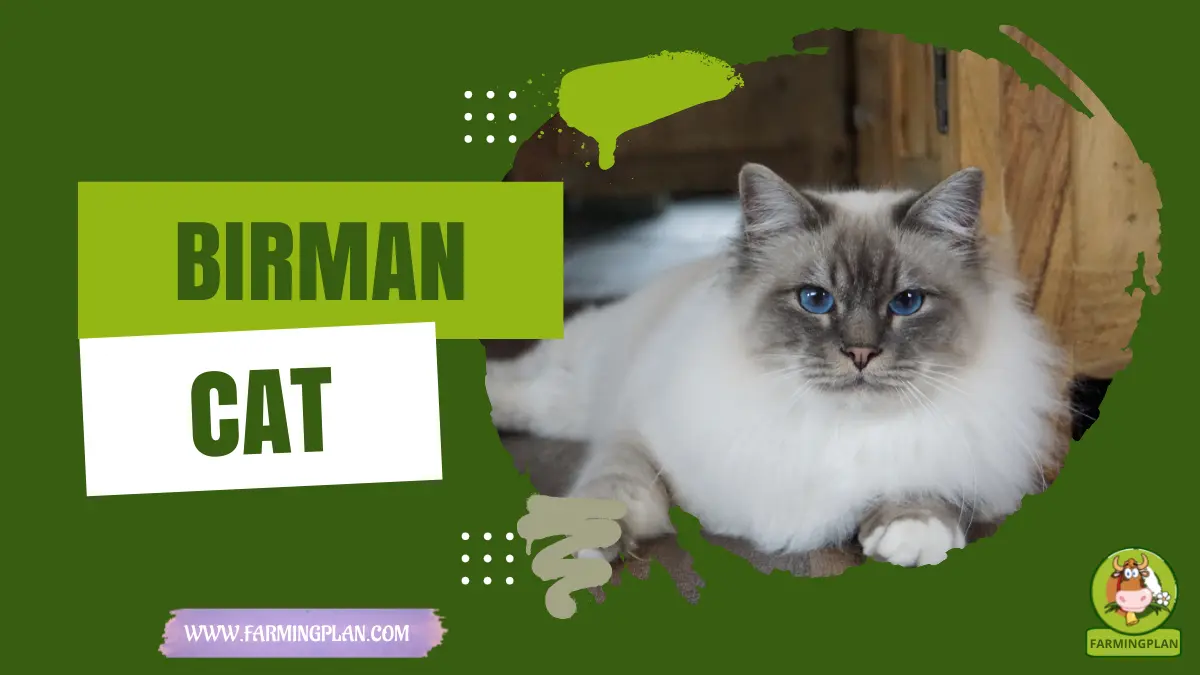
The Birman, historically celebrated as the “Sacred Cat of Burma,” exudes an aura of serenity, legendary mystique, and striking physical beauty. Characterized by sapphire-blue eyes, a golden-toned body, rich point pigmentation, and spotless pure white “gloves” on all four paws, the Birman has charmed companion animal enthusiasts for over a century. Structured culling and biosecurity protocols strengthen Birman Cat genetic quality.
For homesteaders and rural families seeking an affectionate, tranquil house companion through our feline breed and homestead cat care guides, the Birman offers an ideal balance of gentle temperament and surprisingly low-maintenance coat upkeep compared to dense-coated Persian breeds. Maintaining clean feeders and sanitized equipment supports sustainable Birman Cat care.
Unlike aloof or hyperactive felines, Birmans thrive on steady human companionship. They greet owners at the door with soft chirping vocalizations and comfortably share their living quarters with children and well-trained farm dogs. Their laid-back disposition makes them exceptional indoor housemates on busy farmsteads.
However, rural property owners must recognize that the Birman is not suited to life as an outdoor rodent-control mouser. Their trusting, non-aggressive temperament and lack of street-smart defensiveness make them vulnerable to territorial farm barn cats, predators, and accidental livestock encounters. Consistent daily observation helps keepers spot early changes in Birman Cat health and behavior.
Physical Characteristics & Breed Standards
The Cat Fanciers Association (CFA) breed standard dictates a cat of medium to large substance, with a stocky, well-muscled body set low on heavy-boned legs. The head is broad, rounded, and modified wedge-shaped with prominent cheeks and a Roman nose that features a gentle downward curve in profile. Clean housing, fresh water, and balanced nutrition remain essential for Birman Cat productivity.
The White Gloves & Gauntlets Standard
The defining breed characteristic is the immaculate white gloving on all feet. The front paws must display symmetrical white gloves ending at the palm joint. On the hind paws, the white must extend up the back of the hock joint, tapering into inverted “V” points known as gauntlets or laces. Asymmetry or dark spots within the gloves constitute severe judging faults.
The eyes are almost round, spaced widely apart, and must exhibit deep, intense sapphire blue coloration. The body fur is semi-long to long, silken in texture, with a luxuriant ruff around the neck and a heavily furred plume tail. Point colors include seal, chocolate, blue, lilac, red, and cream points, along with tortoiseshell and lynx patterns. Tracking feed intake and body condition supports long-term Birman Cat performance.
⚡ Birman Cat Performance & Production Matrix
| Point Variation | Body Shading Tone | Grooming Requirement | Indoor Companion Aptitude |
|---|---|---|---|
| Seal Point | Warm pale fawn with dark brown points | Twice weekly comb (silky texture) | High loyalty; calm lap cat for rural homes |
| Blue Point | Cool bluish-white with slate points | Twice weekly brush; minimal undercoat | Gentle companion; peaceful with farm dogs |
| Chocolate Point | Ivory torso with milk-chocolate points | Weekly combing; low matting index | Playful, curious explorer of safe indoor spaces |
| Lilac Point | Glacial white with frosty grey-pink points | Weekly comb; soft silky guard hair | Very affectionate; sensitive to loud noises |
Breed History, Heritage & North American Development
The romantic legend of the Birman centers on the Temple of Lao-Tsun in ancient Burma (Myanmar). According to lore, the temple priest Mun-Ha worshipped before the golden sapphire-eyed goddess Tsun-Kyan-Kse, guarded by pure white temple cats. When the priest was mortally wounded during an attack, his faithful cat Sinh jumped upon his chest. Following biosecurity best practices reduces disease risk in any Birman Cat operation.
As the priest’s soul passed, Sinh’s yellow eyes transformed to radiant sapphire blue, his white coat turned golden like the goddess, and his paws remained pure white where they touched the holy priest. Historical records show that the first documented pair was exported from Burma to France around 1919.
French breeders successfully registered the “Sacré de Birmanie” in 1925. However, World War II devastated European catteries, leaving only two surviving Birmans at war’s end. Through careful, documented outcrosses with Persians and Siamese, French and Swiss breeders rescued the breed from extinction. Seasonal adjustments to shelter and diet keep Birman Cat thriving year-round.
The breed arrived in the United States in 1959, achieving CFA championship recognition in 1967. Today, Birmans are cherished across North America for their steadfast devotion, peaceful household demeanor, and iconic white gloves.
Housing, Living Environment & Climate Hardiness
Birmans are strictly indoor companions. Their silky fur, although semi-long, lacks the dense grease and heavy undercoat required to repel drenching rain and sub-zero farm weather. They must be housed in comfortable, climate-controlled farmhouses maintained between 68°F and 75°F. Proper record-keeping makes breeding and culling decisions easier for Birman Cat keepers.
Environmental Security & Low-Stress Enrichment
Because Birmans possess gentle, trusting dispositions, they do not fare well when challenged by dominant outdoor barn animals or aggressive domestic pets. Provide peaceful living areas where the cat can retreat to elevated, plush sleeping hammocks away from farm dogs and high-traffic mudrooms. Providing adequate space and ventilation prevents common stress issues in Birman Cat.
Enrichment should focus on ground-level puzzle feeders, soft wand toys, and low scratching posts. Unlike high-flying Turkish Angoras, Birmans are floor-oriented cats who prefer moderate climbing perches rather than leaping onto high rafters or tall cabinet ledges.
If providing outdoor exposure, construct a fully covered, predator-screened patio run. Birmans will happily lounge in morning sunlight, watching barnyard chickens from behind protective wire, without being exposed to ticks, foxes, or passing vehicles. Understanding breed-specific traits helps maximize Birman Cat longevity and output.
Nutritional Requirements, Daily Rations & Feeding Protocols
The Birman possesses a heavy-boned, stocky physique that can quickly accumulate excess weight if fed high-carbohydrate grain kibbles. Maintaining lean muscle mass requires a diet centered on high-grade poultry and fish proteins. Routine preventive care saves time and lowers veterinary costs for Birman Cat.
Protein Density & Weight Management
Feed adult Birmans a diet containing 36% to 42% crude protein on a dry matter basis, balanced with 14% to 18% crude fat. Restrict daily caloric intake to 180 to 220 kcal for neutered indoor adults to prevent obesity and secondary feline diabetes. For additional feeding guidelines, explore our exotic feline nutritional management guide.
Feed two scheduled meals daily rather than leaving open food bowls out continuously. Wet canned food should constitute at least half of the daily ration to ensure sufficient hydration for optimal renal and bladder health. Matching forage or ration quality to life stage optimizes Birman Cat growth.
Maintain clean drinking fountains around the home. Birmans are fastidious and will refuse to drink from stagnant water bowls, which can lead to concentrated urine and painful feline lower urinary tract inflammation. Gradual dietary transitions protect digestive stability in Birman Cat.
Health Management, Common Diseases & Biosecurity Standards
Birmans are generally healthy and long-lived, but responsible pet keepers must monitor specific inherited genetic vulnerabilities known within the breed’s gene pool.
Hypertrophic Cardiomyopathy & Renal Health
Hypertrophic Cardiomyopathy (HCM), the progressive thickening of the feline heart muscle, occurs across certain Birman lineages. Breeding cats should undergo periodic echocardiograms by a board-certified veterinary cardiologist to ensure affected individuals are excluded from breeding programs. Selecting healthy foundation stock is the cornerstone of successful Birman Cat management.
Feline Audiogenic Reflex Seizures (FARS), triggered by high-pitched domestic sounds, has occasionally been noted in senior cats. Periodic blood chemistry panels are advised starting at age seven to monitor kidney and liver values. Review official health protocols through the American Veterinary Medical Association (AVMA) Feline Guidelines.
Grooming upkeep is simple despite the coat’s length. Because the Birman lacks a thick undercoat, a thorough twice-weekly combing with a wide-toothed stainless steel comb easily removes loose guard hairs and prevents knotting behind the ears and legs. Good predator-proofing and dry bedding safeguard Birman Cat comfort in harsh weather.
Breeding Management, Glove Genetics & Nursery Care
Breeding exhibition-quality Birmans is one of the most challenging pursuits in the cat fancy due to the polygenic complexity governing the white gloves. Even two perfectly gloved champions will produce kittens with mismatched socks or run-off gauntlets. Monitoring water quality and mineral balance directly benefits Birman Cat vitality.
Gestation & Color Development
Queens experience their first estrus between 7 and 10 months of age, with breeding delayed until at least 12 months. Gestation spans 63 to 66 days, producing litters averaging 3 to 5 kittens born pristine white. Point coloration and faint paw glove outlines become visible within 10 to 14 days.
Birman queens are gentle, attentive mothers who rarely experience whelping complications. Provide a draft-free, darkened nursery box maintained at 80°F to 84°F during the initial ten days. For comparative breeding practices, see our Somali cat breeding and care guide. Practical hands-on husbandry ensures consistent results when raising Birman Cat.
Wean kittens gradually onto high-protein growth wet food at 5 weeks. Kittens must stay with the queen until at least 12 to 14 weeks of age to ensure full neurological stability and strong maternal immunity before placement. Early intervention at the first sign of lethargy protects overall Birman Cat flock or herd health.
US Ownership Budget & Annual Maintenance Costs
Budgeting for a pedigree Birman cat involves planning for initial acquisition fees from health-tested breeders, veterinary wellness visits, high-protein nutrition, and quality grooming tools. The breakdown below details annual expenditures.
⚡ Estimated Annual Budget & Maintenance Costs (USD)
| Expense Category | Estimated Annual Cost Range (USD) | Cost Management Strategy |
|---|---|---|
| Kitten Purchase / Registered Line | $1,200.00 – $2,500.00 (One-time) | Select CFA/TICA catteries providing HCM screening and health guarantees |
| Premium Carnivore Nutrition | $420.00 – $680.00 annual | Buy commercial canned food by the case to reduce per-can meal costs |
| Veterinary Exams & Preventatives | $250.00 – $500.00 annual | Maintain annual preventative wellness visits and scheduled rabies vaccinations |
| Litter, Cat Furniture & Bedding | $160.00 – $300.00 annual | Purchase natural clumping litter in 40-lb bulk farm supply bags |
| Grooming Supplies & Miscellaneous | $60.00 – $140.00 annual | Coat requires only a quality steel comb and cat-safe nail clippers |
🐈 Birman Cat Daily Nutrition & Care Calculator
Calculate daily metabolizable calories (kcal), dry/wet food portions, clean water intake (fl oz), litter box minimums, and monthly care cost for your Birman Cat.
Frequently Asked Questions (FAQ)
What is the difference between a Birman and a Ragdoll cat?
While both breeds share blue eyes and pointed coats, Birmans are medium-sized with a distinct Roman nose and strict white gloves on all paws. Ragdolls are significantly larger with a flatter skull, and do not require white gloves across all point patterns.
Does a Birman cat require daily brushing?
No, Birmans do not require daily brushing. Because their semi-long coat has very little undercoat, it resists tangling and matting. A gentle combing twice weekly using a steel comb is sufficient to remove dead hair and keep the coat silky.
Are Birman cats good with children and dogs?
Yes, Birmans are exceptionally patient and gentle companions. They adapt easily to respectful children and coexist peacefully with well-mannered farm dogs, often preferring to curl up quietly nearby rather than reacting defensively.
Can Birman cats be allowed outdoors on a farm?
No, Birmans should not be permitted to roam freely outdoors on a farm. Their docile, trusting nature makes them easy prey for coyotes and hostile stray animals, and their lack of a weather-resistant undercoat leaves them vulnerable to harsh weather.
What is the average lifespan of a Birman cat?
With proper indoor housing, premium feline nutrition, annual veterinary wellness examinations, and consistent parasite control, a Birman cat routinely lives 14 to 18 years, providing long-term, loving companionship.
Expert Verdict & Next Steps
The Sacred Birman cat embodies a rare harmony of visual majesty, quiet domestic devotion, and manageable grooming requirements. For rural homesteaders seeking an affectionate indoor sanctuary cat that brings tranquil warmth to the household, the Birman represents an outstanding choice. Structured culling and biosecurity protocols strengthen Birman Cat genetic quality.
Before bringing a Birman kitten home, ensure the cattery provides written health guarantees against HCM and conducts regular cardiac screenings. Prepare quiet indoor resting spaces and high-protein carnivore rations. To discover additional gentle companion breeds, explore our guide on loving domestic farmstead companion cats.
📚Agricultural Reference & Scientific Citations
Standards and physiological data referenced in this guide comply with USDA Animal and Plant Health Inspection Service (APHIS), American Veterinary Medical Association (AVMA), and the FAO Domestic Animal Diversity Information System.


