

⚡ Swordtail Fish Care at a Glance: Key Specifications & Benchmarks
| Scientific Taxonomy | Xiphophorus hellerii (Poeciliidae Family) |
| Common Industry Names | Swordtail, Green Swordtail, Red Velvet Swordtail, Pineapple Swordtail |
| Adult Body Length | Males 4.0 – 5.5 inches (including sword); Females 4.5 – 6.0 inches total length |
| Minimum Tank Volume | 20 gallons long minimum; 30–40+ gallons recommended for active male swimming |
| Optimal Water Temperature | 72°F – 79°F (22°C – 26°C); tolerates brief winter drops to 68°F |
| Water Chemistry Targets | pH 7.2 – 8.2; General Hardness (GH) 12 – 25 dGH; KH 10 – 18 dKH |
| Sexual Specialization | Males feature elongated lower caudal sword and modified gonopodium |
| Dietary Classification | Omnivorous grazer (spirulina flake, algae biofilms, brine shrimp, bloodworms) |
| Reproduction Mechanism | Ovoviviparous livebearer; females deliver 30–80 robust fry every 28–32 days |
| Average Domestic Lifespan | 3 – 5 years under hard, alkaline water conditions and regular water changes |
The swordtail fish is an enduring aristocrat of the freshwater aquarium hobby. Originating within the fast-flowing rivers, rushing mountain streams, and spring-fed waterways of Central America—stretching from Veracruz, Mexico, through Belize and Honduras—Xiphophorus hellerii is celebrated for its dynamic athleticism, bold colors, and the dramatic sword-like lower caudal extension sported by mature males. Tracking feed intake and body condition supports long-term swordtail fish care performance. Following biosecurity best practices reduces disease risk in any swordtail fish care operation.
Designing an aquarium that supports vigorous livebearer colonies requires proper biofiltration sizing, mineral replenishment, and space management. Review foundational aquaculture principles and water management systems in our fish farming resource center to engineer balanced aquatic closed systems. Seasonal adjustments to shelter and diet keep swordtail fish care thriving year-round.
Unlike their more sedentary platy cousins, swordtails are muscular open-water athletes that require substantial horizontal swimming corridors and strong water currents. Confining them to small tanks induces stress, stunted growth, and male aggression. This comprehensive guide covers water chemistry, tank architecture, dietary formulations, sexual maturity, and prolific livebearer propagation for Xiphophorus hellerii. Proper record-keeping makes breeding and culling decisions easier for swordtail fish care keepers.
Physical Characteristics, Color Strains & Caudal Anatomy
The anatomy of the swordtail is built for navigating fast currents. They possess an elongated, muscular, torpedo-shaped body that is noticeably sleeker than the compact platy. Mature females reach substantial lengths of 4.5 to 5.5 inches, displaying deep bellies and broad caudal fins, while males attain 4.0 to 5.5 inches including their caudal extension. Providing adequate space and ventilation prevents common stress issues in swordtail fish care. Understanding breed-specific traits helps maximize swordtail fish care longevity and output.
The Male Sword Structure and Captive Varieties
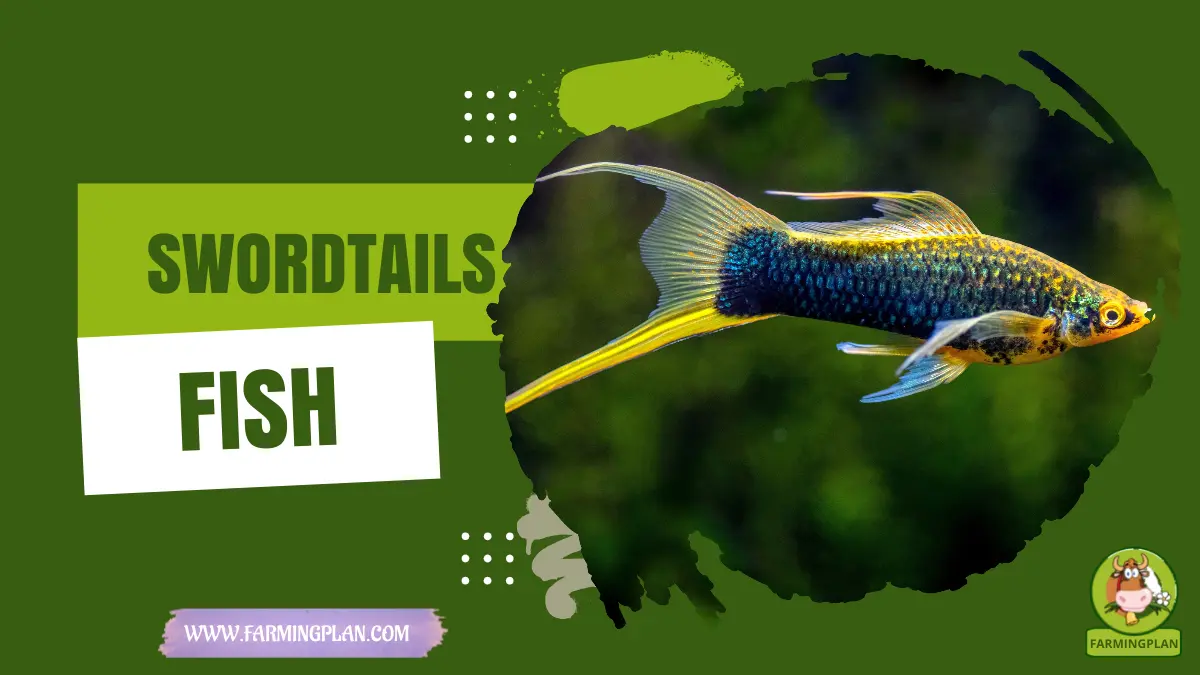
The defining feature of the male is the “sword”—a specialized extension of the bottom rays of the caudal fin that can equal the entire length of the body. This structure contains zero venom or sting; it functions purely as a secondary sexual ornament used during courtship rituals to display vigor to prospective females. Captive breeding has yielded dozens of stunning varieties, including Red Velvet, Pineapple, Kohaku (Koi), Neon Green, and Tuxedo Black swordtails. Routine preventive care saves time and lowers veterinary costs for swordtail fish care.
⚡ Swordtail Variety Classification & Physical Benchmarks
| Variety Name | Primary Coloration | Sword Morphology | Tank Footprint Requirement |
|---|---|---|---|
| Red Velvet Swordtail | Solid deep scarlet-red; jet-black sword margin | Long, straight, intensely pigmented black spine | 20 – 30+ gallons (Long profile) |
| Kohaku (Koi) Swordtail | Translucent white base with bright orange-red patches | Clear to orange extension; high visual contrast | 20 – 30+ gallons |
| Green Wild-Type | Olive-green back, iridescent scales, red lateral stripe | Yellow extension edged in dense black piping | 30-gallon minimum for athletic sprints |
| Pineapple Swordtail | Golden-yellow head and body with neon red fins | Two-tone red and golden sword extension | 20 – 30+ gallons |
| Lyretail Swordtail | Multiple color morphs; extensions on top and bottom fin rays | Double swords (top and bottom); elongated dorsal | 30-gallon minimum; gentle tank mates |
Mesoamerican Stream Ecology & The Late-Developing Male Phenomenon
In their wild Central American range, green swordtails inhabit crystal-clear mountain streams, rocky pools, and rushing rivers with rich mineral substrates. Their native waters are alkaline and hard, enriched by limestone runoff and dense aquatic vegetation that provides shelter from riverine predators. Matching forage or ration quality to life stage optimizes swordtail fish care growth.
A fascinating biological quirk of Xiphophorus hellerii is the phenomenon of “late-developing males.” Aquarists frequently observe what appears to be a large, mature female that suddenly develops a gonopodium and caudal sword at 12 to 18 months of age. While early hobbyist lore claimed swordtails could spontaneously reverse sex, genetic research confirmed that late males are simply slow-maturing individuals who invest energy into somatic growth before initiating hormonal sexual differentiation. Gradual dietary transitions protect digestive stability in swordtail fish care.
Aquarium Dimensions, Jump Prevention & Hard Water Chemistry
Swordtails are energetic swimmers that require generous horizontal space. A 20-gallon long (30 inches wide) or 30-gallon aquarium is the minimum acceptable volume for a trio. A tight, gap-free canopy is absolutely mandatory; swordtails are powerful jumpers and will readily leap through small filter cutouts when startled or chasing mates. Selecting healthy foundation stock is the cornerstone of successful swordtail fish care management. Good predator-proofing and dry bedding safeguard swordtail fish care comfort in harsh weather.
Water chemistry must remain moderately hard to hard alkaline. Maintain water pH strictly between 7.2 and 8.2 with general hardness (GH) of 12 to 25 dGH and carbonate hardness (KH) of 10 to 18 dKH. Keeping swordtails in soft, acidic water compromises their osmoregulatory balance, leading to lethargy, clamped fins, and secondary bacterial infections. In soft-water areas, buffer the water with aragonite sand or crushed oyster shells. Monitoring water quality and mineral balance directly benefits swordtail fish care vitality.
Water temperature should remain between 72°F and 79°F (22°C to 26°C). Swordtails appreciate moderate-to-strong filter currents that simulate their native river rapids. Equip the aquarium with a quality power filter or internal circulation pump, furnishing the perimeter with hardy plants like Vallisneria, Java fern, and Anubias while maintaining an open swimming lane across the front glass. Practical hands-on husbandry ensures consistent results when raising swordtail fish care.
Nutritional Protocols, Herbivorous Grazing & Daily Rations
Swordtails are natural omnivores with a strong herbivorous inclination. In nature, their long intestinal tracts are built to process filamentous algae, plant biofilm, and aquatic debris alongside insect larvae. Contrast dietary regimes with our guide on platy fish care and nutrition to optimize livebearer gastrointestinal balance. Early intervention at the first sign of lethargy protects overall swordtail fish care flock or herd health.
Feed swordtails two small meals daily that they consume within two minutes. A high-quality spirulina-rich flake or vegetable wafer serves as the core diet, supplemented with blanched zucchini, deseeded peas, and fresh spinach. Supplement three times weekly with live or frozen brine shrimp, daphnia, or bloodworms to support active courtship displays and provide protein for developing broods. Structured culling and biosecurity protocols strengthen swordtail fish care genetic quality. Maintaining clean feeders and sanitized equipment supports sustainable swordtail fish care care.
- Spirulina & Kelp Flakes: Essential vegetable staple that fuels digestive motility and prevents gut bloat.
- Blanched Zucchini & Spinach: Natural grazing supplements anchored to the gravel bed that mimic wild biofilm pastures.
- Frozen Brine Shrimp & Bloodworms: High-protein conditioning treats that accelerate growth and support vibrant coloration.
- Live Daphnia: Excellent biological roughage that promotes natural hunting behavior while preventing constipation.
Health Management, Parasite Prevention & Biosecurity Standards
Swordtails are robust fish when provided with hard, alkaline water and consistent hygiene. The most frequent health issue is Ich (Ichthyophthirius multifiliis), which presents as white crystalline cysts across the skin and caudal sword. Swordtails tolerate aquarium salt exceptionally well; dosing 1 tablespoon of non-iodized salt per 5 gallons of water along with raising the temperature to 82°F quickly clears early infections. Consistent daily observation helps keepers spot early changes in swordtail fish care health and behavior.
Another condition to monitor is male aggression and physical trauma. Dominant males frequently spar, which can lead to damaged fins and secondary columnaris infections if water quality declines. For federal biosecurity guidelines and aquatic disease management across commercial holdings, consult the USDA APHIS National Aquaculture Center. Clean housing, fresh water, and balanced nutrition remain essential for swordtail fish care productivity.
Quarantine all new swordtail acquisitions in an isolated 10-to-15-gallon observation tank for 21 days before community introduction. Observe closely for clamped fins, rapid breathing, or white feces, treating proactively with broad-spectrum antiparasitic medications as needed. Tracking feed intake and body condition supports long-term swordtail fish care performance.
Livebearer Reproduction, Harem Ratios & Fry Survival Protocols
Swordtails are prolific livebearers that reproduce readily in home aquaria. Maintaining a strict harem ratio of at least two to three females per male is vital. Male swordtails are relentlessly amorous; keeping a single female leads to chronic exhaustion, stress, and premature mortality. Following biosecurity best practices reduces disease risk in any swordtail fish care operation. Seasonal adjustments to shelter and diet keep swordtail fish care thriving year-round.
Gestation lasts between 28 and 32 days. As delivery approaches, the female’s belly swells significantly, and a dark gravid spot appears near her vent. Large females can deliver 40 to 80 robust, fully formed fry in a single birth. Compare reproductive mechanics with our guide on zebra danio egg-scattering mechanics to contrast livebearing advantages against egg scatterer survival. Proper record-keeping makes breeding and culling decisions easier for swordtail fish care keepers.
Adult swordtails will consume their own young if given the chance. Furnish the aquarium with dense thickets of Java moss, Guppy grass, and floating Hornwort to provide natural nursery cover. Newborn fry are large and capable of immediately eating crushed spirulina flakes, microworms, and newly hatched baby brine shrimp, achieving 1-inch lengths within six weeks under warm water and daily feedings. Providing adequate space and ventilation prevents common stress issues in swordtail fish care.
US Ownership Budget & Annual Maintenance Costs
Swordtails are economical, hardy pets that provide exceptional visual impact per dollar invested. Equipment costs are modest, and operational expenses remain low. Below is an itemized breakdown of estimated startup and maintenance costs for a 30-gallon community setup in the United States. Understanding breed-specific traits helps maximize swordtail fish care longevity and output.
⚡ Estimated Annual Swordtail Aquarium Budget (USD)
| Expense Category | Hardware & Husbandry Schedule | Initial Capital Outlay | Annual Operating Cost |
|---|---|---|---|
| Glass Aquarium & Sealed Canopy | 30-gallon long glass aquarium + tight glass canopy | $85 – $135 | $0 (Equipment capital) |
| Power Filter & Submersible Heater | High-turnover power filter (150–200 GPH) + 100W heater | $40 – $65 | $15 – $25 (Filter media replacement) |
| River Gravel & Live Aquatic Plants | Natural substrate + Vallisneria, Java fern, Hornwort | $40 – $70 | $15 – $20 (Plant food) |
| Initial Swordtail Breeding Stock | 6 purebred swordtails (2M, 4F @ $3.50 – $5.00 ea) | $21 – $30 | $0 (Sustained captive stock) |
| Commercial Flakes & Frozen Diets | Spirulina flakes, micro-pellets, frozen brine shrimp | $18 – $28 | $35 – $55 |
| Conditioners & Mineral Buffers | Water conditioner + liquid GH/KH mineral buffer salts | $20 – $32 | $20 – $35 |
| Electrical Consumption | Filter motor, 100W heater, plant LED (approx. 200 kWh/yr) | $0 | $28 – $45 |
| Total System Projections | 30-gallon active swordtail community aquarium | $224 – $360 | $113 – $180 / year |
🐟 Swordtail Fish Tank & Feed Calculator
Calculate water volume, minimum filtration capacity, water changes, and daily feed amounts for your Swordtail Fish.
Frequently Asked Questions (FAQ)
What water temperature do swordtail fish require?
Swordtails thrive in water temperatures between 72u00b0F and 79u00b0F (22u00b0C to 26u00b0C). They tolerate minor cool temperature drops better than many tropical fish, but keeping water consistently around 75u00b0F promotes optimal vitality and breeding.
What size tank do swordtail fish need?
A 20-gallon long tank is the minimum size for a small trio of swordtails, but a 30-to-40-gallon aquarium is strongly recommended. Swordtails are large, muscular swimmers that require ample horizontal swimming distance.
Can female swordtails turn into males?
No, true genetic females cannot transform into functional males. What hobbyists witness are late-developing males that delay hormonal sexual differentiation, looking like females until maturing and growing a sword at 12 to 18 months.
How many female swordtails should you keep per male?
Maintain a ratio of at least two to three females for every male swordtail. Male swordtails pursue females persistently; keeping multiple females distributes male attention and prevents female stress and exhaustion.
Why do swordtails jump out of aquariums?
Swordtails originate from fast-moving streams and are exceptional jumpers. During courtship, male rivalries, or feeding excitement, they can easily leap out of open tanks. Always secure the aquarium with a tight-fitting glass lid.
How often do female swordtails give birth?
Female swordtails give birth to 30 to 80 live fry every 28 to 32 days. Like other livebearers, females can store viable sperm from a single mating for several months, producing multiple consecutive broods without a male present.
Expert Summary & River Biotope Excellence
The swordtail fish embodies dynamic elegance, color vibrancy, and generational hardiness. By supplying hard alkaline water, generous horizontal sprint lanes, vegetable-rich nutrition, and dense live plant nurseries, aquarists enjoy a captivating aquatic showcase that brings the rushing rivers of Central America into the living room. Routine preventive care saves time and lowers veterinary costs for swordtail fish care. Matching forage or ration quality to life stage optimizes swordtail fish care growth.
For homesteaders scaling up property water stewardship, explore our comprehensive technical manual on farm pond and waterway management to evaluate aeration design, stocking ratios, and biological weed control. Gradual dietary transitions protect digestive stability in swordtail fish care.
Expert Verdict & Next Steps for Swordtail Fish Keepers
Successful management of Swordtail Fish hinges on rigorous adherence to species-specific housing dimensions, precision daily nutrition, and proactive biosecurity protocols. Whether you are managing commercial production or establishing a self-sufficient homestead breeding flock, maintaining disciplined husbandry standards ensures long-term vitality, exceptional output yields, and sustainable enterprise profitability. Selecting healthy foundation stock is the cornerstone of successful swordtail fish care management.
By pairing predator-proof shelter infrastructure with high-quality rations and regular veterinary wellness monitoring, growers can confidently optimize productive longevity across all life stages. For comprehensive operational management blueprints and companion breed guides, explore our complete technical library in Farming Plan Agricultural Guides. Good predator-proofing and dry bedding safeguard swordtail fish care comfort in harsh weather.
📚Agricultural Reference & Scientific Citations
Standards and physiological data referenced in this guide comply with USDA Animal and Plant Health Inspection Service (APHIS), American Veterinary Medical Association (AVMA), and the FAO Domestic Animal Diversity Information System.


