

⚡ Norwegian Fjord Horse at a Glance: Key Specifications & Benchmarks
| Breed Origin | Vestlandet (Western Fjords), Norway (over 4,000 years of pure heritage) |
| Height at Withers | 13.2 to 14.3 hands (54 to 59 inches / 137 to 149 cm) |
| Average Adult Weight | 900 to 1,200 lbs (400 to 550 kg) draft-pony conformation |
| Signature Coat Pattern | 100% Dun (Brunblakk/brown dun, Ulsblakk/white dun, Gra/grey dun, Rodblakk, Gulblakk) |
| Primitive Markings | Dorsal eel stripe (Al), zebra leg striping, dark ear tips, dark dual-colored mane |
| Mane Presentation | Traditional upright roached crescent cut highlighting dark central dorsal hair |
| Average Lifespan | 28 to 35 years under sound low-sugar pasture management |
| Homestead Utility | Forest logging, hillside carriage driving, family trail riding, therapeutic riding |
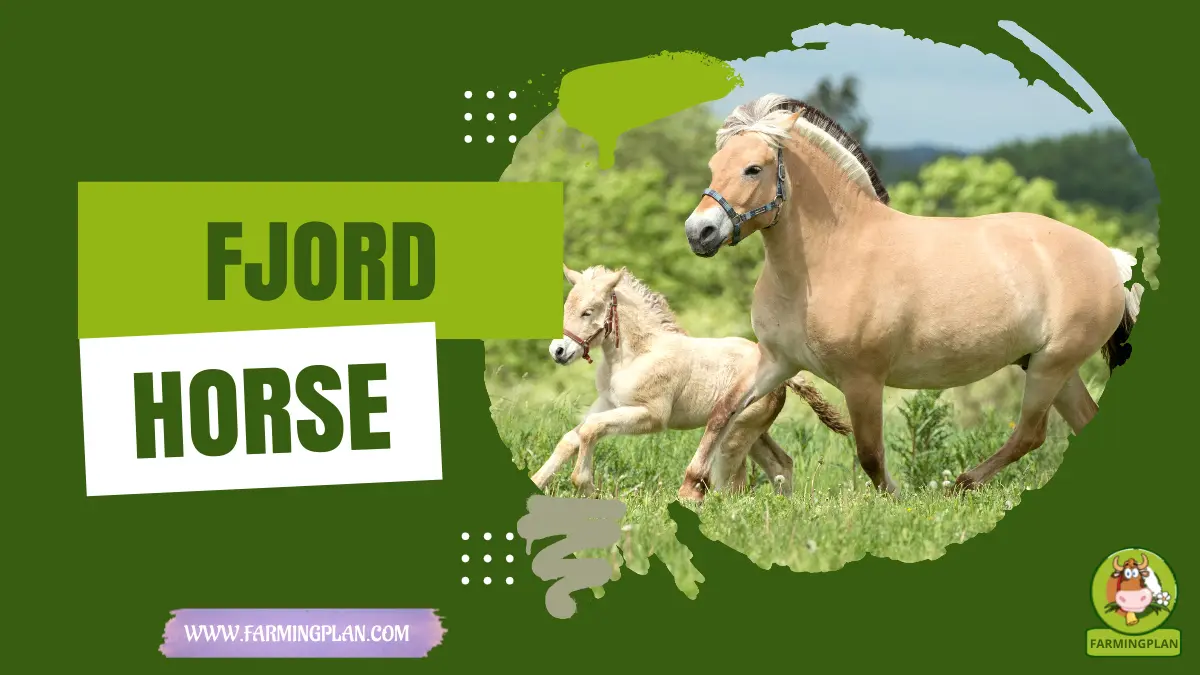
The Norwegian Fjord horse stands as one of the world’s most ancient, pure, and unmistakable equine breeds, instantly recognized by its striking dun coat, primitive zebra stripes, and iconic roached crescent mane. Originating in the mountainous fjord regions of western Norway, this compact draft breed has served Scandinavian farmers, foresters, and Viking warriors for more than four millennia with unwavering loyalty and unmatched endurance.
For modern homesteaders and small-acreage farmers exploring our working horse and equine breed guides, the Fjord horse represents the ultimate versatile partner. With a calm, unflappable temperament and a stocky draft build that easily carries full-grown adult riders while pulling heavy farm equipment, the Fjord combines the draft power of a draft giant with the low-cost upkeep of an easy-keeping mountain pony.
Unlike nervous or flighty warmblood breeds, Fjords are celebrated for their cooperative disposition and deep desire to please their caretakers. However, their ancient arctic efficiency requires knowledgeable metabolic management. If allowed unrestrained access to rich spring pastures, an easy-keeping Fjord can quickly develop equine metabolic syndrome, obesity, and painful laminitis.
In this comprehensive guide, we review the Fjord horse’s historic Viking origins, conformation benchmarks, primitive dun genetics, dietary management, housing setups, and training protocols to ensure your family enjoys decades of safe and rewarding companionship.
⚡ Fjord Horse Breed Guide Conformation & Performance Matrix
| Physical Trait / Metric | Standard Benchmark | Working / Sport Range |
|---|---|---|
| Height at Withers | 14.1–16.2 Hands (57–66 in) | Balanced proportional stature |
| Mature Body Weight | 1,000–1,350 lbs | Lean, dense muscular conformation |
| Gait Cadence & Rhythm | Smooth 4-beat or balanced 3-beat | Exceptional stamina and ground cover |
| Feed Efficiency & Intake | 1.8–2.2% body weight dry matter | Easy keeper on quality forage/hay |
| Bone Density & Hoof Quality | Dense cannon bone, hard dark hoof wall | Superior wear resistance on trail |
| Working Lifespan | 25–30 years | Long productive service life |
Deep Historical Roots & The Viking Age Heritage
Archaeological evidence confirms that the ancestors of the modern Fjord horse migrated into the Scandinavian peninsula following the retreat of the last continental glaciers over 4,000 years ago. Early petroglyphs and Bronze Age tomb carvings throughout western Norway depict stocky, crested equines bearing upright manes and dorsal stripes that closely mirror the contemporary breed.
During the Viking Age (8th to 11th centuries AD), the Fjord horse was central to Norse civilization. Viking warriors utilized these surefooted animals for overland transport, baggage hauling, and agricultural cultivation on steep fjord terraces. Norse sagas describe ceremonial stallion duels (hestavig), where stallions fought in organized competitions to test breeding vigor and courage before local assemblies.
Centuries of geographical isolation along Norway’s narrow fjords protected the breed from foreign outcrossing. In 1910, the Norwegian government established the first official studbook in Nordfjordeid, establishing strict conformation and performance evaluations that emphasized pull capacity, sound bone structure, and obedient temperament. Today, the Norwegian Fjord Horse Registry (NFHR) in North America maintains these exacting historic breed standards.
Much like the wild origins of the Przewalski’s horse breed profile, the Fjord horse preserves ancient primitive equine characteristics lost in most modern domestic breeds.
⚡ The Five Recognized Norwegian Fjord Dun Shades
| Norwegian Dun Shade | Coat Description | Mane & Primitive Markings |
|---|---|---|
| Brunblakk (Brown Dun) | Classic pale yellow-brown or wheat hue; roughly 90% of all Fjords | White outer mane hair with jet-black center dorsal stripe (Al) |
| Ulsblakk (White Dun) | Silvery pale cream to near-white body color; carries cream gene | White outer mane hair with soft black or charcoal dorsal line |
| Gra (Grey Dun / Blue Dun) | Silvery-grey to slate body color; carries black base pigment | Silver-white outer mane with rich black mid-stripe and dark legs |
| Rodblakk (Red Dun) | Pale golden-red or peach body color; chestnut genetic base | White outer mane hair with reddish-brown center dorsal stripe |
| Gulblakk (Yellow Dun) | Pale golden cream; carries chestnut and double cream dilution | Entirely blonde or creamy-white mane and pale dorsal stripe |
Physical Attributes & Breed Conformation Standards
The Fjord horse exhibits a compact, muscular, and well-balanced draft conformation standing between 13.2 and 14.3 hands (54 to 59 inches) at the withers, with adult body weights averaging 900 to 1,200 pounds. Despite their pony stature, Fjords possess the deep heart girth, broad chest, and dense bone structure of a heavy draft horse, allowing them to carry heavy loads effortlessly.
Head Conformation, Primitive Markings & The Crescent Mane
The head is small to medium-sized with a broad, flat forehead, large dark expressive eyes, and small, alert ears set wide apart. The neck is strong, arched, and muscular, blending cleanly into thick, sloping shoulders and a short, powerful back designed for draft traction.
All Fjord horses are dun (possessing the Dun dilution gene, D), displaying classic primitive markings. These include the Al (a dark dorsal stripe running from the forelock, through the mane, along the spine, and through the tail), distinct zebra striping across the knees and hocks, and dark tips on the ears. The mane is clipped in a traditional upright crescent arch: the dark central hair is cut slightly longer than the white outer hair, highlighting the breed’s crested neck and ancient beauty.
Behavioral Traits, Temperament & Working Instincts
The temperament of the Fjord horse is world-renowned for its calm, sensible, and willing nature. While some horse breeds react to unfamiliar objects with sudden panic or flight, a Fjord typically halts, lowers its head, and inspects novel sights with calm curiosity. This steady emotional nature makes them exceptional mounts for youth riders, therapeutic riding programs, and adult amateurs.
On the homestead, Fjords display an honest, steady work ethic. Whether pulling a timber log out of a woodland lot or pulling a carriage down a public roadway, they apply power steadily without frantic pulling. They form deep affectionate bonds with their human handlers, often nickering at feeding time and enjoying long grooming sessions.
Nutritional Requirements & Feeding Protocols
The Fjord horse evolved on sparse arctic mountain pastures, developing an ultra-efficient metabolism designed to extract every possible nutrient from fibrous roughage. As supreme ‘easy keepers,’ their primary management challenge in domestic barnyards is avoiding excess weight and obesity-related metabolic disorders.
The foundation of a Fjord’s daily diet must consist of clean, low-sugar grass hay (timothy, orchard grass, or native prairie hay) containing less than 10 to 12 percent Non-Structural Carbohydrates (NSC), fed at approximately 1.5 percent of their body weight daily. Never feed alfalfa hay or sweet molasses grain feeds, as high sugar intake triggers insulin spikes and acute laminitis.
Provide a concentrated low-intake ration balancer pellet to deliver essential vitamins, trace minerals (copper, zinc, selenium), and amino acids without excess starch. Fresh, clean water must be accessible at all times, warmed during freezing winter conditions to prevent impaction colic. Free-choice plain white salt blocks and loose equine minerals complete the nutritional protocol.
Housing, Space Requirements & Habitat Setup
Fjord horses possess thick, double-layered winter coats that allow them to thrive outdoors in harsh winter temperatures down to sub-zero conditions without blankets, provided they have access to a dry, three-sided run-in shed positioned to block prevailing winds.
Because spring grass is rich in simple sugars, pasturing Fjords requires controlled turnout. Utilize dry lots (paddocks free of grass), rotational grazing strips, or grazing muzzles during peak spring and autumn pasture flushes. Fencing should be sturdy post-and-rail or high-tensile smooth coated wire; avoid barbed wire which can cause severe lacerations.
Common Health Issues, Genetics & Preventative Care
The Fjord horse is exceptionally hardy and boasts a remarkable average lifespan of 28 to 35 years when protected from metabolic disease. The primary clinical vulnerability is Equine Metabolic Syndrome (EMS), Pituitary Pars Intermedia Dysfunction (PPID / Cushing’s), and pasture-associated laminitis.
Routine veterinary care must include regular body condition scoring, annual blood testing for resting insulin and ACTH levels, twice-yearly dental examinations to balance draft-jaw wear, and a regular 6- to 8-week hoof trimming schedule. Fjord hooves are naturally thick, hard, and resilient, allowing most animals to work completely barefoot when trimmed properly.
Training, Exercise & Handling Methodologies
Training a Fjord horse relies upon patient, consistent natural horsemanship methods that reward relaxation and forward willingness. Because Fjords are powerful draft animals, they cannot be forced through physical intimidation; handlers must establish clear respect and leadership through groundwork, yielding to halter pressure, and voice cues.
Fjords excel across an extraordinary range of equestrian disciplines. In harness, they are premier carriage and combined driving horses, negotiating precision cones and cross-country marathons with poise. Under saddle, their rhythmic gaits and balanced canter make them competitive in dressage, western pleasure, and competitive trail riding.
Breeding, Genetics & Lifecycle Management
Breeding Norwegian Fjord horses is guided by strict pedigree registry standards overseen by the NFHR in North America and Norges Fjordhestlag in Norway. Breeding stallions and mares undergo rigorous keuring evaluations scoring conformation, bone substance, movement, and docile temperament.
Fjord mares have a 340-day gestation period, routinely foaling with ease and producing vigorous dun foals that stand and nurse within an hour of birth. Foals develop strong attachments to human caretakers through gentle imprinting and daily handling from birth.
⚡ Estimated Annual Budget & Maintenance Costs (USD)
| Expense Category | Annual Cost Range (USD) | Operational Management Notes |
|---|---|---|
| Quality Pasture Hay & Forage | $1,200 – ,200 | Mixed grass/legume hay (20–25 lbs/day) |
| Ration Balancer & Minerals | 0 – 0 | Fortified vitamins, salt block, biotin |
| Routine Farrier & Hoof Trimming | 0 – 0 | Trimming every 6–8 weeks (–/trim) |
| Veterinary Wellness & Vaccinations | 0 – 0 | Annual 5-way vaccine, Coggins, dental float |
| Deworming & Parasite Control | – 0 | Strategic fecal egg count protocol |
| Barn Bedding, Fencing & Tack Upkeep | 0 – 0 | Pelleted pine bedding, fence repairs |
| Total Estimated Annual Operating Cost | ,510 – ,820 | Per horse maintained on home pasture/shelter |
🧮 Fjord Horse Daily Feed & Hay Intake Calculator
Calculate recommended daily dry grass hay (lbs), clean water intake, and estimated monthly forage costs tailored specifically for your Fjord Horse.
Frequently Asked Questions About Fjord Horse Breed (FAQ)
What is the historical origin of the Norwegian Fjord horse?
The Fjord horse originated in western Norway over 4,000 years ago. Viking farmers and warriors bred them for agricultural plowing, mountain pack transport, and chariot warfare, maintaining pure bloodlines for millennia.
What coat colors are accepted in Norwegian Fjord horses?
All Fjord horses are dun. The five recognized shades are Brunblakk (brown dun, 90%), Ulsblakk (white dun), Gra (grey/blue dun), Rodblakk (red dun), and Gulblakk (yellow dun), all carrying primitive dorsal stripes.
Why is the Fjord horse mane cut in a crescent arch?
The Fjord mane is traditionally roached in an upright crescent to stand erect. Trimming the white outer hair slightly shorter than the dark central hair highlights the muscular arch of the neck and ancient primitive dorsal stripe.
Can an adult ride a Norwegian Fjord horse?
Yes, adult riders easily ride Fjord horses. Despite standing 13.2 to 14.3 hands high, their heavy draft bone, deep ribcage, and muscular loins allow them to carry adult riders up to 220 pounds with balance and ease.
What feeding precautions do Fjord horses require?
Fjords are extreme easy keepers prone to equine metabolic syndrome and laminitis. They require strictly low-sugar grass hay (under 10-12% NSC), ration balancers rather than grain, and controlled pasture turnout using grazing muzzles.
Expert Verdict & Next Steps
The Norwegian Fjord horse is an irreplaceable equine treasure that combines ancient Viking history, striking primitive dun beauty, and unmatched homestead utility. For farmers and families seeking a calm, versatile riding and driving horse that stays sound on low input costs, the Fjord is a peerless investment.
Before bringing a Fjord horse to your homestead, establish dry lot paddocks for weight management and invest in quality low-sugar grass hay. For additional insights into rugged draft and riding horses, explore our guides on the Connemara pony breed and the gaited Paso Fino horse care handbook.
📚Agricultural Reference & Scientific Citations
Standards and physiological data referenced in this guide comply with USDA Animal and Plant Health Inspection Service (APHIS), American Veterinary Medical Association (AVMA), and the FAO Domestic Animal Diversity Information System.


