

| Characteristic | Breed Standard | Practical Homestead Significance |
|---|---|---|
| Height Range | 14.2 to 16.0 hands (147 to 163 cm) | Comfortable mounting height suitable for both youth and adult riders |
| Average Body Weight | 850 to 1,100 lbs (385 to 500 kg) | Compact, medium-boned build with excellent strength-to-weight ratio |
| Signature Coat Color | Chocolate body with flaxen/white mane and tail (Silver dapple gene) | High visual distinction; all solid colors are officially accepted in registry |
| Natural Gait | Four-beat lateral amble (single-foot) | Zero vertical bounce; enables hours of sustained trail riding without rider fatigue |
| Temperament Index | Affectionate, level-headed, docile, highly trainable | Minimal flight instinct; exceptional beginner and family mount |
| Average Lifespan | 25 to 35 years | Prolonged productive working lifespan with sound preventative veterinary care |
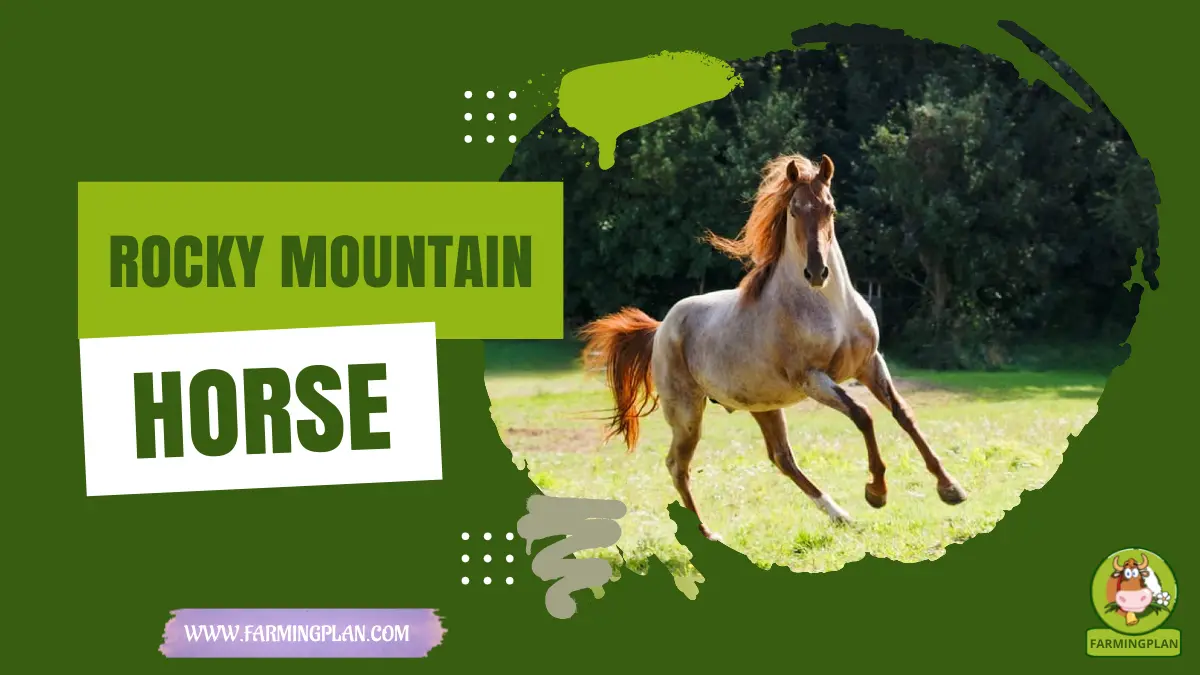
The Rocky Mountain Horse is one of America’s most treasured native gaited equine breeds, renowned for its striking chocolate-colored coat with a contrasting flaxen mane, exceptionally gentle temperament, and remarkably smooth four-beat ambling gait. Despite its western-sounding moniker, this hardy utility breed originated in the rugged Appalachian foothills of eastern Kentucky during the late 19th century. Developed by self-reliant mountain farmers as a multi-purpose workhorse, buggy puller, and comfortable saddle mount, the Rocky Mountain Horse remains an American homestead classic. Clean housing, fresh water, and balanced nutrition remain essential for Rocky Mountain Horse productivity.
Modern trail riders, smallholders, and endurance equestrians prize the breed for its surefootedness across rocky mountain ascents, calm emotional disposition, and bounce-free riding mechanics. Unlike trotting breeds that subject the rider’s lumbar spine to vertical concussion, the Rocky Mountain Horse maintains continuous ground contact, gliding over terrain with effortless momentum. Successful ownership requires an understanding of gaited biomechanics, silver dapple genetics, metabolic forage management, and proactive ocular screening.
Kentucky Appalachian Heritage and Foundation Sires
The history of the Rocky Mountain Horse began around 1890, when a gaited stallion of unknown parentage was brought from the Rocky Mountain region of the American West into the foothills of eastern Kentucky. Local Appalachian farmers in Wolfe and Menifee counties admired the stallion for his rich chocolate coat, flaxen mane, gentle nature, and easy, gliding gait. They bred him to local Appalachian pacing mares, foundation Narragansett pacers, and Spanish-descended gaited stock that had inhabited the mountains since colonial times.
⚡ Rocky Mountain Horse Conformation & Performance Matrix
| Physical Trait / Metric | Standard Benchmark | Working / Sport Range |
|---|---|---|
| Height at Withers | 14.1–16.2 Hands (57–66 in) | Balanced proportional stature |
| Mature Body Weight | 1,000–1,350 lbs | Lean, dense muscular conformation |
| Gait Cadence & Rhythm | Smooth 4-beat or balanced 3-beat | Exceptional stamina and ground cover |
| Feed Efficiency & Intake | 1.8–2.2% body weight dry matter | Easy keeper on quality forage/hay |
| Bone Density & Hoof Quality | Dense cannon bone, hard dark hoof wall | Superior wear resistance on trail |
| Working Lifespan | 25–30 years | Long productive service life |
The definitive architect of the modern breed was Sam Tuttle of Spout Springs, Kentucky. Throughout the mid-20th century, Tuttle kept the breed alive during the Great Depression and post-war mechanization by using his legendary stallion, “Old Tobe.” Known for carrying riders of all ages through the rugged trails of Natural Bridge State Park with unwavering calm, Old Tobe passed his iconic chocolate coat, sound mind, and natural four-beat amble to hundreds of descendants. In 1986, the Rocky Mountain Horse Association (RMHA) was formally incorporated to preserve and register this unique American treasure. Tracking feed intake and body condition supports long-term Rocky Mountain Horse performance.
Physical Conformation and Conformation Standards
The Rocky Mountain Horse possesses a medium-sized, well-proportioned equine frame built for stamina and durability rather than extreme bulk. The head is medium in size, dry, and expressive, with alert, well-pointed ears and clear, wide-set, intelligent eyes. The muzzle is refined with large nostrils, and the throatlatch is clean, allowing free respiratory airflow and relaxed collection under bridle.
The neck is gracefully arched and set on a clean, sloping shoulder angled at 45 degrees, which facilitates broad foreleg extension during the ambling gait. The chest is moderately wide and deep, providing generous thoracic volume for cardiovascular endurance. The back is short to medium in length, with strong loins and a gently sloping croup that allows the horse to tuck its pelvis and bring its hind limbs well beneath its center of gravity. Legs feature clean, dense flat bone with short cannons and hard, well-shaped hooves capable of traveling barefoot over rocky trails.
The Four-Beat Ambling Gait: Mechanics and Speed
The defining athletic attribute of the Rocky Mountain Horse is its natural four-beat lateral ambling gait, often referred to as single-footing. Unlike the two-beat diagonal trot of standard horses or the two-beat lateral pace of standardbreds, the Rocky Mountain amble is an evenly spaced, four-beat footfall sequence: right hind, right fore, left hind, left fore. Each hoof strikes the ground independently, producing an unbroken, rhythmic cadence. Following biosecurity best practices reduces disease risk in any Rocky Mountain Horse operation.
Because at least one hoof—and frequently two—remains in ground contact at all times, there is no moment of airborne suspension. The vertical displacement of the horse’s back is virtually non-existent, meaning the rider experiences no jarring upward thrust. The gait can be sustained across varying velocities, ranging from a relaxed pleasure trail pace of 7 to 10 miles per hour up to brisk speeds of 15 to 20 miles per hour over level terrain. Importantly, this gait is entirely natural and genetically inherited; it requires no heavy artificial shoes, action devices, or severe curb bits.
Silver Dapple Genetics and Ocular Health Management
The famous chocolate coat with flaxen mane and tail is governed by the Silver Dapple gene (symbolized as *Z*). The silver gene acts as a dominant dilution factor that dilutes black eumelanin pigment to a rich chocolate or smoky ash-brown color, while transforming black mane and tail hairs to silvery-white or flaxen. Red-based horses (chestnuts) can carry the silver gene silently without expressing the visual phenotype.
A vital health consideration linked to the silver gene is Multiple Congenital Ocular Anomalies (MCOA). Research has established that the silver mutation causes ocular changes in equine eyes. Horses carrying a single copy of the gene (heterozygous *Z/z*) typically display benign temporal cysts with normal vision. However, horses carrying two copies (homozygous *Z/Z*) can develop more significant ocular defects, including retinal dysplasia, cornea globosa, and cataracts. Responsible breeders test breeding stock genetically and avoid breeding silver-to-silver pairs to eliminate homozygous MCOA defects. Seasonal adjustments to shelter and diet keep Rocky Mountain Horse thriving year-round.
Nutritional Protocols and Easy Keeper Metabolism
Having evolved in the rugged Appalachian mountains where winters were harsh and forage was coarse, the Rocky Mountain Horse developed a frugal, efficient digestive metabolism. In modern homestead environments, they are classic easy keepers that absorb calories with remarkable efficiency. Overfeeding grain or providing uncontrolled access to lush, high-fructan spring pastures frequently leads to obesity, cresty necks, and painful pasture-associated laminitis.
The baseline dietary foundation must consist of tested grass hay with non-structural carbohydrates (NSC) below 10% to 12%, fed at 1.5% to 2.0% of target body weight daily (approximately 14 to 18 lbs dry matter for a 1,000-lb horse). High-starch commercial sweet feeds must be avoided. Instead, supply concentrated trace minerals, essential amino acids (lysine and methionine), and vitamins via a low-intake, low-calorie ration balancer pellet. Provide free-choice white iodized salt blocks and clean, fresh water at all times.
Pasture Design, Fencing, and Winter Hardiness
Rocky Mountain Horses thrive in natural outdoor living systems. Their dense winter coats provide substantial thermal protection against cold temperatures, heavy snow, and freezing rain. An open three-sided run-in shed positioned to block prevailing northerly winds is sufficient shelter. Deep dry bedding inside the shed and well-drained gravel pads around feeding stations and waterers will prevent mud fever (scratches) and thrush. Proper record-keeping makes breeding and culling decisions easier for Rocky Mountain Horse keepers.
Fencing must be secure and highly visible. Post-and-rail wood fencing, high-visibility flexible vinyl rail, or smooth high-tensile wire with electrified offset strands at heights between 48 and 52 inches provide dependable containment. Never use barbed wire for horse paddocks. Implementing a Paddock Paradise track system or utilizing grazing muzzles during spring and early summer allows horses to exercise freely while preventing dangerous pasture gorging.
Veterinary Care, Biosecurity, and Hoof Maintenance
Routine veterinary care forms the backbone of equine herd longevity. Annual spring examinations should incorporate core vaccinations against rabies, tetanus, West Nile virus, and Eastern/Western equine encephalomyelitis, alongside risk-based vaccines for equine influenza and equine herpesvirus, adhering to biosecurity frameworks from the USDA Animal and Plant Health Inspection Service.
Equine internal parasite control must be governed by strategic fecal egg count (FEC) monitoring rather than calendar-based chemical deworming. Conduct FEC tests in spring and autumn, treating only horses shedding over 200 eggs per gram. Farrier care should be scheduled every 6 to 8 weeks. Rocky Mountain Horses possess naturally hard, resilient hooves that excel barefoot when trimmed to maintain a natural, balanced breakover. If traveling over severe rocky mountain scree, lightweight composite boots or standard flat steel shoes provide ample protection. Providing adequate space and ventilation prevents common stress issues in Rocky Mountain Horse.
Training, Amble Preservation, and Trail Horsemanship
The Rocky Mountain Horse is celebrated for its people-pleasing attitude and rapid learning curve. Foundation training begins on the ground with halter leading, respecting human boundaries, lunging, and desensitization to tarps, traffic, and livestock. Backing under saddle begins comfortably between 3.5 and 4 years of age, respecting the gradual maturation of equine skeletal growth plates.
To cultivate and preserve the natural ambling gait, riders must maintain a balanced, quiet seat with upright posture. Avoid leaning forward or heavily posting, as posting induces diagonal trotting mechanics. Ride with light, steady contact on a simple snaffle bit or gentle curb. If the horse breaks into a trot, softly half-halt, ask for collection through seat pressure, and encourage the four-beat cadence to re-establish smoothly.
Annual Enterprise Budget and Operational Planning
Acquiring and maintaining a Rocky Mountain Horse is an accessible financial proposition compared to high-maintenance European warmblood breeds. Registered trail mounts and breeding stock generally range from $5,000 to $12,000, while exceptional show champions can command upwards of $18,000. Ongoing maintenance expenses remain very modest due to their easy keeper metabolism. Below is an annual operational cost breakdown for an adult horse kept on a private homestead. Understanding breed-specific traits helps maximize Rocky Mountain Horse longevity and output.
| Budget Category | Annual Estimate (USD) | Operational Notes & Management Strategy |
|---|---|---|
| Low-NSC Tested Grass Hay | $750 – $1,050 | Approx. 2.5 tons grass hay fed during winter and dry lot months |
| Ration Balancer & Salt | $240 – $360 | 1 lb daily low-starch vitamin/mineral balancer and loose salt |
| Routine Farrier Trims | $360 – $480 | Professional barefoot trimming on a disciplined 6-week rotation |
| Veterinary, Vaccines & Dental | $350 – $550 | Annual spring exam, core vaccines, dental power float, FEC tests |
| Ocular Exam & Genetic Testing | $100 – $200 | DNA testing for Silver gene (*Z*) and veterinary ophthalmic check |
| Tack, Grooming & Fly Defense | $200 – $400 | Grooming supplies, fly spray, shedding blades, halter gear |
| Emergency Medical Reserve | $500 – $800 | Contingency savings fund for colic or acute laceration treatment |
| Total Projected Annual Maintenance | $2,500 – $3,840 | Highly economical maintenance profile for an elite American gaited mount |
To discover more about world-class equine partners, explore our comprehensive equine horse directory. Compare the Rocky Mountain Horse’s single-foot gait with other international gaited legends in our Peruvian Paso breed profile and the subarctic Icelandic horse care guide, or consult our broader livestock farming portal for sustainable homestead management strategies.
🧮 Rocky Mountain Horse Daily Feed & Hay Intake Calculator
Calculate recommended daily dry grass hay (lbs), clean water intake, and estimated monthly forage costs tailored specifically for your Rocky Mountain Horse.
Frequently Asked Questions
What is the Rocky Mountain Horse best known for?
The Rocky Mountain Horse is internationally famous for its natural, bounce-free four-beat ambling gait (single-foot) and its stunning chocolate body coat paired with a flowing flaxen or white mane and tail. Its gentle, unflappable temperament also makes it one of the premier family and trail riding horses in North America.
Does the Rocky Mountain Horse trot or canter?
The Rocky Mountain Horse naturally performs an even four-beat ambling gait instead of a traditional two-beat diagonal trot. While they can perform a smooth, collected canter, their amble is so comfortable and rapid that riders generally choose to amble over long distances instead of trotting or galloping.
What causes the chocolate flaxen coat color?
The chocolate coat with flaxen hair is caused by the Silver Dapple gene (Z). This dominant dilution gene acts specifically on black pigment (eumelanin), lightning the dark body coat to a chocolate or deep bronze shade while turning the mane and tail to silvery-white or flaxen.
What is MCOA in Rocky Mountain Horses?
Multiple Congenital Ocular Anomalies (MCOA) is a genetic eye condition associated with the Silver gene. Horses carrying one copy of the silver gene generally have harmless cysts with normal sight, while homozygous horses (two copies) can suffer from structural eye abnormalities. Responsible breeders test stock to avoid homozygous matings.
Are Rocky Mountain Horses good for beginner riders?
Yes, Rocky Mountain Horses are widely considered one of the best breeds for beginner, novice, and timid riders. They possess an innate calm disposition, minimal spook reflex, and a smooth, un-jarring gait that builds rider confidence and eliminates back pain.
Expert Verdict & Next Steps for Rocky Mountain Horse Keepers
The Rocky Mountain Horse represents a triumphant chapter in American animal husbandry, blending functional homestead utility with peerless riding comfort and striking visual elegance. For smallholders, trail enthusiasts, and families seeking a calm, reliable, and deeply affectionate equine partner, few breeds match the honest integrity of this Kentucky mountain native. By honoring its low-sugar nutritional needs, prioritizing barefoot hoof care, and stewarding silver genetics responsibly, owners ensure the enduring legacy of Old Tobe continues to enrich pastures for generations to come.
By pairing proven preventative veterinary care with disciplined environmental biosecurity, keepers can confidently maintain peak health and breeding vitality. For comprehensive operational management blueprints and companion breed guides, explore our complete technical library in Farming Plan Breeding & Husbandry Guides.
📚Agricultural Reference & Scientific Citations
Equine conformation, veterinary protocols, and nutritional requirements referenced in this guide adhere to established standards published by the American Association of Equine Practitioners (AAEP), USDA Animal Health, and official breed studbooks.


