

| Metric Category | Roosters (Cocks) | Hens (Layers) | Production Benchmarks |
|---|---|---|---|
| Body Weight | 3.0 – 3.8 kg (6.6 – 8.4 lbs) | 2.2 – 2.8 kg (4.8 – 6.2 lbs) | Heavy game fowl frame |
| Carriage & Posture | Upright, proud 70-degree angle | Alert, athletic game posture | High predator awareness |
| Comb & Head | Pea comb or cushion comb | Small compact pea comb | Deep pearl/yellow eyes |
| Shanks & Feet | Long, stout yellow shanks | Clean, stout yellow shanks | Formidable spur growth |
| Annual Egg Output | N/A | 60 – 90 eggs per year | Seasonal clutch layer |
| Egg Shell Weight | N/A | 48 – 54 g | Light brown/tinted shell |
| Broodiness Tendency | N/A | Very strong maternal instinct | Hatching rate: 85 – 95% naturally |
| Heat & Arid Hardiness | Outstanding desert tolerance | Outstanding desert tolerance | Thrives in hot western India |
The Danki Chicken, also known across the Indian subcontinent as the Gujarati Danki or Western Indian Gamefowl, is one of the most imposing and resilient indigenous poultry breeds of South Asia. Developed across the semi-arid grasslands, agricultural fringes, and tribal heartlands of Gujarat, this ancient landrace embodies the magnificent physical architecture of true Asian game fowl. Standing tall with an almost vertical carriage, muscular broad shoulders, and powerful bone structure, the Danki Chicken is celebrated for its indomitable constitutional vigor, keen predator resistance, and exceptional meat density. Consistent daily observation helps keepers spot early changes in Danki Chicken health and behavior.
Unlike fragile industrial broiler hybrids that succumb rapidly to thermal stress, disease vectors, or predators, the Danki Chicken is an autonomous survivor. Rural farmers, heritage poultry breeders, and regenerative homesteaders value the Danki for its remarkable scavenging independence, devoted maternal broodiness, and lean, nutrient-dense organic table meat. This comprehensive breed guide covers the cultural heritage, morphological standards, housing requirements, feeding programs, and financial returns necessary to raise Danki chickens successfully.
Breed History and Cultural Heritage in Gujarat
The origins of the Danki Chicken are rooted in the ancient aviculture traditions of Gujarat and neighboring western regions of India. For centuries, rural pastoralists and tribal communities selectively bred these tall, spirited birds, valuing them for traditional sporting competitions, homestead protection, and ceremonial feasts. Selective breeding prioritized agility, thick skull bones, strong leg tendons, and fierce survival instincts, creating an avian athlete capable of fending off snakes, mongooses, and hawks.
In modern times, poultry geneticists recognize the Danki as an irreplaceable reservoir of native disease resistance and environmental adaptation genes. According to official breed documentation from the ICAR National Bureau of Animal Genetic Resources (NBAGR), characterization and preservation of indigenous poultry like the Danki are essential to safeguard genetic diversity against widespread industrial commercialization. Clean housing, fresh water, and balanced nutrition remain essential for Danki Chicken productivity.
Physical Conformation and Standard Conformation
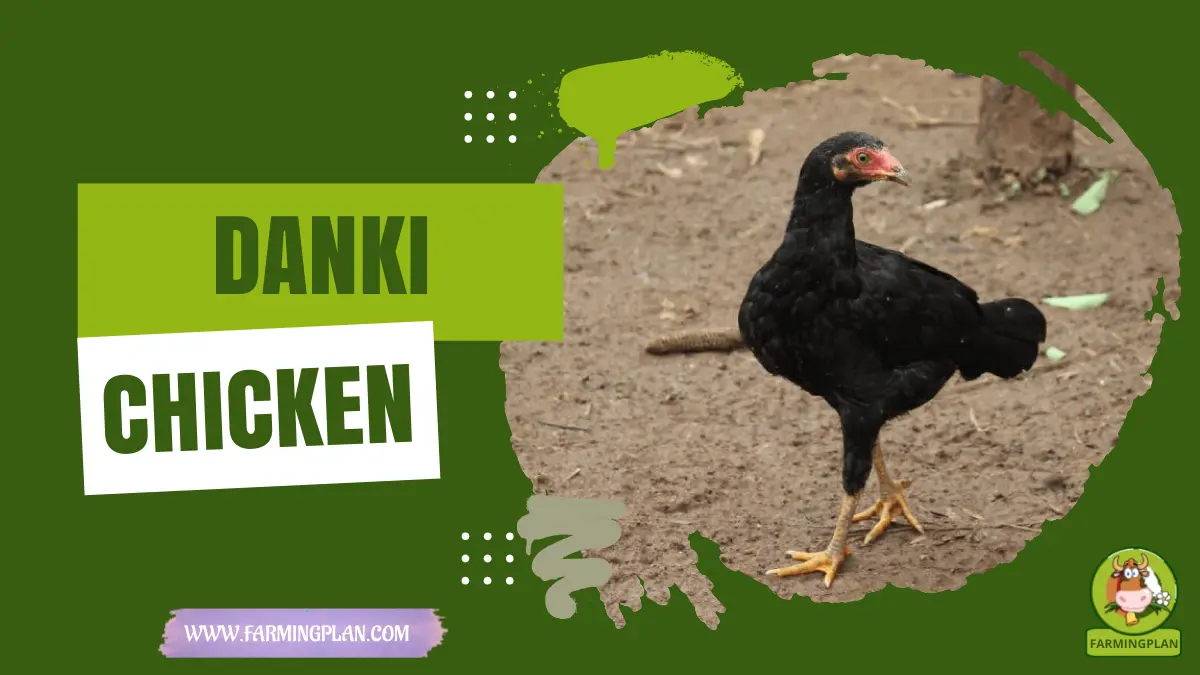
The Danki Chicken exhibits the unmistakable phenotype of classic Asian hard-feathered gamefowl. The body is tall, cylindrical, and carried at a proud, upright stance approaching 60 to 70 degrees from horizontal. The shoulders are notably broad, muscular, and prominent, tapering smoothly into a firm, tight-feathered back and a sloping, low-set tail. Mature cocks weigh between 3.0 and 3.8 kg, while mature hens scale 2.2 to 2.8 kg.
The head is broad and robust, featuring a heavy brow ridge that gives the bird a commanding, eagle-like expression. The comb is a small, compact pea comb or strawberry cushion comb, minimizing the surface area exposed to pecking injuries or frostbite. Wattles are diminutive or virtually absent, paired with small red earlobes. Plumage colors vary, with dark black-breasted red, ginger red, and speckled brown being the most traditional. The legs and shanks are exceptionally long, unfeathered, and deep yellow, armed with stout scales and sharp spurs in mature males.
Behavior, Predator Defense, and Ranging Capability
Behaviorally, the Danki Chicken is alert, independent, and intensely protective of its territory. In free-range setups, Danki roosters serve as fearless flock guardians. When ground predators such as feral cats, mongooses, or small canines approach, a Danki cock will not retreat; instead, he sounds sharp alarm calls, gathers his hens to safe cover, and uses his powerful spurs and muscular wings to attack and drive off the threat. Tracking feed intake and body condition supports long-term Danki Chicken performance.
Their ranging instincts are superb. Danki chickens possess powerful leg muscles that carry them miles across farm pastures, brushlands, and woodlots in search of wild food. They fly with surprising agility for their body size, frequently roosting in high tree branches at night if indoor coop access is restricted. Explore related Asian poultry traits in our Daothigir chicken profile and compare Mediterranean layers in our Castellana Negra chicken overview.
Coop Construction and High-Perch Housing Design
Because Danki chickens possess long limbs and strong natural roosting impulses, standard poultry coops must be adapted to their physical requirements. Coops should provide generous vertical clearance and at least 0.45 to 0.55 square meters (5 to 6 sq ft) of floor area per adult bird. Sturdy roosting bars made from 5 to 7 cm rounded wooden poles must be installed at least 1.0 to 1.5 meters off the ground to satisfy their instinct to sleep high above the floor.
Adequate coop ventilation is critical. In hot, arid climates like Gujarat, open-sided coops enclosed with heavy-gauge welded wire mesh provide optimal cross-ventilation while excluding predators. In temperate regions with winter freezing, ensure shelter is dry and draft-free; the breed’s small pea comb provides excellent natural resistance against frostbite. Following biosecurity best practices reduces disease risk in any Danki Chicken operation.
Nutritional Strategies and Scavenging Diet Optimization
The digestive efficiency of the Danki Chicken is tuned for low-input environments. When permitted open-range foraging, adult birds secure over 50% of their daily nutrition through active scavenging. Their diverse diet includes grasshoppers, beetles, grubs, wild grass seeds, kitchen scraps, and leafy vegetation. However, to maintain peak muscular condition and support seasonal reproduction, supplemental feeding is recommended:
Recommended nutritional program: 1. Foundation Ration: 16% to 18% crude protein poultry grower or maintenance pellet formulated with whole grains (pearl millet/bajra, cracked corn, and sorghum). 2. Supplemental Protein: Whole sprouted grains, black soldier fly larvae, or boiled pulse legumes (chickpeas, lentils) to fuel dense muscular development. 3. Minerals: Free-choice coarse limestone grit and crushed oyster shells to maintain bone density and shell thickness. 4. Clean Water: Fresh, cool water accessible continuously from heavy, non-tip water fountains.
Reproduction, Maternal Broodiness, and Chick Rearing
Danki hens are seasonal layers, producing between 60 and 90 medium-sized, tinted to light brown eggs per year across 3 to 4 distinct clutches. Eggs weigh 48 to 54 grams and possess exceptionally thick, durable shells. Once a hen finishes a clutch of 10 to 12 eggs, she almost invariably goes intensely broody. Seasonal adjustments to shelter and diet keep Danki Chicken thriving year-round.
As mothers, Danki hens are peerless. A setting hen will sit tenaciously on her eggs for the full 21-day incubation period, defending her nest against any intruder with fierce pecks and wing slaps. Once hatched, Danki chicks are strong, active, and precocious, following their mother into the pasture within 48 hours. The mother hen teaches them to forage, scratch for grubs, and take cover at the first hawk alarm, achieving natural survival rates above 90% without artificial brooders. Compare waterfowl reproduction in our Chara Chemballi duck guide.
Meat Quality, Culinary Value, and Heritage Desi Chicken
The primary economic value of the Danki Chicken lies in its supreme meat quality. Throughout South Asian culinary culture, indigenous country chickens (known as Desi Murgh) command immense prestige and market premiums over industrial white broiler meat. The meat of the Danki Chicken is lean, firm-textured, deep reddish-brown, and rich in natural collagen and flavor peptides.
Surplus cockerels harvested between 20 and 26 weeks yield dressed carcasses of 2.2 to 2.8 kg (4.8 to 6.2 lbs). In traditional slow-cooked curries, biryanis, and tandoori preparations, Danki meat holds its structural integrity without disintegrating, infusing gravies with an intense, savory depth of flavor. In urban specialty markets and farm-to-table restaurants, live or fresh-dressed Danki roosters sell for three to four times the price of commercial chicken, creating lucrative profit potential. Proper record-keeping makes breeding and culling decisions easier for Danki Chicken keepers.
Flock Health Management and Disease Hardiness
The Danki Chicken possesses extraordinary natural disease resistance, having survived for centuries without modern veterinary pharmaceuticals. However, maintaining high-density flocks or managing breeding stock requires adherence to basic poultry hygiene protocols:
Key healthcare protocols: – Vaccinate against Newcastle Disease (Ranikhet Disease) and Infectious Bursal Disease (Gumboro) according to regional veterinary schedules. – Provide dust-bathing boxes containing clean wood ash, dry sand, and sulfur powder to prevent feather lice and scaly leg mites. – Rotate pasture grazing runs to interrupt the life cycle of intestinal roundworms and coccidia. – Ensure young growing cockerels have separate pens or ample acreage to prevent territorial fighting as testosterone surges at maturity. Explore Italian heritage poultry health in our Collo Nudo Italiano chicken overview. Breeders interested in comparing housing, diet, and productivity traits should see our Winsener Masthuhn Chicken husbandry guide.
Interactive Poultry Enterprise Calculator
Use the interactive tool below to model feed costs, market meat harvests, and gross revenue projections for your Danki Chicken flock: Providing adequate space and ventilation prevents common stress issues in Danki Chicken.
🐔 Danki Chicken Flock Feed & Egg Yield Calculator
Estimate daily layer feed (lbs), monthly 50-lb feed bags, coop and run requirements, and expected weekly fresh egg yield for your Danki Chicken flock.
Utilizing this calculator allows homesteaders and pastured poultry farmers to balance feed grain purchases against premium direct-market sales of specialty table roasters.
Financial Economics and Heritage Desi Enterprise Viability
An enterprise budget for Danki chickens demonstrates high profit margins because consumer demand for authentic, hormone-free native chicken far exceeds available market supplies. in addition, because Danki hens incubate and brood their own chicks naturally, capital investments in expensive electric incubators and chick brooders are eliminated.
Sample budget for a 40-bird breeding flock (30 hens, 10 roosters): – Annual chick production: Approximately 240 to 300 vigorous chicks hatched naturally across two seasonal clutches. – Finished table cockerels (at 24 weeks): 120 roosters sold at $28 each ($3,360). – Heritage breeding pullets and roosters: 60 sold to smallholders at $35 each ($2,100). – Farm-fresh fertile hatching eggs: 30 dozen sold at $20/dozen ($600). – Total annual feed and healthcare expenses: $1,600 to $2,000. – Net operating farm profit: $4,060 to $4,460 on minimal acreage, offering outstanding return on labor. Understanding breed-specific traits helps maximize Danki Chicken longevity and output.
Comparative Analysis: Danki Chicken vs. Commercial Broiler
Reviewing this comparative analysis clarifies the operational differences between the hardy Danki Gamefowl and industrialized meat chickens:
| Operational Trait | Danki Chicken (Indigenous Gamefowl) | Commercial White Broiler (Cobb 500) |
|---|---|---|
| Harvest Maturity Timeline | 20 – 26 weeks (slow natural maturation) | 5 – 7 weeks (accelerated industrial growth) |
| Predator & Survival Instincts | Exceptional; agile, flies, fights predators | Zero; helpless, cannot run or escape |
| Heat & Drought Hardiness | Outstanding; thrives in hot arid climates | Poor; prone to sudden heat stress death |
| Broodiness & Natural Mothering | Fierce, reliable natural incubator | Nonexistent; artificially incubated only |
| Meat Flavor & Culinary Texture | Dense, firm, deeply savory game flavor | Soft, spongy, bland white meat |
| Market Value per Bird | $25 – $40 in heritage ethnic markets | $7 – $10 in commodity supermarket channels |
| Feed Independence | Gleans 50%+ of nutrition from range | Requires 100% manufactured commercial pellets |
As the table confirms, while commercial broilers grow faster, the Danki Chicken delivers vastly superior survivability, self-replenishing breeding independence, and unmatched culinary market premiums. Explore other heritage livestock in our Challans Duck breed guide.
Pros and Cons of Raising Danki Chickens
Carefully evaluating the advantages and operational considerations of the breed ensures proper alignment with farm resources: Routine preventive care saves time and lowers veterinary costs for Danki Chicken.
Key Advantages: – Superior predator awareness and physical self-defense, minimizing losses on open pasture. – Outstanding heat tolerance and constitutional vigor in harsh arid environments. – Superb natural broodiness eliminates the need for expensive artificial incubation equipment. – High-value gourmet meat commanding premium direct-market prices.
Operational Considerations: – Low annual egg production; primarily a meat and game breed rather than an egg producer. – Mature roosters are highly territorial and cannot be housed together in confined pens. – Strong flight capacity requires high fencing or open-range boundary training. – Sourcing certified purebred foundation stock requires connecting with regional Indian aviculture networks.
Frequently Asked Questions: Danki Chicken Care
What is the Danki Chicken and where does it originate?
The Danki Chicken is an ancient indigenous game fowl breed originating in the western state of Gujarat, India, prized for its tall upright stature, powerful muscularity, and predator-proof survival instincts.
What are the defining physical characteristics of the Danki Chicken?
It features an exceptionally upright, game-like carriage, long muscular neck, pea comb or strawberry comb, broad prominent shoulders, and long, clean yellow shanks with heavy bone structure.
How heavy do mature Danki chickens get?
Mature Danki cocks weigh 3.0 to 3.8 kg (6.6 to 8.4 lbs), while hens weigh 2.2 to 2.8 kg (4.8 to 6.2 lbs), representing a heavy, powerful native fowl.
How many eggs do Danki hens lay per year?
Danki hens lay between 60 and 90 medium tinted eggs per year across seasonal clutches, making them primarily meat birds and devoted natural broody sitters.
Are Danki chickens resistant to predators?
Yes. Due to their sharp eyesight, elevated perching drive, powerful spurs, and pugnacious defense, Danki chickens are exceptionally capable of defending themselves against ground and aerial predators.
Conservation Programs, Registries, and Global Significance
The Danki Chicken is recognized as a priority indigenous avian genetic resource by the ICAR National Bureau of Animal Genetic Resources. State veterinary colleges across Gujarat conduct ongoing fieldwork to document breed standards, evaluate genomic resistance against avian influenza, and encourage village breed conservation cooperatives. Matching forage or ration quality to life stage optimizes Danki Chicken growth.
Raising purebred Danki chickens contributes directly to the conservation of ancient gamefowl genetics while equipping homesteaders with a self-reliant poultry flock capable of thriving on open land.
Actionable Guidelines for Sustainable Flock Success
To succeed with Danki chickens, design an open-range management system that honors their athletic instincts. Provide spacious pasture paddocks with sturdy tree perches or high coop roosts where birds can sleep securely. House breeding trios or quartets (one cock to 3–4 hens) in separate pens to prevent fighting among mature males.
When hens go broody, provide quiet, dark floor nesting boxes equipped with clean straw. Allow mother hens to rear their chicks on open pasture, supplementing with high-protein grower crumbles. Market your finished roosters to specialty culinary clients, highlighting the bird’s slow-grown pasture diet and authentic heritage flavor. With dedicated stewardship, the Danki Chicken will prove to be one of the toughest, most profitable additions to your farm.
📚Agricultural Reference & Scientific Citations
Standards and physiological data referenced in this guide comply with American Poultry Association (APA), The Livestock Conservancy, and USDA APHIS Avian Biosecurity Standards.


