

| Metric Category | Drakes (Mature Males) | Ducks (Mature Females) | Production Benchmarks |
|---|---|---|---|
| Body Weight | 3.0 – 3.5 kg (6.6 – 7.7 lbs) | 2.5 – 3.0 kg (5.5 – 6.6 lbs) | Harvest Weight: 2.4 – 2.8 kg |
| Plumage Color | Mallard wild-type, green head | Partridge brown with penciling | Lustrous blue speculum on wings |
| Bill & Shank Color | Olive-green bill, orange legs | Dark horn bill, orange-brown legs | Webbed feet adapted to marshland |
| Annual Egg Output | N/A | 120 – 160 eggs per year | Laying season: February to July |
| Egg Shell Color | N/A | Pale green to chalk white | Egg weight: 70 – 75 g |
| Growth Rate | Fast early juvenile development | Fast early juvenile development | Prime roasting age: 8 – 10 weeks |
| Meat Flavor Profile | Deep red, succulent, fine grain | Deep red, succulent, fine grain | Prized for canard au sang cuisine |
| Temperament | Active, alert, gregarious | Gentle, excellent marsh forager | High flock cohesion |
The Challans Duck, celebrated across French gastronomy as the Canard de Challans or Nantes duck, is one of the most prestigious culinary waterfowl breeds in the world. Originating in the coastal salt marshes and river wetlands of the Vendée department in western France, this historic breed was developed through systematic crossing of wild mallards with traditional Rouen stock. Renowned globally for its succulent, tender meat and fine muscle texture, the Challans Duck serves as the exclusive culinary foundation for classic French recipes like canard au sang (pressed duck) served in Michelin-starred establishments. Seasonal adjustments to shelter and diet keep Challans Duck thriving year-round.
Beyond its elite gastronomic reputation, the Challans Duck is an exceptionally hardy, agile, and productive bird for diversified pastured poultry producers. Combining rapid early growth with strong egg-laying capacity and outstanding marshland foraging skills, it thrives in regenerative wetland pastures, farm ponds, and integrated permaculture systems. This detailed operational guide covers everything required to raise, feed, breed, and market high-value Challans ducks profitably.
Breed History and Gastronomic Lineage in Vendée
The history of the Challans Duck is intimately linked to the Breton-Vendée marshlands (Marais Breton Vendéen) along the Atlantic coast of France. During the seventeenth and eighteenth centuries, local farmers capitalized on the natural marsh ecosystem by keeping large semi-wild duck flocks that fed freely on tidal canals and marsh grasses. To improve meat yield while preserving wild vitality, breeders selectively crossed indigenous wild mallards with domesticated Rouen ducks. The resulting hybrid was refined into a true-breeding landrace known for supreme culinary tenderness.
By the late nineteenth century, the city of Challans had become the epicenter of French waterfowl commerce, exporting thousands of fresh ducks weekly to the grand restaurants of Paris. The famous Parisian restaurant La Tour d’Argent popularized the breed internationally with its numbered “canard au sang” presentations. The Société Centrale d’Aviculture de France (SCAF) formalized the breed standard to protect its phenotypic identity. Waterfowl preservation data from the FAO Domestic Animal Diversity Information System emphasizes the vital role of the Challans duck in maintaining genetic diversity within European domestic waterfowl.
Physical Characteristics and Morphological Standards
The Challans Duck exhibits a sleek, horizontal body conformation with a long, boat-shaped keel that sits level on the water. While descended in part from the Rouen, the Challans is considerably lighter, higher on its legs, and far more mobile, avoiding the heavy, ground-dragging abdomen of exhibition strains. Drakes weigh between 3.0 and 3.5 kg, while mature ducks weigh 2.5 to 3.0 kg, creating an ideal balance between meat yield and physical agility. Proper record-keeping makes breeding and culling decisions easier for Challans Duck keepers.
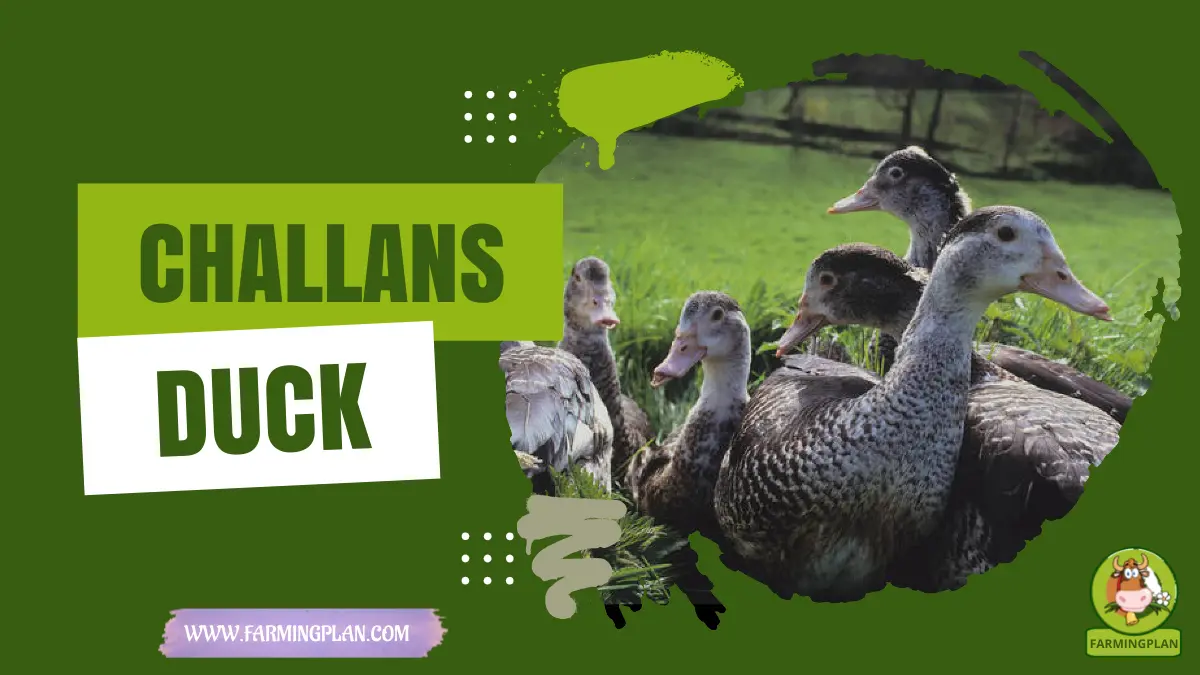
The plumage closely mirrors the wild Mallard ancestral pattern: – Drakes feature an iridescent emerald-green head and neck, separated from a rich claret-wine breast by a narrow, clean white neck ring. The back is dark ash-grey, shading to black at the rump with tightly curled sex feathers. – Ducks display warm partridge-brown plumage, each feather delicately penciled with crescent-shaped dark brown bands that provide natural camouflage during nesting. Both sexes possess a luminous metallic blue-violet speculum on the wing secondaries bordered by narrow white bars. Bills are olive-green in drakes and dark horn with orange shading in ducks, paired with sturdy orange webbed feet.
Behavior, Wetland Foraging, and Flock Dynamics
Challans ducks are lively, alert, and intensely gregarious birds that operate as a cohesive unit when ranging through wetland pastures. While they retain the vigilant predator awareness of wild ancestors, they quickly learn farm routines and move cooperatively when guided by familiar stockmen using herd canes or flags. They rarely exhibit neurotic flightiness when provided with adequate open water and foraging territory.
Their natural foraging capacity is unmatched among dual-purpose ducks. Released into marsh paddocks, irrigation ditches, or farm ponds, they spend hours dabbling for mosquito larvae, freshwater snails, tadpoles, watercress, duckweed, and aquatic roots. By harvesting aquatic pests like liver fluke snail vectors, Challans ducks provide invaluable biological parasite control for livestock operations. Learn how other waterfowl contribute to pasture balance in our Celle Goose husbandry handbook and our Changle Goose management guide.
Housing and Water Infrastructure Requirements
While Challans ducks spend the majority of daylight hours in outdoor pastures or water channels, safe night shelter is mandatory to protect the flock from nocturnal predators like foxes, owls, and raccoons. A simple, well-ventilated pole barn or mobile duck coop providing 0.4 to 0.5 square meters (4 to 5 sq ft) of floor area per duck is ideal. Ensure floors are bedded with dry barley straw or coarse wood shavings, which absorb duck manure moisture effectively. Providing adequate space and ventilation prevents common stress issues in Challans Duck.
Access to swimming water is vital for plumage maintenance, mating, and overall welfare. While commercial meat birds are often raised on dry shavings, pastured Challans ducks intended for breeding or premium culinary markets require clean water channels, ponds, or wide stock tanks. Natural or artificial ponds must provide gently sloping gravel entry ramps to prevent muddy bank erosion and allow effortless access for young ducklings.
Feeding Programs and Pasture Nutrition Strategies
To maximize meat tenderness and optimize growth velocity without inducing leg weakness, Challans ducks require a carefully phased nutritional regimen. Because ducks grow skeletal frame rapidly during the first six weeks, balanced protein, calcium, and niacin levels are critical:
A high-performance feeding program includes: – Starter Phase (Weeks 0 to 3): 20% crude protein non-medicated waterfowl starter crumb fortified with 65 mg/kg of niacin to prevent bowleg deformities. – Grower/Forager Phase (Weeks 4 to 8): 16% protein grower pellet combined with unrestricted pasture and pond foraging. – Finisher Phase (Weeks 9 to 12): 14% finishing ration formulated with cracked wheat, flaked maize, rolled oats, and fresh pasture to encourage intramuscular fat marbling. Always provide plenty of deep, clean drinking water adjacent to feeding stations, as ducks must moisten their feed continuously to prevent choking.
Breeding, Hatching, and Duckling Brooding
Challans ducks are prolific layers, producing 120 to 160 large eggs per hen between late February and mid-summer. Egg shells range from pale sea-green to creamy white, averaging 70 to 75 grams with dense, nutrient-rich yolks prized by bakers. Maintain a breeding ratio of one active drake to four or five ducks to ensure fertility rates above 85%.
While some mature ducks exhibit natural broodiness, consistent production operations utilize forced-air cabinet incubators. Incubation settings require 37.5°C (99.5°F) with 55% relative humidity for days 1 through 25, including daily cooling and misting with warm water starting on day 10 to simulate the natural moist plumage of a mother duck returning to the nest. On day 25, eggs move to the hatcher at 37.0°C and 75% humidity. Ducklings pip and emerge on day 28, displaying active vigor and rapid appetite under brooder heat lamps. Understanding breed-specific traits helps maximize Challans Duck longevity and output.
Carcass Yield, Culinary Quality, and French Haute Cuisine
The hallmark of the Challans Duck is its extraordinary meat quality. The breast meat is deep garnet-red, exceptionally fine-fibered, and infused with delicate monounsaturated fat that melts during cooking, releasing an exquisite gamey sweetness without oily greasiness. When prepared under traditional French techniques, the bird is gently smothered or asphyxiated rather than bled, retaining full blood volume within the muscle tissues to yield the rich, glossy sauce of classic canard au sang.
For farm-to-table direct marketing, pasture-raised Challans ducks harvested at 9 to 11 weeks yield an average oven-ready dressed weight of 2.0 to 2.4 kg (4.4 to 5.3 lbs). Restaurants, gourmet butcher shops, and private culinary clients regularly pay $35 to $55 per whole oven-ready carcass, creating lucrative margins that far exceed standard commercial Pekin duck production. Compare waterfowl meat traits with our Chara Chemballi duck report.
Flock Health, Biosecurity, and Disease Management
Challans ducks are exceptionally resistant to routine poultry diseases, but water-based operations require structured hygiene to manage waterfowl pathogens:
Key preventative protocols: – Vaccinate against Duck Viral Enteritis (Duck Plague) and Riemerella anatipestifer in large commercial flocks. – Prevent botulism outbreaks in summer months by clearing stagnant water pools, removing decomposing organic matter, and maintaining continuous freshwater circulation in holding ponds. – Provide insoluble grit and oyster shell hoppers to support digestive gizzard grinding and solid eggshell formation. – Maintain biosecurity barriers to limit direct contact between domestic flocks and migratory wild waterfowl that carry avian influenza. For poultry health comparisons, see our Castellana Negra chicken health guide. Routine preventive care saves time and lowers veterinary costs for Challans Duck.
Interactive Duck Enterprise Calculator
Use the interactive tool below to estimate feed requirements, egg production volumes, and projected gross revenue for your Challans Duck operation:
🦆 Challans Duck Flock Feed & Water Intake Calculator
Estimate daily balanced feed (lbs), fresh drinking/rinsing water requirements (Gal), indoor shelter, and monthly 50-lb feed bags for your Challans Duck flock.
Utilizing this calculator allows producers to forecast seasonal cash flows, grain expenses, and processing margins based on targeted flock sizes.
Financial Economics and Pastured Enterprise Viability
Developing a direct-market enterprise around the Canard de Challans offers high capital returns because gourmet buyers readily pay substantial premiums for authentic French culinary breeds. Combining culinary carcass sales with spring duckling and fertile hatching egg shipments creates a balanced, year-round revenue model.
Sample budget for a 20-duck breeding flock (4 drakes, 16 ducks): – Annual egg production: Approximately 2,200 eggs, with 1,200 incubated and 1,000 sold as culinary eggs. – Ducklings hatched: Roughly 850 ducklings at 70% overall hatchability. – Day-old duckling sales: 350 ducklings sold as breeding stock at $12 each ($4,200). – Market meat roasters: 450 pasture-finished roasting ducks sold at $42 each ($18,900). – Culinary table eggs: 80 dozen sold at $8.00 per dozen ($640). – Total annual feed, processing, and bedding expenses: $8,500 to $10,500. – Net operating profit: $13,240 to $15,240, demonstrating outstanding land-use efficiency.
Comparative Analysis: Challans Duck vs. Commercial Pekin
Comparing the Challans Duck with the ubiquitous commercial White Pekin highlights the distinct operational advantages of heritage waterfowl: Matching forage or ration quality to life stage optimizes Challans Duck growth.
| Operational Trait | Challans Duck (Canard de Challans) | Commercial White Pekin |
|---|---|---|
| Primary Market Focus | Artisanal gourmet roasting, fine dining | Mass commodity meat production |
| Meat Flavor & Texture | Deep red, succulent, fine muscle fiber | Pale pink, mild flavor, thick fat layer |
| Subcutaneous Fat Layer | Moderate, lean, balanced roasting fat | Very thick, oily fat layer |
| Foraging Independence | Exceptional; natural marsh grazer | Moderate to low; requires heavy grain diets |
| Physical Agility | Highly mobile, energetic, rarely crippled | Prone to leg weakness and joint stress |
| Wholesale Carcass Value | $16 – $22 per kg in specialty markets | $5 – $8 per kg in wholesale supermarkets |
| Historic Culinary Pedigree | Legendary; central to classic French recipes | Standard industrial commercial utility strain |
As this data shows, while commercial Pekins achieve harvest weight two weeks faster, Challans ducks produce vastly superior meat flavor, command double the wholesale price, and forage aggressively, lowering feed costs. Explore related Asian utility waterfowl in our Collo Nudo Italiano chicken review.
Pros and Cons of Raising Challans Ducks
Carefully evaluating the operational profile of the Challans Duck ensures proper alignment with your farm goals:
Key Advantages: – World-renowned meat quality commanding top-tier pricing from chefs and gourmet consumers. – Superb foraging vigor in wetlands, farm ponds, and pastures, reducing commercial feed dependency. – Resilient constitutional health and active mobility with minimal leg or joint issues. – Consistent seasonal egg laying of large, nutrient-dense culinary eggs.
Operational Considerations: – Requires secure water access (ponds or deep tanks) to achieve optimal mating fertility and plumage health. – Flight capability requires wing clipping or covered runs if kept in small enclosures. – Can create muddy conditions around water troughs if drainage is poorly managed. – Purebred foundation breeding stock is rare outside France and specialized European conservancies. Gradual dietary transitions protect digestive stability in Challans Duck.
Frequently Asked Questions: Challans Duck Husbandry
What is the Challans Duck and why is it famous?
The Challans Duck, or Canard de Challans, is a celebrated French heritage waterfowl breed originating in the Vendée marshes, world-famous for tender gourmet roasting meat and the legendary pressed duck (canard au sang) preparation.
What does a Challans Duck look like?
It resembles an alert, elongated wild Mallard with Rouen ancestry, featuring wild-type grey plumage (lustrous green head in drakes, warm penciled brown in ducks), orange shanks, and an olive-green bill.
How heavy do Challans ducks get?
Challans drakes weigh approximately 3.0 to 3.5 kg (6.6 to 7.7 lbs), while ducks weigh 2.5 to 3.0 kg (5.5 to 6.6 lbs), offering an optimal roasting size.
How many eggs do Challans ducks lay annually?
Challans ducks are prolific seasonal layers, yielding 120 to 160 large green-tinted or white eggs per year with excellent culinary baking quality.
Can Challans ducks forage in wetlands and ponds?
Yes. Having evolved in the coastal marshes of western France, they are exceptional wetland foragers that thrive on aquatic vegetation, insects, snails, and small crustaceans.
Breed Conservation, Registries, and Global Potential
In France, the Canard de Challans is officially recognized and conserved under the auspices of the Société Centrale d’Aviculture de France (SCAF) and regional agricultural heritage societies in Vendée. Breeders maintain strict morphological standards, ensuring that exhibition birds retain the vital productive traits of the working marshland landrace. Expanding gourmet interest in sustainable, slow-grown heritage poultry has ignited growing interest among regenerative homesteaders in the UK, Europe, and North America.
By propagating the Challans Duck, modern poultry farmers help conserve a living gastronomic icon while developing a highly resilient, pasture-adapted enterprise that stands apart from homogenized industrial poultry models.
Actionable Guidelines for Sustainable Flock Management
To establish a flourishing Challans Duck flock, prioritize water hygiene and rotational pasture access. Design paddocks with gravel aprons surrounding water access points to keep drinking water clean and eliminate stagnant mud wallows. Implement rotational grazing, moving duck flocks across damp meadow pastures after rain events to capitalize on emerging earthworms, snails, and aquatic vegetation. Breeders interested in comparing housing, diet, and productivity traits should see our Dutch Hookbill Duck husbandry guide.
When preparing market ducks for harvest, finish birds for two weeks on a diet rich in whole oats, cracked corn, and buttermilk or whey to soften muscle grain and impart an exquisite nutty flavor to the carcass fat. Partner with local chef-owned restaurants to market the rich history and unmatched sensory qualities of this historic French breed. With attentive care and natural pasture management, the Challans Duck will become the cornerstone of your farm’s poultry success.
📚Agricultural Reference & Scientific Citations
Standards and physiological data referenced in this guide comply with American Poultry Association (APA), The Livestock Conservancy, and USDA APHIS Avian Biosecurity Standards.


