

| Characteristic | Breed Standard | Silvopastoral Production Significance |
|---|---|---|
| Breed Classification | Aboriginal Silvopastoral Swine (Sus scrofa scrofa / domesticus) | Specialized forest grazer feeding on oak acorns, beechnut mast, and wild roots |
| Mature Senior Boar Weight | 265 to 355 lbs (120 to 160 kg) | Muscular, laterally compressed body designed for rugged mountain forest mobility |
| Mature Senior Sow Weight | 198 to 285 lbs (90 to 130 kg) | Exceptional maternal resilience, natural forest farrowing, and protective instinct |
| Average Litter Size | 5 to 8 striped, vigorous piglets | Camouflaged striped young with very low mortality in outdoor wooded paddocks |
| Coat & Dorsal Mane | Coarse black bristles with a prominent erectable dorsal spine crest | Protects against dense brambles, thorny understory, and freezing mountain rains |
| Ear Carriage & Head Type | Small, erect, forward-pointing ears with long wedge snout | Aboriginal wild-type morphology optimized for rooting tubers and deep acorns |
| Cured Meat & Ham Value | High oleic acid profile producing world-class dry-cured charcuterie | Forms the traditional basis for Bulgarian Elena fillet and Smyadovo lukanik |
Breed Overview and Production Statistics
The East Balkan pig is the only surviving aboriginal swine breed in Bulgaria and one of the oldest semi-feral livestock lineages in all of Europe. Adapted over millennia to the ancient deciduous oak and beech forests of the Strandzha, Stara Planina, and Eastern Balkan mountain ranges, this black indigenous pig thrives under extensive silvopastoral management systems. Roaming freely through protected woodlands to gorge on seasonal oak acorns and beechnut mast, the East Balkan swine represents a direct genetic link to primitive European wild boar ancestors and an essential ecological resource for producing world-renowned dry-cured charcuterie. Consistent daily observation helps keepers spot early changes in east balkan pig health and behavior.
Modern livestock producers and agro-foresters are increasingly rediscovering the economic and ecological value of this primitive forest grazer. With consumer demand surging for pasture-finished heritage meats, the East Balkan pig offers unmatched opportunities for specialty ham production, ecological forest management, and premium niche branding. This manual covers every aspect of managing East Balkan swine herds, from forest grazing permits and winter supplementation to farrowing shelter construction and culinary processing. Clean housing, fresh water, and balanced nutrition remain essential for east balkan pig productivity.
Ancient Origins and Agronomic History
The lineage of the east balkan pig breed extends back more than 2,500 years to early Thracian settlements in southeastern Europe. Archaeological and genetic investigations confirm that these pigs originated through ancient domestications of regional wild boar, followed by centuries of extensive semi-feral grazing across Balkan woodlands. Unlike modern confinement breeds shaped by intense selection for rapid indoor growth, the East Balkan pig evolved through rigorous natural selection, developing survival traits that allow it to withstand sub-zero winters, predator threats, and seasonal forage scarcity.
Historically, entire rural villages along the Black Sea coast and Strandzha mountains based their seasonal economy on the autumn mast fattening of East Balkan herds. Herdsmen accompanied hundreds of pigs into mature oak and beech groves from September through December, where the animals gorged on fallen acorns. This acorn diet loaded their adipose tissues with oleic fatty acids, resulting in meat that cured into celebrated dry-cured fillets revered across southern Europe for their complex nutty aroma. Tracking feed intake and body condition supports long-term east balkan pig performance.
Morphology and Conformation Standards
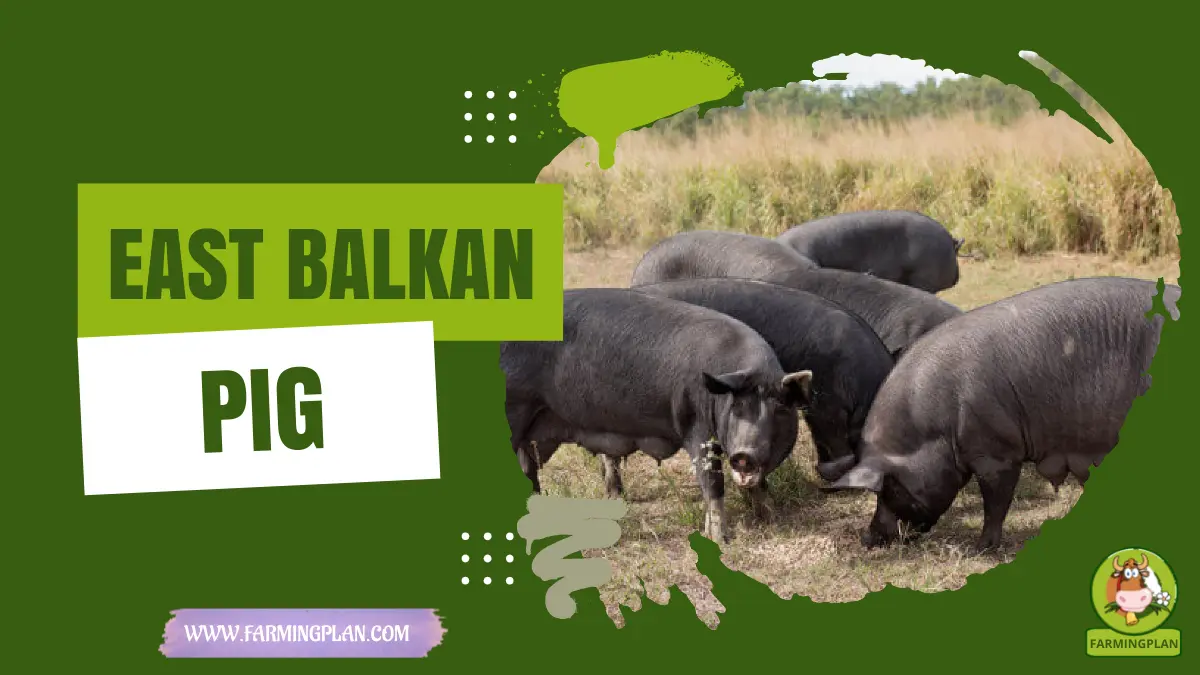
The morphology of the east balkan pig characteristics displays striking similarities to wild boar ancestors. The body is compact, laterally compressed, and muscular, designed for rapid navigation through dense forest undergrowth and steep rocky inclines. The shoulders and neck are heavy and robust, tapering into a narrower rump. A prominent crest of coarse, elongated bristles extends along the spine from the poll to the mid-back, which the pig erects when alarmed or establishing herd hierarchy. To evaluate alternative bloodlines and practical management routines, check our Dharane Kalo Sungur Pig overview. Following biosecurity best practices reduces disease risk in any east balkan pig operation.
Regarding east balkan pig size and weight, mature breeding boars weigh between 120 and 160 kg (265 to 355 lbs), while breeding sows average 90 to 130 kg (198 to 285 lbs). The head is long and wedge-shaped with a straight nasal profile and a tough, muscular snout suited for unearthing deep roots, truffles, and forest tubers without injuring facial cartilage. The ears are small, pointed, and held erect, providing keen directional hearing.
The coat is predominantly solid black, though occasional dark grey or brownish-black variants occur. Piglets are born with distinct longitudinal light yellow and brown camouflage stripes along their flanks—identical to wild boar piglets—which fade into solid black by four to five months of age. The hooves are exceptionally hard, jet black, and resistant to splitting even when traversing flinty mountain soils. Seasonal adjustments to shelter and diet keep east balkan pig thriving year-round.
Silvopasture and Forest Housing Systems
Housing for East Balkan pigs differs fundamentally from conventional intensive pig farming. These animals thrive outdoors year-round and suffer severe psychological and physical stress if confined in indoor stalls. Management relies on seasonal forest grazing enclosures combined with central winter holding yards. For comparative layout systems, explore our pig farming housing and management manual. Proper record-keeping makes breeding and culling decisions easier for east balkan pig keepers.
Winter headquarters should feature three-sided open timber sheds or traditional woven wattle-and-daub shelters thatched with straw or fern fronds. Sows and finishing stock congregate in deep-bedded communal pens during snowy periods. The bedding must be replenished with dry forest leaf litter or rye straw to provide insulation during sub-zero temperatures.
Fencing large forest pastures requires sturdy perimeter containment. Traditional systems rely on living hedgerows reinforced with three-strand high-tensile electric fencing powered by solar energizers. Because East Balkan pigs possess strong wild instincts, maintaining consistent electrical voltage (at least 5,000 volts) prevents them from testing boundaries or mingling with wild boars. Providing adequate space and ventilation prevents common stress issues in east balkan pig.
Forest Mast Foraging and Seasonal Nutrition
The nutritional cycle of the East Balkan pig follows natural woodland phenology. From spring through early summer, herds graze fresh forest pasture, consuming wild grasses, clover, nettles, ferns, and bramble shoots supplemented by earthworms, grubs, and snails. This high-protein, fiber-rich diet supports lean frame growth in growing juveniles and restores maternal condition in post-weaning sows. Understanding breed-specific traits helps maximize east balkan pig longevity and output.
From September through December, herds enter the critical mast fattening phase. In mature oak and beech stands, pigs consume 6 to 10 kg of fallen acorns and beechnuts daily. These nuts are packed with complex carbohydrates and mono-unsaturated fats, allowing the pigs to deposit thick, fragrant backfat that cures into premium charcuterie.
During the lean months of January and February when snow blankets the forest floor, supplemental feeding is necessary. Producers should provide 1.0 to 1.5 kg per head daily of coarsely cracked barley, corn, wheat bran, and alfalfa hay to maintain vital body condition scores. Learn optimal supplemental formulation in our guide to pig feed formulas and seasonal nutrition. Routine preventive care saves time and lowers veterinary costs for east balkan pig.
Biosecurity and Disease Management
Because East Balkan pigs graze extensive forest environments shared with wildlife, biosecurity management requires exceptional vigilance following health guidelines from the USDA Animal and Plant Health Inspection Service. The primary epidemiological threat across Eastern Europe is African Swine Fever, which is harbored by wild boar populations. Swine herders must construct double-fenced perimeter boundaries around winter compounds, prohibit swill feeding, and maintain strict disinfection gates for farm vehicles. Matching forage or ration quality to life stage optimizes east balkan pig growth.
The natural disease resilience of the East Balkan pig is remarkable; the breed exhibits extraordinary resistance to respiratory complexes and enteric disorders that plague commercial hybrids. Nonetheless, routine deworming against trichinella, lungworms, and large roundworms is required. Every slaughtered carcass destined for human consumption must undergo mandatory post-mortem trichinoscopy at a certified veterinary laboratory. Study clinical signs of major viral threats in our reference on pig diseases, diagnoses, and medical care.
Breeding Herd Selection and Farrowing Dynamics
Preserving aboriginal traits demands selective breeding that prioritizes survival instincts, maternal protective behaviors, and conformation soundness over rapid growth. Breeding boars should display strong masculinity, erect dorsal bristles, alert demeanor, and robust testicles. Sows must exhibit sound teats (typically 10 to 12), good maternal nature, and strong foraging drive. Gradual dietary transitions protect digestive stability in east balkan pig.
Gilts reach sexual maturity between 9 and 12 months of age, slightly later than commercial breeds. Mating typically occurs in late autumn during the acorn drop or in early spring. Sows prefer to farrow in secluded forest thickets, excavating shallow depressions and building dome-shaped nests from branches, twigs, and dry leaves. Under semi-managed systems, producers encourage sows to enter sheltered farrowing pens three days prior to parturition. Compare maternity styles in our guide to farrowing crates and welfare pens. Selecting healthy foundation stock is the cornerstone of successful east balkan pig management.
Litter sizes are modest, averaging 5 to 8 vigorous piglets. Piglet mortality is very low due to the sow’s acute protective instincts and thick colostrum. Piglets nurse for 8 to 12 weeks, gradually transitioning to foraged forest roots and supplemental grains before weaning.
Artisanal Meat Production and Gastronomy
The meat of the East Balkan pig represents the pinnacle of heritage pork gastronomy in southeastern Europe. The muscle fibers are deep mahogany-red, dense, and interwoven with glistening veins of intramuscular fat. Because the pigs live active outdoor lives and consume high quantities of acorns and beechnuts, their fat profile is exceptionally high in oleic acid—similar to Spanish Ibérico de Bellota pork. Good predator-proofing and dry bedding safeguard east balkan pig comfort in harsh weather.
Slaughter typically occurs at 18 to 24 months of age when hogs attain 90 to 110 kg liveweight following the autumn mast season. Carcass dressing yield averages 70% to 74%. The cured hams, dry-cured sausages, and cold-smoked lard command prices three to four times higher than conventional commodity pork in gourmet culinary channels and high-end restaurants. Monitoring water quality and mineral balance directly benefits east balkan pig vitality.
Enterprise Economics and Silvopasture Feasibility
Operating an East Balkan silvopastoral enterprise requires lower capital investment in mechanical buildings but demands access to suitable oak woodlands and skilled herd stockmanship. Because feed expenses are dramatically reduced through autumn acorn grazing, operating profit margins per finished animal are among the highest in heritage livestock farming. Learn foundational enterprise planning in our manual on how to start pig farming successfully.
| Expense Category | Operational Breakdown | Cost per Hog (USD) | Batch Total (15 Head) |
|---|---|---|---|
| Piglet Rearing Cost | Breeding herd maintenance & birth costs | $65.00 | $975.00 |
| Winter Supplemental Grain | 180 kg grain & hay ration @ $0.38/kg | $68.40 | $1,026.00 |
| Forest Grazing Fee | Woodland grazing lease & shepherd permits | $25.00 | $375.00 |
| Veterinary & Parasite Control | Trichinella testing, dewormer & vaccines | $22.00 | $330.00 |
| Artisanal Butchery & Curing | Specialized aging, smoking & vacuum pack | $160.00 | $2,400.00 |
| Logistics & Packaging | Temperature-controlled shipping & branding | $30.00 | $450.00 |
| Total Production Cost | Comprehensive Cost per Finished Pig | $370.40 | $5,556.00 |
| Gross Revenue | 70 kg hanging carcass / charcuterie @ $12.00/kg | $840.00 | $12,600.00 |
| Net Profit | Net Enterprise Profit Margin | $469.60 | $7,044.00 |
To dive deeper into European aboriginal livestock and agro-forestry pork systems, browse our extensive pig farming knowledge base, review nutrition in our pig feed guide, or consult diverse grazing systems across our livestock farming portal. Practical hands-on husbandry ensures consistent results when raising east balkan pig.
🐖 East Balkan Pig Swine Daily Feed Calculator
Calculate daily grower/finisher rations (lbs), monthly 50-lb feed bags, pen space, and water needs for your East Balkan Pig pigs.
Frequently Asked Questions
What makes the East Balkan pig unique among European swine?
The East Balkan pig is the only surviving aboriginal swine breed in Bulgaria, maintaining direct genetic ancestry to primitive wild boars. It is raised under extensive silvopastoral conditions, roaming oak and beech forests to fatten naturally on acorns and beechnuts.
What does the East Balkan pig eat in the forest?
Its natural diet consists of oak acorns (mast), beechnuts, wild roots, tubers, mushrooms, snails, and green forest herbs. During snowy winter months, farmers supplement the herd with small rations of cracked grains and hay.
Why is East Balkan pork so highly prized for cured meats?
The heavy consumption of oak acorns infuses the meat with high levels of mono-unsaturated oleic fatty acids. This fat profile creates a silky, nutty flavor and enables long dry-curing without rancidity, producing world-class charcuterie.
Are East Balkan pigs aggressive toward humans?
While East Balkan pigs retain alert, wild instincts and can be cautious around strangers, they are docile and responsive when managed regularly by familiar herdsmen. Sows are protective of young litters and require calm handling.
How long does it take for an East Balkan pig to reach slaughter weight?
Because they grow naturally on woodland forage rather than intensive grain diets, East Balkan pigs take 18 to 24 months to reach mature market weights of 90 to 110 kg (198 to 242 lbs).
Silvopasture Conservation Recommendations
To preserve this irreplaceable swine breed and optimize silvopastoral returns, producers should adhere to three core principles. First, balance herd stocking rates with woodland carrying capacity to prevent over-rooting of forest understory plants and sensitive stream banks. Second, maintain strict double-fenced biosecurity during winter housing to guard against contact with feral wildlife. Finally, pursue geographic indication and heritage certification to guarantee product authenticity and protect the historical economic heritage of Balkan forest pastoralism.

📚Agricultural Reference & Scientific Citations
Standards and physiological data referenced in this guide comply with USDA APHIS Swine Health, FAO Domestic Animal Diversity Information System, and the American Veterinary Medical Association (AVMA).