

| Characteristic | Breed Standard | Village & Smallholder Significance |
|---|---|---|
| Breed Classification | Indigenous Desi Dual-Purpose Fowl (Gallus gallus domesticus) | Exceptional scavenge efficiency, maternal broodiness, and disease hardiness |
| Mature Rooster Weight | 4.8 to 6.2 lbs (2.2 to 2.8 kg) | Muscular, alert sire with strong flock guarding behavior |
| Mature Hen Weight | 3.3 to 4.4 lbs (1.5 to 2.0 kg) | Attentive mother with tight feathering and high maternal defense |
| Annual Egg Production | 80 to 110 tinted to light brown eggs (45 to 50 grams) | Dense shell texture and high hatchability under natural brooding |
| Facial Conformation | Prominent throat beard and lateral muffs with small pea or single comb | Protects facial tissues from insect bites and harsh arid winds |
| Plumage Color Patterns | Reddish-brown, black mottled, partridge, and wheaten | Natural camouflage protecting birds against aerial birds of prey |
| Broodiness & Mothering | Strong maternal instinct; routinely sets on 12 to 15 eggs | Serves as natural incubator and defender of chicks in village farming |
Breed Overview and Production Statistics
The Ghagus chicken is an esteemed indigenous desi poultry breed native to the Deccan Plateau of South India, predominantly across the hilly tracts and dryland farming villages of Andhra Pradesh, Karnataka, and eastern Maharashtra. Renowned for its distinctive throat beard, facial muffs, extreme disease resilience, and legendary broody maternal instincts, this South Indian country fowl represents an invaluable genetic heritage for smallholder farmers. Reared under free-range village scavenging conditions for generations, the Ghagus chicken is celebrated for producing flavorful, nutrient-dense organic meat and reliable brown eggs while maintaining extraordinary vigilance against native predators. Good predator-proofing and dry bedding safeguard ghagus chicken comfort in harsh weather.
Unlike fragile commercial broiler hybrids that require controlled indoor environments, antibiotics, and commercial feed concentrates, the Ghagus chicken thrives on farmyard residues, weed seeds, and insects. In this complete husbandry guide, we break down housing infrastructure, natural brooding management, nutritional supplementation, flock biosecurity, and the commercial economics of organic desi poultry farming.
South Indian Origins and Cultural Heritage
The origins of the ghagus chicken breed are intrinsically linked to the agrarian communities of the Deccan Plateau in South India. For generations, pastoralists and dryland farmers maintained these bearded birds around village settlements. The fowl were expected to forage independently among dry fields, thorny scrublands, and threshing floors, returning to night shelters to roost. They provided rural households with an indispensable source of emergency animal protein and high-value ceremonial poultry for seasonal festivals. Monitoring water quality and mineral balance directly benefits ghagus chicken vitality.
In traditional Indian medicine (Ayurveda and Siddha), the meat and soup of the Ghagus chicken are revered for restorative, therapeutic qualities, often prescribed to nursing mothers and recovering patients. In recent years, the National Bureau of Animal Genetic Resources (NBAGR) in Karnal, India, officially recognized and characterized the Ghagus, stimulating conservation initiatives to preserve this resilient landrace against uncontrolled crossbreeding with commercial hybrid stock.
Morphology and Conformation Standards
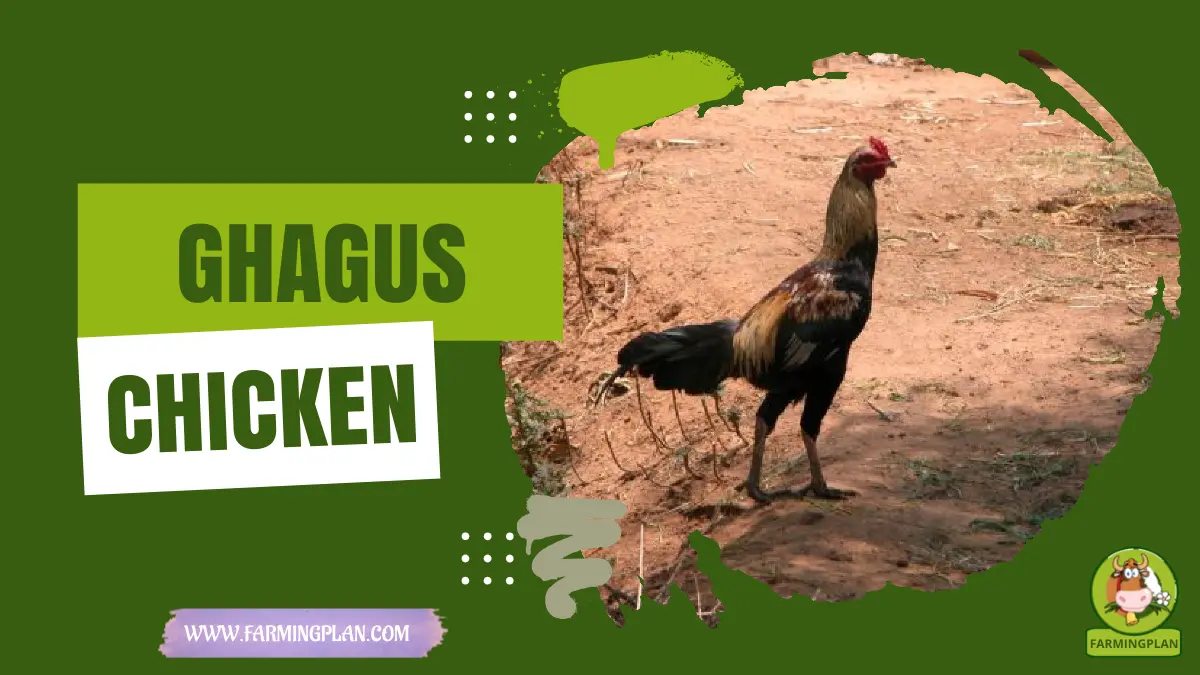
The morphology of the ghagus chicken characteristics exhibits functional, rugged hardiness. The body is medium-sized, compact, and cylindrical, carried in a semi-upright posture on strong, clean yellow or slate shanks. The breast is broad and muscular, and the wings are strong and held tightly against the body, enabling rapid flight to tree branches when ground predators strike. Practical hands-on husbandry ensures consistent results when raising ghagus chicken.
Regarding ghagus chicken size and weight, mature cocks weigh 2.2 to 2.8 kg (4.8 to 6.2 lbs), while hens average 1.5 to 2.0 kg (3.3 to 4.4 lbs). The head is medium in size, featuring a short, stout beak and prominent throat beard (sub-mandibular feathers) accompanied by thick side muffs. The comb is typically a low pea comb or small single serrated comb, which resists injury during brush foraging. The wattles are rudimentary or absent, submerged within the beard.
The ghagus chicken temperament is watchful, intelligent, and highly protective. Roosters actively guard their hens against aerial raptors, sounding sharp alarm calls and confronting small ground predators like snakes and rats.
Coop Design and Village Housing Systems
Housing for Ghagus chickens in semi-arid and tropical regions must prioritize predator security and natural ventilation. An open-sided mesh coop with a wide overhang tin or thatch roof protects birds from intense midday sun and sudden monsoon rains. Provide 0.35 to 0.45 square meters (3.5 to 5.0 square feet) of indoor floor space per bird, alongside elevated wooden perches placed 1.0 to 1.5 meters above ground level. Explore housing layouts in our guide on chicken coop design and predator protection. Early intervention at the first sign of lethargy protects overall ghagus chicken flock or herd health.
Predator protection is essential in rural areas where snakes, mongooses, jackals, and stray dogs threaten poultry. Secure the coop perimeter with 1/2-inch galvanized wire mesh buried 30 cm into the ground to stop burrowing vermin. Install elevated nesting boxes in dark, quiet corners where broody hens can set undisturbed.
Maintain clean dry bedding such as rice hulls, chopped straw, or dry sand on the coop floor. Good sanitation and regular application of slaked lime under roosts controls moisture and prevents pest buildup. Structured culling and biosecurity protocols strengthen ghagus chicken genetic quality.
Scavenging Habits and Range Management
The premier agronomic strength of the Ghagus fowl is its exceptional foraging frugality. Allowed to free-range around orchards, farm fields, and homestead borders, these birds actively search for termites, ants, grasshoppers, weed seeds, fallen grains, and tender greens. Their deep scratching behavior controls garden insect pests while aerating the soil.
Under semi-intensive pastured systems, rotational paddocks with mobile electric netting allow producers to manage foraging territory effectively. The birds’ agility ensures they cover wide ground without causing excessive turf damage in any single spot. Review broader range methods in our chicken farming production directory. Maintaining clean feeders and sanitized equipment supports sustainable ghagus chicken care.
Nutritional Strategies for Desi Poultry
Although Ghagus chickens obtain much of their food via scavenging, offering balanced supplemental rations maximizes egg production and chick growth. Provide a supplemental grain mash composed of cracked maize, sorghum (jowar), pearl millet (bajra), broken rice, and wheat bran, fed at 40 to 60 grams per bird daily in the evening.
To support laying hens, supplement the feed with crushed limestone grit or boiled, crushed eggshells to provide bioavailable calcium. Adding small amounts of roasted soybean meal or fish meal supplies essential lysine and methionine, improving egg size and feather development during molt cycles.
Clean drinking water must be available at all times in shaded locations. In hot seasons, adding natural electrolytes or crushed herbal leaves (such as neem and turmeric) to the water supports gut health and alleviates heat stress. Consistent daily observation helps keepers spot early changes in ghagus chicken health and behavior.
Flock Biosecurity and Disease Management
Centuries of natural selection in parasite-rich tropical environments have granted the Ghagus chicken robust natural immunity against common environmental pathogens. However, maintaining strict biosecurity prevents devastating viral outbreaks under health guidelines monitored by the USDA Animal and Plant Health Inspection Service. Vaccinate all chicks against Newcastle Disease (Ranikhet) at day 7 (F1 strain) and day 28 (Lasota strain), with booster shots given every six months.
Immunize against Fowl Pox via wing-web puncture at 6 to 8 weeks of age to prevent scabbing lesions during mosquito season. Routine deworming using oral albendazole or piperazine every three to four months controls internal roundworms and tapeworms. Explore full poultry health manuals in our poultry and waterfowl knowledge center. Clean housing, fresh water, and balanced nutrition remain essential for ghagus chicken productivity.
Provide deep dust baths filled with wood ash, dry soil, and sulfur powder to suppress external poultry lice and red mites. Spraying coop crevices with natural neem oil solutions disrupts mite hiding spots without contaminating poultry meat or eggs.
Broodiness and Natural Incubation Excellence
The Ghagus hen is celebrated across Indian aviculture as one of the finest natural surrogate incubators in the poultry world. Hens go broody reliably after laying a clutch of 12 to 15 eggs. A single Ghagus hen can sit comfortably on 12 to 14 chicken eggs, or even duck and guinea fowl eggs, maintaining consistent temperature and humidity with remarkable dedication. Tracking feed intake and body condition supports long-term ghagus chicken performance.
When a hen exhibits broodiness—fluffing her feathers, growling upon approach, and remaining steadfast on the nest—move her to a quiet, secluded brooding coop at night. Place fresh straw bedding and provide food and water within easy reach. The hen will leave the nest briefly once daily to eat, drink, and defecate before quickly returning to her clutch.
Upon hatching, the Ghagus mother is fiercely protective. She broods her chicks beneath her expansive wings, teaches them to forage for small insects and seeds, and aggressively attacks potential predators that approach her brood. Chick survival rates under Ghagus mothering are among the highest in free-range poultry.
Meat Quality and Market Opportunities
The meat of the Ghagus chicken represents the gold standard in authentic desi chicken gastronomy. Unlike soft, water-laden commercial broiler meat, Ghagus meat is dark, firm-textured, and deeply aromatic, with low fat content and high natural collagen. When simmered slowly in traditional spiced curries, the meat yields rich, savory broth prized for both flavor and health benefits. Following biosecurity best practices reduces disease risk in any ghagus chicken operation.
In urban markets across South India and international diaspora culinary communities, authentic country fowl (natukodi / desi murg) commands prices two to three times higher per kilogram than commercial chicken. By marketing free-range, organically reared Ghagus cockerels and eggs, smallholders can capture premium niche returns.
Enterprise Economics and Smallholder Budgets
Operating a smallholder flock of Ghagus chickens requires minimal capital outlay while providing multiple income streams from eggs, live breeding stock, and premium table birds. Study comprehensive startup modeling in our guide on how to start poultry farming successfully. Seasonal adjustments to shelter and diet keep ghagus chicken thriving year-round.
| Budget Category | Operational Details | Cost per Hen (USD) | Flock Total (30 Hens) |
|---|---|---|---|
| Replacement Pullet Cost | Desi chick acquisition & brooding | $6.50 | $195.00 |
| Supplemental Grain & Mash | 25 kg grain mix @ $0.40/kg | $10.00 | $300.00 |
| Coop Bedding & Lime | Rice hulls and slaked lime | $2.00 | $60.00 |
| Vaccines & Dewormer | Ranikhet vaccine, dewormer & vitamins | $1.80 | $54.00 |
| Egg Cartons & Packaging | Local cartons & direct delivery | $2.20 | $66.00 |
| Coop Depreciation Share | Wire mesh, feeder & waterer maintenance | $1.50 | $45.00 |
| Total Annual Cost | Total Operating Cost per Laying Hen | $24.00 | $720.00 |
| Gross Egg & Meat Revenue | 8 dozen eggs @ $6.00 + culled bird meat | $62.00 | $1,860.00 |
| Net Annual Profit | Net Return to Producer | $38.00 | $1,140.00 |
To further explore indigenous desi chickens and sustainable pasture management, check our specialized chicken farming portal, review flock nutrition in our poultry and waterfowl directory, or study sustainable agriculture across our livestock farming resource center.
🐔 Ghagus Chicken Flock Feed & Egg Yield Calculator
Estimate daily layer feed (lbs), monthly 50-lb feed bags, coop and run requirements, and expected weekly fresh egg yield for your Ghagus Chicken flock.
Frequently Asked Questions
What makes the Ghagus chicken unique?
The Ghagus chicken is an indigenous South Indian desi breed distinguished by its prominent throat beard, side muffs, extreme disease hardiness, and exceptional maternal broodiness. It thrives on village scavenging with minimal commercial feed inputs.
How many eggs does a Ghagus hen lay per year?
A Ghagus hen typically lays between 80 and 110 tinted to light brown eggs per year (45 to 50 grams each), laid across several distinct clutches interspersed with natural broody periods.
Are Ghagus hens good broodies?
Yes. Ghagus hens are celebrated as some of the finest natural broodies in aviculture. They sit faithfully on clutches of 12 to 14 eggs and are fiercely protective mothers that defend their chicks against predators.
What does a Ghagus chicken eat?
Under free-range management, Ghagus chickens consume insects, termites, weed seeds, agricultural grain residues, and kitchen scraps. Small evening rations of cracked corn, millet, and grain mash keep them productive.
Why is Ghagus chicken meat prized in cooking?
The meat of the Ghagus fowl is lean, firm-textured, and rich in natural collagen and flavor compounds, making it the preferred choice for traditional slow-cooked desi curries and therapeutic soups.
Conservation and Sustainable Breeding Best Practices
To preserve the genetic purity and survival traits of the Ghagus breed, smallholders should follow three essential practices. First, prevent indiscriminate crossbreeding with commercial hybrid white layers or broilers. Second, select breeding birds that demonstrate the characteristic throat beard, low comb, and agile conformation. Finally, maintain community breeding networks that share roosters among neighboring villages to avoid inbreeding depression while expanding desi poultry flocks.

📚Agricultural Reference & Scientific Citations
Standards and physiological data referenced in this guide comply with American Poultry Association (APA), The Livestock Conservancy, and USDA APHIS Avian Biosecurity Standards.


