

📊 Crocodile Farming in Bangladesh at a Glance: Key Specifications & Production Benchmarks
| Primary Cultivated Species | Saltwater Crocodile (Crocodylus porosus; Estuarine Crocodile) |
| Pioneering Commercial Farm | Reptiles Farm Limited (RFL), Bhaluka, Mymensingh District |
| Primary Export Markets | Japan, France, Germany, and Italy (Luxury Tanneries) |
| Commercial Harvest Age | 3.0 to 3.5 years; Belly width 35 to 42 cm; Length 1.5 to 1.8 meters |
| Annual Farm Egg Production | Clutches average 40 to 60 eggs per breeding female |
| Incubation Temperature | 88.5°F to 89.5°F (31.5°C to 32.0°C) producing male cohorts |
| Primary Feed Sources | Fresh poultry offal, minced river trash fish, and beef lungs |
| Regulatory Jurisdiction | Bangladesh Forest Department & Ministry of Environment |
| CITES Listing Category | CITES Appendix II (Registered Commercial Captive Breeding Operation) |
| Average Skin Value | $250 to $450 USD per Grade-1 certified raw salted belly skin |
When planning crocodile farming bangladesh management, Crocodile Farming in Bangladesh represents one of the nation’s most sophisticated and lucrative non-traditional agricultural export sectors. Established in 2004 with the founding of Reptiles Farm Limited (RFL) in Bhaluka within the Mymensingh district, commercial crocodilian farming in Bangladesh transformed from an ambitious conservation venture into a highly structured, export-driven industry producing premium raw salted skins for luxury fashion houses in Europe and Asia.
Whether you are exploring high-value non-traditional agribusiness ventures or studying captive reptile economics through our commercial aquaculture and crocodile farming hub, the Bangladeshi model demonstrates outstanding technical execution. Utilizing captive-bred estuarine saltwater crocodiles (Crocodylus porosus)—the largest living reptile on earth—commercial facilities leverage the country’s sub-tropical monsoon climate, abundant freshwater resources, and low-cost poultry processing by-products to achieve rapid juvenile growth rates. Practical hands-on husbandry ensures consistent results when raising crocodile farming bangladesh.
However, operating a commercial crocodile farm in South Asia demands strict adherence to international legal frameworks, particularly CITES Appendix II registration, environmental ministry licensing, bio-secure quarantine enclosures, and humane slaughter protocols. In this comprehensive technical guide, we evaluate tropical pen engineering, controlled artificial egg incubation, carnivore waste-stream rations, scale-defect prevention, and export logistics. Early intervention at the first sign of lethargy protects overall crocodile farming bangladesh flock or herd health.
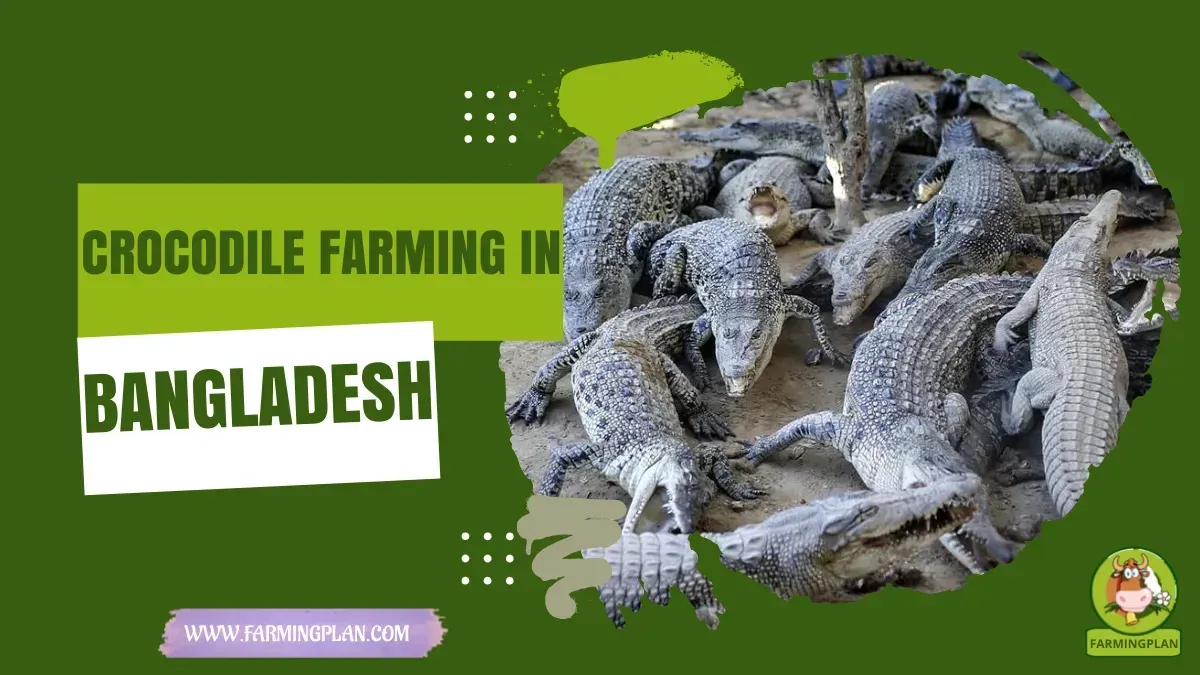
Physical Characteristics & Breed Standards
The saltwater crocodile cultivated in Bangladesh displays a colossal, heavy-set physical conformation engineered for apex amphibious predation. Structured culling and biosecurity protocols strengthen crocodile farming bangladesh genetic quality.
Their body is broad-chested and heavily armored along the dorsal plane, tapering into a massive, laterally flattened tail that delivers explosive swimming thrust. Maintaining clean feeders and sanitized equipment supports sustainable crocodile farming bangladesh care.
Conformation Standards & Anatomical Structure
The skull is heavy and broad with a robust, triangular snout lined with 64 to 68 sharp conical teeth capable of seizing and crushing large prey. The eyes, ears, and nostril openings sit atop the skull, allowing crocodiles to remain submerged while scanning banks.
The commercial value of Crocodylus porosus is rooted in its ventral skin: the belly scales are small, square, exceptionally uniform, and completely devoid of bony calcified osteoderms. This unique anatomical smoothness makes saltwater crocodile leather the most supple, prestigious, and expensive exotic leather in global haute couture. Consistent daily observation helps keepers spot early changes in crocodile farming bangladesh health and behavior.
The limbs are powerful and splayed, ending in webbed rear feet that provide agile terrestrial scrambling and stable bank crawling. Coloration in juveniles is light golden-tan with irregular dark bands, fading to a clean, creamy-white abdominal surface that must be preserved without blemishes. Clean housing, fresh water, and balanced nutrition remain essential for crocodile farming bangladesh productivity.
The circulatory system features an advanced crocodilian cardiac architecture, including a four-chambered heart and hepatic piston diaphragmatic mechanism that supports rapid metabolic recovery during heavy feeding. Tracking feed intake and body condition supports long-term crocodile farming bangladesh performance.
The muscular tail contains extensive fat deposits that sustain the animal during cooler winter spells when digestive enzyme secretion slows naturally.
Size, Weight Benchmarks & Color Variations
Commercial grow-out stock reach harvest size at 36 to 42 months of age, measuring 5.0 to 6.0 feet (1.5 to 1.8 meters) with a certified belly width of 35 to 45 cm. Following biosecurity best practices reduces disease risk in any crocodile farming bangladesh operation.
Adult breeding bulls in Bangladeshi facilities exceed 14 to 17 feet (4.2 to 5.2 meters) and weigh over 1,500 pounds (680 kg). Seasonal adjustments to shelter and diet keep crocodile farming bangladesh thriving year-round.
Mature breeding females maintain weights of 450 to 700 pounds (200 to 320 kg), producing annual clutches of 45 to 60 large, hard-shelled white eggs. Proper record-keeping makes breeding and culling decisions easier for crocodile farming bangladesh keepers.
📊 Crocodile Farming in Bangladesh Performance & Production Matrix
| Commercial Parameter | Bangladesh Saltwater Croc | African Nile Crocodile | American Alligator |
|---|---|---|---|
| Primary Cultivated Species | Saltwater (*C. porosus*) | Nile (*C. niloticus*) | Alligator (*A. mississippiensis*) |
| Belly Leather Value Index | Highest Luxury Grade (Top Tier) | High Luxury Grade (Mid Tier) | Premium Fashion Grade |
| Minimum Water Temp Need | 86°F to 90°F (30°C to 32°C) | 86°F to 90°F (30°C to 32°C) | 82°F to 86°F (28°C to 30°C) |
| Time to 35 cm Belly Width | 36 to 42 Months | 30 to 36 Months | 18 to 24 Months |
| Monsoon Humidity Impact | Ideal (Native High Humidity) | Requires Humidity Control | Tolerates Sub-tropical Humidity |
Breed History, Heritage & North American Development
Commercial crocodile farming in Bangladesh originated in 2004 when entrepreneur Mesbahul Haque founded Reptiles Farm Limited in Hatiber village, Bhaluka, Mymensingh, with initial technical support from Malaysian crocodile specialists. The farm imported 75 adult breeding saltwater crocodiles from Malaysia to establish the country’s first commercial herd.
Prior to this initiative, wild saltwater crocodiles had been extirpated from most of Bangladesh’s river networks, surviving only in deep mangrove tracts of the Sundarbans. The successful captive breeding and international registration of RFL under CITES in 2006 marked a turning point, allowing Bangladesh to legally enter international luxury leather export markets. Providing adequate space and ventilation prevents common stress issues in crocodile farming bangladesh.
In 2010, Bangladesh completed its historic first commercial export of 67 raw crocodile skins to Germany, followed by expanding regular shipments to elite tanneries in Japan and France. Today, the sector serves as a benchmark for high-value export diversification in South Asia. Understanding breed-specific traits helps maximize crocodile farming bangladesh longevity and output.
Housing, Shelter Dimensions & Winter Hardiness
Facility design in Bangladesh must withstand heavy monsoon downpours while maintaining stable thermal hothouse environments during winter. Routine preventive care saves time and lowers veterinary costs for crocodile farming bangladesh.
Spatial Density & Enclosure Engineering
Grow-out crocodiles (ages 1 to 3) are housed in enclosed, naturally lit concrete hothouse units maintained at 86°F to 89°F (30°C to 32°C), with stocking densities of 10 to 14 square feet per animal.
Pond floors and feeding aprons must be finished with polished granite screed or smooth epoxy resins to prevent ventral skin scuffing. Incorporate shallow central drainage trenches that allow 100 percent water drainage and flushing within 20 minutes. Matching forage or ration quality to life stage optimizes crocodile farming bangladesh growth.
Broodstock breeding dams require spacious earthen enclosures (minimum 1.5 acres per breeding colony) featuring a central deep-water lagoon (6 to 8 feet deep) surrounded by elevated sandy nesting banks and dense vegetation where females can construct mound nests. Gradual dietary transitions protect digestive stability in crocodile farming bangladesh.
Construct escape-proof perimeter boundary walls of 8-foot reinforced concrete block topped with outward-angled chain link fencing, sunk 3 feet underground to prevent escape tunneling. Selecting healthy foundation stock is the cornerstone of successful crocodile farming bangladesh management.
Nutritional Requirements, Daily Rations & Feeding Protocols
Commercial crocodile diets in Bangladesh utilize abundant agro-industrial waste streams to achieve low-cost, high-protein conversion.
Crude Protein Benchmarks Across Life Stages
The baseline ration consists of fresh poultry offal (chicken heads, viscera, and necks sourced from local broiler processing hubs) combined with minced freshwater trash fish and fresh beef offal, supplying 50 to 60 percent crude protein. Good predator-proofing and dry bedding safeguard crocodile farming bangladesh comfort in harsh weather.
Supplement meat rations with a specialized crocodilian vitamin-mineral premix containing 2.0 percent calcium carbonate, vitamin A, and vitamin D3 to ensure strong bone mineralization and prevent metabolic bone disorders. Monitoring water quality and mineral balance directly benefits crocodile farming bangladesh vitality.
Feed grow-out stock four to five times weekly during warm months at 3 to 5 percent of total biomass, reducing feed quantities during December and January when cooler winter temperatures naturally reduce digestive enzymes. Practical hands-on husbandry ensures consistent results when raising crocodile farming bangladesh.
Meat must be processed in cold-storage mincers and fed within two hours of preparation; feeding spoiled, decomposing offal causes severe bacterial septicemia and introduces gastrointestinal pathogens.
Health Management, Common Diseases & Biosecurity Standards
Crocodiles possess potent antimicrobial blood peptides, but captive density requires rigorous sanitation to prevent dermatological blemishes. Early intervention at the first sign of lethargy protects overall crocodile farming bangladesh flock or herd health.
Biosecurity Protocols & Veterinary Defenses
Perform daily complete water flushes in all grow-out tanks, pressure-washing concrete feeding aprons with biodegradable sanitizers or dilute chlorine solutions to eliminate organic slime. Structured culling and biosecurity protocols strengthen crocodile farming bangladesh genetic quality.
Inspect animals weekly for signs of bacterial skin ulcerations or fungal dermatitis (such as *Fusarium* infections), treating affected individuals promptly with broad-spectrum antibiotic ointments and clean water isolation. Maintaining clean feeders and sanitized equipment supports sustainable crocodile farming bangladesh care.
Maintain water quality parameters meticulously: maintain total ammonia under 0.1 mg/L and pH between 7.2 and 7.8, utilizing deep borehole water. Access international crocodilian pathology resources through the IUCN Crocodile Specialist Group Technical Veterinary Guides.
Implement strict farm biosecurity: require personnel to use foot disinfectant baths and designated footwear before entering nursery and grow-out hothouses. Consistent daily observation helps keepers spot early changes in crocodile farming bangladesh health and behavior.
Mound Nest Harvesting, TSD Incubation & Hatchling Care
In Bangladesh, saltwater crocodiles mate in April and May, with females constructing large vegetation-and-mud mound nests along sandy lagoon banks between June and July. Clean housing, fresh water, and balanced nutrition remain essential for crocodile farming bangladesh productivity.
Trained farm technicians harvest clutches within 24 hours of oviposition, carefully marking the top of each egg with pencil to maintain orientation; rotating or tilting crocodilian eggs ruptures delicate embryonic membranes, resulting in immediate mortality. Tracking feed intake and body condition supports long-term crocodile farming bangladesh performance.
Incubate eggs in computerized industrial hatching rooms at 88.5°F to 89.5°F (31.5°C to 32.0°C) to produce 100 percent fast-growing male cohorts. Eggs hatch after 75 to 80 days; wash hatchlings in warm saline water and place them in heated nursery water basins bedded with smooth tile.
Commercial Facility & Annual Operating Cost Benchmarks
Developing a commercial crocodile farming enterprise in Bangladesh requires substantial upfront capital for concrete hothouses, water heating, and breeding stock, yielding exceptional long-term export profits. Following biosecurity best practices reduces disease risk in any crocodile farming bangladesh operation.
Developing commercial crocodilian operations in Bangladesh requires patient institutional financing, delivering rapid export cash flow through direct partnerships with European and East Asian luxury leather conglomerates. Seasonal adjustments to shelter and diet keep crocodile farming bangladesh thriving year-round.
💰 Estimated Annual Budget & Maintenance Costs (USD)
| Budget Category | Item Description & Scope | Initial Capital Outlay | Annual Recurring Expense |
|---|---|---|---|
| CITES Licensing & Environmental Permits | Initial government clearances, CITES registry, and legal fees | $3,000 – $6,000 | $500 – $1,000 |
| Concrete Grow-Out Hothouses | Polished concrete tanks, heating system, and drainage pumps | $20,000 – $45,000 | $1,000 – $2,000 |
| Broodstock Lagoon & Security Perimeter | 1.5-acre fenced breeding dam and 8-ft concrete boundary wall | $15,000 – $30,000 | $600 – $1,200 |
| Poultry Offal & Fish Feed Rations | Fresh poultry processing wastes, trash fish, and mineral premix | $1,000 – $1,800 | $5,000 – $9,000 |
| Skinning & Cold Storage Equipment | Stainless skinning tables, salt curing basins, and walk-in freezer | $2,500 – $5,000 | $400 – $800 |
🐊 Crocodile Bangladesh Farm Feed & Pen Calculator
Calculate weekly meat rations (lbs), basking pool volume (gallons), land apron area (sq ft), and water temperature parameters for commercial Crocodile Bangladesh.
Frequently Asked Questions (FAQ)
Where are commercial crocodile farms located in Bangladesh?
The primary commercial operation is located in Bhaluka, Mymensingh district, operated by Reptiles Farm Limited, alongside developing facilities in the coastal southern divisions.
What species of crocodile is farmed in Bangladesh?
Commercial farming in Bangladesh focuses exclusively on the Saltwater Crocodile (Crocodylus porosus), renowned for possessing the finest, highest-value belly skin in the luxury fashion market.
Which countries import crocodile skins from Bangladesh?
Certified skins produced in Bangladesh are exported under CITES permits to luxury fashion tanneries in Japan, France, Germany, Italy, and Singapore.
What do farmed crocodiles eat in Bangladesh?
They are fed high-protein diets consisting of fresh poultry offal (broiler heads, necks, and viscera), minced freshwater fish, and beef lungs mixed with calcium and vitamin supplements.
Expert Verdict & Next Steps for Commercial Reptile Investors
Commercial Crocodile Farming in Bangladesh represents a shining example of non-traditional export agribusiness, demonstrating how sustainable captive breeding can generate substantial foreign exchange while contributing to global wildlife conservation. For visionary agribusiness investors with adequate long-term capital, crocodilian herpetoculture offers unparalleled international export margins. Proper record-keeping makes breeding and culling decisions easier for crocodile farming bangladesh keepers.
Expand your commercial aquaculture knowledge by exploring our companion guides to Crocodile Farming Business Planning, continental Crocodile Farming in Africa, high-density African Catfish Aquaculture, and regional Crocodile Farming in Kenya.
📚Agricultural Reference & Scientific Citations
Standards and physiological data referenced in this guide comply with USDA Animal and Plant Health Inspection Service (APHIS), American Veterinary Medical Association (AVMA), and the FAO Domestic Animal Diversity Information System.


