

📊 Crocodile Farming in Africa at a Glance: Key Specifications & Production Benchmarks
| Primary Commercial Species | Nile Crocodile (Crocodylus niloticus; Family Crocodylidae) |
| Primary Production Regions | Zimbabwe, South Africa, Zambia, Kenya, Madagascar, and Mozambique |
| Primary Commercial Commodities | Classic Belly Skins (Luxury Fashion) & Export Meat (Lean White Protein) |
| Harvest Sizing Benchmark | Belly width: 35 to 45 cm; Total length: 1.5 to 1.8 meters (Age 2.5–3 yrs) |
| Optimal Water Temperature | 86°F to 90°F (30°C to 32°C); Thermally controlled grow-out units |
| Egg Incubation Temperature | 88.5°F to 89.5°F (31.5°C to 32.0°C) for 100% male hatchling cohorts |
| CITES Regulatory Status | CITES Appendix II (Ranching Quotas under strict international oversight) |
| Feed Conversion Efficiency | 1.5 to 2.0 kg meat feed per 1.0 kg body gain in juvenile stages |
| Slaughter Humaneness Standard | Two-step protocol: captive bolt/cranial desensitization followed by pithing |
| Average Farm Revenue Life | Continuous; broodstock females remain fertile for 35 to 50+ years |
When planning crocodile farming africa management, Crocodile Farming in Africa represents one of the modern world’s most successful, internationally celebrated models of commercial wildlife ranching and sustainable conservation utilization. Centered primarily on the iconic Nile crocodile (Crocodylus niloticus)—an apex predatory reptile indigenous to freshwater basins, rivers, and swamps across sub-Saharan Africa—the industry took flight in the 1960s and 1970s in response to wild population collapses caused by uncontrolled twentieth-century poaching. Today, modern African crocodile farming represents a multi-million-dollar export sector governed by strict international conservation conventions.
Whether you are planning commercial reptile ranching or evaluating agribusiness investments through our commercial aquaculture and crocodile farming portal, mastering African crocodilian husbandry requires advanced technical proficiency. Unlike standard warm-blooded livestock, crocodiles are poikilothermic ectotherms whose metabolic rate, digestion, immune defenses, and growth velocity are strictly dictated by ambient water and air temperatures. Producing pristine, unblemished grade-one belly skins demanded by European luxury fashion houses requires immaculate concrete pen hygiene and stress-free handling. Selecting healthy foundation stock is the cornerstone of successful crocodile farming africa management.
Additionally, African commercial ranching programs operate under rigorous CITES Appendix II frameworks, where commercial farms collect a percentage of wild eggs under governmental quotas and return healthy sub-adult crocodiles back into native river systems, ensuring wild population revival. In this authoritative technical farming manual, we evaluate CITES licensing frameworks, controlled egg incubation temperatures, high-density grow-out pen engineering, raw carnivore nutrition, and humane slaughter protocols. Good predator-proofing and dry bedding safeguard crocodile farming africa comfort in harsh weather.
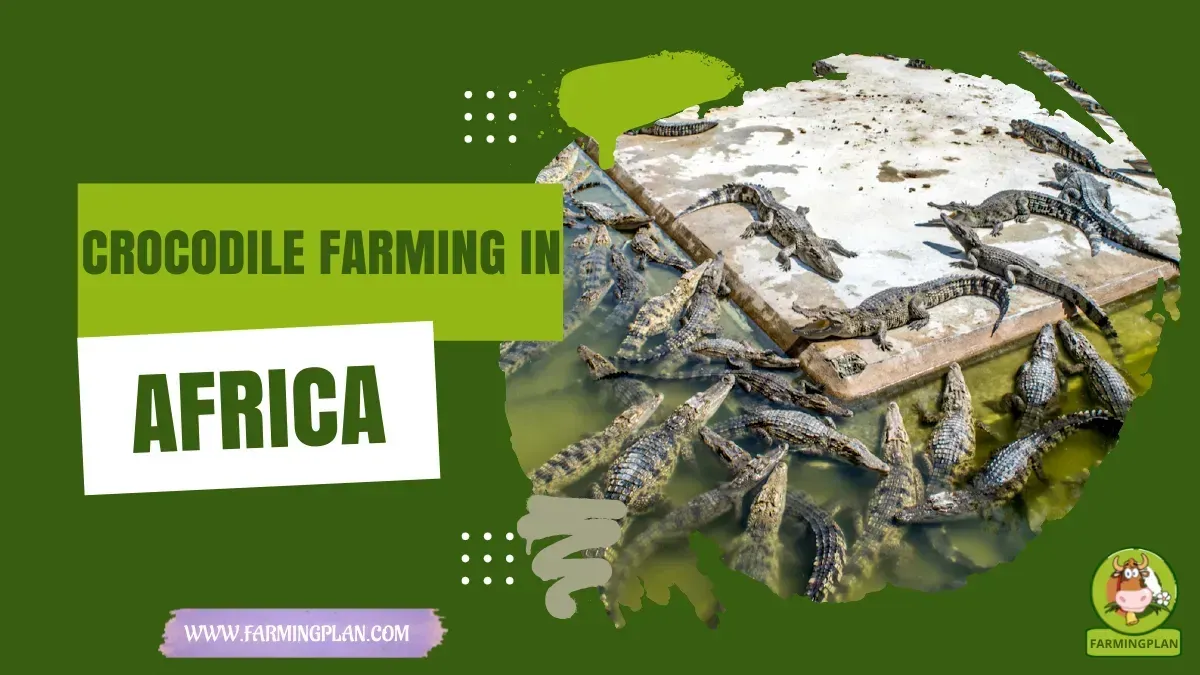
Physical Characteristics & Breed Standards
The Nile crocodile displays an armored, hydrodynamically perfected physical conformation that has survived virtually unchanged for over 80 million years. Monitoring water quality and mineral balance directly benefits crocodile farming africa vitality.
Their body is elongated and muscular with a massive, laterally compressed swimming tail that accounts for nearly half of the animal’s total body length. Practical hands-on husbandry ensures consistent results when raising crocodile farming africa.
Conformation Standards & Anatomical Structure
The skull is heavy, broad, and armored, housing powerful jaws lined with 64 to 68 interlocking teeth capable of exerting crushing hydraulic pressure. The eyes, ears, and nostrils are positioned high on top of the head, allowing the crocodile to remain submerged while breathing and scanning the water surface.
The dorsal skin is protected by rows of heavy, bony osteoderms (scutes) that serve as physical armor and vascular solar heat collectors. However, the commercial value resides entirely on the ventral (belly) skin: smooth, flexible, non-osteoderm scales with neat sensory pores, highly prized by luxury tanneries in France and Italy. Early intervention at the first sign of lethargy protects overall crocodile farming africa flock or herd health.
The limbs are short, splayed, and muscular, ending in clawed, webbed feet that provide agile crawling on land and stable steering in water currents. Structured culling and biosecurity protocols strengthen crocodile farming africa genetic quality.
Coloration in juveniles is dark bronze-olive with distinct black cross-bands across the flanks and tail, transitioning to an immaculate creamy-yellow or ivory belly that must be kept free of scratches or abrasions. Maintaining clean feeders and sanitized equipment supports sustainable crocodile farming africa care.
The heart possesses an advanced four-chambered architecture with a specialized *Foramen of Panizza*, enabling blood shunting that supports prolonged underwater submersion exceeding two hours.
Size, Weight Benchmarks & Color Variations
Commercial harvest size is reached at 2.5 to 3.0 years of age, when crocodiles measure 4.9 to 5.9 feet (1.5 to 1.8 meters) in length with a belly width of 35 to 45 cm. Consistent daily observation helps keepers spot early changes in crocodile farming africa health and behavior.
Adult breeding bulls routinely exceed 14 to 16 feet (4.2 to 4.8 meters) and weigh over 1,200 to 1,600 pounds (550 to 730 kg). Clean housing, fresh water, and balanced nutrition remain essential for crocodile farming africa productivity.
Breeding cows achieve lengths of 9 to 11 feet (2.7 to 3.3 meters) and weights of 450 to 650 pounds (200 to 300 kg), producing annual clutches of 40 to 60 eggs. Tracking feed intake and body condition supports long-term crocodile farming africa performance.
📊 Crocodile Farming in Africa Performance & Production Matrix
| Commercial Benchmark | Nile Crocodile (*C. niloticus*) | American Alligator (*A. mississippiensis*) | Saltwater Crocodile (*C. porosus*) |
|---|---|---|---|
| Primary Native Range | Sub-Saharan Africa & Nile Basin | Southeastern United States | Indo-Pacific & Northern Australia |
| Belly Scale Texture | Small, Uniform, Non-calcified | Smooth, Broad, Soft Scales | Extremely Fine, Ultra-Luxury |
| Optimal Water Temp | 86°F to 90°F (30°C to 32°C) | 82°F to 86°F (28°C to 30°C) | 88°F to 92°F (31°C to 33°C) |
| Commercial Harvest Age | 2.5 to 3.0 Years (1.5 m) | 1.5 to 2.0 Years (1.2 m) | 2.5 to 3.5 Years (1.6 m) |
| CITES Regulatory Status | Appendix II (Ranching Quota) | Appendix II (Strict Export) | Appendix II / Appendix I |
Breed History, Heritage & North American Development
Historically, unregulated hunting across colonial Africa between the 1940s and 1960s decimated wild Nile crocodile populations to supply the post-war European leather trade, driving the species toward commercial extinction. In response, international conservation treaties and the 1973 CITES convention placed the species under strict protection. Following biosecurity best practices reduces disease risk in any crocodile farming africa operation.
In 1965, the world’s first commercial crocodile ranch was established at Victoria Falls in Rhodesia (now Zimbabwe), pioneering captive breeding and wild egg harvesting protocols. South Africa and Zambia rapidly developed matching industries, proving that economic ranching could directly support wild habitat preservation.
Under the scientific guidance of the IUCN Crocodile Specialist Group, African nations established the ‘ranching model’: farms gather wild eggs from seasonal floodplains where over 90 percent would naturally drown or fall to predators, incubate them artificially, and release 5 percent of captive-grown sub-adults back into the wild. Today, African Nile crocodile populations are completely secure. Seasonal adjustments to shelter and diet keep crocodile farming africa thriving year-round.
Housing, Shelter Dimensions & Winter Hardiness
Facility engineering for African crocodile farming emphasizes smooth concrete pen surfaces, geothermal heating, and daily automated drainage. Proper record-keeping makes breeding and culling decisions easier for crocodile farming africa keepers.
Spatial Density & Enclosure Engineering
House grow-out crocodiles (ages 1 to 3) in climate-controlled hot-houses maintained at a constant 88°F (31°C), with stocking densities of 8 to 12 square feet of total space per animal, maintaining an equal ratio of water pond to dry basking apron. Providing adequate space and ventilation prevents common stress issues in crocodile farming africa.
All concrete surfaces must be finished with ultra-smooth epoxy coatings or polished screed: any rough sand or aggregate will scratch the delicate belly scales, immediately downgrading a $300 luxury skin to an unsellable grade-three reject.
Water ponds must be shallow (12 to 18 inches deep) with central drainage channels allowing complete daily drain-and-refill cycles. Broodstock require expansive outdoor breeding dams with natural sandy nesting banks (3 feet deep) where mature females can dig nesting burrows. Understanding breed-specific traits helps maximize crocodile farming africa longevity and output.
Nutritional Requirements, Daily Rations & Feeding Protocols
Crocodiles are obligate carnivores that require high-protein, fresh animal flesh supplemented with vital calcium and vitamins for rapid skeletal growth. Routine preventive care saves time and lowers veterinary costs for crocodile farming africa.
Crude Protein Benchmarks Across Life Stages
Feed grow-out crocodiles a daily diet of fresh minced poultry offal (deboned chicken necks, heads, and carcasses), beef trimmings, or fresh freshwater fish, supplying 55 to 65 percent crude protein on a dry matter basis. Matching forage or ration quality to life stage optimizes crocodile farming africa growth.
Incorporate a dedicated crocodilian vitamin-mineral premix containing calcium carbonate, dicalcium phosphate, vitamin A, vitamin D3, and vitamin E at 1.5 to 2.0 percent of total feed weight to prevent metabolic bone disease and rubber-jaw syndrome.
Feed hatchlings daily at 5 to 7 percent of body weight; feed yearlings and finishing stock four times weekly at 2 to 3 percent of biomass during late afternoon when ambient temperatures are warmest. Smallholders comparing closely related stock can also review our detailed Crocodile Farming in the UK guide. Gradual dietary transitions protect digestive stability in crocodile farming africa.
Never feed decomposed, rancid, or chemically treated meats; crocodiles digest fresh meats with remarkable speed at 88°F, but spoiled meat induces fatal bacterial enteritis and salmonellosis. Selecting healthy foundation stock is the cornerstone of successful crocodile farming africa management.
Health Management, Common Diseases & Biosecurity Standards
Crocodiles possess a formidable antimicrobial peptide immune system, but are vulnerable to fungal skin infections and stress-induced septicemia. Good predator-proofing and dry bedding safeguard crocodile farming africa comfort in harsh weather.
Biosecurity Protocols & Veterinary Defenses
Maintain pristine water hygiene: empty and pressure-wash grow-out ponds daily with quaternary ammonium disinfectants or mild chlorine solutions, refilling with clean, warm borehole water. Monitoring water quality and mineral balance directly benefits crocodile farming africa vitality.
Watch for Brown Spot disease (Fusarium fungal dermatitis), which presents as brownish erosive lesions on belly scales; treat outbreaks promptly with copper sulfate footbaths and improved water filtration.
Prevent juvenile stress-induced hypoglycemia and gout by avoiding sudden water temperature drops below 77°F (25°C) and ensuring adequate dietary hydration. Access official crocodilian veterinary protocols via the IUCN-SSC Crocodile Specialist Group Health Manuals. Practical hands-on husbandry ensures consistent results when raising crocodile farming africa.
Enforce strict biosecurity perimeters around the farm with 6-foot concrete barrier walls and double-gated disinfection vehicle sprays to prevent the entry of feral carnivores and wild reptiles. Early intervention at the first sign of lethargy protects overall crocodile farming africa flock or herd health.
Egg Harvesting, Temperature Sex Determination & Hatching
Nile crocodiles exhibit Temperature-Dependent Sex Determination (TSD): incubation temperature during the third and fourth weeks of embryonic development dictates the sex of the hatchling. Structured culling and biosecurity protocols strengthen crocodile farming africa genetic quality.
Incubate eggs in computerized industrial incubators at a constant 88.5°F to 89.5°F (31.5°C to 32.0°C) to produce 100 percent fast-growing male cohorts; temperatures below 87°F (30.5°C) or above 92°F (33.5°C) produce 100 percent females.
Eggs are packed in moist vermiculite or river sand (90 percent relative humidity) and hatch after 84 to 90 days. When hatchlings emit high-pitched chirping calls, unearth eggs immediately; wash newborn hatchlings in saline solution and place them in heated nursery water basins. Maintaining clean feeders and sanitized equipment supports sustainable crocodile farming africa care.
Commercial Facility & Annual Operating Cost Benchmarks
Establishing a commercial crocodile ranch in Africa involves substantial upfront capital investment in concrete infrastructure, heating, and CITES licensing, yielding high profit margins upon skin harvest. Consistent daily observation helps keepers spot early changes in crocodile farming africa health and behavior.
💰 Estimated Annual Budget & Maintenance Costs (USD)
| Budget Category | Item Description & Scope | Initial Capital Outlay | Annual Recurring Expense |
|---|---|---|---|
| CITES Farm Licensing & Permits | Government wildlife permits, CITES tags, and inspections | $2,500 – $5,000 | $500 – $1,000 |
| Concrete Grow-Out Hothouse | Epoxy-coated insulated concrete ponds and drainage system | $15,000 – $35,000 | $800 – $1,500 |
| Water Heating & Solar System | Commercial biomass boiler or solar water heating array | $6,000 – $14,000 | $400 – $800 |
| Carnivore Offal & Premix Rations | Minced poultry carcasses, beef offal, and vitamin premix | $800 – $1,500 | $4,500 – $8,500 |
| Slaughter & Skinning Equipment | Captive bolt stunner, skinning tools, salting drums | $1,200 – $2,500 | $200 – $400 |
🐊 Crocodile Africa Farm Feed & Pen Calculator
Calculate weekly meat rations (lbs), basking pool volume (gallons), land apron area (sq ft), and water temperature parameters for commercial Crocodile Africa.
Frequently Asked Questions (FAQ)
What are the primary commercial products of crocodile farming in Africa?
The primary commercial product is high-grade belly skin exported to luxury European fashion houses for handbags, belts, and boots, alongside lean, boneless white crocodile meat sold in domestic and export culinary markets.
What is the role of CITES in African crocodile farming?
CITES regulates international trade under Appendix II, enforcing strict quotas, individual skin tagging, and conservation compliance to ensure that commercial farming supports wild population conservation.
Why are concrete grow-out pens coated with epoxy on crocodile farms?
Concrete pens are coated with smooth epoxy or polished screed to prevent abrasive scratches on the crocodile’s belly scales, as even microscopic abrasions drastically reduce skin commercial value.
How does incubation temperature determine the sex of Nile crocodiles?
Crocodiles have temperature-dependent sex determination: incubating eggs at 88.5u00b0F to 89.5u00b0F produces 100% males (which grow faster), while cooler or warmer temperatures produce females.
Expert Verdict & Next Steps for Commercial Crocodilian Ranchers
Commercial Crocodile Farming in Africa stands as an extraordinary triumph of sustainable wildlife utilization, blending rigorous scientific conservation with high-value international luxury trade. For well-capitalized agribusiness operators seeking long-term commercial returns in tropical and subtropical regions, Nile crocodile ranching offers a unique, globally lucrative enterprise. Clean housing, fresh water, and balanced nutrition remain essential for crocodile farming africa productivity.
Deepen your commercial aquaculture and livestock expertise by reviewing our companion guides to high-density African Catfish Aquaculture, profitable Crocodile Farming Business Analysis, regional Crocodile Farming in South Africa, and technical Crocodile Farming Techniques.
📚Agricultural Reference & Scientific Citations
Standards and physiological data referenced in this guide comply with USDA Animal and Plant Health Inspection Service (APHIS), American Veterinary Medical Association (AVMA), and the FAO Domestic Animal Diversity Information System.


