

📊 CARI Gold Chicken at a Glance: Breed Standards & Production Benchmarks
| Scientific Classification | Gallus gallus domesticus (Improved Dual-Purpose Hybrid Fowl) |
| Developing Institution & Origin | Central Avian Research Institute (CARI, ICAR), Izatnagar, Uttar Pradesh, India |
| Primary Agricultural Purpose | Dual-purpose utility (prolific brown table eggs, rapid rural meat growth) |
| Mature Rooster Live Weight | 4.8 to 6.2 lbs (2.2 to 2.8 kg) – Sturdy, well-muscled dual-purpose sire |
| Mature Hen Live Weight | 3.7 to 4.8 lbs (1.7 to 2.2 kg) – Compact, highly efficient brown egg layer |
| Signature Plumage & Build | Golden-brown to deep chestnut plumage with dark tail feathers; yellow shanks |
| Annual Egg Laying Capacity | 190 to 220 tinted brown eggs (54–60g each) under backyard foraging systems |
| Climate Hardiness Rating | Superior tropical heat tolerance; thrives in humid temperatures exceeding 104°F |
| Scavenging & Foraging Ability | High foraging agility; derives substantial nutrition from backyard scavenging |
| Breeding Stock Investment | $25 to $55 per vaccinated breeding pair or high-grade pullet package |
The cari gold chicken represents one of the most successful agricultural innovations in modern tropical poultry science. Developed by geneticists at the Central Avian Research Institute (CARI) under the Indian Council of Agricultural Research (ICAR) in Izatnagar, India, this high-performance dual-purpose fowl was systematically engineered to thrive in rural backyard, semi-intensive, and small-scale commercial production systems across challenging tropical environments. Tracking feed intake and body condition supports long-term cari gold chicken performance.
Created by crossing indigenous Desi chicken bloodlines with high-yielding Rhode Island Red stock, the CARI Gold delivers an optimal balance between rustic survival stamina and modern commercial productivity. Smallholders exploring our tropical dual-purpose poultry guide appreciate the CARI Gold for its ability to produce between 190 and 220 rich brown eggs per year while reaching prime table cockerel harvest weights at early ages on simple scavenging diets supplemented with grain. Following biosecurity best practices reduces disease risk in any cari gold chicken operation.
Unlike fragile industrial broiler or layer hybrids that demand climate-controlled housing and intensive veterinary medications, the CARI Gold exhibits outstanding natural immunity, heat tolerance, and escape reflexes against ground predators. This comprehensive livestock guide delivers production-grade technical protocols, housing layouts, feeding formulations, and disease-prevention strategies for farmers seeking to maximize profitability with this robust dual-purpose bird. Seasonal adjustments to shelter and diet keep cari gold chicken thriving year-round.
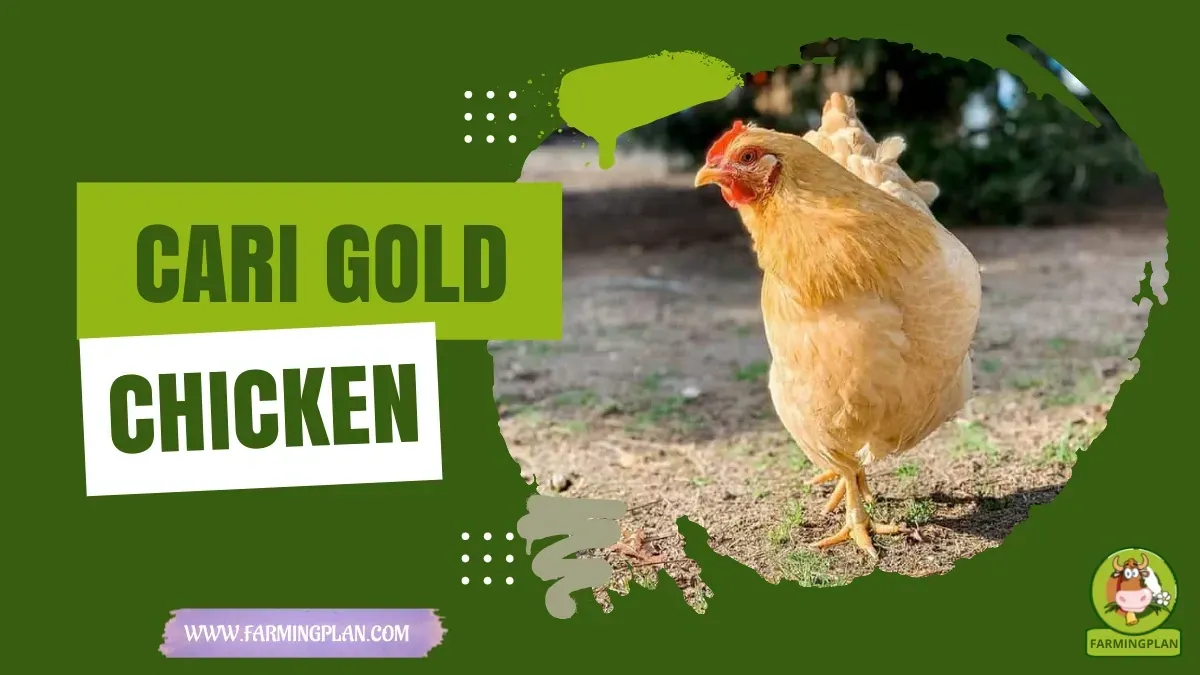
Conformation Standards & Physical Characteristics
The CARI Gold presents a robust, well-proportioned utility conformation engineered for both efficient egg synthesis and substantial meat yield. Mature roosters attain live weights of 2.2 to 2.8 kilograms (4.8 to 6.2 pounds), while mature hens weigh between 1.7 and 2.2 kilograms (3.7 to 4.8 pounds). Their carriage is alert, active, and horizontal, supported by muscular legs built for all-day foraging. Proper record-keeping makes breeding and culling decisions easier for cari gold chicken keepers.
Plumage coloration is a vibrant golden-brown or rich reddish-chestnut across the neck hackles, back, and saddle, often accented with iridescent greenish-black tail feathers in roosters and subtle dark stippling on hen tail tips. The comb is a medium single serrated blade of vivid red, matched by smooth red wattles and earlobes. Beak, shanks, and unfeathered feet are bright yellow, reflecting active carotenoid absorption from pasture greens. The carcass dresses out with firm, flavorful meat that closely matches consumer preferences for indigenous heritage chicken. Providing adequate space and ventilation prevents common stress issues in cari gold chicken.
📊 CARI Gold Chicken Morphological & Production Matrix
| Trait Parameter | Rooster (Cock) Standard | Hen Standard | Breeding Selection Benchmark |
|---|---|---|---|
| Mature Body Weight | 2.2 – 2.8 kg (4.8 – 6.2 lbs) | 1.7 – 2.2 kg (3.7 – 4.8 lbs) | Select for broad chest and strong shanks |
| Plumage Color | Golden-chestnut with black tail | Rich golden-brown with dark tail tips | Uniform plumage matching Desi market appeal |
| Shank & Skin Color | Bright yellow unfeathered shanks | Bright yellow unfeathered shanks | Reject pale or dark greenish shanks |
| Egg Output (Backyard) | — | 190–220 tinted brown eggs | Average egg weight 54–60 grams |
| Cockerel Market Age | 10–12 weeks (1.4–1.8 kg live) | — | High dressing yield (70%) with tender meat |
Development History & Tropical Genetics
The development of the CARI Gold was initiated by the Indian Council of Agricultural Research (ICAR) to address critical economic and nutritional needs in rural agrarian communities. Traditional indigenous village chickens (Desi fowl), while well-adapted to local diseases and predators, produce only 50 to 70 small eggs annually and grow slowly, yielding minimal meat revenue for smallholders. Understanding breed-specific traits helps maximize cari gold chicken longevity and output.
Researchers at the Central Avian Research Institute in Izatnagar executed systematic diallel crossing and multi-generation reciprocal selection programs, combining the hardiness, disease resistance, and multi-colored plumage of native fowl with the prolific egg-laying and growth performance of adapted Rhode Island Red lines. The resulting CARI Gold synthetic line demonstrated a dramatic improvement in annual egg count and growth velocity while preserving the attractive brown plumage and yellow skin demanded by regional consumer markets.
Today, CARI Gold is distributed across South Asia and tropical regions worldwide through agricultural extension centers, serving as an engine of rural poverty alleviation and women-led homestead livestock enterprises. Routine preventive care saves time and lowers veterinary costs for cari gold chicken.
Housing Systems, Predator Security & Range Management
CARI Gold chickens are versatile birds that succeed under free-range, semi-intensive, and deep-litter confinement systems. For optimal economic returns, a semi-intensive scavenging system—providing a secure night shelter combined with fenced daytime grazing paddocks—is strongly recommended. Matching forage or ration quality to life stage optimizes cari gold chicken growth.
Inside the night shelter, allocate 2 to 2.5 square feet of floor space per bird on clean deep litter (paddy husk, chopped straw, or untreated wood shavings). Coops must feature extensive wire-mesh ventilation near the eaves to facilitate airflow during sweltering tropical summers. Roosts should be installed 2 to 3 feet above floor level to satisfy their natural perching instinct and prevent nocturnal predator attacks from snakes, mongooses, and stray dogs. Gradual dietary transitions protect digestive stability in cari gold chicken.
Outdoor runs should offer at least 15 to 20 square feet of pasture per bird. Planting shade trees (such as moringa, leucaena, or neem) throughout runs provides natural protection against aerial hawks while offering protein-rich browse that birds harvest eagerly. For full structural layouts, explore our layer housing management blueprints. Selecting healthy foundation stock is the cornerstone of successful cari gold chicken management.
Nest box design requires careful sizing to prevent egg breakage and maintain shell cleanliness. Provide one 12×12-inch darkened wooden nest box for every four laying hens, bedded with clean rice hulls or dry straw. Mount nest boxes 18 inches above the floor with an exterior access door for simple daily egg collection without disturbing resting birds. Breeders interested in comparing housing, diet, and productivity traits should see our Gramalakshmi Chicken husbandry guide. Good predator-proofing and dry bedding safeguard cari gold chicken comfort in harsh weather.
Nutritional Strategies & Low-Cost Feeding Protocols
One of the primary advantages of the CARI Gold chicken is its exceptional scavenging capability. Under free-range conditions, adult birds gather 30% to 50% of their daily nutrient needs from spilled grains, weed seeds, green forage, earthworms, and insects, substantially decreasing commercial feed costs.
During the chick brooding phase (weeks 0 to 4), feed a balanced 20% crude protein starter mash to support immune organ development and skeletal growth. From weeks 5 to 16, provide a 15% to 16% CP grower ration consisting of broken rice, maize, wheat bran, and soybean meal. During the laying phase, supply a 16% to 17% CP layer mash providing 3.5% calcium, supplemented with crushed limestone or oyster shell. Complete dietary formulations are detailed in our poultry nutrition and feed conversion guide. Monitoring water quality and mineral balance directly benefits cari gold chicken vitality.
During peak egg production in hot tropical climates, incorporate dietary electrolytes (potassium chloride and sodium bicarbonate) into drinking water during afternoon hours. This practice mitigates heat distress, preserves blood acid-base equilibrium, and maintains optimal eggshell calcification even when daytime temperatures exceed 100°F. Practical hands-on husbandry ensures consistent results when raising cari gold chicken.
Always provide unlimited cool, clean drinking water. In tropical temperatures exceeding 95°F (35°C), chickens consume two to three times their normal water volume to dissipate internal heat via evaporative panting. Early intervention at the first sign of lethargy protects overall cari gold chicken flock or herd health.
Flock Health, Biosecurity & Disease Prevention
CARI Gold chickens possess robust general disease tolerance compared to industrial hybrids. However, maintaining strict vaccination schedules is mandatory to safeguard flocks against virulent endemic poultry pathogens in tropical regions. Structured culling and biosecurity protocols strengthen cari gold chicken genetic quality.
Chicks must receive Marek’s disease vaccination on day 1 at the hatchery, followed by Newcastle disease (Ranikhet F-strain) ocular drops on day 5 to 7. Administer Infectious Bursal Disease (Gumboro) vaccine on day 14 and day 24, followed by a booster Newcastle R2B strain injection at 8 to 10 weeks of age. Review detailed disease schedules in our poultry vaccination protocols manual and biosecurity standards from the USDA APHIS Avian Disease Program. Maintaining clean feeders and sanitized equipment supports sustainable cari gold chicken care.
Routinely deworm birds every 60 to 90 days using albendazole or piperazine to control roundworms (Ascaridia galli) and tapeworms picked up during open pasture foraging. Provide dust baths with sulfur powder to prevent tropical fowl mites and lice.
Breeding Management, Incubation & Chick Brooding
CARI Gold pullets reach point-of-lay at approximately 19 to 21 weeks of age, demonstrating rapid sexual maturity and consistent laying persistence. While commercial farmers utilize artificial hatcheries, smallholders can successfully hatch fertile eggs using broody local hens or small table-top incubators. Consistent daily observation helps keepers spot early changes in cari gold chicken health and behavior.
Establish breeding pens using a ratio of 1 rooster to 8 or 10 hens. CARI Gold roosters are active, vigorous breeders that maintain high fertility rates across warm seasons. Collect eggs multiple times daily to prevent pre-incubation heat damage. For complete hatchery setups, consult our poultry production and incubation guide. Clean housing, fresh water, and balanced nutrition remain essential for cari gold chicken productivity.
When incubating artificially, maintain 99.5°F (37.5°C) with 55% relative humidity for the first 18 days, increasing humidity to 70% during the final three days before hatching on day 21. Brood chicks under infrared heat lamps at 95°F (35°C) during week one, decreasing by 5°F each subsequent week until fully feathered at 4 weeks. Tracking feed intake and body condition supports long-term cari gold chicken performance.
Flock Economics & Estimated Annual Production Budget
Operating a 25-hen CARI Gold pastured poultry unit provides outstanding profitability for smallholders and rural families. Generating approximately 5,000 high-value brown table eggs annually alongside 25 meat cockerels, this low-capital enterprise delivers consistent weekly cash flow with low operating expenses. Following biosecurity best practices reduces disease risk in any cari gold chicken operation.
📊 Estimated Annual Production Budget: 25-Hen CARI Gold Semi-Intensive Unit
| Expense Category | Description & Operational Scale | Initial Capital Setup | Annual Recurring Expense |
|---|---|---|---|
| Point-of-Lay Pullets | 25 vaccinated CARI Gold pullets ($12 ea) + 2 roosters ($15 ea) | $330 | $0 |
| Night Shelter & Wire Run | Bamboo/mesh predator-proof shed, nest boxes, range fencing | $450 | $35 |
| Supplementary Feed | Grains, layer mash, mineral premix (partial scavenging diet) | $0 | $520 |
| Litter, Shavings & Grit | Paddy husk bedding, limestone grit, calcium supplement | $0 | $80 |
| Vaccines & Dewormers | Ranikhet, Gumboro vaccines, periodic anthelmintics | $25 | $55 |
| Projected Annual Revenue | 4,800 brown eggs ($3.50/doz) + 20 meat cockerels ($18 ea) | — | +$1,760 |
🐔 Cari Gold Chicken Flock Feed & Egg Yield Calculator
Estimate daily layer feed (lbs), monthly 50-lb feed bags, coop and run requirements, and expected weekly fresh egg yield for your Cari Gold Chicken flock.
Frequently Asked Questions (FAQ)
What is the CARI Gold chicken breed?
CARI Gold is an improved dual-purpose poultry hybrid developed by ICAR-CARI in India, crossing indigenous Desi stock with Rhode Island Red for high egg and meat yields.
How many eggs do CARI Gold hens lay per year?
CARI Gold hens produce between 190 and 220 tinted brown eggs annually under rural scavenging and semi-intensive backyard management systems.
How fast do CARI Gold cockerels reach market weight?
CARI Gold cockerels reach prime harvest weights of 1.4 to 1.8 kilograms (3.1 to 4.0 pounds) at 10 to 12 weeks of age on supplemental feeding.
Is the CARI Gold chicken heat tolerant?
Yes, engineered specifically for tropical climates, CARI Gold chickens withstand high temperatures exceeding 104u00b0F (40u00b0C) with remarkable resilience.
Can CARI Gold chickens survive on scavenging alone?
While CARI Gold chickens forage vigorously for up to 50% of their diet, providing daily grain or layer mash supplementation maximizes egg production and growth.
Expert Verdict & Next Steps for Poultry Producers
The CARI Gold chicken represents an ideal fusion of rustic survival genetics and modern laying performance. Offering robust tropical heat tolerance, strong scavenging instincts, high brown egg counts, and rapid cockerel growth, this hybrid bird is a powerhouse for sustainable smallholder farming systems. Seasonal adjustments to shelter and diet keep cari gold chicken thriving year-round.
Producers planning to establish pastured or backyard flocks should consult our comprehensive guide on commercial layer flock management to design efficient shelter and feeding systems. Sourcing certified vaccinated stock from authorized agricultural institutes ensures peak flock health and long-term farm profitability.
📚Agricultural Reference & Scientific Citations
Standards and physiological data referenced in this guide comply with American Poultry Association (APA), The Livestock Conservancy, and USDA APHIS Avian Biosecurity Standards.


