

⚡ Dhanraja Chicken at a Glance: Key Specifications & Benchmarks
| Scientific Classification | Gallus gallus domesticus (Tropical Dual-Purpose Synthetic Hybrid Poultry) |
| Origin & Breeding Foundation | Developed in India through ICAR & state agricultural university poultry breeding programs |
| Signature Physical Markings | Variegated rustic plumage (rich gold, mahogany, black spangled), upright single red comb, yellow legs |
| Mature Body Weight & Build | Roosters: 6.6 to 8.4 lbs (3.0 to 3.8 kg); Hens: 4.8 to 6.2 lbs (2.2 to 2.8 kg) |
| Primary Agricultural Purpose | Dual-purpose: rapid meat production (country broiler) & consistent brown egg laying |
| Growth Rate & Meat Harvest | Reaches 4.0 to 4.8 lbs (1.8 to 2.2 kg) in 8 to 10 weeks on semi-intensive grain rations |
| Annual Egg Laying Capacity | 160 to 190 tinted brown eggs per year; high shell breaking strength and rich orange yolks |
| Environmental Adaptation | Outstanding tropical heat resilience (>108°F / 42°C), robust predator agility, free-range foraging |
1. Introduction: The High-Yield Country Fowl of Tropical Farms
The Dhanraja chicken represents a remarkable achievement in modern tropical poultry genetics. Engineered to address the unique challenges of smallholder farming and rural commercial poultry enterprises across tropical and subtropical climates, the Dhanraja combines the rapid growth rates and meatiness of commercial broilers with the hardiness, scavenging tenacity, and disease resilience of native country (desi) fowl. Matching forage or ration quality to life stage optimizes Dhanraja Chicken growth.
In rural and semi-urban agricultural markets, consumers increasingly reject pale, soft industrial commercial broilers in favor of flavorful, firm-textured country chicken meat that commands premium prices. The Dhanraja bird fills this market void perfectly, delivering rapid weight gains under semi-intensive or free-range management while supplying a steady stream of nutritious brown eggs for farm families and local markets. Gradual dietary transitions protect digestive stability in Dhanraja Chicken.
Smallholders and commercial poultry farmers seeking a resilient, low-mortality flock that thrives on farm-milled grains, garden surplus, and pasture foraging find the Dhanraja chicken to be a dependable, highly profitable enterprise choice.
2. Deep Historical Origins & Tropical Poultry Engineering
The development of the Dhanraja chicken was initiated by Indian poultry geneticists and agricultural universities affiliated with the Indian Council of Agricultural Research (ICAR) and the Directorate of Poultry Research (DPR). Throughout the late twentieth century, rural poultry producers faced substantial losses when attempting to raise imported commercial broiler lines in hot, humid climates without expensive climate-controlled housing. Selecting healthy foundation stock is the cornerstone of successful Dhanraja Chicken management.
To overcome this limitation, researchers initiated a selective synthetic crossbreeding program. They crossed highly resilient indigenous breeds—such as the Aseel and Kadaknath, famed for heat tolerance and immune vigor—with high-performing dual-purpose exotic breeds including the Rhode Island Red, Australorp, and select Cornish meat lines. The resulting synthetic population was stabilized under hot climatic conditions, selecting for rapid feathering, feed efficiency, and survivability.
The name Dhanraja signifies agricultural abundance and prosperity. Today, government rural development initiatives and private hatcheries distribute Dhanraja day-old chicks to empower smallholder farmers, creating sustainable micro-enterprises that enhance rural household protein nutrition and generate steady cash flow. Good predator-proofing and dry bedding safeguard Dhanraja Chicken comfort in harsh weather.
The breed retains strong genetic resistance to environmental stressors, enabling it to maintain metabolic stability during hot monsoon seasons and sudden temperature shifts that devastate less adaptable commercial hybrids.
3. Standard Physical Characteristics & Breed Conformation
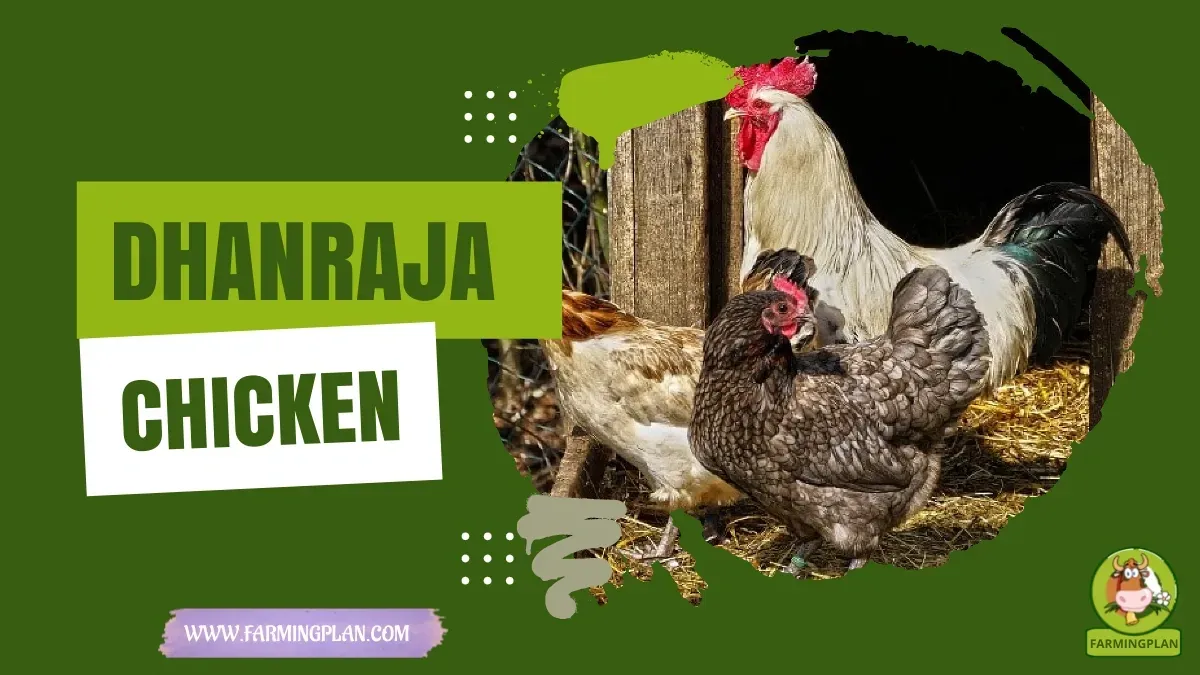
The visual appearance of the Dhanraja chicken closely mirrors the colorful, variegated plumage patterns beloved in traditional country fowl. Feathers showcase a vibrant spectrum of colors, including shimmering mahogany reds, golden buffs, deep browns, and black spangling with emerald iridescence. This colorful camouflage provides natural camouflage against aerial raptors during free-range grazing. Monitoring water quality and mineral balance directly benefits Dhanraja Chicken vitality.
The head features a medium-sized, upright single comb with well-defined serrations, vivid crimson wattles, and smooth red earlobes. The beak is stout, yellow to dark horn in color, and designed for efficient scavenging. The eyes are bright reddish-bay, expressing continuous environmental alertness. Practical hands-on husbandry ensures consistent results when raising Dhanraja Chicken.
The body conformation is deep, broad, and well-muscled. The breast carries prominent meat density, supported by strong, unfeathered yellow shanks that terminate in strong, straight toes. Mature roosters attain body weights of 6.6 to 8.4 lbs (3.0 to 3.8 kg), while mature hens weigh 4.8 to 6.2 lbs (2.2 to 2.8 kg).
The plumage is tight and smooth across the body, which aids in efficient heat dissipation under intense tropical sunlight, preventing heat buildup within the feather canopy. Early intervention at the first sign of lethargy protects overall Dhanraja Chicken flock or herd health.
4. Temperament, Flock Dynamics & Foraging Tenacity
Dhanraja chickens display an energetic, inquisitive, and confident temperament. They are not sluggish like industrial meat birds, nor are they wildly flighty like feral junglefowl. Instead, they exhibit sharp survival instincts, scanning the skies for hawks and sounding distinct alarm calls that prompt the flock to seek shelter under bushes.
Within the flock, roosters act as vigilant protectors. They maintain order among hens, escort them to productive foraging zones, and actively defend against small predatory snakes, rodents, and stray pests. Hens form harmonious social pecking orders with minimal feather-pecking or cannibalistic vices. Structured culling and biosecurity protocols strengthen Dhanraja Chicken genetic quality.
Their foraging tenacity is outstanding. Dhanraja chickens actively scratch and hunt across paddocks from dawn until dusk, consuming grass seeds, weed shoots, termites, grubs, grasshoppers, and earthworms. This active foraging substantially lowers commercial feed expenses and enriches both meat flavor and yolk pigmentation.
5. Housing Systems, Space Requirements & Tropical Shelter Design
In hot, humid tropical regions, poultry housing must prioritize ventilation, roof insulation, and predator exclusion. Fully enclosed, solid-wall barns trap heat and ammonia, leading to rapid respiratory distress. Instead, open-sided coops constructed with wire mesh walls and wide roof overhangs are ideal. Maintaining clean feeders and sanitized equipment supports sustainable Dhanraja Chicken care.
In semi-intensive or free-range setups, provide at least 2.0 to 2.5 square feet of indoor night roosting floor space per adult bird, coupled with at least 15 to 25 square feet of outdoor fenced run or pasture per bird. Roosts should be built from smooth 2-inch wooden poles positioned 18 to 24 inches above the floor, allowing 8 to 10 inches of roost space per bird.
Deep litter systems using dry rice husks, wood shavings, or chopped peanut hulls (4 to 6 inches deep) absorb moisture and manure effectively. Turn litter weekly to keep it dry and prevent fly breeding. Fencing should be at least 5 feet in height, buried 6 inches into the ground to exclude burrowing predators such as mongooses, jackals, and stray dogs. Consistent daily observation helps keepers spot early changes in Dhanraja Chicken health and behavior.
Ensure nest boxes measuring 12 x 12 x 12 inches are installed in the darkest, coolest corner of the coop, providing one nest box for every four laying hens, bedded with clean straw. Clean housing, fresh water, and balanced nutrition remain essential for Dhanraja Chicken productivity.
6. Nutritional Strategy, Feed Formulation & Tropical Rations
A major commercial strength of the Dhanraja chicken is its high digestive flexibility. While standard broilers require expensive 22% protein commercial starter crumbles, Dhanraja birds can be raised successfully on low-cost, farm-formulated rations combined with daily scavenging.
During the brooding phase (weeks 0 to 4), chicks should receive a balanced starter crumble containing 20% crude protein and 2,900 kcal/kg metabolizable energy. From week 5 to market age (weeks 8 to 12), the flock can transition to a grower mash formulated with 17% to 18% crude protein consisting of broken corn, rice bran, soybean meal, groundnut cake, and trace minerals. Tracking feed intake and body condition supports long-term Dhanraja Chicken performance.
For egg-laying hens, provide a balanced layer ration containing 16% crude protein fortified with 3.5% calcium (coarse limestone grit or crushed oyster shells) to ensure strong eggshells. Supplementing with fresh azolla (aquatic fern) or moringa leaf meal provides cost-free natural vitamins, protein, and beta-carotene.
Clean, cool water is vital. During hot summer days, water consumption doubles; provide fresh water in shaded bell drinkers, adding electrolytes or vitamin C during extreme heat spells to alleviate oxidative stress. Following biosecurity best practices reduces disease risk in any Dhanraja Chicken operation.
7. Meat Growth Rates, Feed Conversion & Carcass Performance
When managed under semi-intensive commercial meat systems, Dhanraja broilers achieve impressive growth benchmarks. Chicks reach live body weights of 2.2 to 2.6 lbs (1.0 to 1.2 kg) by 6 weeks, and prime market slaughter weights of 4.0 to 4.8 lbs (1.8 to 2.2 kg) within 8 to 10 weeks of age.
The feed conversion ratio (FCR) ranges between 2.2:1 and 2.5:1 under semi-intensive feeding, significantly outperforming indigenous unselected fowl (which often exceed 4.0:1) while providing the firm, lean meat texture desired by consumers. Dressing percentage averages 72% to 75%. Seasonal adjustments to shelter and diet keep Dhanraja Chicken thriving year-round.
The meat of the Dhanraja is darker, firmer, and more aromatic than industrial white broiler meat, holding its structure beautifully in traditional curries, stews, and tandoori preparations without shredding or turning mushy. Retailers can market Dhanraja meat as premium country chicken (desi murg), securing 30% to 50% price premiums over white broilers.
Uniform flock development ensures that whole batches can be processed together, streamlining distribution to regional hotel chains and local butcher shops. Proper record-keeping makes breeding and culling decisions easier for Dhanraja Chicken keepers.
8. Egg Laying Benchmarks & Flock Reproductive Care
While often harvested for meat, Dhanraja hens are also productive egg producers. Pullets begin laying at approximately 20 to 22 weeks of age, reaching peak production between 26 and 32 weeks. Providing adequate space and ventilation prevents common stress issues in Dhanraja Chicken.
Under good nutritional and lighting management (providing 14 to 15 hours of light per day), a healthy Dhanraja hen produces between 160 and 190 eggs annually. The eggs are medium to large in size (52 to 58 grams), featuring smooth, tinted light brown to cream shells with high breaking strength that reduces transport breakage.
The internal egg quality is exceptional, featuring thick albumen and deep orange-gold yolks enriched by the hen’s active pasture foraging for carotenoid-rich greens and insects. While pure synthetic hybrids exhibit low broodiness to maximize continuous laying, farm hens can be mated with roosters at an 8:1 ratio to produce fertile hatching eggs with hatchability rates of 80% to 85% in artificial incubators. Understanding breed-specific traits helps maximize Dhanraja Chicken longevity and output.
Egg production remains steady across multi-year cycles, allowing smallholders to maintain laying hens economically for two full laying seasons before retiring them as soup fowl.
9. Preventative Healthcare, Tropical Vaccination & Biosecurity
While the Dhanraja chicken exhibits robust natural immunity against endemic tropical pathogens, maintaining a disciplined vaccination schedule is critical for commercial success. Day-old chicks should be vaccinated against Marek’s Disease at the hatchery. Routine preventive care saves time and lowers veterinary costs for Dhanraja Chicken.
On Day 5 to 7, administer the Lasota or F1 strain against Ranikhet Disease (Newcastle Disease) via eye drop, followed by Infectious Bursal Disease (IBD / Gumboro) vaccine on Day 14. A booster Ranikhet vaccination (R2B or Lasota) should be administered at 8 to 10 weeks of age, alongside Fowl Pox vaccine via wing-web puncture at 6 to 8 weeks.
Internal worms (notably roundworms Ascaridia galli and cecal worms Heterakis gallinarum) are common in free-range systems; deworm the flock every 8 to 12 weeks using piperazine or albendazole. Dust roost poles with sulfur powder or food-grade diatomaceous earth to suppress red poultry mites (Dermanyssus gallinae) and lice. Matching forage or ration quality to life stage optimizes Dhanraja Chicken growth.
Maintain clean waterers, apply agricultural lime to outdoor soil runs annually, and quarantine new birds for 21 days to prevent pathogen introduction into your resident flock.
10. Economic Feasibility, Enterprise Budgets & Smallholder Profitability
The economic feasibility of Dhanraja poultry production is outstanding for smallholders and commercial farm units due to rapid capital turnover and premium retail meat valuation. Raising batches of 200 to 500 birds every 10 weeks allows farmers to generate year-round cash flow. Gradual dietary transitions protect digestive stability in Dhanraja Chicken.
Because mortality rates in vaccinated Dhanraja flocks typically remain below 3% to 5% under good care—compared to 15% to 25% for fragile exotic broilers—input risks are significantly reduced. Integrating poultry droppings as high-nitrogen organic manure for agricultural crops further improves total farm margins. Selecting healthy foundation stock is the cornerstone of successful Dhanraja Chicken management.
Explore comprehensive poultry enterprise models in our poultry farming guide, design durable housing via our chicken coop plans, and optimize feed costs with our poultry feed formulation handbook.
11. Interactive Poultry Meat & Egg Calculator
Calculate your feed requirements, flock growth timelines, and expected net meat and egg yields for Dhanraja chickens using the interactive calculator below: Good predator-proofing and dry bedding safeguard Dhanraja Chicken comfort in harsh weather.
🐔 Dhanraja Chicken Flock Feed & Egg Yield Calculator
Estimate daily layer feed (lbs), monthly 50-lb feed bags, coop and run requirements, and expected weekly fresh egg yield for your Dhanraja Chicken flock.
12. Strategic Implementation Roadmap for Commercial Flocks
Starting a successful Dhanraja poultry operation involves three structured phases. In Phase 1, construct an open-sided, predator-proof coop equipped with brooding lamps, chick feeders, and fenced foraging yards.
In Phase 2, source certified day-old Dhanraja chicks from authorized government or recognized commercial hatcheries. Brood chicks under heat lamps (95°F / 35°C during week 1, reducing by 5°F weekly) and execute the strict first-month vaccination program. Monitoring water quality and mineral balance directly benefits Dhanraja Chicken vitality.
In Phase 3, transition birds to grower rations and daytime free-range foraging, establish reliable marketing channels with local restaurants and country meat vendors, and cycle batch placements every 8 weeks for uninterrupted income.
13. Frequently Asked Questions
What kind of chicken is the Dhanraja breed?
The Dhanraja chicken is a synthetic dual-purpose tropical poultry hybrid developed in India, combining the rapid growth and meatiness of commercial broilers with the disease resilience, colorful plumage, and foraging tenacity of native country fowl.
How fast do Dhanraja chickens reach market weight?
Under semi-intensive feeding and good management, Dhanraja chickens reach prime market weights of 4.0 to 4.8 lbs (1.8 to 2.2 kg) in 8 to 10 weeks, delivering an efficient feed conversion ratio between 2.2:1 and 2.5:1.
How many eggs do Dhanraja hens lay per year?
Dhanraja hens lay between 160 and 190 medium-to-large tinted brown eggs per year, featuring strong shells and rich golden yolks enriched by their active pasture foraging.
Can Dhanraja chickens tolerate hot summer temperatures?
Yes, the breed is specifically bred for tropical resilience, tolerating ambient temperatures above 108°F (42°C) without suffering the severe heat prostration common in conventional white broilers, provided they have shade and fresh drinking water.
14. Conclusion & Future Outlook for Tropical Poultry
The Dhanraja chicken provides tropical poultry producers with an outstanding commercial asset, bridging modern genetic efficiency with traditional rustic hardiness. By producing firm, premium-flavored country meat and reliable eggs with minimal infrastructure costs, it remains an indispensable breed for modern smallholders. Practical hands-on husbandry ensures consistent results when raising Dhanraja Chicken.
To discover more livestock production systems and explore advanced animal care techniques, study our complete guide on commercial livestock management and scale your poultry farm with confidence.
📚Agricultural Reference & Scientific Citations
Standards and physiological data referenced in this guide comply with American Poultry Association (APA), The Livestock Conservancy, and USDA APHIS Avian Biosecurity Standards.


