

⚡ Burmese Cat at a Glance: Key Specifications & Benchmarks
| Scientific Classification | Felis catus (Domestic shorthair carrying the sepia c(b) allele) |
| Foundation Ancestor | Wong Mau (Imported from Burma to San Francisco, USA in 1930) |
| Adult Body Weight | Males: 8 to 12 lbs (3.6 to 5.4 kg); Females: 6 to 9 lbs (2.7 to 4.1 kg) |
| Body Silhouette & Build | “A brick wrapped in silk”; compact, muscular, and surprisingly heavy |
| Coat Texture & Colors | Short, satin-gloss single coat in sable, champagne, blue, and platinum |
| Eye Color Mandate | Luminous gold to rich warm yellow, set in rounded expressive sockets |
| Average Lifespan | 14 to 18+ years under routine veterinary wellness and proper nutrition |
| Homestead Lifestyle Fit | Strictly indoor farmhouse companion; deeply bonded to family and pets |
The Burmese cat is celebrated throughout the feline fancy as “a brick wrapped in silk.” Behind their short, shimmering satin coat and soulful golden eyes lies a surprisingly solid, dense, and muscular frame that feels astonishingly heavy when lifted. Developed in the United States from a single walnut-brown matriarch imported from Burma in 1930, the Burmese has earned devotion for its dog-like affection and boundless enthusiasm. Understanding breed-specific traits helps maximize Burmese Cat longevity and output.
For homesteaders and rural companion animal keepers exploring our feline breed and homestead cat care guides, the Burmese offers an extraordinarily social housemate. Unlike independent or aloof felines, Burmese cats demand active participation in family life, supervising kitchen chores, greeting farm guests at the door, and curling up beneath the blankets at bedtime. Routine preventive care saves time and lowers veterinary costs for Burmese Cat.
The signature coat of the Burmese is governed by the sepia gene (c(b)), a temperature-sensitive allele of the albino series that allows deep pigment expression across the torso with subtle shading toward the extremities. The fur is ultra-short, fine, and lustrous, requiring minimal grooming while producing negligible household shedding.
However, rural property owners must understand their intensely dependent, trusting nature. Burmese cats lack street-smart fear and will happily walk up to strange dogs, wildlife, or farm equipment. They belong strictly indoors in protected farmhouses where their gregarious personality flourishes safely. Matching forage or ration quality to life stage optimizes Burmese Cat growth.
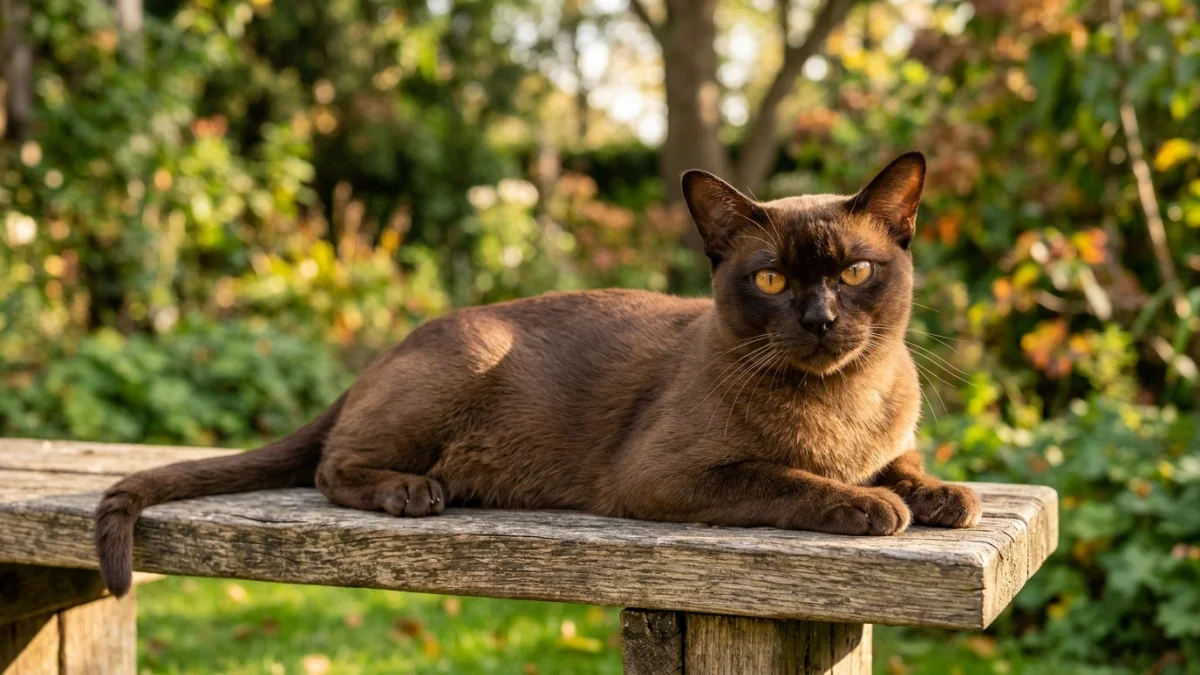
Physical Characteristics & Breed Standards
The Cat Fanciers Association (CFA) breed standard dictates a cat of medium size with substantial bone structure, well-developed musculature, and a compact, rounded chest. The overall impression is one of surprising weight and athletic balance, without being overly cobby or fine-boned. Gradual dietary transitions protect digestive stability in Burmese Cat.
Cranial Architecture & The Four Traditional Colors
The head is pleasingly rounded with a short, broad muzzle, full cheeks, and a visible nose break in profile. The ears are medium in size, set well apart, broad at the base, and rounded at the tips. Large, rounded eyes are set wide apart, glowing in brilliant yellow to deep gold; green tones are considered a fault in CFA championship judging.
The coat is ultra-short, fine, glossy, and satin-smooth, lying close to the body. The CFA recognizes four traditional colors: Sable (rich warm espresso brown), Champagne (warm milk-chocolate honey beige), Blue (cool slate-grey with warm undertones), and Platinum (pale silvery-grey with fawn undertones). Selecting healthy foundation stock is the cornerstone of successful Burmese Cat management.
⚡ Burmese Cat Performance & Production Matrix
| Color Class | Genotype Shading Tone | Grooming Requirement | Indoor Companion Aptitude |
|---|---|---|---|
| Sable (Traditional) | Rich dark espresso brown; satin sheen | Minimal; weekly stroke with rubber mitt | Extremely affectionate, vocal lap cat |
| Champagne (Chocolate) | Warm golden honey beige with pale mask | Weekly brushing; zero matting | Playful companion; retrieves thrown toys |
| Blue | Cool slate grey with warm silver tipping | Weekly gentle comb; minimal shed | Curious problem-solver; bonds with dogs |
| Platinum (Lilac) | Pale frosty silver with delicate pink tone | Soft chamois wipe; low dander | Very sweet, cuddly, and deeply human-oriented |
Breed History, Heritage & North American Development
All authentic modern Burmese cats trace their ancestry back to a single foundation matriarch: Wong Mau, a walnut-brown female cat brought from Rangoon (Yangon), Burma to San Francisco in 1930 by retired US Navy physician Dr. Joseph Cheesman Thompson. Good predator-proofing and dry bedding safeguard Burmese Cat comfort in harsh weather.
Believing Wong Mau was not merely a dark Siamese but a distinct breed, Dr. Thompson assembled a team of geneticists and breeders. They mated Wong Mau to a seal point Siamese named Tai Mau. When the resulting kittens were back-crossed, litters produced kittens with solid dark brown coats, proving the existence of the unique sepia gene.
The Cat Fanciers Association granted championship recognition to the Burmese in 1936. While European breeders later crossed Burmese with red and tortie domestic cats to create the distinct European Burmese, American breeders kept the lineage pure, focusing strictly on the four original colors. Monitoring water quality and mineral balance directly benefits Burmese Cat vitality.
Today, the Burmese remains one of America’s most cherished companion breeds. Homesteaders value their steady devotion, noting that they thrive in active households filled with people and other animals.
Housing, Living Environment & Thermal Care
Burmese cats have short single coats that provide minimal insulation against freezing weather. They must be maintained strictly as indoor companions in temperature-controlled farmhouses kept between 68°F and 74°F. Practical hands-on husbandry ensures consistent results when raising Burmese Cat.
Social Enrichment & Lap Perches
The primary environmental requirement for a Burmese is companionship. They experience profound loneliness if left alone for extended periods. If farm owners spend long hours in outdoor barns, adopting a bonded pair of Burmese or keeping a cat-friendly farm dog ensures their social needs are fulfilled. Early intervention at the first sign of lethargy protects overall Burmese Cat flock or herd health.
Provide comfortable vertical climbing towers, scratching posts, and sunny window hammocks overlooking farm pastures. Burmese cats retain high athletic agility and love perching on high shelves where they can observe household activities.
Never permit a Burmese to roam outdoors unsupervised. Their trusting nature and lack of street-smart fear make them vulnerable to predators, vehicles, and theft. An enclosed, predator-proof catio is the only safe outdoor option. Structured culling and biosecurity protocols strengthen Burmese Cat genetic quality.
Nutritional Requirements, Daily Rations & Feeding Protocols
Because the Burmese possesses dense musculature and heavy bone structure, they require premium carnivore nutrition to maintain lean muscle mass without gaining excess abdominal fat. Maintaining clean feeders and sanitized equipment supports sustainable Burmese Cat care.
High-Protein Density & Hydration Balance
Feed adult Burmese cats a high-grade carnivore diet containing 38% to 44% crude protein and 15% to 18% crude fat on a dry matter basis. High-quality poultry and rabbit proteins provide the amino acids necessary for glossy coat health. For broader feline dietary principles, review our exotic feline nutritional management guide.
Caloric intake should range between 180 and 230 kcal daily for neutered adults. Feed two scheduled meals per day rather than leaving open food bowls out. Wet canned food should comprise at least half the daily intake to support kidney function and urinary tract health. Consistent daily observation helps keepers spot early changes in Burmese Cat health and behavior.
Provide clean drinking fountains to encourage regular hydration. Felines naturally obtain moisture from their prey, making supplemental dietary moisture vital for renal wellness. Clean housing, fresh water, and balanced nutrition remain essential for Burmese Cat productivity.
Health Management, Genetic Screening & Biosecurity Standards
The Burmese is generally healthy and long-lived, but specific inherited conditions require genetic screening by responsible breeders.
Craniofacial Defect & Hypokalemia Screening
Burmese Craniofacial Defect (head defect) was historically linked to extreme contemporary head types. Thanks to modern DNA testing, breeders can identify carriers and eliminate the condition from breeding programs. Hypokalemia (familial episodic muscle weakness) must also be screened via DNA testing to ensure clean bloodlines. Tracking feed intake and body condition supports long-term Burmese Cat performance.
Dental health requires vigilance, as Burmese cats can be prone to gingivitis and periodontal tartar. Practice regular home tooth brushing and schedule annual veterinary dental cleanings. Review health protocols via the American Veterinary Medical Association (AVMA) Feline Clinical Guidelines.
Grooming requires minimal effort. A weekly rubdown with a rubber curry brush or damp chamois cloth easily removes dead hairs and maintains the satin sheen. Maintain monthly veterinarian-approved flea and heartworm preventatives. Following biosecurity best practices reduces disease risk in any Burmese Cat operation.
Breeding Management, Reproduction & Kitten Care
Burmese queens mature early, often experiencing their first estrus between 6 and 8 months of age. Maiden matings should be delayed until 12 months to ensure full physical maturity. Seasonal adjustments to shelter and diet keep Burmese Cat thriving year-round.
Gestation & Sepia Coat Development
Gestation spans 63 to 66 days, yielding litters of 4 to 6 sturdy kittens. Kittens are born lighter in color than their adult shade, with the rich satin sepia coloration deepening over the first several months. Eye color starts pale blue, transitioning to gold by 8 to 12 weeks of age.
Provide a quiet, draft-free nursery box bedded with clean fleece. Wean onto high-protein growth wet food at 5 weeks. For comparative reproductive care, consult our Somali cat breeding and care guide. Proper record-keeping makes breeding and culling decisions easier for Burmese Cat keepers.
Kittens should remain with the queen until at least 12 to 14 weeks of age to ensure full social confidence and complete core vaccinations before rehoming. Providing adequate space and ventilation prevents common stress issues in Burmese Cat.
US Ownership Budget & Annual Maintenance Costs
Budgeting for a pedigree Burmese cat involves initial kitten acquisition from certified catteries, premium nutrition, regular dental scaling, and enriching cat furniture. Below is an itemized annual budget forecast.
⚡ Estimated Annual Budget & Maintenance Costs (USD)
| Expense Category | Estimated Annual Cost Range (USD) | Cost Management Strategy |
|---|---|---|
| Kitten Purchase / Registered Line | $1,200.00 – $2,200.00 (One-time) | Source from CFA/TICA catteries providing DNA clear health panels |
| Premium Carnivore Nutrition | $420.00 – $680.00 annual | Buy commercial cases of quality meat-first wet rations directly from wholesalers |
| Veterinary Care & Dental Scaling | $280.00 – $550.00 annual | Maintain scheduled annual wellness visits and practice regular home dental hygiene |
| Cat Furniture, Catio & Bedding | $150.00 – $320.00 annual | Build sturdy timber climbing shelves; provide cozy plush fleece beds |
| Grooming Supplies & Litter | $100.00 – $180.00 annual | Single coat requires only a rubber mitt; buy natural unscented litter in bulk |
🐈 Burmese Cat Daily Nutrition & Care Calculator
Calculate daily metabolizable calories (kcal), dry/wet food portions, clean water intake (fl oz), litter box minimums, and monthly care cost for your Burmese Cat.
Frequently Asked Questions (FAQ)
Why are Burmese cats described as ‘a brick wrapped in silk’?
The phrase describes their surprising weight and texture. A Burmese looks sleek and elegant, but lifting one reveals a compact, muscular, and dense body that feels surprisingly heavy. Their ultra-short coat feels like luxurious smooth silk.
Are Burmese cats vocal and demanding of attention?
Yes, Burmese cats are very communicative. They possess soft, raspy voices and will converse regularly with their owners, following them from room to room and demanding to be included in household activities. They thrive on close human contact.
What is the difference between an American and European Burmese?
American Burmese feature a shorter, rounder head with large expressive eyes and come in four colors (sable, champagne, blue, platinum). European Burmese have a slightly more oriental modified wedge head and come in ten colors including red and cream.
Can a Burmese cat be left alone while owners work?
Burmese cats do not tolerate long periods of isolation well. They can become depressed or anxious without company. If you work away from home, having a second cat (especially another Burmese) or a cat-friendly dog provides necessary companionship.
What is the average lifespan of a Burmese cat?
Burmese cats are one of the longest-lived pedigree breeds. With high-protein nutrition, routine dental cleanings, and indoor living, they routinely live 15 to 18+ years, with some documented individuals living past 20 years in active health.
Expert Verdict & Next Steps
The Burmese cat stands as a timeless masterpiece of satin elegance, dog-like devotion, and joyful companionship. For rural homesteaders seeking an affectionate, highly interactive indoor cat that will integrate seamlessly into family life, the Burmese is an extraordinary choice. Understanding breed-specific traits helps maximize Burmese Cat longevity and output.
Before bringing a kitten home, connect with a reputable CFA- or TICA-registered cattery that provides written health guarantees and DNA test results for hypokalemia and head defects. Prepare warm bedding and rich carnivore rations. To explore additional serene companion cats, review our guide on the Russian Blue pedigree cat.
📚Agricultural Reference & Scientific Citations
Standards and physiological data referenced in this guide comply with USDA Animal and Plant Health Inspection Service (APHIS), American Veterinary Medical Association (AVMA), and the FAO Domestic Animal Diversity Information System.


