

⚡ Balwen Welsh Mountain Sheep at a Glance: Key Specifications & Benchmarks
| Scientific Classification | Ovis aries |
| Breed Classification | Hardy Upland Heritage Mountain Sheep |
| Origins & Foundation Region | Tywi Valley, Wales (survived severe 1947 blizzards) |
| Mature Ram Body Weight | 100 to 135 lbs (45 to 60 kg) |
| Mature Ewe Body Weight | 75 to 95 lbs (35 to 45 kg) |
| Horned / Polled Trait | Rams carry curving horns; ewes naturally polled |
| Distinctive Color Pattern | Jet black/brown with white blaze, 4 white feet & white tail tip |
| Fleece Yield & Quality | 4.0 to 6.5 lbs (medium wool, 30–34 micron, kemp-free) |
| Lambing Ease & Vitality | Unassisted lambing rate >98%; vigorous, alert lambs |
| Upland Foraging Ability | Exceptional roughage converter on steep, marginal pastures |
| Temperament & Flocking | Alert, hardy, maternal, strong flocking cohesion |
| Gestation Period | 145 to 148 days (smooth seasonal spring lambing) |
The Balwen Welsh Mountain Sheep stands as one of the most distinctive and resilient heritage hill sheep breeds developed in the British Isles. Originating in the rugged Tywi Valley of central Wales, this small, athletic sheep is immediately recognizable by its dark brown or black fleece, crisp white facial blaze, four white socks, and white-tipped tail. Selecting healthy foundation stock is the cornerstone of successful Balwen Welsh Mountain Sheep management.
For smallholders establishing self-sufficient pasture systems through our comprehensive sheep farming operations manual, Balwen sheep provide extraordinary advantages. Unlike large commercial meat breeds that demand heavy grain supplementation and level paddocks, Balwens thrive on coarse hillside vegetation, wet moorland grasses, and unimproved pasture.
Their biological resilience was forged under severe natural selection, famously surviving the devastating Welsh blizzard of 1947 that wiped out entire valley flocks. Today, North American shepherds value Balwens for their effortless lambing, exceptional mothering instinct, and premium specialty wool sought after by hand spinners. Good predator-proofing and dry bedding safeguard Balwen Welsh Mountain Sheep comfort in harsh weather.
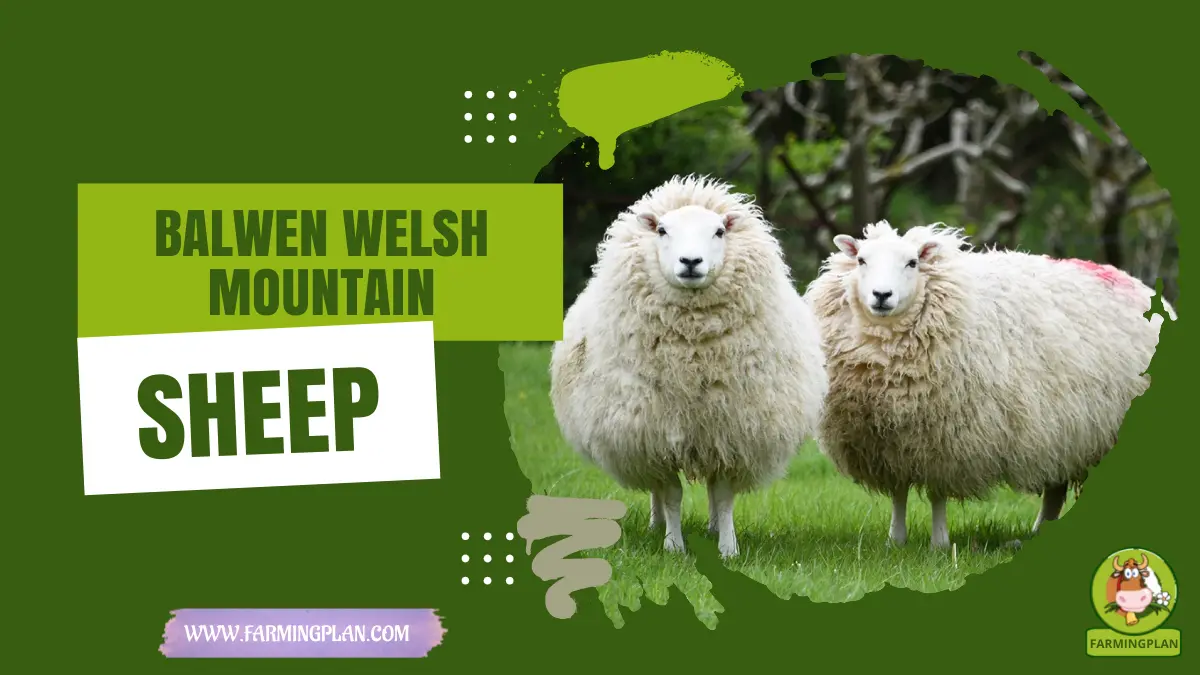
Physical Characteristics & Breed Standards
The Balwen Welsh Mountain Sheep possesses a compact, muscular, athletic conformation adapted to ascending steep mountain slopes and navigating treacherous boggy terrain. Mature rams average 100 to 135 lbs (45 to 60 kg) and feature gracefully curved horns that sweep backward and outward. Mature ewes weigh 75 to 95 lbs (35 to 45 kg) and are naturally hornless (polled), exhibiting a wedge-shaped body that facilitates smooth lamb passage.
Conformation Standards & Blaze Markings
The defining breed standard is the “Balwen” marking pattern (Welsh for “white blaze”). A continuous white stripe must run down the face from the poll to the muzzle. Additionally, exactly half of the tail tip must be white, and all four feet must display white stockings terminating cleanly below the hocks and knees without irregular spotting across the main fleece. Monitoring water quality and mineral balance directly benefits Balwen Welsh Mountain Sheep vitality.
The fleece itself is remarkably dense, protecting the skin against driving rain and gale-force mountain winds. The wool is graded as a versatile medium quality with a staple length of 3 to 4 inches and a micron count between 30 and 34. Unlike standard mountain sheep wool that is contaminated with brittle kemp fibers, purebred Balwen fleece is virtually kemp-free, making it highly desirable for artisan knitwear and weaving.
⚡ Balwen Welsh Mountain Sheep Performance & Production Matrix
| Performance Benchmark | Breed Target Standard | Homestead Management Advantage |
|---|---|---|
| Birth Weight Range | 5.0 to 6.8 lbs (2.3 to 3.1 kg) | Negligible lambing difficulties; 98%+ unassisted births |
| Weaning Weight (100-Day) | 38 to 48 lbs (17 to 22 kg) | High meat conversion on grass alone without costly creep feed |
| Annual Fleece Weight | 4.0 to 6.5 lbs (1.8 to 3.0 kg) | Premium natural colored wool for handspinners and crafters |
| Foot Health Resilience | Hard black hooves resistant to foot rot | Dramatically reduces pasture foot soak labor in wet climates |
| Ewe Productive Lifespan | 9 to 12 productive lambing seasons | Extremely low flock depreciation and replacement overhead |
| Lamb Vigor at Birth | Standing and suckling within 15 minutes | High survival rates during cold, unpredictable spring weather |
Breed History, Heritage & Welsh Mountain Survival
The Balwen Welsh Mountain Sheep developed in a localized pocket of the Tywi Valley surrounding the village of Rhandirmwyn in Carmarthenshire, Wales. Mountain farmers bred these distinctive sheep for centuries, valuing their unique coloration that allowed individual shepherds to identify their stock easily across open communal mountain commons.
In the catastrophic winter of 1947, consecutive blizzards blanketed the Welsh mountains under deep snowdrifts for nearly three months. Almost all local sheep perished from starvation and exposure, leaving only a single surviving Balwen ram and a handful of ewes on the high slopes. Dedicated hill farmers rallied to preserve these miraculous survivors, carefully restoring the breed while preserving its genetic uniqueness. Practical hands-on husbandry ensures consistent results when raising Balwen Welsh Mountain Sheep.
The Balwen Welsh Mountain Sheep Society was officially formed in 1985 to standardize registrations and promote the breed’s commercial value. In recent years, small flock stewards in the United States and Canada have imported semen and breeding stock, utilizing Balwens to produce grass-fed gourmet lamb and fine heritage fleeces on small acreage.
Housing, Shelter Dimensions & Winter Hardiness
Balwen sheep are engineered by nature to withstand extreme weather and do not tolerate hot, stuffy confinement. Housing should prioritize fresh air flow, dry bedding underfoot, and protection from severe driving rain during early spring lambing season. Early intervention at the first sign of lethargy protects overall Balwen Welsh Mountain Sheep flock or herd health.
Flock Density & Field Enclosures
Inside an open-front barn or three-sided shelter, provide 12 to 16 square feet of clean bedded area per adult ewe, expanding to 20 square feet during lambing. Bedding should consist of dry oat straw or clean wood shavings, topped up regularly to prevent moisture build-up and maintain fleece cleanliness.
Pasture fencing must be secure, as mountain sheep are remarkably agile jumpers. Install 42-to-48-inch high-tensile woven field wire supplemented by an electrified offset wire placed 10 inches off the ground to prevent canids and coyotes from crawling underneath. Design your shelter setups using our detailed practical sheep housing blueprints. To evaluate alternative bloodlines and practical management routines, check our Bond Sheep overview.
Nutritional Requirements, Grass Protocols & Minerals
Balwens have thrifty digestive metabolisms honed on sparse hill heather and mountain grasses. Feeding them rich alfalfa hay or high-starch grain rations is counterproductive, often causing obesity, prolapse at lambing, and metabolic disorders. Structured culling and biosecurity protocols strengthen Balwen Welsh Mountain Sheep genetic quality.
Daily Dry Matter Intake & Copper Caution
A mature ewe consumes approximately 2.8 to 4.0 lbs of dry matter forage daily, which can be entirely satisfied by rotational grazing on mixed pasture grasses, timothy, and meadow fescue. During the final four weeks of gestation, supplement ewes with 0.5 lb of a 14% crude protein ovine grain mix to sustain rapid fetal growth.
Ovine mineral nutrition requires extreme care: sheep are highly sensitive to copper toxicity. Always supply dedicated loose sheep minerals containing zero added copper, ensuring adequate zinc, selenium, and cobalt. Balance your flock rations according to our balanced sheep feed and pasture rations. Maintaining clean feeders and sanitized equipment supports sustainable Balwen Welsh Mountain Sheep care.
Health Management, Common Diseases & Biosecurity Standards
Balwen sheep exhibit remarkable natural resistance to foot rot and flystrike compared to commercial Lowland sheep breeds. However, internal parasites and infectious respiratory conditions require strict preventive management.
Parasite Screening & Routine Vaccinations
Conduct regular FAMACHA eye membrane checks and pasture fecal egg counts to monitor barber pole worm (Haemonchus contortus) loads during warm, wet summer grazing. Deworm selectively only when clinical anemia is observed to preserve chemical efficacy. Vaccinate all adult sheep annually with Clostridium perfringens Types C & D plus Tetanus (CDT vaccine) four weeks prior to lambing. Consistent daily observation helps keepers spot early changes in Balwen Welsh Mountain Sheep health and behavior.
Maintain flock biosecurity by quarantining new arrivals for 30 days and testing for Caseous Lymphadenitis (CL) and Ovine Progressive Pneumonia (OPP). For national scrapie eradication and disease surveillance guidelines, consult the USDA APHIS National Scrapie Eradication Program. Review treatments in our ovine disease prevention and biosecurity protocols.
Breeding Management, Lambing & Flock Multiplications
Balwen ewes are seasonal autumn breeders that begin cycling naturally as day lengths decrease in October and November. One mature ram easily covers 30 to 40 ewes in a 35-day breeding window. Ewes reach sexual maturity at 7 to 9 months, though breeding as yearlings (shearlings) at 18 months ensures mature skeletal development.
Lambing is notably trouble-free, with ewes routinely giving birth unassisted in outdoor pasture paddocks. Lambs are small, streamlined, and extremely vigorous, shaking dry and nursing rich colostrum within minutes of delivery. Twinning rates average 120% to 140% on hill pastures, increasing to 150% on improved lowlands. Clean housing, fresh water, and balanced nutrition remain essential for Balwen Welsh Mountain Sheep productivity.
Compare hardiness and maternal efficiency with other easy-care heritage breeds such as the Barbados Blackbelly sheep to assess pasture compatibility across your homestead.
US Ownership Budget & Annual Maintenance Costs
Operating a small breeding flock of six Balwen ewes and one purebred ram is economically accessible for smallholders. The financial model below itemizes typical startup equipment and ongoing annual operational costs in the United States. Tracking feed intake and body condition supports long-term Balwen Welsh Mountain Sheep performance.
⚡ Estimated Annual Budget & Maintenance Costs (USD)
| Expense Category | Budget Scope & Resource Allocation | Initial Outlay | Annual Recurring Cost |
|---|---|---|---|
| Breeding Stock | Registered breeding starter group (4 ewes, 1 ram) | $1,500 – $2,400 | $0 (flock retention) |
| Fencing & Pasture Setup | 48-inch woven field wire, electric perimeter strand | $600 – $1,100 | $40 – $70 (fence upkeep) |
| Winter Meadow Hay | Good quality grass-timothy hay (approx. 50 bales/yr) | $60 | $300 – $450 |
| Copper-Free Minerals | Loose ovine trace mineral tubs & selenium salt | $25 | $55 – $80 |
| Annual Shearing & Care | Professional shearing fees, CDT vaccines, foot dip | $40 | $80 – $130 |
| Ear Tags & Registration | Breed registry membership, official scrapie tags | $35 | $30 – $50 |
| Total 5-Sheep Flock Budget | Complete small farm investment model | $2,260 – $3,660 | $505 – $780 / flock / year |
🐑 Balwen Welsh Mountain Sheep Flock Forage & Pasture Calculator
Calculate winter hay bales, daily pasture forage intake, minerals, and water needs for your Balwen Welsh Mountain Sheep flock.
Frequently Asked Questions (FAQ)
What makes Balwen Welsh Mountain Sheep sheep unique?
Balwen Welsh Mountain Sheep sheep are famous for their striking markings: a solid black or dark brown body with a clean white facial blaze, four white socks, and a white tail tip, combined with extreme hardiness.
Do Balwen Welsh Mountain Sheep sheep have horns?
Rams carry magnificent, curving horns that sweep backward and outward, while ewes are naturally hornless (polled), making them easy and safe to handle during lambing.
What type of fleece does a Balwen Welsh Mountain Sheep sheep produce?
They produce 4.0 to 6.5 pounds of dense medium wool with a 30 to 34 micron count. Unlike many mountain sheep, their fleece is virtually free of brittle kemp fibers.
How difficult is lambing for Balwen Welsh Mountain Sheep ewes?
Lambing is exceptionally easy, with unassisted birth rates exceeding 98%. Ewes have spacious pelvic conformations and deliver small, vigorous lambs that nurse within minutes.
Can Balwen Welsh Mountain Sheep sheep survive on poor hill pasture?
Yes, Balwens were developed in the Welsh uplands specifically to convert rough mountain grasses, brush, and heather into healthy meat and wool without grain supplementation.
How cold hardy are Balwen Welsh Mountain Sheep sheep in the US?
They are extremely cold hardy across USDA zones 3 through 8, readily enduring driving snow, cold rains, and sub-zero temperatures provided they have basic windbreak shelters.
Expert Verdict & Next Steps for US Shepherds
The Balwen Welsh Mountain Sheep represents a triumph of natural survival and dedicated heritage conservation. For North American smallholders seeking an easy-lambing, parasite-tolerant flock that thrives on unimproved pasture while producing distinctive fleece and flavorful gourmet lamb, Balwens are an exceptional choice.
Setting up your flock requires secure fencing, clean water access, and vigilant copper-free mineral management. Explore our foundational guidelines in the sheep farming operations manual to design the ideal pasture setup for your property.
📚Agricultural Reference & Scientific Citations
Standards and physiological data referenced in this guide comply with USDA APHIS Small Ruminant Health, The Livestock Conservancy, and the American Veterinary Medical Association (AVMA).


