

⚡ Bagot Goat at a Glance: Key Specifications & Production Benchmarks
| Scientific Classification | Capra hircus |
| Breed Classification | Rare Heritage Parkland & Conservation Caprine |
| Ancestral Origin & Records | Staffordshire, England (Blithfield Hall herd documented 1389) |
| Mature Buck Body Weight | 130 to 175 lbs (60 to 80 kg) |
| Mature Doe Body Weight | 85 to 115 lbs (40 to 52 kg) |
| Horn Conformation | Swept-back horns in both sexes; massive curved buck horns |
| Coat Color & Markings | Bicolor: solid black forequarters, pristine white hindquarters |
| Browsing Specialization | Aggressive scrub, bramble, nettle, and brushwood clearance |
| Kidding Rate & Twinning | High single kidding rate; twins common in mature conditioned does |
| Temperament & Demeanor | Independent, alert, agile, thrives under extensive free range |
| Cold & Climate Tolerance | USDA Zones 4–8; exceptional rain, sleet, and winter frost resilience |
| Gestation Period | 147 to 153 days (average 150 days) |
The Bagot Goat holds a revered status among rare heritage livestock, recognized globally as one of Britain’s oldest documented caprine landraces. Renowned for its striking bicolor pattern featuring a jet-black head and forequarters paired with snow-white hindquarters, this agile breed provides invaluable environmental management services across modern conservation landscapes.
Smallholders and regenerative land managers incorporating browsing caprines through our foundational goat farming operations manual discover that Bagots excel where commercial dairy breeds struggle. Rather than requiring energy-dense grain rations, they thrive on fibrous invasive brush, wild rose brambles, and woody undergrowth that choke out productive pastures.
Unlike pampered dairy does susceptible to cold dampness, the Bagot Goat developed over six centuries of semi-feral parkland living. Their dense outer coat, strong hooves, and resilient biological constitution allow them to navigate wet hillsides, wooded gullies, and challenging winter homestead conditions with minimal veterinary intervention.
Physical Characteristics & Breed Standards
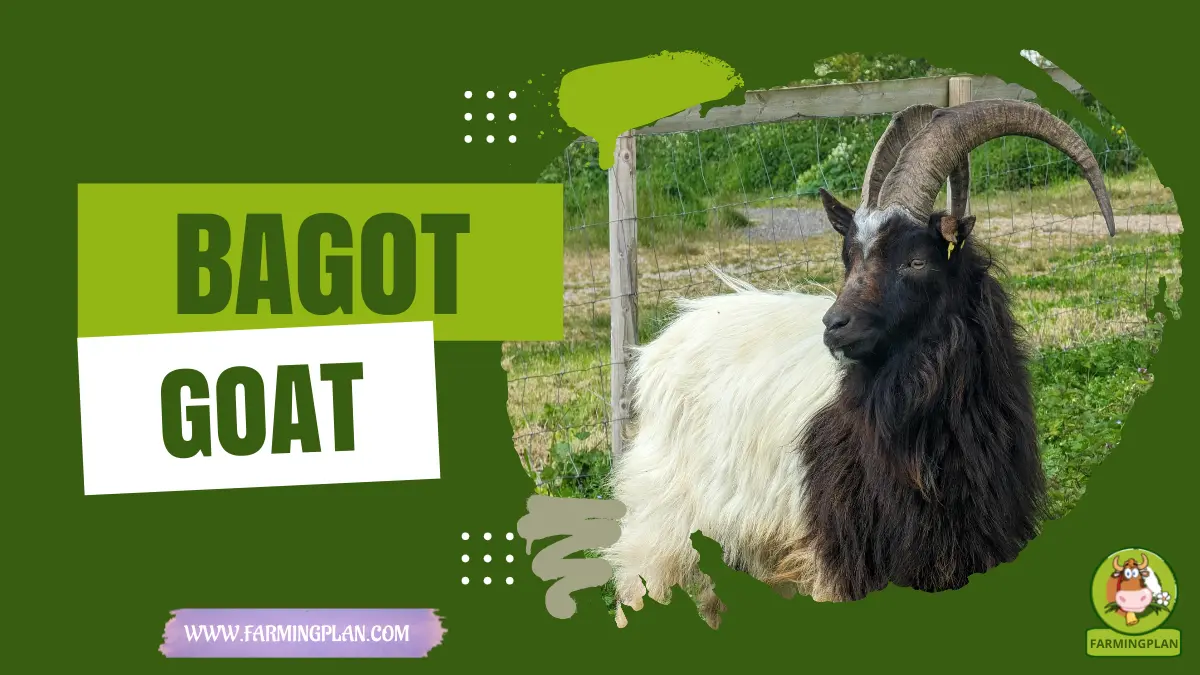
The Bagot Goat displays a lean, primitive, athletic conformation built for nimbleness and sustained browse foraging across rugged terrain. Mature bucks weigh 130 to 175 lbs (60 to 80 kg) and carry magnificent, sweeping horns that arc gracefully backward over the neck and shoulders. Mature does are compact, weighing 85 to 115 lbs (40 to 52 kg), exhibiting fine bone structure and alert, inquisitive head carriage.
Bicolor Markings & Horn Morphology
The hallmark visual identity of the Bagot Goat is its sharp bicolor division: the head, neck, shoulders, and forelegs are deep glossy black, while the barrel, hindquarters, and rear legs are clear white. A narrow white facial star or blaze is permissible under heritage breed standards, but excessive white splashing onto the shoulders or black spotting across the rump is discouraged in purebred registrations. If you are balancing utility output and herd resilience, take a look at our Chengde Polled Goat reference guide.
Horns are present in both sexes and must never be disbudded, as they play an integral physiological role in thermoregulation and defensive balance. Bucks develop substantial horn ridges with outward-curving tips measuring up to 24 inches in mature individuals. Hooves are dark, dense, and naturally resistant to foot rot, having evolved on gravelly British parkland soils.
⚡ Bagot Goat Performance & Production Matrix
| Performance Benchmark | Breed Target Parameter | Conservation Homestead Advantage |
|---|---|---|
| Birth Weight Range | 4.5 to 6.5 lbs (2.0 to 3.0 kg) | Effortless unassisted birth; near-zero dystocia rates |
| Weaning Weight (90-Day) | 28 to 36 lbs (13 to 16 kg) | Steady, natural muscle gain on roughage browse alone |
| Brush & Weed Ingestion | Exceptional consumption of briars, nettles, dock, and ivy | Chemical-free land reclamation and wildfire fuel reduction |
| Parasite Tolerance | Moderate to high resilience on low-density pasture | Lower anthelmintic chemical reliance in well-rotated herds |
| Doe Productive Longevity | 10 to 14 productive kidding seasons | Remarkable maternal stamina outlasting intensive commercial does |
| Fiber & Pelt Yield | Coarse outer guard hair with dense fine winter cashmere underwool | Durable, high-contrast decorative pelts for heritage markets |
Breed History, Heritage & North American Conservation
The origins of the Bagot Goat trace back over six centuries to medieval England. Historical tradition records that King Richard II presented a herd of black-and-white goats to Sir John Bagot of Blithfield Hall in Staffordshire around 1389, honoring his services in managing the royal hunting chase of Needwood Forest. For generations, the herd roamed the enclosed parklands of the estate with minimal human interference.
By the mid-20th century, modern agricultural intensification pushed traditional parkland breeds to the brink of extinction. The Rare Breeds Survival Trust (RBST) placed the Bagot at the top of its critical watch lists during the 1970s, establishing dedicated breeding groups and pedigree registers that successfully multiplied flock numbers from fewer than 100 registered females to viable conservation populations.
In recent decades, North American conservation graziers have recognized the unique ecological value of these primitive caprines. Land trusts, public parks, and agroforestry stewards deploy small herds to eradicate aggressive European buckthorn, multiflora rose, and poison ivy without disturbing native topsoils or requiring heavy mechanical shredders.
Housing, Shelter Dimensions & Fencing Security
While Bagot Goat goats are naturally hardy and accustomed to harsh weather, they require well-ventilated, dry shelter to escape prolonged driving rain and cold sleet. Wet fleece combined with chilly winds can chill even primitive caprines, making draft-free three-sided run-in sheds an operational necessity across North American homesteads.
Spatial Density & High-Tensile Enclosures
Inside the barn or shelter, provide a minimum of 20 to 25 square feet of dry bedded floor space per adult doe, expanding to 35 square feet for does with nursing kids. Bedding should consist of clean wheat straw or kiln-dried wood shavings over a well-drained gravel base, refreshed frequently to keep ambient ammonia fumes below 10 ppm.
Fencing must be exceptionally robust to contain these athletic, inquisitive goats. Install 48-to-60-inch woven wire fencing (4×4-inch goat mesh) reinforced with a top and bottom hot wire charged to at least 4,500 volts. Avoid wide 6×6-inch sheep fencing, as horned bucks and playful kids will inevitably catch their sweeping horns and become trapped.
Nutritional Requirements, Browse Protocols & Minerals
The digestive physiology of the Bagot Goat is specifically adapted to highly fibrous, woody plant material rather than lush, high-sugar pasture grasses. Overfeeding commercial grain or rich legume hay to Bagots often leads to rumen acidosis, enterotoxemia, and obesity-related reproductive failure.
Daily Roughage Rations & Caprine Minerals
An adult doe requires approximately 3.5 to 5.0 lbs of dry matter roughage daily, ideally obtained from diverse shrub paddocks, willow cuttings, hedge trimmings, and stemmy grass-orchard hay. During late gestation and early lactation, supplement each doe with 0.5 to 1.0 lb of a 14% crude protein caprine grain mix to support growing fetuses and steady milk production.
Free-choice loose mineral supplementation is essential year-round. Provide weather-protected loose caprine minerals containing adequate copper (1,500 to 2,000 ppm), zinc, selenium, and iodine. Never feed sheep minerals to Bagots, as sheep formulations lack the copper levels required to maintain goat coat pigmentation and immune health. Optimize pasture nutrition using our best grass and browse pastures for goats.
Health Management, Common Diseases & Biosecurity Standards
Bagots benefit from strong ancestral hardiness, exhibiting lower incidence of mastitis and foot abscesses than intensive dairy breeds. However, internal parasites—most notably the barber pole worm (Haemonchus contortus)—remain the leading threat to caprine health in warm, humid grazing zones.
FAMACHA Monitoring & Vaccination Schedules
Implement weekly FAMACHA eye mucous membrane scoring from spring through autumn to selectively treat only individuals showing anemia scores of 4 or 5. This selective deworming strategy preserves refugia and slows anthelmintic resistance. Administer annual Clostridium perfringens Types C & D and Tetanus toxoid (CDT vaccine) boosters to all adult breeding stock four weeks prior to kidding.
Isolate newly acquired stock for 30 days, performing fecal egg counts and testing for Caseous Lymphadenitis (CL), Caprine Arthritis Encephalitis (CAE), and Johne’s disease. For national biosecurity standards, follow clinical protocols published by the USDA APHIS Small Ruminant Health Center. Review diagnostic protocols in our caprine parasite control and herd health standards.
Breeding Management, Kidding & Kid Raising
Bagot Goat does are seasonal breeders that enter estrus in late autumn as day length shortens, cycling every 18 to 21 days between September and January. One mature buck easily services 20 to 30 does in open pasture. Maintain young bucks in separate secure paddocks until they reach 12 to 14 months of age to prevent accidental paddock escapes and unplanned breedings.
Does kid with remarkable ease, rarely requiring human obstetric intervention. Deliveries occur rapidly, and newborn kids possess strong survival instincts, standing to nurse warm colostrum within 20 minutes of birth. Colostrum intake within the first two hours is non-negotiable to transfer maternal antibodies against local barn pathogens.
Wean kids naturally at 12 to 14 weeks of age once they are eagerly foraging pasture roughage and consuming clean hay. Compare maternal instinct and browse efficiency with other hardy heritage milk and meat breeds such as the Barbari goat to assess optimal herd fit.
US Ownership Budget & Annual Maintenance Costs
Establishing and maintaining a conservation breeding group of four Bagot Goat does and one herd buck requires disciplined financial planning. The budget framework below details realistic initial acquisition costs and ongoing annual maintenance expenses for US owners.
⚡ Estimated Annual Budget & Maintenance Costs (USD)
| Budget Category | Item Description & Allocation | Initial Outlay | Annual Recurring Expense |
|---|---|---|---|
| Breeding Stock | Registered heritage breeding trio (2 does, 1 buck) | $1,200 – $2,200 | $0 (flock retention) |
| Fencing & Paddock Shelter | Heavy woven wire, electric top wire, 3-sided shed | $650 – $1,200 | $50 – $80 (fence testing/repairs) |
| Winter Hay & Forage | Grass-alfalfa small square bales (approx. 45 bales/yr) | $50 | $320 – $480 |
| Loose Minerals & Salt | High-copper loose caprine mineral tubs & kelp meal | $30 | $65 – $95 |
| Veterinary & Vaccines | Annual CDT vaccines, dewormers, copper boluses | $40 | $75 – $120 |
| Hoof Care & Supplies | Hoof trimmers, antiseptic spray, blue kote, syringes | $45 | $25 – $40 |
| Total 5-Goat Herd Budget | Complete smallholding operational model | $2,015 – $3,565 | $535 – $815 / herd / year |
🐐 Bagot Goat Herd Feed & Pasture Calculator
Calculate daily forage, monthly hay bales, loose minerals, and clean water needs for your Bagot Goat herd.
Frequently Asked Questions (FAQ)
What are Bagot Goat goats used for on modern farms?
Bagot Goat goats are primarily raised for conservation grazing, invasive scrub clearance, and heritage genetic preservation. Their aggressive browsing on briars and nettles makes them exceptional eco-landscaping animals.
Are Bagot Goat goats a rare or endangered breed?
Yes, Bagot Goat goats are a critically endangered heritage breed monitored by the Rare Breeds Survival Trust, with global breeding populations carefully tracked to prevent genetic bottlenecks.
Do Bagot Goat goats have horns?
Yes, both male and female Bagot Goat goats carry large, distinctive swept-back horns. Bucks develop dramatic, backward-arching horns with outward tips measuring up to 24 inches.
What should you feed a Bagot Goat goat?
Feed a coarse, high-fiber diet consisting of tree browse, woody shrubs, weeds, and clean grass hay, supplemented with loose high-copper caprine minerals. Avoid rich grain rations that cause rumen acidosis.
How tall should fencing be for Bagot Goat goats?
Fencing should stand at least 48 to 60 inches tall, constructed with heavy 4×4-inch goat mesh reinforced by an electrified top wire, preventing these athletic goats from jumping or catching horns.
Can Bagot Goat goats withstand cold American winters?
Yes, Bagot Goat goats are cold hardy across USDA zones 4 through 8, growing dense winter underwool that protects them from sub-zero temperatures provided they have dry, draft-free shelter.
Expert Verdict & Next Steps for Heritage Breeders
The Bagot Goat offers smallholders and conservation land trusts an extraordinary combination of historical significance, visual beauty, and rugged functional utility. Their unmatched efficiency in clearing overgrown pastures without chemical herbicides makes them a cornerstone asset for sustainable homesteading and regenerative land management.
By establishing secure predator fencing, dry winter shelter, and strict mineral protocols, you can successfully maintain this rare breed while contributing to global livestock biodiversity. Discover essential herd building strategies in our goat farming operations manual to get started today.
📚Agricultural Reference & Scientific Citations
Standards and physiological data referenced in this guide comply with USDA APHIS Small Ruminant Health, The Livestock Conservancy, and the American Veterinary Medical Association (AVMA).


