

⚡ Chengde Polled Goat at a Glance: Key Specifications & Benchmarks
| Scientific Classification | Capra hircus (Polled Dual-Purpose Meat & Down Subtype) |
| Breed Origin | Yanshan Mountain Region, Chengde, Hebei Province, Northern China |
| Native Chinese Name | Chengde Wu-Jiao Shan-Yang (承德无角山羊) |
| Mature Buck Weight | 110 to 145 lbs (50 to 65 kg) |
| Mature Doe Weight | 75 to 95 lbs (35 to 43 kg) |
| Signature Horn Status | 100% naturally polled (completely hornless in both sexes) |
| Cashmere Down Harvest | 6.0 to 10.5 oz (170 to 300 g) fine down per head annually |
| Fiber Quality Parameters | 14.5 to 15.8 microns fiber diameter; staple length 1.8 to 2.4 inches |
The Chengde Polled goat, known in northern China as the Chengde Wu-Jiao goat, represents one of East Asia’s most valuable genetic assets for commercial meat and fiber production. Developed in the rugged, rocky Yanshan mountain ranges surrounding Chengde in Hebei province, this hardy mountain landrace evolved to withstand sub-zero Siberian winter freezes, survive on sparse mountain shrubbery, and produce high-yielding carcasses without the management hazards associated with horned stock. Exploring our complete directory of specialized goat farming guides reveals how naturally polled breeds dramatically simplify herd management and reduce handling injuries. Providing adequate space and ventilation prevents common stress issues in Chengde Polled Goat.
What sets the Chengde Polled goat apart from conventional meat breeds is its remarkable dual-purpose revenue model. In addition to producing lean, tender, and high-dressing chevon (goat meat), the breed grows an abundant undercoat of ultra-fine winter cashmere down measuring strictly between 14.5 and 15.8 microns. In late spring, this valuable down is combed out, delivering high-margin fiber sales alongside annual kid meat marketing. In addition, their complete absence of horns eliminates head-butting injuries, gate entanglements, and the stress of disbudding kids.
Raising Chengde Polled goats successfully requires understanding mountain forage management, cold-weather shelter design, strategic pre-kidding nutrition, and proper seasonal cashmere combing techniques. This comprehensive production manual outlines official breed conformation standards, nutritional feeding protocols, housing requirements, herd health management, and operational budgeting for the Chengde Polled goat. Understanding breed-specific traits helps maximize Chengde Polled Goat longevity and output.
Physical Characteristics & Breed Standards
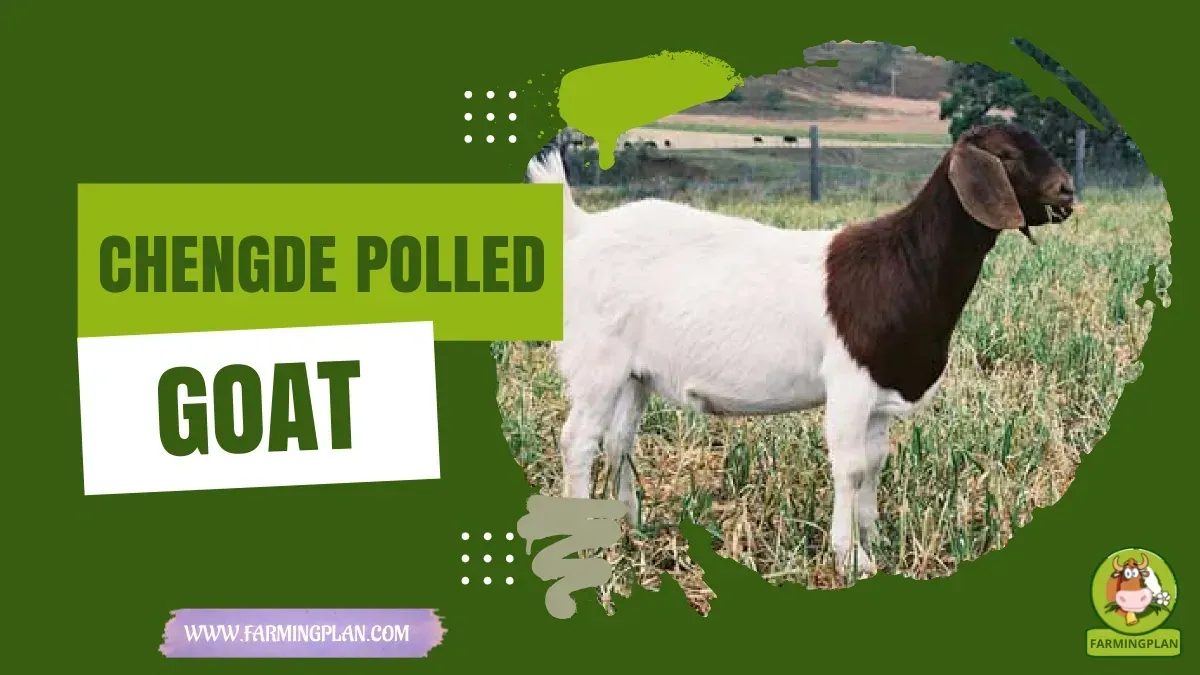
Conformationally, the Chengde Polled goat displays a compact, muscular, and barrel-ribbed body structure engineered for mountain terrain stability. Mature does stand between 23 and 27 inches at the shoulder, featuring a wide, deep chest, level back, strong loin, and a broad pelvis that facilitates effortless unassisted kidding. The bone structure is medium, clean, and dense, supported by tough slate-colored hooves that resist cracking on rocky mountain inclines.
The defining anatomical hallmark of the breed is its natural polling. Both bucks and does are completely hornless, with a smooth, rounded poll free from scurs or bony buds. The head is neat, medium-sized, and dry, featuring a straight facial profile, bright, alert dark eyes, and medium-sized ears held horizontally or slightly erect. The neck is strong, muscular, and cleanly attached to sloping shoulders. Routine preventive care saves time and lowers veterinary costs for Chengde Polled Goat.
Conformation Standards & Anatomical Structure
The fleece structure is dual-coated, consisting of an outer guard hair coat that is coarse, straight, and lustrous, overlaying a dense, fine undercoat of cashmere down. The dominant coat color is pure white, which commands top market prices in the textile industry because it can be dyed any color, though light fawn and brown individuals occasionally occur in regional mountain pockets.
The legs are sturdy, straight, and well-muscled, with clean joints and strong pasterns. The udder in does is well-attached, held high between the thighs to avoid brush scratches, with two uniform, functional teats that provide ample milk for fast-growing twin kids. Matching forage or ration quality to life stage optimizes Chengde Polled Goat growth.
Size, Weight Benchmarks & Color Variations
Mature breeding bucks weigh between 110 and 145 lbs and stand 26 to 30 inches at the withers, displaying deep muscular chests and alert herd leadership. Mature does weigh 75 to 95 lbs, presenting a modest, highly thrifty body frame that minimizes maintenance feed requirements.
This medium frame size allows high stocking density on pasture and mountain paddocks while ensuring that growing kids achieve fast, efficient weight gains on roughage. Gradual dietary transitions protect digestive stability in Chengde Polled Goat.
⚡ Chengde Polled Goat Performance & Production Matrix
| Functional Benchmark | Operational Standard | Performance Metric | Practical Field Application |
|---|---|---|---|
| Natural Polled Genetics | 100% hornless in both bucks and does | Elite (9.9/10) | Eliminates disbudding costs, feed bunk trapping, and herd injury. |
| Cashmere Down Harvest | 6.0 to 10.5 oz (170 – 300 g) per head combed | Superior (9.7/10) | Ultra-fine down (14.5 – 15.8 microns) generates high annual fiber revenue. |
| Chevon Carcass Dressing | 48% to 53% dressing percentage on forage | Superior (9.6/10) | Produces tender, lean, mild-flavored meat with high meat-to-bone ratio. |
| Sub-Zero Winter Hardiness | Withstands temperatures drops to -25°F (-32°C) | Superior (9.9/10) | Dual-layer fleece and dense down provide exceptional cold insulation. |
| Maternal Prolificacy & Ease | 135% to 165% kidding rate; twins common | Superior (9.8/10) | Does kid unassisted in field shelters; kids nurse within 15 minutes. |
| Browse & Scrub Utilization | Consumes mountain brush, pine needles, coarse grass | Superior (9.8/10) | Flourishes on rough marginal land that cattle and sheep reject. |
Breed History, Heritage & North American Development
The origin of the Chengde Polled goat is tied to the historical farming and nomadic cultures of northern Hebei province, China. For centuries, mountain farmers in the Yanshan ranges selectively bred indigenous cashmere goats, favoring naturally hornless individuals that exhibited superior meat muscling and docile herd manners. By the mid-twentieth century, regional agricultural cooperatives recognized the unique economic advantage of a polled goat that produced both commercial meat and luxury cashmere down.
In the 1980s, the Chinese Academy of Agricultural Sciences (CAAS) and the Hebei Provincial Department of Agriculture formalized selective breeding programs, establishing official herdbook standards and genetic conservation herds in Chengde. Genetic studies confirm that the polling trait is governed by a dominant gene, allowing breeders to rapidly introduce hornlessness into horned flocks. Research documented by the Food and Agriculture Organization (FAO) highlights the breed as a vital dual-purpose resource for cold, mountainous developing regions. Compare this fiber-and-meat combination with luxury down goats in our guide to Cashmere goats. Selecting healthy foundation stock is the cornerstone of successful Chengde Polled Goat management.
Housing, Shelter Dimensions & Winter Hardiness
Housing architecture for Chengde Polled goats should leverage their exceptional cold hardiness while providing simple, functional protection from wet precipitation and wind. Adapted to the frigid, dry winters of northern China, Chengde goats tolerate sub-zero temperatures effortlessly, provided their coats remain dry.
In temperate and cold climates, an open-front pole barn or three-sided run-in shed oriented away from prevailing winter winds provides ideal shelter. The shed should offer at least 14 to 18 square feet of dry space per adult doe, bedded with clean straw or wood shavings over well-drained dirt or stone-dust flooring. Good ridge-cap ventilation is essential to expel moisture and ammonia. Good predator-proofing and dry bedding safeguard Chengde Polled Goat comfort in harsh weather.
Spatial Density & Enclosure Engineering
Because Chengde Polled goats have no horns, feeder bunks, gateways, and handling chutes can be designed with standard cattle or sheep spacing without fear of horns becoming trapped or broken. This hornless advantage significantly lowers infrastructure construction and maintenance costs.
Fencing should consist of 48-inch high woven wire with 4×4-inch spacing, or high-tensile electric fencing with four to five strands (carrying 4,500 to 5,500 volts). Rotational grazing subdivided into multiple paddocks keeps pastures clean and naturally limits internal parasite transmission.
Nutritional Requirements, Daily Rations & Feeding Protocols
Nutritional management for the Chengde Polled goat centers on diverse fibrous roughage, shrub browse, and strategic protein balancing during the winter cashmere-growing season. Because the goat’s body manufactures dense cashmere down throughout the autumn and winter months, dietary sulfur-containing amino acids (methionine and cystine) must be maintained through quality forage or protein balancing. Reviewing meat goat nutrition in our guide to Boer goats provides helpful comparative models for balancing meat herd rations. Monitoring water quality and mineral balance directly benefits Chengde Polled Goat vitality.
The core diet should consist of native mountain browse, clean mixed grass hay, and browse cuttings, consumed at 3.0 to 3.5 percent of body weight in dry matter daily (approximately 2.3 to 2.8 lbs of dry matter for an 80-lb doe). University livestock extension research from Texas A&M AgriLife Extension shows that providing free-choice brush browse stimulates robust rumen microbial fermentation and stabilizes internal body temperature during winter freezes.
Crude Protein Benchmarks Across Life Stages
During late gestation and early lactation, does nursing twins benefit from 0.6 to 1.0 lb of whole grain concentrate (whole oats, rolled barley, and sunflower meal) daily to sustain milk output and kid growth. Practical hands-on husbandry ensures consistent results when raising Chengde Polled Goat.
Clean, fresh water must be available continuously; water troughs should be equipped with submersion heaters during freezing winter weather to prevent dehydration. Free-choice loose goat mineral formulated with adequate copper, zinc, and selenium is mandatory year-round.
Health Management, Common Diseases & Biosecurity Standards
Chengde Polled goats are celebrated for exceptional hardiness, clean respiratory health, and low veterinary overhead. Their dense slate-colored hooves wear naturally on firm soils, requiring only an annual visual inspection and light corrective balance trim. Early intervention at the first sign of lethargy protects overall Chengde Polled Goat flock or herd health.
Internal parasite surveillance should follow seasonal FAMACHA eye-mucosa scoring and targeted fecal testing, administering anthelmintics only to goats showing clinical signs of anemia to preserve chemical drug efficacy.
Biosecurity Protocols & Veterinary Defenses
Annual vaccination should include CD-T (Clostridium perfringens types C & D plus tetanus), administered to pregnant does four weeks prior to kidding to provide maternal antibody protection in colostrum. Structured culling and biosecurity protocols strengthen Chengde Polled Goat genetic quality.
Cashmere down harvesting should occur in late spring (April to May) when the down begins to shed naturally from the skin. Shepherds comb the goats using specialized wire cashmere combs, gently teasing out the valuable down while leaving the outer guard hair intact to protect against insects and sun.
Breeding Management, Reproductive Cycles & Offspring Care
Breeding Chengde Polled goats is characterized by seasonal autumn estrus, high conception rates, and complete absence of kidding difficulties. Does reach breeding age at 8 to 10 months (provided they reach 60% of mature body weight), with gestation averaging 147 to 152 days. Kidding occurs in early spring, timing kid emergence with warming weather. Maintaining clean feeders and sanitized equipment supports sustainable Chengde Polled Goat care.
Kidding percentages average 135% to 165%, with mature does regularly delivering vigorous twins. Calving difficulty is virtually non-existent; kids are born small and hardy (weighing 4.0 to 5.5 lbs), standing and nursing within 15 minutes of birth. Chengde does exhibit gentle, attentive maternal instincts and produce rich, abundant colostrum.
Crossbreeding Chengde Polled bucks over horned commercial meat does introduces the dominant polled trait, producing 50% to 100% naturally hornless F1 market kids with excellent meat growth. Consistent daily observation helps keepers spot early changes in Chengde Polled Goat health and behavior.
US Ownership Budget & Annual Maintenance Costs
Establishing a Chengde Polled goat breeding enterprise requires modest initial capital and remarkably low annual maintenance overhead. The dual income streams from gourmet kid meat sales and premium combed cashmere down create a highly resilient agricultural business model.
The financial model below details typical initial investments and recurring annual operational expenses for maintaining a 20-doe Chengde Polled goat herd on an American pasture homestead. Clean housing, fresh water, and balanced nutrition remain essential for Chengde Polled Goat productivity.
💰 Estimated Annual Budget & Maintenance Costs (USD)
| Budget Category | Item Description & Scope | Initial Capital Outlay | Annual Recurring Expense |
|---|---|---|---|
| Registered Polled Breeding Stock | 20 young breeding does and 1 proven polled buck | $4,000 – $7,000 | $0 |
| Open-Air Pole Loafing Shed | 12×24 ft pole shed with gravel loafing apron | $1,400 – $2,600 | $90 / yr |
| Pasture Hay & Browse Stover | 4 to 5 tons clean grass hay annually | $0 | $700 – $1,000 / yr |
| Goat Minerals & Grain Balancer | High-copper loose minerals, whole oats | $0 | $250 – $380 / yr |
| Veterinary Care & CD-T Vaccines | Annual vaccinations, dewormers, fecal kits | $0 | $150 – $220 / yr |
| Cashmere Harvesting Combs | Specialized wire down-combing tools | $60 – $120 | $10 / yr |
| Woven Wire & Electric Perimeter | 48-inch woven wire, solar energizer, posts | $1,800 – $3,200 | $100 / yr |
🐐 Chengde Polled Goat Herd Feed & Pasture Calculator
Calculate daily forage, monthly hay bales, loose minerals, and clean water needs for your Chengde Polled Goat herd.
Frequently Asked Questions (FAQ)
Are all Chengde Polled goats naturally hornless?
Yes. The breed carries the dominant polling gene, meaning both bucks and does are 100% naturally hornless without requiring disbudding or dehorning procedures.
How much cashmere down does a Chengde Polled goat produce?
An adult Chengde Polled goat produces between 6.0 and 10.5 oz (170 to 300 g) of raw, fine cashmere down annually, combed out by hand during the natural spring shedding period.
What is the fiber diameter of Chengde goat down?
The cashmere down measures between 14.5 and 15.8 microns in diameter with a staple length of 1.8 to 2.4 inches, placing it in the highest commercial grade for luxury cashmere textiles.
How do Chengde Polled goats perform as meat animals?
They produce tender, lean, high-protein chevon with dressing percentages between 48% and 53%. Kids grow quickly on browse and pasture, reaching prime market weights of 40 to 55 lbs within 5 to 7 months.
Expert Verdict & Next Steps for US Goat Producers
The Chengde Polled goat is an extraordinary biological innovation for homesteaders, commercial goat producers, and regenerative brush managers seeking an easy-to-handle, naturally hornless animal that delivers dual revenues from gourmet meat and luxury cashmere down. Their extreme winter cold hardiness, unassisted kidding, and calm handling make them a premier livestock asset. For comparison with commercial brush-clearing breeds, explore our guide on Kiko meat goats.
Before sourcing breeding stock, install secure 48-inch perimeter fencing, prepare open-front winter loafing sheds, and stock high-copper loose goat minerals. With disciplined pasture browsing and seasonal cashmere combing, the Chengde Polled goat will deliver exceptional farm profit and operational peace of mind season after season.
📚Agricultural Reference & Scientific Citations
Standards and physiological data referenced in this guide comply with USDA APHIS Small Ruminant Health, The Livestock Conservancy, and the American Veterinary Medical Association (AVMA).


