

⚡ Ancona Duck Quick Reference Data
| Weight Classification | Medium duck class; Drake: 6.0 – 6.5 lbs (2.7 – 3.0 kg) |
| Female Mature Weight | Duck: 5.0 – 5.5 lbs (2.3 – 2.5 kg) |
| Annual Egg Production | 210 – 280 large eggs per year (white, cream, green, or blue tint) |
| Plumage Pattern | Broken pinto pattern (mottled white with black, blue, chocolate, or lavender) |
| Conservation Category | Critical priority on The Livestock Conservancy Conservation List |
| Foraging Efficiency | Outstanding wetland and garden slug hunter; rarely damages greens |
| Flight Capability | Cannot fly; easily contained by 24 to 36-inch garden fencing |
| Temperament | Calm, friendly, highly adaptable to homestead backyards |
| Cold Hardiness | Exceptional winter hardiness down to sub-zero temperatures |
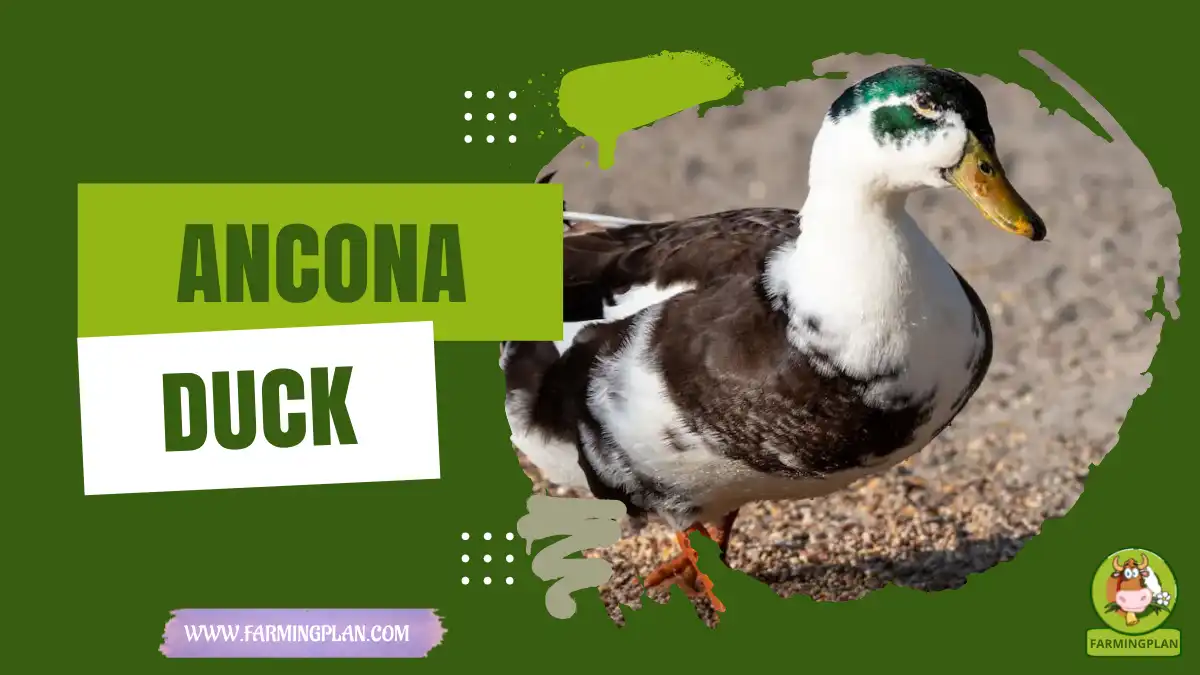
The Ancona duck is one of the most productive, visually captivating, and versatile dual-purpose waterfowl breeds developed in early twentieth-century Britain. Closely related to the Magpie duck and developed from Indian Runner and Campbell ancestry, this medium-weight bird features a striking “broken” pinto plumage pattern where asymmetrical splashes of color contrast with crisp white feathers. Homesteaders celebrate ancona ducks for their prolific egg production, quiet demeanors, and relentless appetite for garden snails and orchard pests. Providing adequate space and ventilation prevents common stress issues in ancona duck.
Raising ancona duckling clutches requires thoughtful management of water basins, starter nutrition, and predator exclusion. Because adults are too heavy to fly, they can be safely contained with modest two-foot garden boundaries, making them ideal permaculture partners. Discover our comprehensive water engineering manual on pond management and biological aeration to design healthy waterfowl swimming systems. Understanding breed-specific traits helps maximize ancona duck longevity and output.
Whether you choose classic black-and-white, chocolate, or a rare blue ancona duck variety, understanding their egg-laying cycles, protein formulations, and winter bedding is essential. This technical guide outlines breed standards, coop construction, nutritional requirements, and commercial flock economics. Routine preventive care saves time and lowers veterinary costs for ancona duck.
British Origins & Genetic Heritage
The Ancona duck was developed in Great Britain during the early 1900s, emerging from the same regional waterfowl breeding initiatives that produced the Magpie duck. Fanciers bred prolific Indian Runner ducks with Huttegem and Campbell bloodlines, aiming to combine the phenomenal laying capacity of Runners with the meatier frame and calm temperament of traditional farm ducks. Matching forage or ration quality to life stage optimizes ancona duck growth.
Early British breeders valued the breed’s extraordinary foraging stamina across damp pasturelands and coastal estuaries. By combining the alert insect-foraging behavior of Runner ducks with a deeper breast and calmer disposition, the Ancona quickly earned favor among English smallholders during the early twentieth century. Gradual dietary transitions protect digestive stability in ancona duck.
Imported to the United States in the 1970s and 1980s by heritage waterfowl enthusiasts, the breed quickly captured the attention of sustainable smallholders. While closely resembling the Magpie duck, the Ancona differs in that its color patches are randomly broken and scattered across the torso, neck, and sides, whereas the Magpie exhibits a uniform, symmetrical cap-and-saddle color pattern. Selecting healthy foundation stock is the cornerstone of successful ancona duck management.
Despite its superior production performance, the Ancona remains an endangered heritage breed on The Livestock Conservancy’s Critical list. Conserving pure breeding lines protects critical genetic biodiversity for small-scale regenerative poultry producers. Good predator-proofing and dry bedding safeguard ancona duck comfort in harsh weather.
Conformation Standards & Broken Plumage Genetics
The Ancona is categorized within the medium duck class, with mature drakes weighing 6.0 to 6.5 pounds (2.7 to 3.0 kg) and ducks weighing 5.0 to 5.5 pounds (2.3 to 2.5 kg). The body is oval and compact, carried at a moderate 20 to 30-degree angle above horizontal. The head is oval with a bill of medium length, and the shanks are orange, often mottled with dark spots matching the plumage. Monitoring water quality and mineral balance directly benefits ancona duck vitality.
The plumage displays a striking broken pattern, where roughly 75% of the body surface is white and 25% is marked with irregular pigmented patches. Permitted color varieties include: Practical hands-on husbandry ensures consistent results when raising ancona duck.
- Black Ancona: Glossy beetle-green sheen over jet-black patches on a snowy white ground.
- Blue Ancona: Slate blue patches ranging from light sky blue to deep steel gray.
- Chocolate Ancona: Warm cocoa brown mottling contrasting with white base feathers.
- Lavender & Silver: Subtle pastel dilutions highly prized by exhibition waterfowl fanciers.
Temperament & Garden Permaculture Utility
Ancona ducks are celebrated for their calm, inquisitive, and friendly temperament. Unlike flighty Runner ducks or noisy Pekins, Anconas maintain quiet vocalizations, making them well-suited for suburban farmsteads where close neighbors might object to loud poultry calls. Early intervention at the first sign of lethargy protects overall ancona duck flock or herd health.
In orchard and garden permaculture, Anconas are unmatched pest foragers. They eagerly hunt down destructive Spanish slugs, Japanese beetles, grubs, and snails without scratching up plant root systems like chickens. Their wide, flat bills rarely damage mature leafy crops, allowing homesteaders to deploy them directly into garden rows for organic biological pest control. For paddock fencing strategies that safeguard ducks from nocturnal predators, consult our guide on predator-proof perimeter fencing. Structured culling and biosecurity protocols strengthen ancona duck genetic quality.
Their calm social flocking behavior simplifies daily pasture rotations. Unlike flighty light breeds that panic when approached by farm handlers, Anconas walk calmly in loose groups, following grain shaker buckets or voice cues directly back to their night coops at dusk with minimal herding effort. Maintaining clean feeders and sanitized equipment supports sustainable ancona duck care.
Night Coop Architecture & Water Management
While Anconas spend their daylight hours foraging pastures and swimming ponds, they must be secured every evening in a predator-proof night coop. Raccoons, weasels, foxes, and owls easily target non-flying waterfowl. The coop must be well-ventilated, thoroughly bedded with dry straw or wood shavings, and latched securely with two-step hardware. Consistent daily observation helps keepers spot early changes in ancona duck health and behavior.
Implement these technical waterfowl housing specifications:
- Floor Space: Provide at least 4 to 6 square feet of floor space per duck inside the night house, plus 15 to 20 square feet per bird in outdoor runs.
- Ground-Level Nest Boxes: 14×14 inch open-front wooden boxes placed directly on the floor, bedded with fresh wheat straw.
- Water Access: Waterers must be deep enough for ducks to fully submerge their heads to clean their nares (nostrils) and lubricate their eyes.
- Splashing Drainage: Place watering founts over wire mesh drain platforms to keep indoor bedding dry and prevent ammonia generation.
Nutritional Requirements & Egg Layer Conditioning
Because Ancona ducks are capable of laying between 210 and 280 large eggs annually, their nutritional demands are substantial. High-output layers require a 16% to 18% crude protein waterfowl pellet fortified with calcium, phosphorus, and essential B-vitamins—especially niacin (vitamin B3), which is essential for preventing leg weakness in heavy-bodied ducks. Clean housing, fresh water, and balanced nutrition remain essential for ancona duck productivity.
⚡ Daily Nutritional Matrix for Ancona Ducks
| Life Stage / Activity | Crude Protein | Calcium | Niacin Level | Dietary Component |
|---|---|---|---|---|
| Ducklings (0–3 weeks) | 20 – 22% | 0.9 – 1.1% | 65 – 75 mg/kg | Non-medicated waterfowl starter crumbles |
| Grower Ducks (4–18 weeks) | 15 – 16% | 0.8 – 1.0% | 55 – 65 mg/kg | Waterfowl grower pellets + pasture forage |
| Laying Ducks (In Production) | 16 – 18% | 3.2 – 3.8% | 60 – 70 mg/kg | Layer pellets + free-choice crushed oyster shell |
| Breeding Drakes | 14 – 16% | 1.0 – 1.2% | 50 – 60 mg/kg | Maintenance pellets + whole soaked wheat |
Health Management, Parasite Control & Biosecurity
Ancona ducks are hardy birds with strong natural immunity to common avian ailments. However, wet living quarters can lead to wet feather condition, where preen gland oils fail to waterproof the feathers, causing birds to become chilled. Clean swimming water and clean straw bedding restore preen gland function. Tracking feed intake and body condition supports long-term ancona duck performance.
Veterinary biosecurity should guard against duck viral enteritis (duck plague) and avian influenza. For federal waterfowl health and biosecurity protocols, consult the USDA APHIS Avian Health Information Portal. Following biosecurity best practices reduces disease risk in any ancona duck operation.
⚡ Preventative Health & Parasite Schedule
| Health Vector | Clinical Symptoms | Biosecurity Protocol | Treatment Action |
|---|---|---|---|
| Bumblefoot (Ulcerative Pododermatitis) | Limping, dark scab on footpad, swelling | Smooth bedding, eliminate sharp rocks and wire | Antiseptic soak, drawing salve, bandage wrap |
| Wet Feather Condition | Waterlogged plumage, shivering, soaked down | Clean swimming water, dry bedding, sunshine | Dry shelter isolation until preen oil balance returns |
| Niacin Deficiency | Bowed legs, enlarged hock joints, reluctance to walk | Supplement brewer’s yeast in starter feed | Liquid vitamin B complex oral administration |
| Gapeworm (Syngamus trachea) | Head shaking, neck stretching, wheezing | Pasture rotation, snail population control | Oral fenbendazole treatment for 3 to 5 days |
Estimated Annual Budget & Flock Economics
Maintaining a small heritage flock of Ancona ducks (1 drake and 4 ducks) yields abundant gourmet eggs and garden pest control with predictable operational costs: Seasonal adjustments to shelter and diet keep ancona duck thriving year-round.
⚡ Estimated Annual Budget & Maintenance Costs (USD)
| Expense Category | Initial Outlay | Annual Recurring | Category Details |
|---|---|---|---|
| Breeding Flock (1 Drake + 4 Ducks) | $160 | $0 | Five pedigree Ancona ducklings or started stock ($32 each) |
| Predator-Proof Night House | $650 | $40 | Sturdy timber shelter with concrete footings and double latches |
| Stock Tank Swimming Basin & Drain | $220 | $30 | 100-gallon heavy poly tank with ball valve drain assembly |
| Layer Pellets, Grains & Oyster Shell | $0 | $340 | High-protein layer feed ($280) + whole grains & calcium ($60) |
| Bedding Straw & First Aid Supplies | $40 | $110 | Wheat straw, brewer’s yeast, electrolytes, wound spray |
| Total Operational Budget | $1,070 | $520 | Projected annual budget for a 5-bird Ancona egg laying flock |
Interactive Feed & Resource Calculator
Calculate daily feed consumption, annual egg production estimates, and swimming basin water volumes with our interactive calculator: Proper record-keeping makes breeding and culling decisions easier for ancona duck keepers.
🦆 Ancona Duck Flock Feed & Water Intake Calculator
Estimate daily balanced feed (lbs), fresh drinking/rinsing water requirements (Gal), indoor shelter, and monthly 50-lb feed bags for your Ancona Duck flock.
Frequently Asked Questions
How many eggs do Ancona ducks lay per year?
Ancona ducks are prolific egg producers, laying between 210 and 280 large eggs annually. Their eggs range in shell color from pure white and cream to subtle tints of blue and seafoam green.
Can Ancona ducks fly over fences?
No. Ancona ducks are classified as a medium-weight breed (5.0 to 6.5 pounds) and are physically incapable of sustained flight. They can be safely and easily contained within 24 to 36-inch garden fencing.
Are Ancona ducks noisy compared to other breeds?
No. Ancona ducks are relatively quiet compared to loud breeds like Pekins or Call ducks. The females produce a gentle, measured quack, while the drakes make a low, raspy whistle, making them well-suited for suburban farmsteads.
What is the difference between an Ancona duck and a Magpie duck?
While both breeds share Indian Runner ancestry, their plumage patterns differ significantly. Magpie ducks exhibit a formal, symmetrical cap-and-saddle color pattern, whereas Ancona ducks display an asymmetrical broken pinto pattern scattered randomly over the body.
Do Ancona ducks make good garden pest controllers?
Yes. Ancona ducks are superb foragers that eagerly hunt down slugs, snails, Japanese beetles, and grasshoppers. Because they do not scratch the soil like chickens and have wide, flat bills, they cause minimal damage to established garden plants.
Breed Merits & Homestead Limitations
Key Advantages
- Prolific egg production delivering 210 to 280 large eggs per year
- Stunning unique broken plumage pattern with green-black or blue sheen
- Flightless medium build easily secured within standard garden fencing
- Relentless slug and insect eradication without garden bed scratching
- Hardy constitution with excellent sub-zero winter weather tolerance
Management Challenges
- Requires dedicated predator-proof night lockup against foxes and weasels
- Water splashing requires regular bedding replenishment and drainage
- Critical heritage breed status makes sourcing pure stock challenging
- Ducklings require supplemental niacin to ensure proper bone development
Expert Verdict & Next Steps for Ancona Duck Care Keepers
Successful management of Ancona Duck Care hinges on rigorous adherence to species-specific housing dimensions, precision daily nutrition, and proactive biosecurity protocols. Whether you are managing commercial production or establishing a self-sufficient homestead breeding flock, maintaining disciplined husbandry standards ensures long-term vitality, exceptional output yields, and sustainable enterprise profitability. Smallholders comparing closely related stock can also review our detailed Bashkir Duck Care Guide. Providing adequate space and ventilation prevents common stress issues in ancona duck.
By pairing predator-proof shelter infrastructure with high-quality rations and regular veterinary wellness monitoring, growers can confidently optimize productive longevity across all life stages. For comprehensive operational management blueprints and companion breed guides, explore our complete technical library in Farming Plan Agricultural Guides.
📚Agricultural Reference & Scientific Citations
1. The Livestock Conservancy: Ancona Duck Heritage Breed Profile & Conservation Guidelines.
2. Cornell University Department of Animal Science: Waterfowl Care, Niacin Requirements & Duckling Brooding.
3. American Poultry Association (APA): Waterfowl Conformation and Standard of Perfection.


