

⚡ Havana Rabbit at a Glance: Key Specifications & Benchmarks
| Primary Agricultural Purpose | Exhibition show rabbit, companion animal, luxurious pelt production |
| Mature Senior Doe Weight | 5.0 – 6.5 lbs (2.3 – 2.9 kg); ideal weight 5.5 lbs |
| Mature Senior Buck Weight | 4.5 – 6.0 lbs (2.0 – 2.7 kg); ideal weight 5.0 lbs |
| Body Type Classification | Compact body type according to ARBA standards (short, close-coupled, rounded) |
| Fur Structure & Texture | Flyback fur with exceptional soft density and lustrous, mink-like sheen |
| Recognized Color Varieties | Chocolate (original), Black, Blue, and Broken (spotted on clean white background) |
| Ear Conformation | Upright, closely set, medium substance, well-furred (3.75 to 4.25 inches) |
| Average Litter Size | 4 to 6 kits per kindle; attentive maternal care and rich milk production |
| Typical Lifespan | 7 to 10 years with clean indoor hutch housing and grass hay feeding |
| ARBA Standard Class | Four-Class Breed recognized by American Rabbit Breeders Association |
The Havana rabbit stands as one of the most elegant and rewarding compact breeds in domestic rabbit breeding. Renowned across show tables for its silky, mink-like pelt and well-rounded confirmation, this medium-small lagomorph delivers an exceptional balance of calm temperament and physical beauty. Breeders and homesteaders seeking a manageable, gentle animal often find the Havana to be an ideal candidate for small-scale rabbitries and companion housing. Selecting healthy foundation stock is the cornerstone of successful havana rabbit management.
Success with this distinguished breed demands an understanding of its unique coat structure, compact bone density, and delicate gastrointestinal biology. Keepers who review foundational lagomorph principles in our dedicated rabbit farming and hutch management guide can establish clean biosecure housing and proper forage feeding schedules prior to acquiring breeding stock. Good predator-proofing and dry bedding safeguard havana rabbit comfort in harsh weather.
Whether your agricultural goal centers on breeding champion stock under American Rabbit Breeders Association standards or maintaining calm family companions, the Havana provides remarkable feed efficiency. Consuming significantly less daily feed than commercial meat breeds while producing pelts of supreme quality, this animal thrives across diverse US climates when sheltered from intense summer humidity. This manual details physical standards, dietary requirements, health management, and breeding practices. Producers planning a diversified homestead operation often cross-reference our Alaska Rabbit Care Guide.
Barn management for Havana rabbits prioritizes consistent handling and low-stress environmental conditions. Because Havanas possess quiet and attentive temperaments, gentle weekly socialization creates docile bucks and does that sit quietly during show judging. Ensuring routine cage sanitization and clean resting mats maintains clean fur on the hocks and belly pads, preserving show condition throughout the exhibition season. Monitoring water quality and mineral balance directly benefits havana rabbit vitality.
Physical Characteristics & Mink Fur Standards
Under the American Rabbit Breeders Association (ARBA) standard of perfection, the Havana is classified as a compact breed. Senior bucks should ideally weigh 5.0 pounds with a maximum ceiling of 6.0 pounds, while senior does present ideal weights of 5.5 pounds and an upper limit of 6.5 pounds. The body topline must rise in a continuous, smooth arc from the base of the ears over well-rounded hindquarters, tapering smoothly toward a compact tail. Practical hands-on husbandry ensures consistent results when raising havana rabbit.
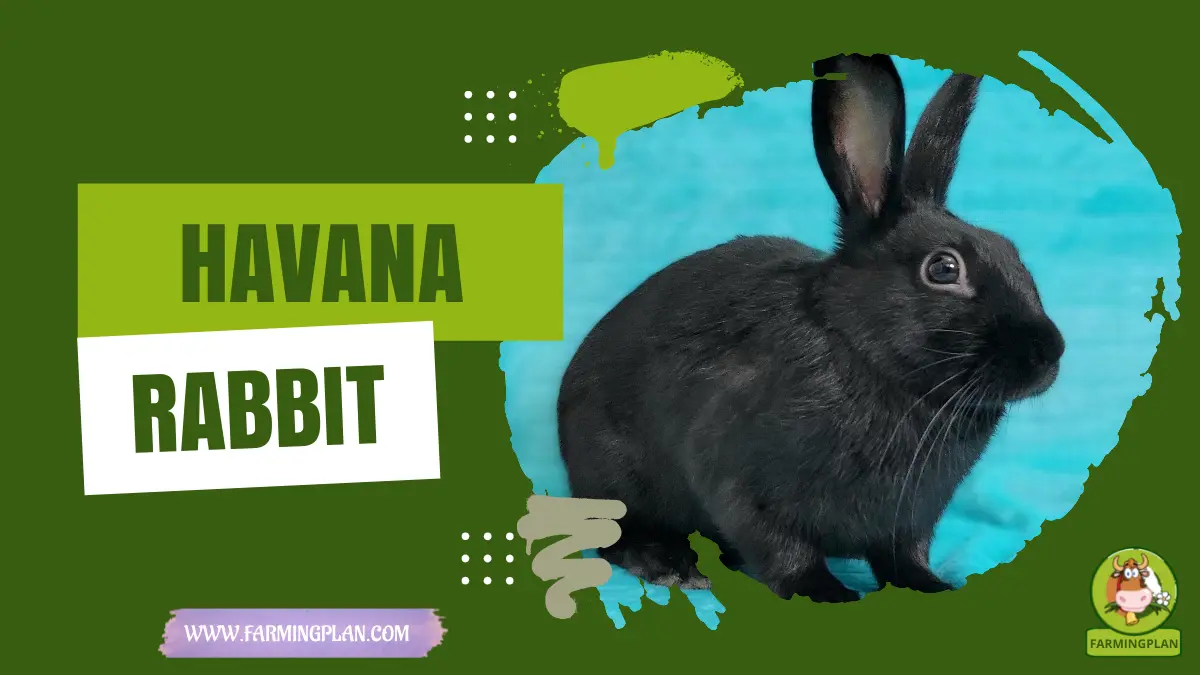
The defining breed characteristic remains its exquisite flyback coat. The fur measures approximately one inch in length, dense with an undercoat that snaps smoothly back into position when stroked against the grain. ARBA judges award significant points to coat luster, texture, and density. The fur feels exceptionally soft beneath the fingers, closely resembling sheared wild mink pelt in both sheen and hand feel.
Four distinct color varieties receive official championship recognition. The original Chocolate variety displays a deep, rich reddish-brown color that extends uniformly down the hair shaft to a dove-gray undercolor. The Black variety exhibits an intense jet black with slate undercolor and intense surface luster. The Blue variety shows a clean, deep slate blue, while the Broken variety features uniform patches of recognized solid colors distributed across a clean white body. Early intervention at the first sign of lethargy protects overall havana rabbit flock or herd health.
⚡ Havana Rabbit Conformation & Fur Evaluation Matrix
| Judging Category | Point Weight | Ideal Breed Standard Specification | Common Elimination Faults |
|---|---|---|---|
| Body Topline & Type | 35 Points | Compact, short neck, rounded hips, full hindquarters | Long narrow body, flat loin, pinched hips, swayback |
| Fur Texture & Luster | 30 Points | Dense flyback fur, glossy mink-like sheen, thick undercoat | Woolly texture, molting patches, lack of flyback snap |
| Color & Uniformity | 20 Points | Deep, lustrous color carried down hair shaft to slate base | Faded chocolate tones, scattered white hairs in solids |
| Head, Eyes & Ears | 10 Points | Broad skull, prominent dark eyes, upright 4-inch ears | Ears exceeding 4.5 inches, narrow pencil ears, blindness |
| Condition & Health | 5 Points | Firm muscle tone, clean hocks, bright eyes, clean nostrils | Snuffles, abscesses, sore hocks, emaciation, nasal discharge |
Breed History & International Recognition
The Havana rabbit originated in 1898 in the Dutch village of Ingen, Netherlands. A small rural farmer named Mr. Honders kept common barnyard rabbits for meat production. One black and white doe gave birth to an unspotted litter that included a unique male kit boasting an extraordinarily deep brown, glistening coat. Recognizing the novelty of this rich color, Honders preserved the animal and bred him to produce additional chocolate kits. Structured culling and biosecurity protocols strengthen havana rabbit genetic quality.
Because the striking brown color closely resembled the shade of fine Cuban Havana cigars, breeders designated the new variety as the Havana rabbit. The breed quickly spread to Germany, Switzerland, and France, where commercial furriers marveled at the natural mink sheen that required no chemical dyeing or artificial shearing. By 1908, the breed reached the British Isles, establishing a dedicated fancier following.
Havana rabbits arrived in the United States around 1916, gaining formal acceptance by the National Pet Stock Association (the predecessor of ARBA). While originally bred solely in chocolate, American geneticists later introduced black and blue varieties through meticulous crossbreeding programs with black Flemish Giants and American Blues. In 2008, ARBA officially recognized the Broken Havana variety, cementing the breed as a staple across national exhibition showrooms. Maintaining clean feeders and sanitized equipment supports sustainable havana rabbit care.
Hutch Dimensions, Wire Floor Care & Exercise Needs
Proper housing protects the delicate foot structure and glossy pelt of the Havana rabbit. While compact, an active Havana requires a hutch providing a minimum of 30 inches by 24 inches of floor space (5 square feet) and a minimum interior height of 18 inches. This allows the rabbit to stretch fully, hop uninhibited, and stand upright on hind legs without their ears brushing cage wire ceilings. Consistent daily observation helps keepers spot early changes in havana rabbit health and behavior.
When using galvanized wire cages, floor wire must be 14-gauge galvanized-after-weld wire with 1/2-inch by 1-inch mesh spacing. Bare wire floors can cause ulcerative pododermatitis (sore hocks), especially in heavy breeding does. Every cage must include a solid resting pad made of textured polypropylene or unfinished untreated plywood. This provides relief for the rear footpads and keeps foot fur dense and clean.
Ventilation is vital for respiratory health in rabbitry design. Lagomorphs tolerate ambient temperatures between 35 and 65 degrees Fahrenheit with ease, but suffer rapid heat distress when temperatures exceed 80 degrees Fahrenheit. Barn ventilation should provide 10 to 15 air exchanges per hour to eliminate ammonia fumes. During high summer heat, rabbitries require ceramic ice tiles, misting fans, or evaporative coolers to prevent fatal heatstroke. Clean housing, fresh water, and balanced nutrition remain essential for havana rabbit productivity.
Nutritional Requirements & Hay Rations
The digestive physiology of the Havana rabbit relies upon continuous hindgut fermentation driven by indigestible long-stem fiber. High-quality grass hay, such as first-cutting or second-cutting Timothy hay, orchard grass, or meadow brome, must constitute 80% to 85% of the rabbit’s total daily diet. Unlimited hay promotes gut motility and provides the continuous mechanical wear required by continuously growing open-rooted incisors and cheek teeth. Tracking feed intake and body condition supports long-term havana rabbit performance.
Concentrated commercial rabbit pellets should be fed in measured daily rations to avoid obesity, which degrades show toplines and impairs doe fertility. Senior non-breeding Havanas thrive on 1/4 to 1/3 cup of 14% to 16% crude protein pellets containing at least 20% crude fiber per day. Growing juniors and pregnant or nursing does require free-choice 16% to 18% protein pellets supplemented with small handfuls of alfalfa hay to support milk production.
Fresh leafy greens, including romaine lettuce, cilantro, dandelion greens, and parsley, provide bioavailable micronutrients and natural hydration. Clean, unchlorinated drinking water must be available 24 hours a day via gravity ball-point water bottles or heavy ceramic crocks. Water intake averages 50 to 100 milliliters per kilogram of body weight daily, increasing significantly during lactating cycles. Following biosecurity best practices reduces disease risk in any havana rabbit operation.
Health Management, GI Stasis & Biosecurity
Gastrointestinal stasis (gut slowdown) remains the most critical health threat confronting domestic rabbits. When stress, dehydration, pain, or insufficient dietary fiber disrupts cecal fermentation, beneficial gut flora dies off, causing painful gas accumulation and complete digestive shutdown. Keepers must monitor fecal pellet production daily; small, irregularly shaped, or absent pellets signal emergency clinical intervention with oral hydration and veterinary care. Seasonal adjustments to shelter and diet keep havana rabbit thriving year-round.
External parasite management requires routine inspection for ear mites (*Psoroptes cuniculi*) and fur mites (*Cheyletiella parasitovorax*). Keepers managing mixed homestead livestock can reference our practical protocols for mite prevention and coop treatments and our guide to livestock lice eradication to sanitize pens and grooming brushes effectively.
Infectious respiratory disease caused by *Pasteurella multocida* (commonly termed snuffles) spreads through aerosolized droplets and shared equipment. Symptoms include thick white nasal discharge, matted fur on front paws from grooming, and wet sneezing. Any symptomatic rabbit must be isolated immediately into quarantine quarters. University veterinary researchers at Purdue University College of Veterinary Medicine emphasize that maintaining low ammonia levels below 10 ppm protects respiratory cilia from chronic bacterial colonization. Proper record-keeping makes breeding and culling decisions easier for havana rabbit keepers.
Preventative health protocols should also screen for internal parasites, especially hepatic and intestinal coccidiosis (*Eimeria* species) in weanling kits. Utilizing slotted dropping pans and sanitizing water systems prevents fecal-oral recontamination. In multi-species environments, producers should also review our guidelines on livestock tapeworm protocols to eliminate common agricultural parasites from barnyard pastures. Providing adequate space and ventilation prevents common stress issues in havana rabbit.
Breeding Management, Nest Boxes & Kit Care
Havana does reach breeding maturity at five to six months of age, while bucks are fertile by six to seven months. Always bring the doe to the buck’s cage for mating; does are fiercely territorial and may attack a buck placed inside their own hutch. A successful mating is confirmed when the buck completes copulation and falls over cleanly to one side.
The gestation period averages 31 days (with normal variance between 28 and 33 days). On day 27 of gestation, provide a sanitized metal or wooden nest box measuring 14 inches long by 10 inches wide by 8 inches high, packed with clean wood shavings and soft meadow hay. Does will pull belly fur to line the nest 24 to 48 hours prior to kindling. Understanding breed-specific traits helps maximize havana rabbit longevity and output.
Havana litters typically average 4 to 6 kits. Does nurse only once or twice daily, typically during quiet nighttime hours. Check the nest box on morning following kindling to remove any deceased kits and verify that kits possess plump, rounded bellies indicating nursing success. Kits open their eyes at 10 to 12 days of age and begin nibbling fine grass hay and mother’s pellets at three weeks. Weaning takes place safely at eight weeks. Routine preventive care saves time and lowers veterinary costs for havana rabbit.
⚡ Estimated Annual Budget & Maintenance Costs (USD)
| Expense Category | Year 1 Setup Cost | Annual Recurring Cost | Practical Budgeting Notes |
|---|---|---|---|
| Quality Stock Acquisition | $100 – $250 | $0 – $75 | Pedigreed ARBA breeding pair or show-quality junior stock |
| Hutches & Housing Hardware | $180 – $350 | $25 – $50 | Heavy galvanized wire cages, dropping pans, resting pads |
| Commercial Pellet Rations | $65 – $90 | $65 – $90 | 50 lb bags of 16% crude protein extruded rabbit pellets |
| Premium Timothy Hay Bales | $80 – $140 | $80 – $140 | Clean first-cutting or second-cutting dust-free grass hay |
| Nest Boxes & Bedding Shavings | $35 – $60 | $40 – $70 | Kiln-dried pine shavings or shredded paper bedding |
| Waterers, Feeders & Crocks | $40 – $75 | $15 – $30 | Chew-proof metal J-feeders and stainless ball water bottles |
| Veterinary & Biosecurity Care | $75 – $150 | $50 – $120 | Routine wellness exams, dewormers, coccidiosis medication |
| ARBA Show Fees & Registration | $30 – $80 | $30 – $80 | Club memberships, tattoo equipment, show entry fees |
| Total Estimated Investment | $605 – $1,195 | $305 – $655 | Economic small-scale footprint with high pelt & breeding value |
Estimate your rabbitry operational expenses and forage requirements using our interactive budget tool below:
🐇 Havana Rabbit Daily Hay & Pellet Calculator
Calculate daily Timothy hay (unlimited bulk), pellet rations, fresh greens, and clean water intake for your Havana Rabbit.
Frequently Asked Questions (FAQ)
What is the mature weight and ARBA body type of a Havana rabbit?
According to American Rabbit Breeders Association (ARBA) standards, Havana rabbits have a compact, short, close-coupled body type. Mature senior does weigh 5.0 to 6.5 lbs (ideal 5.5 lbs) and senior bucks weigh 4.5 to 6.0 lbs (ideal 5.0 lbs).
What makes Havana rabbit fur unique compared to other breeds?
Havana rabbits are famous for their short flyback coat with extraordinary soft density and a rich, lustrous mink-like sheen. When stroked from tail to head, the fur snaps briskly back into place.
What Havana rabbit color varieties are recognized by ARBA?
ARBA officially recognizes four color varieties of the Havana rabbit: Chocolate (the original 1898 Dutch variety), Black, Blue, and Broken (spotted markings over a clean white background).
What should you feed a Havana rabbit to prevent obesity and GI stasis?
Unlimited high-fiber grass hay such as Timothy or orchard grass should make up 80% of the daily diet, paired with measured 16% protein pellets (roughly 1 oz per pound of body weight) and fresh leafy greens to maintain gut motility and prevent bloat.
How many kits do Havana rabbits typically have per litter and how long do they live?
Havana does are attentive mothers that average 4 to 6 kits per kindle and produce rich milk. With clean housing, hay-rich nutrition, and biosecurity, Havana rabbits typically live 7 to 10 years.
Expert Verdict & Husbandry Roadmap
For exhibition enthusiasts, 4-H youth competitors, and homesteaders seeking a docile small-livestock breed with minimal feed demands, the Havana rabbit offers an outstanding return on investment. Its moderate 5.5-pound frame simplifies cage handling, reduces annual hay costs, and eliminates the heavy space footprints required by giant commercial breeds. Does make nurturing, calm mothers that kindle vigorous litters with minimal birth complications. Matching forage or ration quality to life stage optimizes havana rabbit growth.
To maintain peak show condition and long-term vitality, provide unlimited grass hay, enforce daily portion control on pelleted rations, and inspect rear hocks weekly for early signs of skin chafing. By coupling clean indoor shelter with proactive biosecurity, your rabbitry will thrive with healthy stock showcasing the brilliant mink luster that has made the Havana rabbit a global favorite for over a century.
📚Agricultural Reference & Scientific Citations
Standards and physiological data referenced in this guide comply with American Rabbit Breeders Association (ARBA), USDA APHIS Animal Health, and the FAO Domestic Animal Diversity Information System.


