

⚡ Bielefelder Kennhuhn Chicken at a Glance: Key Benchmarks
| Breed Classification | Heavy Dual-Purpose Heritage Fowl (Auto-Sexing Utility Breed) |
| Country of Origin | Germany (Bielefeld; developed by Gerd Roth in the 1970s) |
| Mature Rooster Weight | 8.0 to 10.0 lbs (3.6 to 4.5 kg) robust, broad-backed meat frame |
| Mature Hen Weight | 6.5 to 8.5 lbs (2.9 to 3.8 kg) prolific, winter-hardy brown layer |
| Annual Egg Production | 200 to 230 large to jumbo brown eggs with thick shell quality |
| Auto-Sexing Trait | Day-old cockerels display pale chipmunk stripes and yellow head spots; pullets have dark racing stripes |
| Temperament Profile | Exceptionally calm, gentle, friendly, and docile around family |
| Hardiness & Housing | Cold-hardy with small wattles and combs resistant to frostbite |
The Bielefelder Kennhuhn stands as one of the finest achievements in twentieth-century German poultry breeding. Developed in the 1970s by Gerd Roth, this heavy dual-purpose breed combines exceptional winter egg production, generous meat yields, and an extraordinarily docile temperament. For homesteaders exploring our poultry farming guides, the Bielefelder offers a dependable, low-stress centerpiece for productive family flocks. Structured culling and biosecurity protocols strengthen bielefelder kennhuhn chicken genetic quality.
What sets the breed apart is its genetic auto-sexing capability. Day-old male and female chicks display distinct down colorations, allowing breeders to sort cockerels and pullets immediately upon hatching without stressful vent sexing. When raised alongside other hardy heritage fowl like the Jersey Giant chicken and Minorca chicken, Bielefelders demonstrate outstanding foraging ability while thriving on sustainable poultry feed rations. Maintaining clean feeders and sanitized equipment supports sustainable bielefelder kennhuhn chicken care.
History & Origin
The Bielefelder Kennhuhn Chicken, a breed that originated in the 1970s, was the brainchild of a skilled German chicken breeder named Gerd Roth. Roth, who resided in the town of Bielefeld, where the breed gets its name, had a vision of creating the ultimate chicken—productive, friendly, and attractive. To achieve this, he crossed several strong and reliable breeds, including Ameraucana chickens, Welsummers, and Rhode Island Reds.
The result was a robust dual-purpose breed that could thrive in cold climates, lay abundant eggs, and provide high-quality meat. Over time, the Bielefelder earned a solid reputation in Germany and across Europe. Today, it’s a favorite among backyard chicken keepers around the world. Its popularity keeps growing thanks to its calm behavior, easy-to-handle size, and eye-catching feather pattern. Consistent daily observation helps keepers spot early changes in bielefelder kennhuhn chicken health and behavior.
Reads More: Silver Appleyard Duck – The Ultimate Friendly Farm Favorite Clean housing, fresh water, and balanced nutrition remain essential for bielefelder kennhuhn chicken productivity.
Characteristics
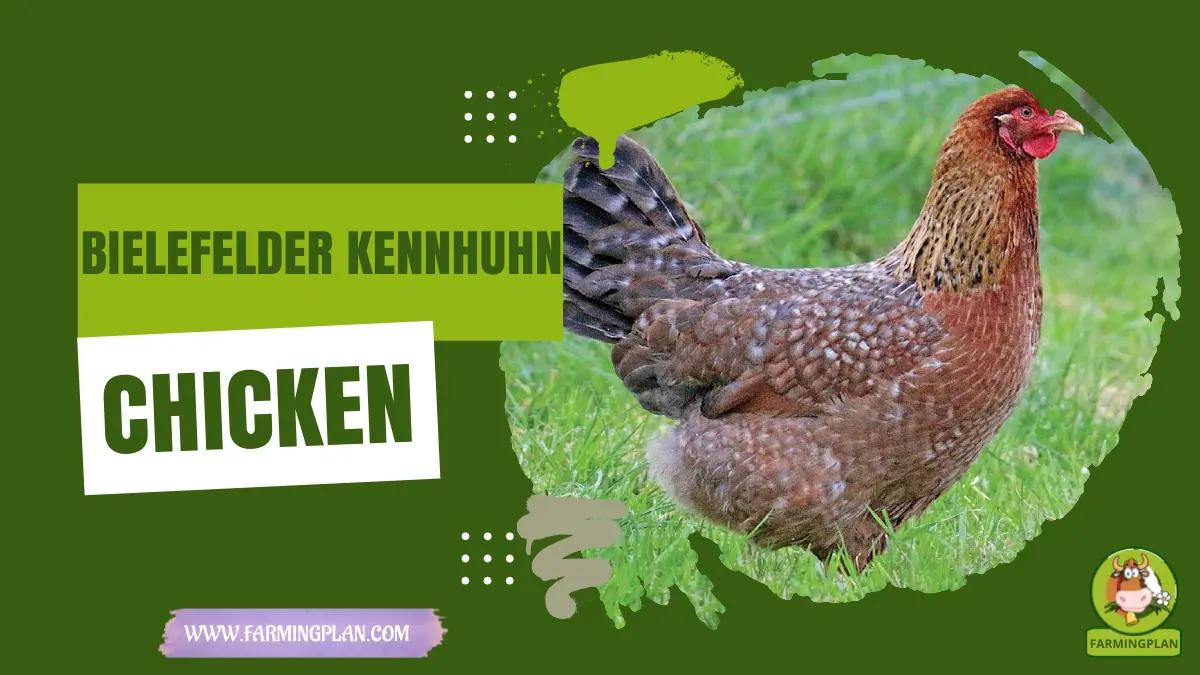
The Bielefelder Kennhuhn Chicken is a standout in any flock. It’s a large bird with a striking cuckoo feather pattern—a blend of soft browns, gold, and black that creates a unique striped effect. Both the hens and the handsome roosters are visually striking, with roosters often displaying more golden tones on their neck and back.
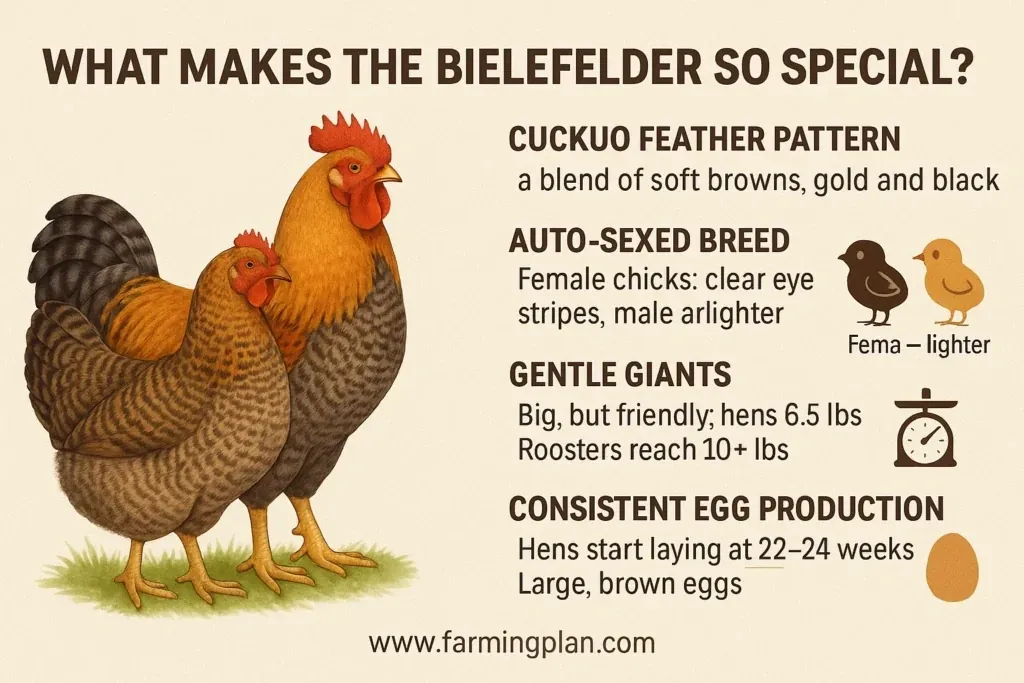
One of the breed’s most unique traits is that it’s an auto-sexed breed. This means you can tell male and female chicks apart just by looking at them on the day they hatch. Female chicks are darker with clear eye stripes, while males are lighter. To evaluate alternative bloodlines and practical management routines, check our Gallina Ibicenca Chicken overview. Tracking feed intake and body condition supports long-term bielefelder kennhuhn chicken performance.
These chickens are often called gentle giants because they’re big, but they’re friendly. Hens typically weigh around 6.5 pounds, and roosters can reach 10 pounds or more. Even with their size, they’re easy to reach and great for beginners. They also start laying early—most hens begin producing large, brown eggs at around 22–24 weeks of age. These chickens are known for consistent egg production, making them a reliable choice for anyone wanting fresh eggs daily. Following biosecurity best practices reduces disease risk in any bielefelder kennhuhn chicken operation.
Nature & Temperament of Bielefelder Kennhuhn chicken
The Bielefelder Kennhuhn Chicken is known for its gentle nature and calm personality. If you’re tired of your vicious birds or dealing with pecking order disputes, this breed can bring peace to your coop. Many keepers call them the “kinder chicken” because they “et al, ong so well with humans and other animals. Even the roosters are well-behaved.
Unlike some breeds that turn into crazed psychopath bird, Bielefelder roosters are often calm and protective roosters, making them a safe choice for families with kids. These chickens are easy to manage in mixed flocks and don’t bully, so they don’t breed. They don’t make a noise, which is great if you have neighbors nearby. Their calm nature also makes daily chicken chores much easier and more enjoyable. Seasonal adjustments to shelter and diet keep bielefelder kennhuhn chicken thriving year-round.
Food & Diet of Bielefelder Kennhuhn chicken
Feeding your Bielefelder Kennhuhn Chicken the right diet is key to keeping it healthy and productive. These birds do best on a high-quality feed that supports both egg production and muscle growth. Look for balanced layer pellets once they start laying eggs. Proper record-keeping makes breeding and culling decisions easier for bielefelder kennhuhn chicken keepers.

As dual-purpose birds, they also enjoy foraging. They’ll happilyThey’ll for bugs, seeds, and greens during free-range time. Still, you should always give them plenty of clean feed and water. When foraging, these birds are smart and know how to lead their girls to food without much fuss.
For baby chicks, including Bielefelder baby chicks, use a starter crumble that’s high in that. As they grow, slowly move them to grower feed, then to layer feed around 18–20 weeks. This supports healthy growth and prepares them for strong egg production. Avoid giving “hem salty snacks, raw beans, or sugary treats. Stick with safe fruits, veggies, grains, and protein-rich kitchen scraps when you want to treat them. Providing adequate space and ventilation prevents common stress issues in bielefelder kennhuhn chicken.
Tip: Always offer c “ushed oyster shells in a separate dish—this helps hens lay stronger, healthier eggs.
Usage & Purpose
The Bielefelder Kennhuhn Chicken is often called a true dual-purpose bird—and for good reason. It delivers both excellent egg production and quality meat, making it a smart choice for families, hobby farmers, and breeders. Hens lay around 230–280 large brown eggs each year. That means you can count on fresh eggs almost every day without long production vacations. Their eggs are not only tasty but also strong-shelled, thanks to their balanced diet and strong genetics. When it comes to meat, the Bielefelder grows fast and fills out nicely. Understanding breed-specific traits helps maximize bielefelder kennhuhn chicken longevity and output.
Roosters provide a lot of meat per bird, making them classic meat birds that fit well into sustainable living plans. Because they’re so easythey’rese and handle, they’re a favorthey’reng people building a balanced flock. These chickens also make great additions to backyard chickens setups, especially for those who want both beauty and purpose in their coop. Whether you’re in it for you, meat, or just a remarkable bird to enjoy around your yard, the Bielefelder does it all. Routine preventive care saves time and lowers veterinary costs for bielefelder kennhuhn chicken.
Special Features
The Bielefelder Kennhuhn Chicken isn’t just another in the coop—it’s packed with traits that make it one of the most wonderful chickens you can raise. One standout feature is its auto-sexing trait. This means you can spot female baby chicks and males right after hatching. No guessing. This is a big help for breeders and anyone buying a couple of chicks for their backyard.
Another amazing feature is their stunning cuckoo pattern. These gorgeous birds look stylish and stand out in any flock. They also handle cold weather well, thanks to their dense feathers. Because they are so large and friendly, they’re often gentle giants. They’re calm, don’t eat, and make perfect companions for beginners or families. The breed’s production, peaceful behavior, and ability to live in mixed flocks all add to its charm. It’s no wonder that Bielefelder is known as a “super chicken” by those who “eep them. Matching forage or ration quality to life stage optimizes bielefelder kennhuhn chicken growth.
Health Issues & Prevention of Bielefelder Kennhuhn chicken
The Bielefelder Kennhuhn Chicken is a hardy breed, but like all chickens, they’re susceptible to a few common health issues. Thankfully, with proper care, most of these problems can be prevented. Gradual dietary transitions protect digestive stability in bielefelder kennhuhn chicken.

Common Health Issues
- Mites and Lice: These pests can affect any flock. Regularly check your chickens for signs of irritation or feather loss. Keep their coop clean and dry to prevent infestations.
- Respiratory Infections: Like many chickens, Bielefelders can get respiratory illnesses if exposed to wet or cold environments. Make sure they have proper ventilation and stay dry, especially during wet weather.
- Egg Binding: Although rare, this can happen if a hen has difficulty laying an egg. Providing a calcium supplement (like crushed oyster shells) and maintaining a high-quality feed can help prevent this issue.
- Worms: Internal parasites can be a problem for any flock. Regular deworming is important, particularly for free-range chickens.
Preventive Care Tips
- Regular Check-ups: Keep an eye on your Bielefelders by looking for changes in their behavior, egg production, or appearance.
- Good Hygiene: A clean environment is essential for preventing disease. Make sure the coop is well-ventilated, dry, and free from waste.
- Vaccinations: Ensure your chickens are up to date on necessary vaccines, such as Marek’s DiseaseMarek’swcastle disease, to protect them from common viral infections.
By staying proactive and following these preventive steps, you can ensure your Bielefelder chickens live long, healthy lives.
Step-by-Step Farming Guide
Raising Bielefelder Kennhuhn chickens is a rewarding experience, and with the right steps, your flock will thrive. Whether you’re a beginner or you’re experienced, here’s a simple, reasonable guide to caring for your birds. Selecting healthy foundation stock is the cornerstone of successful bielefelder kennhuhn chicken management.
Step 1: Set Up a Comfortable Coop
Ensure your coop is spacious enough for your chickens to roam freely. Bielefelder chickens are large, so they need space to spread out. Each chicken should have at least 4 square feet of space indoors. Make sure the coop is well-ventilated, dry, and protected from predators. Add bedding like straw or wood shavings for comfort. Good predator-proofing and dry bedding safeguard bielefelder kennhuhn chicken comfort in harsh weather.
Step 2: Provide a Balanced Diet
Feed your Bielefelder Kennhuhn chickens a high-quality feed designed for egg layers. Once they start laying, you can supplement their diet with kitchen scraps, greens, and grains. Don’t forget toDon’tr crushed oyster shells to strengthen egg shells. They also need access to clean water at all times.
Step 3: Maintain a Clean Environment
Keep your chicken coop clean by removing waste regularly. Dirty conditions can lead to health issues like mites and respiratory infections. Clean the waterers and feeders at least once a week to prevent contamination. Monitoring water quality and mineral balance directly benefits bielefelder kennhuhn chicken vitality.
Step 4: Ensure Safe Free-Range Time
If you’re letting you’rehickens roam free, make sure your yard is secure. Bielefelders enjoy foraging, but they’re also vuthey’ree to predators like hawks or raccoons. A secure fenced yard or chicken run will help keep them safe while they enjoy free-range time. Practical hands-on husbandry ensures consistent results when raising bielefelder kennhuhn chicken.
Step 5: Watch for Health Issues
Check your birds regularly for signs of illness or discomfort. Look out for changes in behavior, egg production, or feather condition. Regularly check for mites, lice, and respiratory issues. A little prevention goes a long way in keeping your flock healthy.
Step 6: Collect Eggs Daily
Collect eggs from your Bielefelder hens at least once a day to ensure they stay clean and prevent them from breaking. If you’re not eatiyou’re eggs right away, store them in a cool, dry place. Early intervention at the first sign of lethargy protects overall bielefelder kennhuhn chicken flock or herd health.
🐔 Bielefelder Kennhuhn Chicken Flock Feed & Egg Yield Calculator
Estimate daily layer feed (lbs), monthly 50-lb feed bags, coop and run requirements, and expected weekly fresh egg yield for your Bielefelder Kennhuhn Chicken flock.
Frequently Asked Questions (FAQ)
What makes the Bielefelder chicken auto-sexing?
Bielefelders carry genetic cuckoo and crele barring patterns that allow breeders to accurately identify cockerels and pullets immediately upon hatching. Male chicks have a distinct yellow spot on their head with lighter chipmunk stripes, while female chicks have dark brown dorsal racing stripes and eyeliner marks.
How many eggs do Bielefelder hens lay per year?
Healthy Bielefelder hens lay an average of 200 to 230 large to jumbo brown eggs annually. They are renowned for their steady production throughout cold winter months when other breeds slow down.
Are Bielefelder chickens friendly around children?
Yes, Bielefelders are widely regarded as one of the most gentle and docile chicken breeds in the world. Both hens and roosters exhibit calm, placid dispositions, rarely show aggression, and enjoy interacting with family members.
How big do Bielefelder chickens get?
Bielefelders are heavy utility birds. Mature roosters weigh between 8 and 10 pounds (3.6 to 4.5 kg), while mature hens weigh between 6.5 and 8.5 pounds (2.9 to 3.8 kg), yielding plump, succulent table meat.
Do Bielefelder chickens handle cold winters well?
Yes, developed in Germany, Bielefelders are extremely cold-hardy. Their dense plumage, broad meaty bodies, and moderate comb sizes give them strong natural resistance against frostbite and freezing winter weather.
Maintaining a healthy, thriving flock requires disciplined coop sanitation and predator-proof infrastructure. By equipping your run with modern poultry coop equipment and adhering to strict flock vaccination protocols, your Bielefelders will deliver years of gentle companionship, heavy egg baskets, and top-tier table meat.
📚Agricultural Reference & Scientific Citations
Standards and physiological data referenced in this guide comply with American Poultry Association (APA), The Livestock Conservancy, and USDA APHIS Avian Biosecurity Standards.


