

⚡ Jersey Giant Chicken at a Glance: Key Specifications & Benchmarks
| Primary Agricultural Purpose | Heavy dual-purpose meat bird, roaster production, winter brown egg layer |
| Standard Mature Cock Weight | 13.0 – 15.0 lbs (5.9 – 6.8 kg); undisputed heavyweight of purebred poultry |
| Standard Mature Hen Weight | 10.0 – 11.5 lbs (4.5 – 5.2 kg) with broad, deep, horizontal carriage |
| Annual Egg Production | 180 to 220 large to extra-large brown eggs with thick, durable shells |
| Recognized Color Varieties | Black (beetle-green sheen), White (snowy plumage), Blue (slate with lacing) |
| Comb & Wattles Type | Single upright comb with six well-defined serrations; bright red earlobes |
| Distinguishing Physical Trait | Yellow soles on the footpads and under the toes (contrasts with Australorps) |
| Growth Rate to Maturity | Deliberate: requires 8 to 10 months for full muscular and skeletal frame |
| Temperament & Sociability | Exceptionally gentle, placid, non-aggressive giants that handle calmly |
| APA Recognition Year | Admitted to American Poultry Association Standard of Perfection in 1922 |
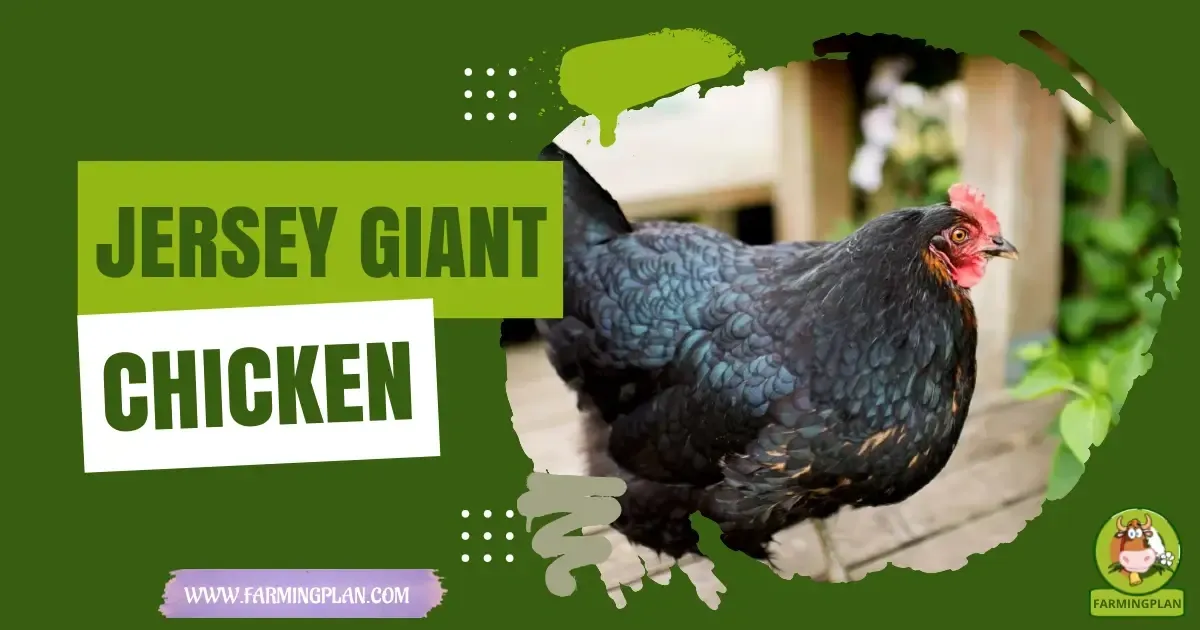
The Jersey Giant chicken holds the undisputed title as the largest purebred domestic fowl in the world. Engineered in Burlington County, New Jersey during the late 1870s by brothers John and Thomas Black, the breed was created to replace the holiday roasting turkey with an enormous, capon-grade chicken capable of feeding large Victorian families. Through strategic crossings of Black Javas, Dark Brahmas, and Black Langshans, the Black brothers established an American icon that combines massive table weight with gentle docility. Gradual dietary transitions protect digestive stability in jersey giant chicken. Selecting healthy foundation stock is the cornerstone of successful jersey giant chicken management.
Beyond their impressive physical scale, Jersey Giant hens function as dependable dual-purpose egg layers. Unlike modern fast-growing broilers that experience metabolic collapse within weeks, Jersey Giants possess rugged constitutions, laying between 180 and 220 rich brown eggs annually while maintaining consistent production throughout sub-zero winter temperatures. Flock keepers designing sturdy coops can review our foundational layer poultry farming management guide to configure reinforced perches and low nest boxes. Good predator-proofing and dry bedding safeguard jersey giant chicken comfort in harsh weather.
Managing the Jersey Giant requires adjusting traditional poultry routines to suit their immense body mass. High roosts cause bumblefoot and joint trauma, while standard grain feeders can restrict their broad heads and beaks. Combining durable equipment from our poultry equipment and automation guide with structured rations ensures your flock matures into healthy, majestic backyard protectors that delight keepers for years. Monitoring water quality and mineral balance directly benefits jersey giant chicken vitality.
Origins in New Jersey & The Heritage Roaster Legacy
The historical emergence of the Jersey Giant was driven by market economics in the northeastern United States. During the late nineteenth century, Philadelphia and New York wholesale meat markets demanded heavy roasting capons weighing ten to twelve pounds dressed. Standard farm chickens were too small, while turkeys commanded seasonal premiums. John and Thomas Black spent two decades refining a giant black fowl originally termed “Black’s Giants.” Practical hands-on husbandry ensures consistent results when raising jersey giant chicken.
The foundation stock drew heavily on the long, horizontal body carriage of Black Javas, the towering bone structure of Dark Brahmas, and the deep, lustrous plumage of Black Langshans. Selection focused strictly on physical scale and meat cutability rather than feather color uniformity. It was not until breeders formed the American Black Jersey Giant Club in 1921 that the name was standardized and feather color varieties were cataloged. Early intervention at the first sign of lethargy protects overall jersey giant chicken flock or herd health.
The American Poultry Association admitted the Black Jersey Giant to the Standard of Perfection in 1922, followed by the White Jersey Giant in 1947 (originating as sports from purebred black lines), and the Blue variety in 2003. While twentieth-century industrial agriculture shifted to rapid-growing Cornish-Rock hybrid broilers, the Jersey Giant remains a beloved heritage champion among sustainable homesteads worldwide. Breeders interested in comparing housing, diet, and productivity traits should see our Dresdner Chicken husbandry guide. Structured culling and biosecurity protocols strengthen jersey giant chicken genetic quality.
Breed Standards, Conformation & The Yellow Sole Identification
The standard conformation of the Jersey Giant is defined by horizontal balance, extreme width, and massive skeletal density. The back is exceptionally long and flat, flowing into a full, rounded tail carried at an angle of 45 degrees. The breast is broad, deep, and carried well forward, creating a rectangular silhouette that conveys immense power. Mature roosters stand nearly 26 inches tall, weighing 13 to 15 pounds, while mature hens weigh 10 to 11.5 pounds. Maintaining clean feeders and sanitized equipment supports sustainable jersey giant chicken care.
A critical breed identification marker is the color of the feet. In Black Jersey Giants, the legs and shanks are nearly black with a willow green cast, but the bottom of the footpads and the undersides of the toes must be bright yellow. This trait distinguishes authentic Jersey Giants from Black Australorps, which exhibit white or pinkish skin on the bottom of their feet. In White Jersey Giants, the shanks are dark willow, while the bottom of the toes remains yellow. Consistent daily observation helps keepers spot early changes in jersey giant chicken health and behavior.
⚡ Jersey Giant Chicken Waterfowl Performance Matrix
| Production Metric | Standard Benchmark | Flock Homestead Performance |
|---|---|---|
| Mature Drake Weight | 5.5–9.5 lbs | Robust keel and broad breast meat |
| Mature Duck (Hen) Weight | 4.5–8.0 lbs | High volume body capacity |
| Annual Egg Production | 180–280 eggs/year | Rich, nutrient-dense white/tinted eggs |
| Egg Weight & Shell Density | 75–88 grams | Heavy yolk percentage (32–35%) |
| Foraging Efficiency | Active pasture grazer | Consumes slugs, snails & greens |
| Cold Hardiness Threshold | Down to -10°F (-23°C) | Dense down plumage & weatherproofing |
The head is large, broad, and crowned with a single, medium-sized upright comb featuring six distinct points. Earlobes and wattles are bright red, and the eyes are dark brown to hazel. In show competitions, disqualifications include split combs, twisted feathers, white earlobes, and any sign of feathered shanks inherited from Brahma ancestral genetics. Clean housing, fresh water, and balanced nutrition remain essential for jersey giant chicken productivity.
Flock Temperament, Behavior & Pasture Foraging Dynamics
Despite their formidable physical scale, Jersey Giants are famous for their calm, docile temperament, earning them the nickname “gentle giants” of the poultry run. Roosters rarely display unprovoked human aggression, often acting as protective, watchful guardians over the foraging hens. Their placid nature allows them to integrate harmoniously with lighter, active breeds such as Minorca chickens without instigating bullying or flock chaos. Tracking feed intake and body condition supports long-term jersey giant chicken performance.
On open pasture, Jersey Giants are active and methodical foragers. While their heavy mass prevents high-speed sprinting, they cover broad acreage grazing tender grasses, seeds, beetles, and field grubs. Because their weight prevents them from flying over low fences (even a three-foot garden fence easily contains adult birds), homesteaders can safely run them around orchard perimeters and vegetable plots with minimal risk of escaped birds. Following biosecurity best practices reduces disease risk in any jersey giant chicken operation.
Their massive size also offers natural predator deterrent benefits. Aerial hawks and falcons that routinely prey on standard five-pound pullets hesitate to strike an adult ten-pound Jersey Giant hen or a fifteen-pound cock. While foxes and coyotes still pose dangers requiring secure nighttime coops, day-ranging losses to small raptors are significantly reduced in giant flocks. Seasonal adjustments to shelter and diet keep jersey giant chicken thriving year-round.
Egg Production, Shell Quality & Winter Laying Reliability
While historically bred for meat, Jersey Giant hens are productive and consistent egg layers. A healthy heritage hen yields between 180 and 220 large to extra-large brown eggs annually. Pullets take longer to reach point-of-lay than hybrid commercial layers, typically dropping their first egg between 6.5 and 8 months of age as their heavy bodies complete primary skeletal development. Proper record-keeping makes breeding and culling decisions easier for jersey giant chicken keepers. Providing adequate space and ventilation prevents common stress issues in jersey giant chicken.
One of the breed’s greatest operational strengths is cold-weather laying resilience. Originating in harsh northeastern winters, Jersey Giants continue laying steadily through freezing December and January weather when delicate Mediterranean breeds shut down. Their dense feather coats and thick body mass insulate internal organs, preserving ovulation energy during freezing nights. Understanding breed-specific traits helps maximize jersey giant chicken longevity and output.
Jersey Giant hens occasionally display broodiness, making dedicated mothers. However, because of their heavy mass, broody hens risk accidentally stepping on and cracking thin-shelled hatching eggs when shifting on the nest. When incubating valuable hatching eggs, many experienced keepers collect the eggs for artificial incubator hatching or place them under lighter foster broodies. Routine preventive care saves time and lowers veterinary costs for jersey giant chicken.
Slow-Growth Nutritional Protocols & Bone Density Fortification
Raising Jersey Giant chicks demands nutritional discipline. Unlike hybrid broilers that reach five pounds in 42 days through forced feed intake, Jersey Giants grow at a steady, deliberate pace, requiring 8 to 10 months to reach full maturity. Pushing giant chicks with high-protein broiler starter beyond four weeks can cause severe developmental bone deformities, slipped tendons, and perosis, as muscle accretion outstrips skeletal calcification. Matching forage or ration quality to life stage optimizes jersey giant chicken growth.
Transition chicks to a 16% to 18% crude protein grower mash at four weeks of age, ensuring balanced calcium, phosphorus, and vitamin D3 levels. Provide free-choice insoluble granite grit from week two to facilitate gizzard grinding. To understand related feeding principles across poultry classes, review our analysis of broiler poultry feed formulations for comparative amino acid nutrition. Gradual dietary transitions protect digestive stability in jersey giant chicken.
Adult Jersey Giants consume approximately 1.5 times the daily grain ration of a standard Leghorn, eating 6 to 7 ounces of balanced 16% layer feed daily alongside free-choice oyster shell and clean water. Supplementing with sprouted barley, fresh garden greens, and black oil sunflower seeds maintains plumage luster and provides essential fatty acids for rich, orange egg yolks. Selecting healthy foundation stock is the cornerstone of successful jersey giant chicken management.
Coop Engineering, Low Roost Construction & Flock Health
Standard chicken coop designs can cause physical injury to Jersey Giants. Traditional 3-foot to 5-foot high perches force heavy birds to jump down onto hard floors, causing footpad bruising, abscesses (bumblefoot), and ruptured tendons. Construct roost bars no higher than 18 to 24 inches above the floor, using wide 2×4 lumber with the 4-inch flat side turned upward to distribute foot pressure evenly across the pads. Good predator-proofing and dry bedding safeguard jersey giant chicken comfort in harsh weather.
Nest boxes must be customized for their physical scale. Standard 12×12-inch nest boxes cramp giant hens, leading to egg breakage. Build generous 16×16-inch or 18×18-inch boxes placed at ground level or equipped with low entry ramps. Line boxes with thick wood shavings and clean orchard straw to provide a deep, protective cushion for heavy laying hens. Monitoring water quality and mineral balance directly benefits jersey giant chicken vitality.
Flock health management includes biosecure vaccination and routine parasite suppression. Vaccinate day-old chicks against Marek’s disease, as giant breeds with extended development are vulnerable to viral immunosuppression. To maintain disease-free yards, reference our flock biosecurity guide on poultry vaccination schedules to safeguard growing heritage birds against common respiratory pathogens. Practical hands-on husbandry ensures consistent results when raising jersey giant chicken.
Winter comb management requires vigilance in northern climates. Although Jersey Giants tolerate sub-zero temperatures with ease, the tall single upright combs of mature roosters are susceptible to frostbite during extreme humidity and sub-zero nights. Ensure coops have high-level ridge ventilation that exhausts moist warm air without creating drafts over the perches, and coat comb points with organic coconut oil or petroleum jelly during cold snaps. Early intervention at the first sign of lethargy protects overall jersey giant chicken flock or herd health.
Breeding selection for long-term flock improvement demands patient culling. Avoid breeding individuals displaying slipped wings, crooked breast keels, or pinched tail carriage. Selecting breeding roosters with exceptional chest breadth, heavy bone girth, and pure green plumage luster ensures your breeding line retains authentic nineteenth-century roaster proportions. Structured culling and biosecurity protocols strengthen jersey giant chicken genetic quality.
⚡ Estimated Annual Budget & Maintenance Costs (USD)
| Heritage Day-Old Chicks (15 Chicks) | NPIP-certified purebred Jersey Giant chicks: $75 |
| Low-Roost Coop Retrofit & Nest Boxes | Heavy 2×4 roost bars, oversized nest boxes, ramps: $220 |
| Starter, Grower & Layer Feed Rations | Non-GMO feeds, calcium grit, oyster shell (10-bird flock): $540 |
| Automated Waterers & Heavy Feeders | Trough heated font, wide-pan metal gravity feeder: $125 |
| Bedding Packs & Deep Shavings | Kiln-dried pine shavings, straw bales for winter pack: $160 |
| Veterinary Supplies & Marek’s Vaccines | Vaccines, electrolytes, poultry dust, wound spray: $65 |
| Pasture Seed & Enrichment Greens | Clover, ryegrass, seasonal winter scratch grains: $90 |
| Estimated Total Annual Investment | $1,275 total startup and annual operational budget |
🐔 Jersey Giant Chicken Flock Feed & Egg Yield Calculator
Estimate daily layer feed (lbs), monthly 50-lb feed bags, coop and run requirements, and expected weekly fresh egg yield for your Jersey Giant Chicken flock.
Frequently Asked Questions (FAQ)
How heavy do Jersey Giant roosters and hens grow?
Developed in New Jersey in the 1870s and admitted to the APA in 1922, the Jersey Giant is the largest purebred chicken: mature cocks weigh 13.0 to 15.0 lbs and hens weigh 10.0 to 11.5 lbs.
How can you tell a Black Jersey Giant apart from a Black Australorp?
Look at the bottom of the feet: Black Jersey Giants always have distinct yellow skin on the footpads and under the toes (with dark willow-black shanks), whereas Black Australorps have pinkish-white soles.
How many eggs do Jersey Giant hens lay per year?
Jersey Giant hens are dependable cold-hardy winter layers producing 180 to 220 large to extra-large brown eggs annually with thick, strong shells.
How long does a Jersey Giant take to reach full meat and skeletal maturity?
Unlike fast-growing commercial Cornish Cross broilers, Jersey Giants grow deliberately—building their heavy bone frame first before filling out muscle fully over 8 to 10 months.
What roost height and space do giant 11-to-15 lb Jersey Giants need?
Keep wooden roosts low (18 to 24 inches off deep bedding) with gentle ramps so heavy birds do not bruise footpads into bumblefoot when jumping down, and provide at least 6 to 8 sq ft of indoor coop space per bird.
Expert Verdict & Husbandry Roadmap
The Jersey Giant chicken stands as an enduring masterpiece of American heritage poultry breeding. Combining magnificent physical presence, peaceful behavior, reliable cold-weather egg laying, and heavy table meat, this breed delivers comprehensive homestead self-sufficiency. Rather than rushing birds through rapid artificial fattening, keepers who appreciate traditional slow-growth agriculture will find immense satisfaction in raising these magnificent birds. Maintaining clean feeders and sanitized equipment supports sustainable jersey giant chicken care.
Flock success relies on accommodating their substantial size: engineering low perches with ample floor bedding, avoiding high-protein feed forcing, and providing open foraging space. By stewarding these heritage giants, breeders preserve an iconic piece of American agrarian history while enjoying dependable farm-fresh eggs and succulent heritage roasters. Consistent daily observation helps keepers spot early changes in jersey giant chicken health and behavior.
📚Agricultural Reference & Scientific Citations
Standards and physiological data referenced in this guide comply with American Poultry Association (APA), The Livestock Conservancy, and USDA APHIS Avian Biosecurity Standards.


