

⚡ Dresdner Chicken at a Glance: Key Specifications & Benchmarks
| Scientific Classification | Gallus gallus domesticus (German Continental Dual-Purpose Heritage Fowl) |
| Native Origins & History | Dresden, Saxony, Germany; standardized between 1948 and 1955 by Alfred Zumpe |
| Comb Style & Frost Tolerance | Medium rose comb with straight rear leader; total frostbite resistance in severe winter cold |
| Mature Body Weight & Build | Roosters: 6.6 to 7.7 lbs (3.0 to 3.5 kg); Hens: 5.5 to 6.6 lbs (2.5 to 3.0 kg) |
| Primary Agricultural Purpose | Dual-purpose: heavy winter egg laying & plump, fine-grained gourmet table meat |
| Annual Egg Laying Performance | 180 to 220 large brown-shelled eggs (55 to 62 g); sustained laying through cold winter months |
| Recognized Color Varieties | Red-brown (rotbraun), white (weiß), and black (schwarz) with rich beetle-green sheen |
| Temperament & Foraging Habit | Calm, confident, docile handling manners; vigorous free-range grassland foragers |
1. Introduction: The Resilient Dual-Purpose Pride of Saxony
The Dresdner chicken represents one of the most accomplished and practical dual-purpose heritage breeds developed in central Europe. Originating in the historic state of Saxony during the mid-twentieth century, this robust bird was bred to combine heavy, reliable egg production during freezing continental winters with a well-fleshed, juicy carcass suitable for Sunday family roasts. Maintaining clean feeders and sanitized equipment supports sustainable Dresdner Chicken care.
A crowning hallmark of the Dresdner is its functional architectural adaptation to cold northern climates. Featuring a compact, low-profile rose comb and dense feathering, the breed is virtually immune to the crippling winter frostbite that damages single-combed breeds. For homesteaders and sustainable farmers seeking a productive, calm, and visually striking flock capable of thriving in snowy or damp pasture conditions, the Dresdner chicken delivers unmatched dependability. Consistent daily observation helps keepers spot early changes in Dresdner Chicken health and behavior.
In addition to its utilitarian excellence, the Dresdner exhibits a proud, dignified presence in the poultry run. Its balanced rectangular body, rich mahogany plumage, and bright yellow legs make it an enduring favorite among exhibition fanciers and practical livestock keepers alike.
2. Deep Historical Origins & Post-War Saxon Breeding
The history of the Dresdner began in the aftermath of World War II in the Saxon capital of Dresden, Germany. Facing severe regional food shortages and rebuilding efforts, visionary poultry breeder Alfred Zumpe set out in 1948 to create a new, high-performance utility fowl that could endure the harsh Saxon winters while subsisting on rustic farm grains and pasture forage. Clean housing, fresh water, and balanced nutrition remain essential for Dresdner Chicken productivity.
Zumpe carefully selected foundation breeding stock from three outstanding heavy breeds: the New Hampshire (prized for rapid growth and early feathering), the Wyandotte (selected for its frost-resistant rose comb and deep breast fleshing), and the Rhode Island Red (celebrated for intense egg-laying stamina). Over eight years of rigorous selection, Zumpe fixed uniform breed characteristics, establishing the characteristic rich reddish-brown plumage and broad, muscular frame.
The breed achieved official recognition from the German Poultry Federation (Bund Deutscher Rassegeflügelzüchter – BDRG) in 1955. It rapidly spread across East Germany and neighboring regions as a premier homestead chicken. Today, conservation breeders throughout Germany, Austria, and Scandinavia maintain high genetic purity, preserving its valuable combination of cold hardiness and dual-purpose utility. Tracking feed intake and body condition supports long-term Dresdner Chicken performance.
The historic focus on economic self-sufficiency ensures that modern Dresdner strains retain their rustic vigour, resisting metabolic fatigue and producing steady egg clutches even under sub-zero winter barn conditions.
3. Standard Physical Characteristics & Breed Conformation
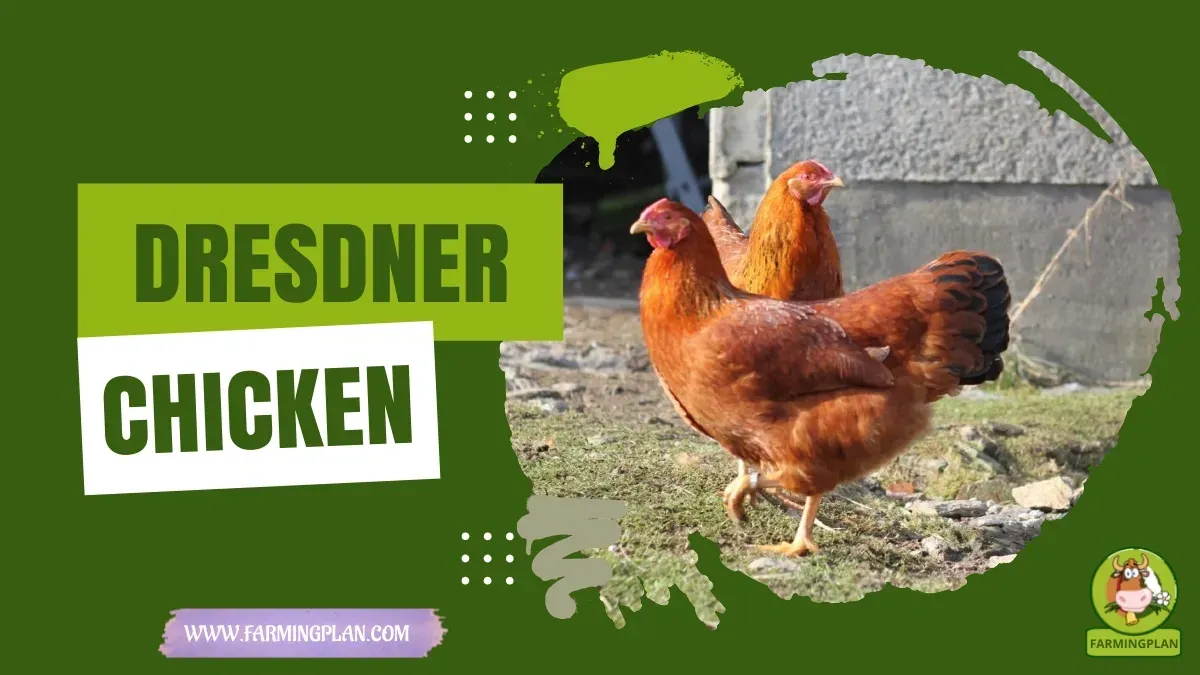
The conformation of the Dresdner chicken is characterized by a strong, rectangular, medium-heavy body structure with a broad back that slopes gently into a full, moderately elevated tail. The breast is deep, well-rounded, and prominent, indicating generous breast meat yield. Following biosecurity best practices reduces disease risk in any Dresdner Chicken operation.
The head is medium-sized and adorned with a firm, well-set rose comb that follows the curvature of the neck with a straight, tapering leader spike that does not curve downward. The wattles are medium in size, oval, and smooth, while the earlobes are vivid red, confirming the hen’s production of brown-shelled eggs. Eyes are deep reddish-bay, alert and bright. Seasonal adjustments to shelter and diet keep Dresdner Chicken thriving year-round.
Mature roosters reach standard body weights of 6.6 to 7.7 lbs (3.0 to 3.5 kg), carrying themselves with quiet dignity. Mature hens settle between 5.5 to 6.6 lbs (2.5 to 3.0 kg), displaying generous abdominal width and depth suited for continuous oviduct activity. The legs and shanks are clean of feathers, stout, and bright yellow in color, ending in four well-spread toes.
The most iconic color variety is the red-brown (rotbraun), where the male displays a brilliant golden-red hackle and saddle, mahogany wing bows, and a glossy greenish-black tail, while the female exhibits a uniform, warm chestnut-brown body tone with subtle black stippling in the tail feathers. Proper record-keeping makes breeding and culling decisions easier for Dresdner Chicken keepers.
4. Temperament, Flock Dynamics & Foraging Behavior
Dresdner chickens are celebrated for their remarkably calm, trustful, and even-tempered disposition. They settle quickly into farm routines, interacting placidly with human handlers and showing little inclination toward flightiness or hysteria when entered into coops.
Roosters are protective yet courteous flock leaders. They diligently watch for airborne hawks, locate choice food morsels for their hens with rhythmic tidbitting calls, and rarely display unprovoked human aggression. Within the hen flock, pecking orders are established peacefully, resulting in harmonious flock dynamics with virtually no feather-plucking or bullying. Providing adequate space and ventilation prevents common stress issues in Dresdner Chicken.
Their foraging behavior is active and methodical. When given access to pastures, orchards, or rotational paddocks, Dresdners spend all day exploring vegetative edges, scratching for beetle grubs, slugs, wireworms, and weed seeds. Because of their heavy build, low 4-foot pasture fences are entirely sufficient to contain them safely.
5. Housing Systems, Space Requirements & Winter Shelter Design
While the Dresdner is exceptionally cold-hardy, sound housing remains vital for maintaining dry plumage and preventing respiratory ailments. The coop must provide continuous, draft-free ventilation near the roofline while ensuring floor-level roosts remain completely shielded from cold air drafts. Understanding breed-specific traits helps maximize Dresdner Chicken longevity and output.
Provide at least 3.5 to 4.5 square feet of indoor coop floor space per adult bird in standard backyard or homestead flocks, alongside 10 to 12 inches of horizontal roost space per bird on 2×4 wooden roost bars (installed wide side up to allow the birds to cover their toes with warm body feathers during freezing nights). Outdoor runs should allocate at least 15 to 20 square feet per bird.
Deep bedding systems using dry pine wood shavings or chopped wheat straw (6 to 8 inches deep) provide excellent thermal insulation and composting warmth during freezing northern winters. Clean nest boxes measuring 14 x 14 x 14 inches should be provided at a ratio of one box per four laying hens, positioned 18 inches off the floor with perches for easy access. Routine preventive care saves time and lowers veterinary costs for Dresdner Chicken.
Ensure outdoor runs have covered shade structures or evergreen shrub plantings to provide shelter from rain and protective cover against aerial raptors. Matching forage or ration quality to life stage optimizes Dresdner Chicken growth.
6. Nutritional Strategy, Daily Feed Rations & Metabolic Care
The nutritional efficiency of the Dresdner allows keepers to maintain low feed costs while sustaining high egg output. Their energetic foraging allows them to harvest up to 20% to 25% of their daily dietary requirements from diverse pasture during spring, summer, and autumn.
For laying hens, provide a complete balanced layer pellet or mash containing 16% to 17% crude protein and 3.8% to 4.2% calcium, supplemented with free-choice crushed oyster shell in separate feeding hoppers. An adult Dresdner hen consumes approximately 120 to 140 grams (4.2 to 4.9 oz) of feed daily depending on weather and pasture availability. Gradual dietary transitions protect digestive stability in Dresdner Chicken.
Growing cockerels being finished for the table benefit from a dedicated grower mash containing 18% crude protein and whole grains (cracked corn, oats, and barley) from week 8 to week 16, promoting firm muscular growth without excessive visceral fat accumulation.
Provide fresh, unfrozen drinking water daily. In freezing winter climates, utilize heated poultry drinking bases to prevent dehydration, as laying hens will cease egg production within 24 hours if drinking water is inaccessible. Selecting healthy foundation stock is the cornerstone of successful Dresdner Chicken management.
7. Egg Production Benchmarks & Winter Laying Stamina
A primary commercial asset of the Dresdner chicken is its consistent, year-round egg production. Pullets mature rapidly and typically lay their first eggs between 20 and 22 weeks of age.
A well-nourished Dresdner hen lays between 180 and 220 large eggs per year. The eggs weigh between 55 and 62 grams, featuring a smooth, thick shell with an attractive light to medium brown color that resists cracking. The internal albumen is firm, holding high spherical yolk heights that make them superb for baking and culinary breakfast dishes. Good predator-proofing and dry bedding safeguard Dresdner Chicken comfort in harsh weather.
Most impressively, Dresdner hens maintain consistent egg laying throughout the dead of winter, long after single-combed Mediterranean breeds have halted production. With modest supplemental coop lighting (providing 14 hours of total light daily) and unfrozen water, winter egg yields remain steady, ensuring reliable farm revenue when egg prices are highest.
Broodiness is low to moderate in standard production lines, allowing hens to focus their metabolic energy on continuous laying rather than sitting broody in nesting boxes. Monitoring water quality and mineral balance directly benefits Dresdner Chicken vitality.
8. Gourmet Meat Value & Carcass Performance
In addition to heavy egg production, the Dresdner was intentionally engineered as an exceptional table fowl. Unlike scrawny modern industrial leghorns, young Dresdner cockerels develop broad, fleshy breasts and plump thighs with fine muscle grain. Practical hands-on husbandry ensures consistent results when raising Dresdner Chicken.
Surplus cockerels reach prime roasting slaughter weights of 5.5 to 6.5 lbs (2.5 to 3.0 kg) between 16 and 20 weeks of age under pasture-based management. Carcasses dress out at 70% to 73%, yielding yellow skin, tender white breast meat, and richly flavored dark leg meat that roasts to perfection without dryness.
The meat possesses a rich, authentic chicken flavor reminiscent of traditional French Label Rouge poultry, offering homesteaders and pasture poultry producers a high-margin specialty meat product for local farm-gate sales. Early intervention at the first sign of lethargy protects overall Dresdner Chicken flock or herd health.
Retired laying hens after two or three seasons make rich, golden chicken broth and tender braised stewing fowl, ensuring zero waste across the bird’s productive lifecycle.
9. Preventative Healthcare, Parasite Control & Biosecurity
The Dresdner chicken is celebrated for its natural health vigor and immune robustness. However, basic biosecurity and preventative healthcare protocols are essential to protect the flock from ubiquitous avian pathogens. Structured culling and biosecurity protocols strengthen Dresdner Chicken genetic quality.
Vaccinate day-old chicks against Marek’s Disease at the hatchery. Administer Newcastle Disease (ND) and Infectious Bronchitis (IB) vaccinations according to local agricultural extension schedules. Provide clean wood ash and sand dust bathing areas treated with food-grade diatomaceous earth to allow birds to naturally control external poultry lice (Menacanthus stramineus) and northern fowl mites.
Internal parasites such as roundworms (Ascaridia galli) and cecal worms should be monitored with periodic fecal flotation tests, deworming with flubendazole or veterinary-approved botanicals if parasite burdens rise. Keep coop litter dry to break the developmental cycle of coccidial oocysts (Eimeria species). Maintaining clean feeders and sanitized equipment supports sustainable Dresdner Chicken care.
Quarantine all newly acquired birds for at least 21 days in a separate facility before introducing them into your main flock, inspecting plumage and respiratory sounds daily.
10. Economic Feasibility, Enterprise Budgets & Homestead Scale
The economics of raising Dresdner chickens are outstanding for small farms, homesteads, and pasture-based poultry enterprises. Because the breed produces both heavy brown eggs and substantial gourmet meat, farm managers can diversify revenue without maintaining separate meat and egg flocks. Consistent daily observation helps keepers spot early changes in Dresdner Chicken health and behavior.
A flock of 50 Dresdner laying hens produces approximately 9,000 to 11,000 pasture-raised eggs annually, generating steady weekly cash flow. In addition, raising seasonal batches of cockerels for harvest provides high-value roasting birds for autumn and holiday markets, while the sale of fertile hatching eggs and started pullets provides lucrative secondary income. Clean housing, fresh water, and balanced nutrition remain essential for Dresdner Chicken productivity.
Learn comprehensive flock management techniques in our poultry farming guide, build optimal winter housing via our chicken coop plans, and project egg profits using our egg production calculator.
11. Interactive Dual-Purpose Flock Calculator
Calculate your estimated feed consumption, seasonal egg production, and cockerel meat yields for Dresdner chickens using the interactive calculator below: Tracking feed intake and body condition supports long-term Dresdner Chicken performance.
🐔 Dresdner Chicken Flock Feed & Egg Yield Calculator
Estimate daily layer feed (lbs), monthly 50-lb feed bags, coop and run requirements, and expected weekly fresh egg yield for your Dresdner Chicken flock.
12. Strategic Implementation Roadmap for Heritage Poultry Keepers
Establishing a productive Dresdner poultry flock involves three sequential phases. In Phase 1, construct an insulated, predator-proof coop equipped with wide 2×4 roosts, clean rollaway nest boxes, and an automated watering system.
In Phase 2, source certified purebred Dresdner hatching eggs or day-old chicks from registered BDRG breeders or reputable heritage preservation hatcheries. Brood carefully under radiant heaters, feed high-protein starter mash, and establish calm handling habits. Following biosecurity best practices reduces disease risk in any Dresdner Chicken operation.
In Phase 3, transition the flock to outdoor rotational pastures at 10 weeks of age, monitor egg laying as pullets reach maturity at 20 weeks, and establish local marketing channels for premium brown pasture eggs and heritage roasting chickens.
13. Frequently Asked Questions
What makes the Dresdner chicken comb special in cold climates?
The Dresdner chicken possesses a compact, low-profile rose comb with a straight rear spike. Unlike tall single combs that easily freeze and turn necrotic in sub-zero weather, the rose comb stays close to the skull and is virtually immune to winter frostbite.
How many eggs does a Dresdner hen lay each year?
A healthy Dresdner hen lays between 180 and 220 large brown eggs per year (weighing 55 to 62 grams), with remarkable laying consistency continuing through cold winter months when other breeds stop laying.
What is the mature size and weight of Dresdner chickens?
Standard Dresdner roosters weigh between 6.6 and 7.7 lbs (3.0 to 3.5 kg), while mature hens weigh 5.5 to 6.6 lbs (2.5 to 3.0 kg). They possess a broad, rectangular body with plump breast fleshing suitable for roasting.
Are Dresdner chickens friendly and easy to manage?
Yes, the breed is renowned for its calm, trusting, and docile temperament. They handle easily, forage actively without frantic flightiness, and roosters are protective yet courteous flock guardians.
14. Conclusion & Next Steps for Sustainable Poultry Keepers
The Dresdner chicken embodies the finest qualities of European dual-purpose poultry breeding. Offering unmatched frostbite resistance, generous winter egg production, superb meat quality, and a peaceful personality, it provides homesteaders and commercial pasture farmers with an invaluable livestock asset. Seasonal adjustments to shelter and diet keep Dresdner Chicken thriving year-round.
To deepen your broader knowledge of sustainable livestock systems and discover synergistic farm animal combinations, review our comprehensive guide on commercial livestock management and take your poultry enterprise forward today.
📚Agricultural Reference & Scientific Citations
Standards and physiological data referenced in this guide comply with American Poultry Association (APA), The Livestock Conservancy, and USDA APHIS Avian Biosecurity Standards.


