

⚡ Sumatra Chicken at a Glance: Key Specifications & Benchmarks
| Metric / Characteristic | Standard Specification | Production Benchmark & Exhibition Notes |
|---|---|---|
| Breed Origin & Indigenous Range | Island of Sumatra, Indonesia | Imported to the US in 1847; admitted to the APA Standard in 1883 |
| Standard Adult Body Weight | Cock: 5.0 lbs (2.25 kg); Hen: 4.0 lbs (1.8 kg) | Light, slender, pheasant-like frame built for agile, athletic flight |
| Tail Plumage Conformation | Flowing, sweeping sickles carried low | Horizontal to slightly drooping tail; side hangers trail close to the ground |
| Plumage Color & Lustre | Solid black with intense beetle-green sheen | Also recognized in Blue and White varieties by exhibition associations |
| Facial & Shank Pigmentation | Gypsy face (dark purple / mulberry black) | Black or leaden shanks with distinct yellow soles on the foot pads |
| Comb & Spur Anatomy | Small three-row pea comb; multiple spurs | Males routinely develop 2 to 4 distinct bony spurs on each shank |
| Annual Egg Production | 100 – 140 medium white or tinted eggs | Seasonal spring layer; dependable mother and excellent broody sitter |
| Flight & Roosting Behavior | Exceptional sustained aerial flight ability | Requires fully covered enclosed aviaries and high roost perches |
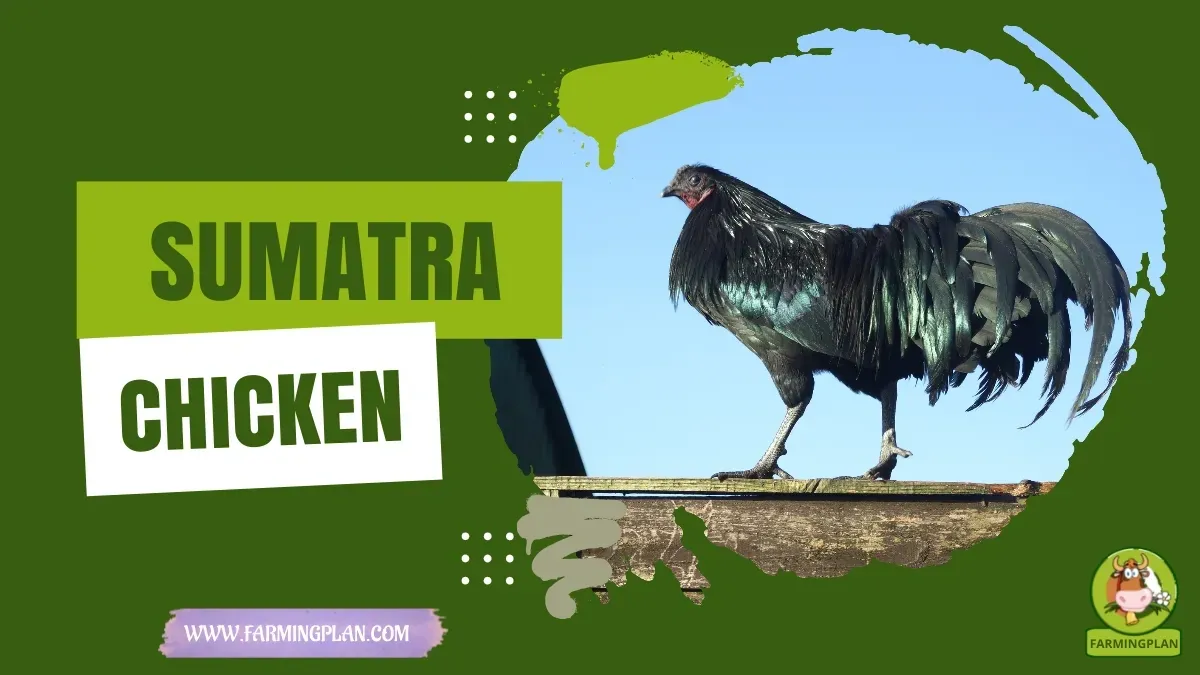
The Sumatra chicken is one of the most exotic, striking, and ancient heritage poultry breeds in existence. Native to the dense tropical rainforests of Sumatra, Java, and adjacent Indonesian islands, this distinctive fowl retains many ancestral pheasant-like characteristics. Revered worldwide for its cascading, low-slung tail feathers, intense beetle-green iridescent plumage, and dark mulberry facial skin, the Sumatra commands awe in exhibition arenas. Good predator-proofing and dry bedding safeguard Sumatra Chicken comfort in harsh weather.
Unlike standard barnyard breeds, the Sumatra preserves unmatched athletic flight capabilities, keen predator awareness, and an independent foraging nature. Cocks often possess multiple spurs on each shank—a rare genetic trait shared with wild junglefowl. When accommodated in spacious, covered aviaries fitted with elevated roosts, Sumatras reward dedicated aviculturists with a magnificent living link to tropical avian heritage. Monitoring water quality and mineral balance directly benefits Sumatra Chicken vitality.
History & Indonesian Rainforest Origins
The Sumatra chicken evolved in the rugged jungle terrain of western Indonesia, where indigenous peoples trapped wild junglefowl and maintained them as cultural ritual birds and game fowl. Early maritime merchant clippers visiting the Sunda Strait collected these exotic birds, transporting them to North America and Europe in the 1840s. The first recorded importation into the United States arrived in Boston in 1847. Practical hands-on husbandry ensures consistent results when raising Sumatra Chicken.
Recognizing the bird’s extraordinary ornamental attributes, Western breeders ceased viewing the Sumatra as a fighting bird, selecting exclusively for magnificent tail length, rich feather iridescence, and graceful pheasant-like silhouettes. The American Poultry Association admitted the Black Sumatra into the Standard of Perfection in 1883, followed later by the bantam variety and additional color forms. Early intervention at the first sign of lethargy protects overall Sumatra Chicken flock or herd health.
Physical Conformation & Multiple Spur Genetics
The Sumatra presents a unique long, horizontal body structure that mirrors wild phasianids. The head is small and carried proudly, crowned by a tiny, three-row pea comb that sits flush upon the skull. The face, wattles, and tiny earlobes exhibit “gypsy face”—a rich, dark purplish-mulberry skin tone caused by dermal melanin expression. The eyes are dark hazel to nearly black, giving the bird an intense, alert expression. Structured culling and biosecurity protocols strengthen Sumatra Chicken genetic quality.
The plumage is renowned for its sheer abundance and lustrous beetle-green iridescence. Every feather displays a deep metallic green gloss when viewed in sunlight. The rooster’s tail features an extraordinary cascade of long, broad main sickles and lesser coverts that flow horizontally backward, curving gently toward the earth without high arching. Fanciers often compare this long-tailed feathering with Japanese heritage lines like the Phoenix chicken. Maintaining clean feeders and sanitized equipment supports sustainable Sumatra Chicken care.
A distinctive biological trait of the Sumatra rooster is the presence of multiple spurs. While standard domestic chickens possess a single spur on each tarsus, Sumatra cocks often develop two, three, or even four distinct functional spurs per leg. Multiple spurs are an ancient hereditary genetic characteristic prized by exhibition judges as a hallmark of pure ancestral bloodlines. Consistent daily observation helps keepers spot early changes in Sumatra Chicken health and behavior.
Temperament, Behavior & Flight Mechanics
Sumatras possess an independent, alert, and active demeanor. They are exceptionally swift on their feet and retain powerful flight capabilities, able to launch vertically into the air and glide sustained distances across yards or roost high in tree canopies. While not naturally aggressive toward their keepers, they are shy and wary of abrupt movements, requiring quiet handling to build trust. Clean housing, fresh water, and balanced nutrition remain essential for Sumatra Chicken productivity.
Within the flock, Sumatras establish complex social hierarchies. Roosters are protective of their hens but generally display courteous leadership, calling their mates to discovered food items. They coexist harmoniously with other docile breeds provided ample space is provided, but multiple mature Sumatra cocks should not be confined in cramped quarters where dominance disputes can damage valuable tail feathers. Tracking feed intake and body condition supports long-term Sumatra Chicken performance.
Egg Production, Broodiness & Maternal Excellence
Sumatra hens are modest seasonal layers, producing roughly 100 to 140 medium-sized white to lightly tinted eggs annually. Laying commences in late winter and peaks through early summer. The eggs have smooth, dense calcium shells that maintain internal humidity exceptionally well during natural incubation. Following biosecurity best practices reduces disease risk in any Sumatra Chicken operation.
Maternal instinct is strongly preserved in Sumatra hens. They go broody readily and make dedicated, protective mothers. A broody Sumatra will sit patiently on her clutch for twenty-one days, rarely leaving the nest except for brief feeding intervals. Once chicks hatch, she fiercely defends them against barnyard intruders, successfully raising clutches with minimal human intervention. For additional husbandry benchmarks and feeding standards, explore our complete Aseel Chicken care guide. Seasonal adjustments to shelter and diet keep Sumatra Chicken thriving year-round.
Aviary Architecture, High Perches & Feather Preservation
Housing Sumatras requires specialized aviary engineering to preserve their delicate, cascading plumage. Standard low coops cause tail feathers to drag in dirt and feces, breaking delicate feather shafts. Design walk-in aviaries with a minimum ceiling height of 7 to 8 feet, equipped with high wooden roosts positioned 4 to 6 feet above the floor. Proper record-keeping makes breeding and culling decisions easier for Sumatra Chicken keepers.
Perches should be smooth, rounded hardwood branches or 2×3-inch lumber with rounded edges, placed far enough away from walls to prevent tail rubbing. Fully enclosed runs covered with 1/2-inch galvanized mesh are mandatory to prevent birds from flying away and to exclude climbing predators like raccoons and weasels. Maintain dry pine shavings or hemp bedding across all floor areas.
Nutrition, Keratin Synthesis & Plumage Gloss Rations
Producing and maintaining magnificent feather length requires elevated dietary protein and sulfur-containing amino acids (methionine and cysteine). Feed an 18% to 20% crude protein complete poultry crumble, supplemented with black oil sunflower seeds, dried mealworms, and flaxseed. These oilseeds provide essential omega-3 fatty acids that enhance the plumage’s signature beetle-green sheen. Providing adequate space and ventilation prevents common stress issues in Sumatra Chicken.
Always provide soluble calcium (crushed oyster shell) in separate hoppers for laying hens, alongside insoluble granite grit to support gizzard function. Fanciers often compare dietary conditioning strategies with specialized feeding regimens described in our guide to broiler poultry feed principles. Understanding breed-specific traits helps maximize Sumatra Chicken longevity and output.
Health Management, Cold Resilience & Biosecurity
Originating in the equatorial tropics, Sumatras are naturally heat-tolerant and flourish in hot, humid summers. However, they demonstrate surprising hardiness in temperate winter climates when provided dry, draft-free shelter. Their small pea combs and tiny wattles are practically immune to winter frostbite, giving them an advantage over large single-comb fowl. Routine preventive care saves time and lowers veterinary costs for Sumatra Chicken.
Provide deep litter bedding in winter coops to insulate foot pads, and check that drinking water remains unfrozen. Implement strict biosecurity protocols for show birds, quarantining returning exhibition stock for thirty days. Review federal poultry health guidelines published by the USDA Animal and Plant Health Inspection Service (APHIS). Matching forage or ration quality to life stage optimizes Sumatra Chicken growth.
Breed Comparison: Sumatra vs. Ayam Cemani & Phoenix
Comparing the Sumatra to other exotic Asian heritage breeds clarifies its distinct identity. While the Ayam Cemani chicken exhibits complete internal fibromelanosis (black bones, meat, and organs) with upright posture, the Sumatra possesses white flesh and yellow foot soles beneath its dark plumage. Gradual dietary transitions protect digestive stability in Sumatra Chicken.
Compared to the Phoenix chicken, which carries extreme tail genetics (requiring non-molting genes that produce 10-foot tails), the Sumatra maintains a natural annual molt. Its tail flows horizontally in a graceful, manageable cascade that does not impede active ranging or aviary agility. Selecting healthy foundation stock is the cornerstone of successful Sumatra Chicken management.
Pros & Cons of Raising Sumatra Chickens
Evaluating the breed helps aviculturists determine whether the Sumatra aligns with their facility. Key benefits include unmatched ornamental beauty with iridescent green-black plumage, small frost-resistant pea combs, excellent maternal brooding instincts, and calm behavior when handled gently. Good predator-proofing and dry bedding safeguard Sumatra Chicken comfort in harsh weather.
On the other hand, considerations include strong flight ability that requires fully enclosed covered aviaries, modest egg production, shyness around loud disturbances, and the necessity of high roosts to protect long tail sickles from soiling and breakage. Monitoring water quality and mineral balance directly benefits Sumatra Chicken vitality.
Seasonal Aviary Care & Molt Management
During the late summer and autumn molt, Sumatra cocks shed their long tail feathers and enter a vulnerable regenerative phase. Growing dozens of dense new sickles places heavy metabolic demands on the bird. Supplement their diet with high-protein feeds, vitamins, and minerals to ensure complete feather regrowth before cold weather arrives. Practical hands-on husbandry ensures consistent results when raising Sumatra Chicken.
In winter, maintain dry, draft-free quarters and ensure plenty of clean, unfrozen water. Summer management requires shaded aviary runs and fresh dust-bathing areas to allow birds to groom their feathers and eliminate mites naturally. Early intervention at the first sign of lethargy protects overall Sumatra Chicken flock or herd health.
Financial Planning, Aviary Budget & Setup Outlays
Establishing an authentic Sumatra aviary requires modest capital outlay for tall covered flight housing and quality breeding stock. Operating costs remain low due to the breed’s moderate body size and light feed intake. Implementing structured preventive health care, as outlined in our manual on livestock vaccination and deworming, safeguards valuable exhibition breeding lines. Structured culling and biosecurity protocols strengthen Sumatra Chicken genetic quality.
⚡ Sumatra Aviary Establishment & Annual Operating Budget
| Expense Category | Estimated Financial Outlay | Management Strategy & Cost Reduction Notes |
|---|---|---|
| Exhibition Breeding Trio (1 Cock, 2 Hens) | $150.00 – $350.00 initial outlay | Source pedigreed Black or Blue stock from certified APA heritage breeders |
| Tall Covered Aviary & Predator Flight Run | $650.00 – $1,400.00 setup outlay | Build 8-foot tall covered run with 1/2-inch mesh and high elevated perches |
| High Perches, Feeders & Heated Waterers | $80.00 – $150.00 setup outlay | Install smooth hardwood perches placed 4 to 5 feet high to protect tails |
| Annual High-Protein Feed & Oilseed Rations | $140.00 – $240.00 for trio annually | Feed 18% crumble supplemented with sunflower seeds, mealworms, and grit |
| Biosecurity, Parasite Dusts & Health Supplies | $45.00 – $90.00 annual supply | Maintain dust-bath areas with wood ash, diatomaceous earth, and vitamins |
⚡ Estimated Annual Budget & Maintenance Costs (USD)
| Expense Category | Annual Cost Range (USD) | Operational Management Notes |
|---|---|---|
| Complete Layer / Grower Rations | 0 – 0 | 16–18% crude protein balanced crumbles/pellets |
| Supplemental Oyster Shell, Grit & Niacin | – | Essential for bone density and shell thickness |
| Coop Bedding & Pine Shavings | – 0 | Deep litter replenishment, moisture control |
| Health Care, Electrolytes & Biosecurity | – | Water sanitizers, dewormers & mite dust |
| Equipment Maintenance & Winter Heat | – 0 | Heated water base, nipple waterers, netting |
| Total Estimated Annual Operating Cost | 5 – 5 | Based on a typical backyard flock (6–12 birds) |
🐔 Sumatra Chicken Flock Feed & Egg Yield Calculator
Estimate daily layer feed (lbs), monthly 50-lb feed bags, coop and run requirements, and expected weekly fresh egg yield for your Sumatra Chicken flock.
Frequently Asked Questions (FAQ)
Why do Sumatra roosters have multiple spurs?
Sumatra roosters possess an ancient genetic trait that causes them to develop multiple bony spurs on each shank, often having two to four spurs per leg. This rare trait is inherited from their wild Indonesian junglefowl ancestors.
Can Sumatra chickens fly well?
Yes. Sumatra chickens are athletic, lightweight birds with powerful wings. They can fly sustained distances and jump vertically into tree canopies. They must be housed in fully covered, netted aviaries to prevent escapes.
How many eggs do Sumatra hens lay per year?
Sumatra hens lay roughly 100 to 140 medium white or lightly tinted eggs annually. They lay primarily during the spring and are bred for their exotic ornamental beauty and exhibition rather than high egg production.
Are Sumatra chickens friendly?
Sumatras are calm, gentle, and non-aggressive with people, but they are naturally alert and cautious. When raised with gentle daily interaction and hand-feeding, they become tame and steady in aviary environments.
What is ‘gypsy face’ on a Sumatra chicken?
Gypsy face refers to the distinctive dark purple, mulberry, or black skin coloration on the face, comb, and wattles of the Sumatra chicken. It is caused by dermal melanin pigmentation and is a mandatory breed standard.
Expert Verdict & Next Steps
The Sumatra chicken is an avian aristocrat that brings the untamed majesty of the Indonesian rainforest to the heritage poultry aviary. Its cascading tail plumage, beetle-green iridescence, and ancient multiple spurs make it an enchanting centerpiece for dedicated exhibition breeders. Maintaining clean feeders and sanitized equipment supports sustainable Sumatra Chicken care.
To succeed with Sumatras, construct tall covered flight pens fitted with elevated perches that protect their flowing sickles from wear and tear. Secure foundation stock from reputable exhibition breeders who maintain standard gypsy face pigmentation and multiple spur conformation. With thoughtful care and oilseed-rich nutrition, your Sumatras will thrive as living masterpieces.
📚Agricultural Reference & Scientific Citations
Standards and physiological data referenced in this guide comply with American Poultry Association (APA), The Livestock Conservancy, and USDA APHIS Avian Biosecurity Standards.


