

⚡ Polish Chicken at a Glance: Key Specifications & Benchmarks
| Primary Agricultural Purpose | Exhibition fancy poultry, white egg layer, ornamental homestead pet |
| Mature Hen Weight | 4.5 lbs (2.0 kg) for Standard; 26 oz for Bantam variety |
| Mature Rooster Weight | 6.0 lbs (2.7 kg) for Standard; 30 oz for Bantam variety |
| Annual Egg Production | 160 – 200 medium white eggs; non-broody continuous layer |
| Egg Size & Shell Color | Medium (50 – 54 grams); smooth porcelain chalk-white shells |
| Signature Crest Structure | Globular dome crest in hens; sweeping cascade crest in cocks over cranial protuberance |
| Comb & Nostril Type | V-shaped horn comb (duplex comb); cavernous, wide-nostril apertures |
| APA Recognized Varieties | Bearded & Non-Bearded: White Crested Black, Golden, Silver, White, Buff Laced |
| Crest Vision Accommodation | Requires elevated nipple drinkers, covered runs & hair tie/trimming for pets |
| Breed Classification | Continental Class; recognized by American Poultry Association in 1874 |
The Polish chicken stands as one of the most visually stunning, dramatic, and historic breeds in world aviculture. Celebrated for its crowning head crest of dense feathers—resembling an extravagant Victorian bouffant or pom-pom—this ornamental bird has captivated poultry enthusiasts, royal courts, and backyard keepers for centuries. Beneath its theatrical appearance lies an active, productive layer capable of producing 160 to 200 crisp white eggs annually. Good predator-proofing and dry bedding safeguard polish chicken comfort in harsh weather.
Raising Polish chickens successfully requires specialized coop design, predator-proof enclosures, and vigilant crest management. Because their massive feather headdress severely restricts peripheral and upward vision, Polish chickens are uniquely vulnerable to aerial predators and easily startled by sudden movements. Keepers can review foundational flock housing in our comprehensive flock management and chicken farming guide to build sheltered runs, clean roosts, and predator-proof fencing. Monitoring water quality and mineral balance directly benefits polish chicken vitality.
Whether your agricultural goal involves exhibiting champion stock under American Poultry Association standards or enjoying friendly companion birds on a homestead, the Polish chicken brings unmatched character to the coop. Their light Mediterranean-type frame delivers excellent feed efficiency, consuming less daily grain than heavier heritage breeds. This comprehensive guide details breed conformation, skull anatomy, crest maintenance, winter protocols, and disease prevention. Practical hands-on husbandry ensures consistent results when raising polish chicken.
Daily handling protocols must account for their visual limitations. Because Polish chickens cannot see handlers approaching from behind or above, always announce your presence with a gentle whistle or soft voice before opening coop doors or picking up a bird. This simple communication prevents panicked flapping, avoids collision injuries against roost supports, and fosters calm, trusting interactions.
Physical Characteristics & Cranial Crest Anatomy
Under the American Poultry Association (APA) Standard of Perfection, the Polish chicken is classified within the Continental Class. Standard cocks weigh 6.0 pounds (2.7 kg) and hens weigh 4.5 pounds (2.0 kg), while Bantam cocks weigh 30 ounces and hens weigh 26 ounces. The body conformation is upright, graceful, and slender, featuring a medium-length back that slopes gently to a well-spread, sweeping tail carriage. Early intervention at the first sign of lethargy protects overall polish chicken flock or herd health.
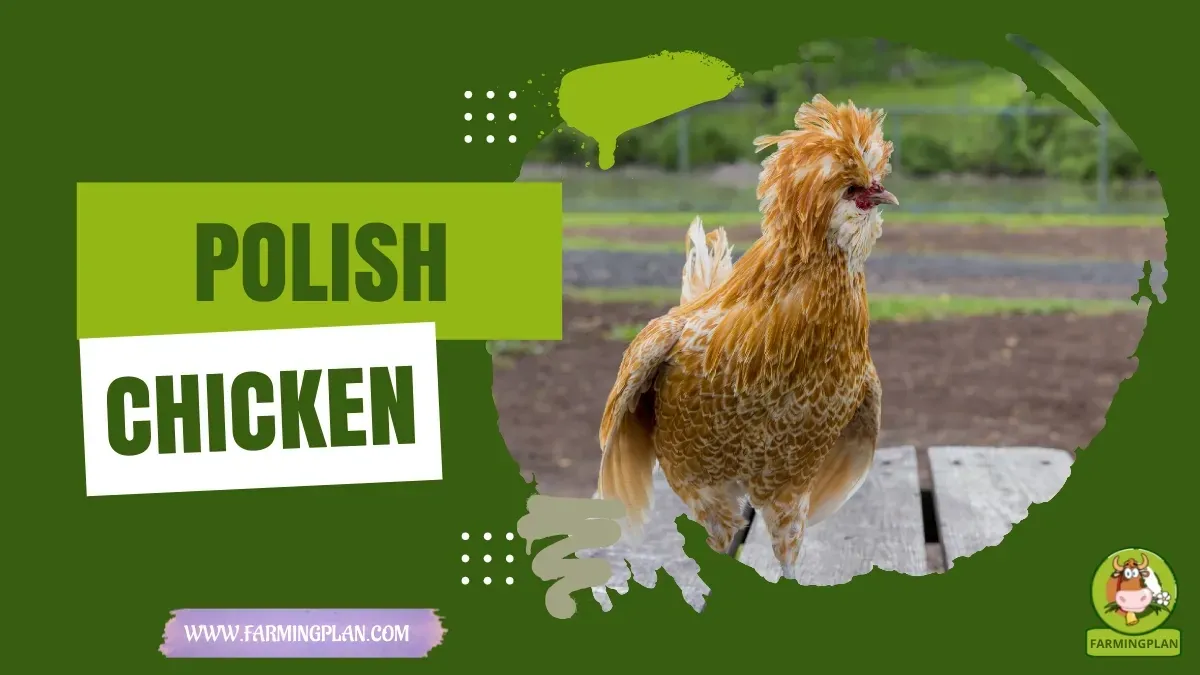
The defining anatomical hallmark of the Polish chicken is its massive crest, which is anchored upon a remarkable biological foundation: a prominent, hemispherical protuberance of the frontal skull bones (a cranial hernia). In hens, the crest feathers are broad, rounded, and closely packed into a symmetrical, tight globular ball. In roosters, the crest feathers are long, pointed, and flowing, cascading down around the neck and shoulders like a majestic mane. Structured culling and biosecurity protocols strengthen polish chicken genetic quality.
The head features a distinctive V-shaped horn comb (duplex comb) consisting of two small, upright horn-like prongs nestled at the front base of the crest. The nostril apertures are cavernous and elevated, accompanied by small white earlobes. Polish chickens exist in both Bearded varieties (boasting full facial muffs and a thick chin beard that conceals red wattles) and Non-Bearded varieties (exhibiting clean throats and prominent red wattles).
⚡ Polish Chicken Recognized Color Varieties & Feather Markings
| Recognized Variety | Beard Classification | Crest Coloration | Body Plumage Standard |
|---|---|---|---|
| White Crested Black | Non-Bearded | Pure snowy white with small black front brow | Deep lustrous beetle-green black body |
| White Crested Blue | Non-Bearded | Pure snowy white with blue front brow | Even slate blue with dark lustrous lacing |
| Golden Laced | Bearded & Non-Bearded | Rich golden bay, each feather laced with black | Golden bay body feathers laced with narrow black border |
| Silver Laced | Bearded & Non-Bearded | Silvery white, each feather laced with black | Silvery white body feathers with crisp black lacing |
| Buff Laced | Bearded & Non-Bearded | Rich buff, each feather laced with creamy white | Rich golden buff feathers with distinct white borders |
| Pure White | Bearded & Non-Bearded | Solid immaculate white throughout | Pristine white plumage with bright yellow skin |
| Tolbunt (Heritage) | Bearded | Tri-colored: rich bay, black, and white spangles | Mottled tri-color pattern across entire body and crest |
Breed History, Dutch Ancestry & Royal European Favor
Despite its name, the Polish chicken did not originate in Poland. The breed’s name is believed to derive from the Middle Dutch word *pol*, meaning “head” or “top,” referencing the bird’s exaggerated dome skull and crest. Historical records and Dutch master paintings confirm that crested chickens were thoroughly established and selectively bred in the Netherlands and Northern Italy as early as the 15th and 16th centuries. Maintaining clean feeders and sanitized equipment supports sustainable polish chicken care.
During the Renaissance, Dutch fanciers refined the striking White Crested Black variety, producing paintings by Jan Steen and Melchior d’Hondecoeter that featured these elegant birds as status symbols in aristocrats’ private gardens. By the 18th century, Polish chickens spread to the royal menageries of France and England, where King Louis XVI and Marie Antoinette kept flocks at Versailles for their exquisite beauty. Consistent daily observation helps keepers spot early changes in polish chicken health and behavior.
The Polish chicken arrived in the United States around 1830, quickly gaining immense popularity among poultry breeders. The American Poultry Association admitted the original White Crested Black, Golden, and Silver varieties into its inaugural Standard of Excellence in 1874. Today, the Polish remains a cornerstone of fancy exhibition showrooms and heritage preservation programs nationwide.
Coop Design, Covered Runs & Crest Maintenance
Housing design for Polish chickens must prioritize visual safety and crest dryness. Because overhead crest feathers block the bird’s view of hawks and owls, Polish chickens should never be allowed to free-range in open pastures without protective overhead netting. A covered outdoor run constructed with 1/2-inch hardware cloth provides safe foraging while preventing wild birds from stealing feed. Clean housing, fresh water, and balanced nutrition remain essential for polish chicken productivity.
Watering equipment requires careful selection. Never use open water bowls, troughs, or wide bell waterers for Polish flocks. When a Polish chicken dips its head into an open dish, the voluminous crest absorbs water like a sponge. In winter, a wet crest freezes into heavy ice balls, causing severe hypothermia, frostbite, and corneal blindness. Install elevated horizontal nipple drinkers that allow birds to drink cleanly without wetting their crest feathers. Tracking feed intake and body condition supports long-term polish chicken performance.
For companion backyard birds not destined for the show table, keepers can gently secure overhanging crest feathers with soft orthodontic rubber bands or trim excess feathers around the eyes using rounded grooming scissors. Improving their peripheral vision reduces stress, eliminates startling, and allows hens to locate feed hoppers and nest boxes with confidence.
Nutritional Protocols & Feather Keratin Requirements
Producing and maintaining hundreds of dense, elongated crest feathers places intense metabolic demands on the Polish chicken’s protein reserves. Feathers consist of over 90% keratin, a fibrous structural protein rich in sulfur-containing amino acids such as methionine and cystine. Laying Polish hens require a balanced 17% to 18% crude protein complete layer pellet supplemented with bioavailable calcium (3.8% to 4.2%) to support eggshell calcification. Following biosecurity best practices reduces disease risk in any polish chicken operation.
During the annual autumn molt, feather synthesis accelerates dramatically. Upgrade rations to a 20% protein grower/finisher crumble or supplement feed with black oil sunflower seeds (rich in linoleic acid) and dried mealworms. Supplying sulfur amino acids shortens molting duration and prevents ragged, pinched crest regrowth. Seasonal adjustments to shelter and diet keep polish chicken thriving year-round.
Provide free-choice crushed oyster shell in separate hoppers, allowing laying hens to regulate calcium intake without over-mineralizing non-producing roosters. Insoluble granite grit must be accessible at all times to enable the gizzard to grind coarse seeds and kitchen greens properly. Proper record-keeping makes breeding and culling decisions easier for polish chicken keepers.
Crest Parasite Management & Flock Biosecurity
The warm, dense micro-environment inside a Polish chicken’s crest makes it an ideal sanctuary for external parasites. Northern fowl mites (*Ornithonyssus sylviarum*) and poultry shaft lice (*Menopon gallinae*) congregate at the base of crest feather shafts near the skull, sucking blood and causing severe itching, feather loss, and anemia. Keepers must part crest feathers every two weeks to inspect skin for moving insects or egg clusters.
Combat external parasites by dusting the crest, vent, and wing pits with food-grade diatomaceous earth or authorized permethrin dust. Flock managers should consult our practical protocols for poultry and livestock mite eradication and our comprehensive guide to barnyard lice management to sanitize perches and nest cubicles. Providing adequate space and ventilation prevents common stress issues in polish chicken.
Due to their unique cranial protuberance, Polish chicks are born with soft, unossified skull domes that can be injured if pecked by aggressive standard flock mates. Never house Polish chicks with aggressive, boisterous dual-purpose breeds like Rhode Island Reds, which frequently peck crests and cause fatal brain trauma. Avian pathology research from Texas A&M University School of Veterinary Medicine emphasizes housing crested breeds in dedicated coops to eliminate traumatic cranial injuries. Understanding breed-specific traits helps maximize polish chicken longevity and output.
Protect flocks against mosquito-borne avian poxvirus by following our clinical manual on chickenpox and fowl pox treatment. In addition, multi-species homesteaders should review our field guide on livestock tapeworm eradication to maintain pristine, biosecure pasture grounds. Producers planning a diversified homestead operation often cross-reference our Sebright Chicken breed and care guide.
Breeding Management, Crest Selection & Incubation
Breeding show-quality Polish chickens requires rigorous genetic selection for balanced, symmetrical crests and correct V-comb alignment. When selecting breeding stock, choose roosters with wide crests that flow evenly without dividing in the middle (split crest), and hens with dense, globular crests free of twisted or drooping feathers. Routine preventive care saves time and lowers veterinary costs for polish chicken.
Polish hens are notoriously non-broody, rarely exhibiting the maternal instinct to sit on their own eggs. Breeders rely on artificial incubators or dependable broody foster hens (such as Silkies or Cochins) to hatch Polish eggs. Collect hatching eggs twice daily, storing them at 55°F to 60°F with 75% relative humidity for no longer than seven days before setting. Matching forage or ration quality to life stage optimizes polish chicken growth.
Incubation takes exactly 21 days at 99.5°F (37.5°C) with 50% to 55% relative humidity in forced-air incubators. At lockdown on day 18, stop egg turning and increase humidity to 65% to 70%. Polish chicks hatch with a visible fuzzy dome atop their heads, indicating healthy cranial protuberance formation. Brood chicks under gentle radiant heating plates rather than bright overhead heat lamps to reduce picking stress.
⚡ Estimated Annual Budget & Maintenance Costs (USD)
| Expense Category | Year 1 Setup Cost | Annual Recurring Cost | Husbandry & Crest Management Notes |
|---|---|---|---|
| Quality Polish Chicks / Breeding Trio | $90 – $220 | $0 – $75 | Day-old pedigreed chicks or show-quality breeding trio |
| Predator-Proof Covered Run & Coop | $350 – $750 | $30 – $60 | Enclosed wooden coop, 1/2″ hardware cloth, secure netting |
| High-Protein Layer Pellets (18%) | $90 – $160 | $90 – $160 | 50 lb bags of high-protein layer ration and scratch grains |
| Horizontal Nipple Waterer System | $35 – $70 | $10 – $25 | 5-gallon bucket with horizontal freeze-proof nipple drinkers |
| Feather Molt Supplements & Grit | $30 – $60 | $30 – $60 | Black oil sunflower seeds, crushed oyster shell, granite grit |
| Pine Shavings & Nest Bedding | $40 – $80 | $40 – $80 | Dust-free kiln-dried pine shavings for coop floor and nests |
| Parasite Dusts & Biosecurity Care | $35 – $75 | $25 – $50 | Permethrin poultry dust, diatomaceous earth, electrolytes |
| Show Entries & APA Memberships | $25 – $65 | $25 – $65 | Club registration, show entry tags, leg band supplies |
| Total Estimated Investment | $695 – $1,480 | $250 – $575 | High visual entertainment with steady white egg harvests |
Estimate your feed consumption, flock housing requirements, and annual operational costs with our interactive poultry calculator: Gradual dietary transitions protect digestive stability in polish chicken.
🐔 Polish Chicken Flock Feed & Egg Yield Calculator
Estimate daily layer feed (lbs), monthly 50-lb feed bags, coop and run requirements, and expected weekly fresh egg yield for your Polish Chicken flock.
Frequently Asked Questions (FAQ)
How many eggs do Polish chickens lay per year?
Despite being prized ornamental exhibition birds, Polish hens are active non-broody layers producing 160 to 200 medium chalk-white eggs annually (50 to 54 grams each).
What special coop adaptations do crested Polish chickens require?
Because their large globular feather crests obstruct overhead and peripheral vision, Polish chickens need covered predator-proof runs, enclosed nipple waterers (so crests do not freeze or sour in open bowls), and calm flockmates that do not feather-pick.
What is the mature weight of Standard vs. Bantam Polish chickens?
Standard Polish hens weigh around 4.5 lbs and roosters 6.0 lbs, while Bantam Polish hens weigh approximately 26 oz and roosters 30 oz.
What is the cranial protuberance on a Polish chicken skull?
Polish chickens carry a vaulted cranial skull knob underneath their crest feathers that supports their dramatic bouffant plumage; this delicate structure means they must be protected from head pecking and aggressive roosters.
Which Polish chicken color varieties are recognized by the APA?
Admitted to the APA Standard in 1874 (Continental Class), recognized varieties in both Bearded and Non-Bearded forms include White Crested Black, Golden, Silver, White, and Buff Laced.
Expert Verdict & Husbandry Roadmap
The Polish chicken is one of the crowning triumphs of heritage poultry breeding. Offering unmatched showroom theatricality, delightful companion temperament, and steady yields of medium white eggs, this Continental breed brings vibrant excitement to any homestead flock. Their playful bouffant hairdos and distinctive V-combs never fail to spark admiration from barnyard visitors. Selecting healthy foundation stock is the cornerstone of successful polish chicken management.
Flock success requires attentive husbandry: fortifying outdoor runs against hawks and owls, switching exclusively to nipple waterers to keep crest feathers immaculate, feeding high-protein rations during the annual molt, and bi-weekly parting of crest plumage to catch mites early. By honoring their specialized physical needs, your flock of Polish chickens will thrive as proud, healthy showstoppers for years to come.
📚Agricultural Reference & Scientific Citations
Standards and physiological data referenced in this guide comply with American Poultry Association (APA), The Livestock Conservancy, and USDA APHIS Avian Biosecurity Standards.


