

⚡ Ossabaw Island Hog at a Glance: Key Specifications & Benchmarks
| Scientific Classification | Sus scrofa domesticus (Feral Spanish Colonial Heritage Swine) |
| Breed Origin & Antiquity | Ossabaw Island, Georgia; marooned by Spanish explorers in the 16th century |
| Mature Boar Weight Range | 175 to 250 lbs (79 to 113 kg) on pasture; smaller in wild island conditions |
| Mature Sow Weight Range | 135 to 200 lbs (61 to 91 kg) on pasture |
| Height at the Withers | 20 to 24 inches (51 to 61 cm); compact, short-legged swine morphology |
| Metabolic Adaptation | “Thrifty gene” phenotype; stores extreme fat reserves to survive winter famine |
| Primary Culinary Value | Artisanal charcuterie, jamón-style cured hams, and prized silky cooking lard |
| Average Expected Lifespan | 12 to 15+ years under sound nutritional and woodland pasture management |
The Ossabaw Island hog is a living genetic time capsule and one of the rarest, most culinarily celebrated heritage swine breeds in North America. Marooned on Ossabaw Island off the coast of Georgia by sixteenth-century Spanish conquistadors and maritime explorers, this small, resilient pig survived in wild isolation for over four hundred years, preserving authentic Iberian swine genetics that have vanished from Europe. Routine preventive care saves time and lowers veterinary costs for Ossabaw Island Hog.
Subjected to centuries of natural selection in harsh maritime barrier island ecosystems, the Ossabaw developed a legendary “thrifty gene” metabolism. In our dedicated homestead swine and pig husbandry guides, regenerative farmers admire the Ossabaw for its unmatched woodland foraging ability, gentle demeanor, and world-class artisanal charcuterie pork. Matching forage or ration quality to life stage optimizes Ossabaw Island Hog growth.
Unlike modern industrial factory hogs bred for rapid growth on corn-soy diets in confinement barns, the Ossabaw Island pig is a true lard-type heritage hog. They thrive on acorns, roots, fallen fruit, and pasture forages, transforming seasonal woodland mast into intensely marbled, dark ruby-red pork rich in mono-unsaturated oleic fats.
The Livestock Conservancy lists the Ossabaw Island hog as “Critical” on its Conservation Priority List. Dedicated homesteaders and artisanal charcutiers play an indispensable role in preserving this irreplaceable swine treasure through sustainable farm-to-table breeding programs. Gradual dietary transitions protect digestive stability in Ossabaw Island Hog.
Physical Characteristics & Iberian Phenotype
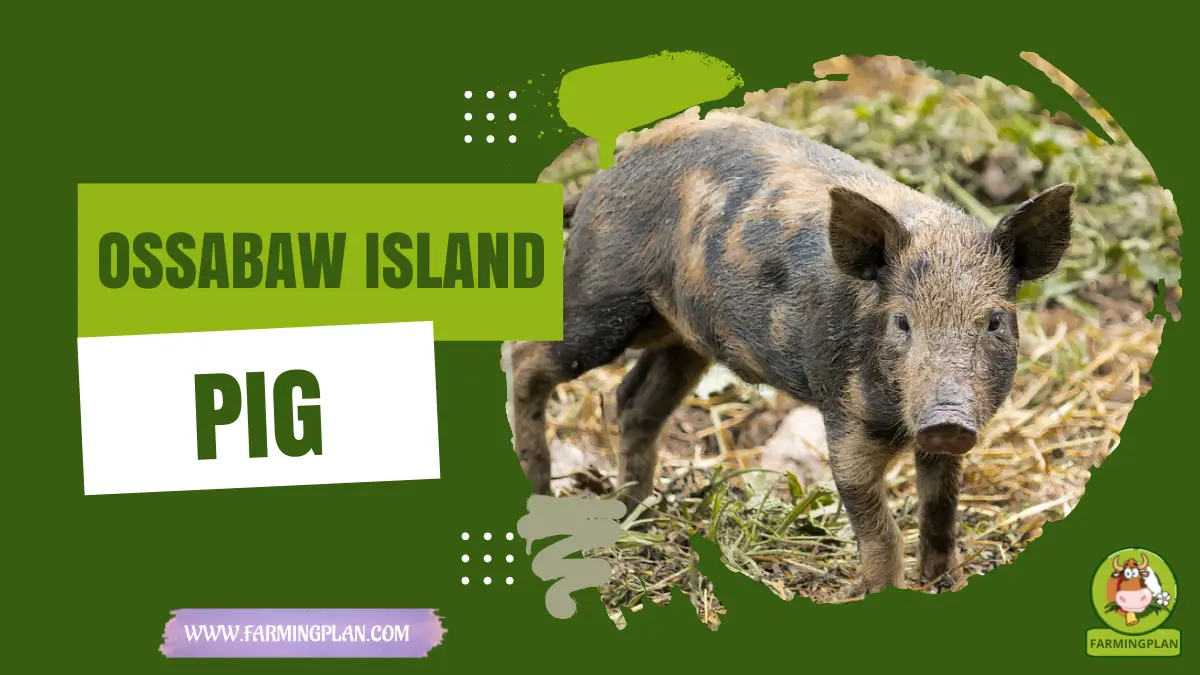
The Ossabaw Island hog exhibits the classic morphology of primitive Spanish pigs, characterized by a slender wedge-shaped head, long straight snout, erect pointed ears, and heavy dorsal hair bristles that stand upright along the spine when alarmed. Selecting healthy foundation stock is the cornerstone of successful Ossabaw Island Hog management.
Color Patterns, Snout Morphology & Thrifty Metabolism
Ossabaw swine appear in a wide variety of colors, including solid black, spotted black and white, red, brown, and sandy agouti. In winter, they grow dense, bristly coats that shed water and shield against thorns and briars in dense coastal brush.
The snout is long and straight, perfectly adapted for deep root digging and foraging for tubers without suffering nasal injuries. Unlike commercial breeds with collapsed snouts, Ossabaws have strong cartilage and powerful neck muscles built for natural woodland foraging. Good predator-proofing and dry bedding safeguard Ossabaw Island Hog comfort in harsh weather.
Their most extraordinary biological trait is the “thrifty gene” phenotype. In the wild, the pigs gorged on abundant autumn live oak acorns, accumulating massive fat reserves. During winter food scarcity, they utilized this stored fat to survive without starving. On domestic homesteads, this metabolic trait requires careful feed management to prevent excessive obesity.
⚡ Heritage Swine Comparison: Conformation & Performance
| Swine Parameter | Ossabaw Island Hog | Berkshire Hog | Kunekune Pig |
|---|---|---|---|
| Mature Adult Weight | 150 to 250 lbs (68 to 113 kg) | 400 to 600 lbs (181 to 272 kg) | 140 to 220 lbs (64 to 100 kg) |
| Primary Carcass Type | Primitive lard / Charcuterie jamón | High-marbled butcher meat | Lard and tender grazing pork |
| Foraging Efficiency | Outstanding (Acorns, roots, swamp mast) | Moderate (Requires grain finishing) | High pasture grazer (Grass lover) |
| Ear Conformation | Erect, prick ears | Erect, slightly forward ears | Semi-lopped or prick ears |
| Conservation Status | Critical (Livestock Conservancy) | Watch / Sustainable | Recovering heritage breed |
Breed History, Spanish Exploration & Barrier Island Isolation
In the 1500s, Spanish maritime explorers and missionaries established colonies along the coast of La Florida and coastal Georgia. Explorers routinely released breeding pairs of Iberian pigs onto barrier islands to establish self-sustaining meat supplies for future trading voyages. Monitoring water quality and mineral balance directly benefits Ossabaw Island Hog vitality.
On Ossabaw Island—a pristine 26,000-acre sea island near Savannah—these feral pigs thrived in maritime salt marshes, maritime live oak forests, and palmetto groves. Isolated from mainland swine, the Ossabaw herd never crossed with modern nineteenth-century breeds like Yorkshires or Durocs, preserving 500-year-old Spanish genetics. Practical hands-on husbandry ensures consistent results when raising Ossabaw Island Hog.
In the 1970s, geneticists and medical researchers discovered that Ossabaw pigs possess a unique metabolic syndrome that makes them invaluable for studying human diabetes and cardiovascular disease. Recognizing their irreplaceable cultural and agricultural value, heritage conservationists established satellite breeding herds on mainland farms.
Today, mainland herds maintained by dedicated breeders provide seedstock for regenerative silvopasture farms, ensuring the breed’s survival even as state wildlife agencies eradicate non-native feral hogs from fragile island ecosystems. Early intervention at the first sign of lethargy protects overall Ossabaw Island Hog flock or herd health.
Housing, Woodland Silvopasture & Fence Engineering
Ossabaws are active, agile swine that thrive in wooded pastures, brush lots, and silvopasture systems where they can express natural foraging behaviors.
Electric Fencing, Hog Panels & Low-Impact Shelters
Containment requires properly engineered fencing. Use two to three strands of high-tensile electric wire positioned 6, 12, and 18 inches above the ground, or install heavy 34-inch welded galvanized hog wire panels. Ossabaws quickly respect hot electric fencing and do not challenge properly energized wires. Structured culling and biosecurity protocols strengthen Ossabaw Island Hog genetic quality.
Provide dry, draft-free A-frame farrowing huts or wooden three-sided run-in sheds lined with deep wheat straw or wood shavings. Their thick winter bristles provide excellent cold tolerance down to freezing, but newborn piglets need dry, protected bedding. Maintaining clean feeders and sanitized equipment supports sustainable Ossabaw Island Hog care.
Equip woodland pastures with shallow wallow pits during summer months. Like all pigs, Ossabaws cannot sweat and rely on cool mud wallows to regulate body temperature and coat their skin against biting flies and midges.
Nutritional Requirements & Managing Feast-and-Famine Metabolism
Managing Ossabaw nutrition requires strict discipline. Feeding commercial hog feed free-choice results in extreme obesity, liver disease, and reproductive failure due to their hyper-efficient thrifty gene metabolism. Consistent daily observation helps keepers spot early changes in Ossabaw Island Hog health and behavior.
Forage Rations, Acorn Mast & Restricted Pellets
Feed a restricted, high-fiber diet based on woodland forage, mixed pasture grasses, pumpkins, fallen orchard apples, and limited commercial 14% swine pellets. Non-lactating mature adults require only 1.5 to 2.5 pounds of balanced pellets daily if foraging on good pasture. Review nutritional strategies in our homestead livestock feeding guide.
During late autumn, finish market hogs on hardwood acorn mast in live oak or white oak woodlots for 60 to 90 days. Acorns infuse the pork with high levels of oleic acid, transforming the fat into a silky, translucent white lard that melts at room temperature, mirroring Spanish Jamón Ibérico. Clean housing, fresh water, and balanced nutrition remain essential for Ossabaw Island Hog productivity.
Always provide fresh, clean drinking water through freeze-proof nipple drinkers or heavy steel troughs anchored to wooden posts. Clean hydration is vital to support kidney clearance on forage diets. Tracking feed intake and body condition supports long-term Ossabaw Island Hog performance.
Farrowing hut sanitation requires periodic deep bedding turnover. After each weaning cycle, strip soiled bedding from A-frame huts, spray interior wood walls with certified agricultural disinfectant, and allow structures to air-dry thoroughly under direct sunlight before bedding with fresh oat straw.
Implement rotational perimeter firebreaks and brush hogging around woodland pig runs. Maintaining cleared buffer zones along perimeter electric fences prevents falling tree branches from grounding out high-voltage wires during severe windstorms, keeping swine securely contained inside assigned forage sectors. Following biosecurity best practices reduces disease risk in any Ossabaw Island Hog operation.
Health Management, Parasite Control & Biosecurity
Ossabaws are exceptionally disease-resistant, displaying high immune vitality and sturdy dark hooves that resist foot rot and joint pathologies.
Erysipelas Vaccination, Rotational Grazing & Internal Parasites
Administer annual core swine vaccinations against Swine Erysipelas and Leptospirosis, consulting biosecurity protocols from the USDA APHIS Swine Health Center to safeguard smallholder breeding herds. Seasonal adjustments to shelter and diet keep Ossabaw Island Hog thriving year-round.
Because Ossabaws root actively in woodland soil, implement rotational pasture spelling every 3 to 4 weeks to break internal parasite life cycles (kidney worms and roundworms). Strategic deworming with ivermectin or fenbendazole once or twice annually keeps breeding stock vigorous. Proper record-keeping makes breeding and culling decisions easier for Ossabaw Island Hog keepers.
Quarantine all new breeding stock for 30 days before herd introduction, and verify pseudorabies and brucellosis-free herd certification when purchasing breeding seedstock from out-of-state producers.
Breeding Biology, Farrowing Ease & Charcuterie Quality
Ossabaw sows reach sexual maturity at 6 to 8 months, but should be bred at 10 to 12 months when they reach full physical maturity. Sows are gentle, attentive mothers with excellent farrowing ease. Providing adequate space and ventilation prevents common stress issues in Ossabaw Island Hog.
Litter Sizes, Maternal Vigor & Market Harvest Age
Gestation lasts the standard 114 days (3 months, 3 weeks, 3 days). Sows build intricate grass and brush nests, farrowing litters of 4 to 8 active, striped or spotted piglets without human assistance. Crushing is rare due to the sow’s agile, moderate frame and acute awareness of her young.
Piglets nurse vigorously on rich sow milk, weaned at 8 to 10 weeks of age onto pasture and forage. Grow-out is deliberate and slow compared to commercial hybrids. Ossabaw feeder pigs reach ideal slaughter weights of 180 to 220 pounds at 12 to 16 months of age. Understanding breed-specific traits helps maximize Ossabaw Island Hog longevity and output.
The culinary reward is unparalleled. The meat is deep mahogany-red, richly marbled with healthy mono-unsaturated fat, and possesses an intense nutty, complex flavor that gourmet chefs and artisan salumi makers revere. For comparative livestock production, explore our guide on Lowline Angus beef cattle. Routine preventive care saves time and lowers veterinary costs for Ossabaw Island Hog.
US Ownership Budget & Artisanal Economics
Raising Ossabaw Island hogs provides lucrative specialty returns through direct-to-consumer sales of premium charcuterie, heritage breeding stock, and pure artisan lard.
⚡ Estimated Annual Budget & Maintenance Costs (USD)
| Expense Category | Estimated Annual Cost Range (USD) | Management Strategy |
|---|---|---|
| Registered Breeding Pair | $600.00 – $1,200.00 initial purchase | Acquire purebred stock registered with the Livestock Conservancy or breed registry |
| Electric Perimeter Fence & Charger | $450.00 – $950.00 setup | Install 3-strand high-tensile electric wire with solar 1.5-joule fence energizer |
| A-Frame Farrowing Hut & Bedding | $200.00 – $400.00 setup | Construct durable plywood A-frame huts with skids and dry wheat straw bedding |
| Restricted Swine Pellets & Minerals | $220.00 – $380.00 per pig/year | Purchase commercial 14% feed sacks in bulk alongside free-choice swine mineral |
| Veterinary Care, Vaccines & Deworming | $45.00 – $85.00 per pig/year | Annual erysipelas vaccine, internal dewormer paste, and veterinary health certs |
| Artisanal Slaughter & Meat Processing | $220.00 – $380.00 per pig | USDA-inspected harvest, dry aging, custom charcuterie primal cuts, and lard rendering |
🐖 Ossabaw Island Hog Swine Daily Feed Calculator
Calculate daily grower/finisher rations (lbs), monthly 50-lb feed bags, pen space, and water needs for your Ossabaw Island Hog pigs.
Frequently Asked Questions (FAQ)
What makes Ossabaw Island hog pork unique?
Ossabaw pork is deep mahogany-red with extraordinary intramuscular marbling. Foraging on woodland acorns produces silky, nutty-flavored fat rich in mono-unsaturated oleic acid.
What is the ‘thrifty gene’ in Ossabaw pigs?
The thrifty gene is a unique metabolic adaptation that allows Ossabaws to store massive fat reserves during autumn mast flushes to survive winter famine without starving.
How big do Ossabaw Island hogs get?
On pasture farms, mature Ossabaw boars weigh 175 to 250 pounds, while sows weigh 135 to 200 pounds, making them a compact, manageable heritage swine breed.
Can you feed Ossabaw pigs like commercial pigs?
No. Feeding commercial hog feed free-choice makes Ossabaws dangerously obese. They require restricted rations high in forage, vegetables, and acorns with minimal grain.
Are Ossabaw Island hogs aggressive?
No, domesticated Ossabaw hogs are remarkably gentle, curious, and easy to handle on homesteads, though boars require respectful handling during breeding seasons.
Expert Verdict & Next Steps
The Ossabaw Island hog is a culinary and historical treasure, offering regenerative homesteaders the chance to preserve an ancient Spanish swine lineage while producing unmatched artisanal charcuterie and fine cooking lard on woodland pastures. Matching forage or ration quality to life stage optimizes Ossabaw Island Hog growth.
Partner with heritage conservation breeders registered with the Livestock Conservancy to source authentic, pedigree seedstock. For dual-purpose meat and fur production on small acreages, explore our husbandry guide on the Champagne d’Argent meat rabbit. For additional husbandry benchmarks and feeding standards, explore our complete Ningxiang Pig care guide.
📚Agricultural Reference & Scientific Citations
Standards and physiological data referenced in this guide comply with USDA APHIS Swine Health, FAO Domestic Animal Diversity Information System, and the American Veterinary Medical Association (AVMA).


