

⚡ Lowline Angus Cattle at a Glance: Key Specifications & Benchmarks
| Scientific Classification | Bos taurus (Compact Moderate-Frame Purebred Beef Breed) |
| Breed Origin & Antiquity | Trangie Agricultural Research Centre, New South Wales, Australia (1974–1992) |
| Mature Bull Weight Range | 950 to 1,350 lbs (430 to 612 kg) |
| Mature Cow Weight Range | 650 to 950 lbs (295 to 430 kg) |
| Height at the Withers | Bulls: 39 to 44 in (100 to 112 cm); Cows: 36 to 40 in (91 to 102 cm) |
| Dwarfism Gene Status | 100% Free of Chondrodysplasia (Naturally proportionate dwarfism-free genetics) |
| Dressed Carcass Dressing % | 60% to 65% clean dressing percentage on grass pasture finishing |
| Average Expected Lifespan | 14 to 18+ years with outstanding longevity and reproductive stamina |
Lowline Angus cattle, officially registered globally as Australian Lowlines, stand among the most practical and economically efficient beef cattle breeds ever developed for small acreage farms and regenerative grass-fed homesteads. Originating from an intensive 18-year scientific research project in Australia, these compact bovines possess 100% pure Aberdeen Angus genetics without the dwarfism genes found in miniature cattle breeds. Routine preventive care saves time and lowers veterinary costs for Lowline Angus Cattle.
Standing approximately 60% the size of modern commercial cattle, the Lowline cow was scientifically selected for superior feed conversion efficiency on pure forage pastures. In our dedicated homestead cattle and bovine husbandry guides, livestock producers celebrate the breed for producing premium marbled beef on smaller pasture acreages with minimal feed inputs. Matching forage or ration quality to life stage optimizes Lowline Angus Cattle growth.
Commercial livestock trends of the late twentieth century favored towering, massive cattle that required heavy grain supplementation and damaged fragile pastures. In stark contrast, Lowlines excel on modest pastures, exerting less soil compaction, demanding standard perimeter fencing, and demonstrating exceptional calving ease with unassisted births.
Their docile temperament makes them an ideal choice for beginner farmers, family homesteads, and lifestyle acreage owners. Combining natural polled (hornless) genetics with solid black or red coats, Lowline Angus cattle deliver commercial beef quality in a manageable, highly efficient physical package. Gradual dietary transitions protect digestive stability in Lowline Angus Cattle.
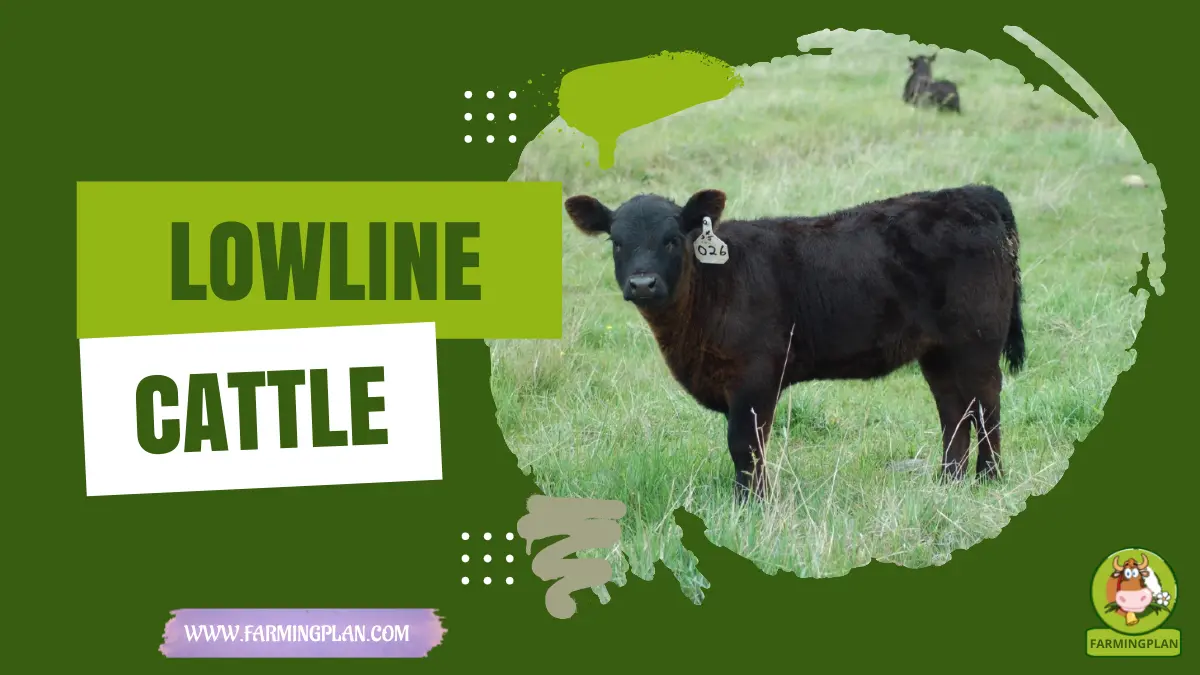
Physical Characteristics & Conformation Standards
The Australian Lowline is a beautifully proportioned, moderate-frame beef bovine exhibiting deep fleshing, wide spring of ribs, and heavily muscled hindquarters. Breed registry standards established by the Australian Lowline Cattle Association (ALCA) mandate natural polled heads and solid black or red coat coloration. Selecting healthy foundation stock is the cornerstone of successful Lowline Angus Cattle management.
Frame Scores, Muscularity & Absence of Dwarfism
Lowlines register a standard Frame Score 1 on the USDA beef cattle scale. Mature bulls measure between 39 and 44 inches at the hip, weighing 950 to 1,350 pounds. Mature cows stand between 36 and 40 inches and weigh 650 to 950 pounds. Their skeletal conformation is completely proportionate, free from the deformed heads and joint pathologies associated with chondrodysplasia dwarfism.
The ribcage is deep and barrel-shaped, providing massive rumen capacity to process fibrous pasture grasses efficiently. Legs are straight, set squarely under four corners of the body with sound dark hooves that resist foot rot in damp pastures. Good predator-proofing and dry bedding safeguard Lowline Angus Cattle comfort in harsh weather.
Udder conformation in cows is compact, well-attached, and equipped with small, evenly placed teats that newborn calves nurse without assistance. Bulls display clean sheaths, well-developed testicular circumference, and strong libido from 14 months of age.
⚡ Lowline Angus vs. Standard Commercial Angus: Performance Comparison
| Operational Parameter | Lowline Angus Cattle | Standard Commercial Angus |
|---|---|---|
| Mature Cow Weight | 650 to 950 lbs (295 to 430 kg) | 1,300 to 1,700 lbs (590 to 770 kg) |
| USDA Frame Score | Frame Score 1 (Extremely compact) | Frame Score 5 to 7 (Large frame) |
| Finishing Regime | 100% Grass & Forage Finishing | Grain & Feedlot Intensive |
| Average Calf Birth Weight | 42 to 55 lbs (19 to 25 kg) | 75 to 90+ lbs (34 to 41+ kg) |
| Stocking Rate Density | 1.5 to 2.0 head per standard animal unit | 1.0 head per standard animal unit |
Breed History, The Trangie Research Trial & Pure Genetics
Unlike many modern mini cattle breeds produced by crossing beef stock with miniature breeds like Dexters, Lowline cattle are 100% purebred Aberdeen Angus. Their unique size was created through an ambitious scientific study initiated in 1974 at the Trangie Agricultural Research Centre in New South Wales, Australia. Monitoring water quality and mineral balance directly benefits Lowline Angus Cattle vitality.
Australian Department of Agriculture researchers established a closed herd of champion purebred Canadian and American Angus cattle. The herd was divided into three distinct groups selected strictly for growth rate over 18 years: the “High Line” herd, the “Low Line” herd (selected for low yearling growth rates), and an unselected “Control Line” herd. Producers planning a diversified homestead operation often cross-reference our Alentejana Cattle breed and care guide. Practical hands-on husbandry ensures consistent results when raising Lowline Angus Cattle.
By 1992, researchers discovered that while the Lowline cattle were significantly smaller, they produced significantly more ribeye muscle area and meat yield per acre of grass than the large-frame cattle. When the government trial concluded, the Lowline herd was preserved by private cattlemen who established the Australian Lowline Cattle Association.
Exported to North America in 1996, the breed found rapid adoption among progressive grass-fed ranchers and smallholders. They remain a genetic marvel: pure heritage Angus cattle preserved in an ultra-efficient, moderate frame. Early intervention at the first sign of lethargy protects overall Lowline Angus Cattle flock or herd health.
Housing, Pasture Engineering & Stocking Density
Lowline cattle thrive in basic pasture environments without requiring heavy industrial handling equipment. Their smaller physical footprint allows producers to run more animal units per acre while preserving delicate soil structure.
Fencing Standards, Run-In Sheds & Pasture Rotation
Standard 48-inch woven wire field fencing or four-strand high-tensile electric fencing is completely sufficient for containing Lowline cattle. Because they do not test fences like aggressive large-frame stock, standard perimeter boundaries remain secure for years without expensive reinforcements. Structured culling and biosecurity protocols strengthen Lowline Angus Cattle genetic quality.
Provide simple open-front run-in sheds facing away from prevailing winter winds, supplemented with dry straw bedding during sub-zero cold snaps. Their thick winter hair coats provide superb thermal insulation down to -20°F without supplemental heat. Maintaining clean feeders and sanitized equipment supports sustainable Lowline Angus Cattle care.
Implement rotational intensive grazing to maximize forage utilization. A single 10-acre parcel that supports five commercial cows can easily sustain eight to ten Lowline cows, significantly increasing annual beef production per acre.
Nutritional Requirements & Grass-Fed Pasture Management
Lowlines possess remarkable metabolic efficiency, thriving on 100% pasture and good quality hay without needing grain concentrates to achieve high marbling and prime finish. Consistent daily observation helps keepers spot early changes in Lowline Angus Cattle health and behavior.
Forage Quality, Winter Hay Rations & Free-Choice Minerals
During active spring and summer growing seasons, manage rotational grazing across mixed pasture swards containing orchard grass, brome, timothy, and red clover. A mature 800-pound Lowline cow consumes roughly 16 to 20 pounds of dry matter daily, roughly half the intake of a commercial cow. Review nutritional balancing in our homestead livestock nutrition guide.
Winter rations consist of clean grass-legume mixed hay providing 10% to 12% crude protein. Avoid feeding heavy corn silage or high-starch grain rations, which quickly lead to excessive fat deposition around cow udders and pelvic birth canals. Clean housing, fresh water, and balanced nutrition remain essential for Lowline Angus Cattle productivity.
Supply high-quality loose beef cattle minerals and white salt blocks free-choice year-round. Ensure balanced ratios of calcium, phosphorus, magnesium, and chelated copper to support reproductive fertility and immune vitality. Tracking feed intake and body condition supports long-term Lowline Angus Cattle performance.
Pasture management in humid summer climates requires fly mitigation and shaded resting areas. Erect simple shade pavilions or plant silvopasture tree shelterbelts along pasture edges. Install automated insecticide cattle rubbing rolls or provide free-choice sulfur mineral blocks to suppress horn flies and face flies naturally.
Low-stress stockmanship techniques integrate seamlessly with Lowline cattle behavior. Due to their docile temperament and moderate height, handlers can navigate alleyway sorting pens and curved working chutes calmly on foot without relying on aggressive cattle prods or loud herding dogs. Following biosecurity best practices reduces disease risk in any Lowline Angus Cattle operation.
Health Management, Herd Biosecurity & Parasite Control
Lowlines are renowned for exceptional genetic hardiness, displaying low veterinary maintenance costs and resistance to common commercial herd ailments.
Pinkeye Resistance, Blackleg Vaccines & Deworming
Their solid dark skin pigmentation around eyes and udders provides natural resistance to solar cancer eye and sunburn. Administer core annual 7-way or 8-way Clostridial (blackleg) vaccines alongside respiratory viral vaccines (BVD, IBR, BRSV) according to recommendations from the USDA APHIS Veterinary Services. Seasonal adjustments to shelter and diet keep Lowline Angus Cattle thriving year-round.
Manage internal gastrointestinal parasites through rotational pasture spelling rather than excessive chemical pour-on dewormers. Moving cattle to clean rest paddocks breaks parasite egg cycles naturally while protecting dung beetle populations. Proper record-keeping makes breeding and culling decisions easier for Lowline Angus Cattle keepers.
Maintain clean stock tanks equipped with freeze-proof float valves. A lactating cow requires 10 to 15 gallons of fresh, clean water daily to support milk production and metabolic function.
Reproduction, Calving Ease & Beef Finishing
Reproductive efficiency is one of the standout hallmarks of Lowline Angus cattle. Calving ease is exceptional, making the breed a favorite for crossing onto first-calf commercial heifers. Providing adequate space and ventilation prevents common stress issues in Lowline Angus Cattle.
Unassisted Calving, Maternal Vigor & Carcass Yields
Calves are born weighing an easy 42 to 55 pounds, leaping up to nurse within twenty minutes of birth. Dystocia (calving difficulty) is virtually nonexistent in purebred herds, allowing cattlemen to sleep soundly through spring calving seasons without pulling calves.
Cows produce rich, creamy milk and possess attentive maternal instincts, weaning vigorous calves that weigh 40% to 50% of the cow’s body weight at six to seven months. For comparative small-farm livestock production, explore our profile on the Ossabaw Island heritage hog. Understanding breed-specific traits helps maximize Lowline Angus Cattle longevity and output.
Finished steers reach prime slaughter condition at 20 to 24 months weighing 850 to 1,000 pounds on 100% pasture. Carcasses dress out at an extraordinary 60% to 65%, yielding perfectly proportioned ribeye steaks and gourmet marbled cuts that fit standard home freezers. Routine preventive care saves time and lowers veterinary costs for Lowline Angus Cattle.
US Ownership Budget & Commercial Economics
Investing in Lowline Angus cattle offers exceptional returns on investment through registered breeding stock sales, grass-fed freezer beef marketing, and reduced hay and pasture costs.
⚡ Estimated Annual Budget & Maintenance Costs (USD)
| Expense Category | Estimated Annual Cost Range (USD) | Management Strategy |
|---|---|---|
| Registered Bred Cow Purchase | $1,800.00 – $3,200.00 initial purchase | Acquire purebred stock registered with the American Lowline Association |
| Pasture Fencing & Corral Gates | $800.00 – $2,200.00 setup | Install 4-strand electric fencing with standard tubular steel farm gates |
| Winter Grass Hay (2 Tons per Cow) | $240.00 – $380.00 per cow/year | Source clean first and second cut orchard-timothy round bales from local growers |
| Pasture Mineral Supplements & Salt | $45.00 – $75.00 per cow/year | Provide free-choice weatherized cattle mineral mix in covered rubber tire feeders |
| Veterinary Vaccines & Pregnancy Check | $55.00 – $110.00 per cow/year | Annual 8-way blackleg vaccine, viral respiratory booster, and ultrasound vet checks |
| Freezer Beef Processing Fees | $450.00 – $700.00 per steer | USDA-inspected slaughter, hang aging, cut, vacuum wrap, and flash freezing |
🐄 Lowline Angus Cattle Daily Forage & Bale Calculator
Calculate daily dry matter forage, winter round bale consumption, pasture allocation, and water requirements for Lowline Angus Cattle cattle.
Frequently Asked Questions (FAQ)
What is the difference between Lowline Angus and miniature cattle?
Lowlines are 100% purebred Aberdeen Angus selected scientifically for small frame size, completely free from the chondrodysplasia dwarfism gene found in miniature breeds.
How many Lowline cattle can you keep per acre?
Depending on pasture quality and rainfall, you can typically run 1.5 to 2.0 Lowlines per acre where you would normally run only 1 standard commercial cow.
Do Lowline cattle need grain to finish for beef?
No, Lowlines finish exceptionally well on 100% pasture and grass hay, producing heavily marbled, tender beef without requiring grain concentrates.
Are Lowline Angus cattle naturally hornless?
Yes, Lowlines carry 100% pure Angus genetics and are naturally polled (hornless), eliminating the need for painful dehorning procedures on calves.
How big does a Lowline Angus bull get?
A mature purebred Lowline bull stands 39 to 44 inches at the hip and weighs between 950 and 1,350 pounds, offering great muscularity in a safe, moderate frame.
Expert Verdict & Next Steps
Lowline Angus cattle represent the future of sustainable small-acreage beef farming, uniting pure Angus beef quality, gentle family-friendly disposition, and outstanding grass-conversion efficiency. For smallholders seeking maximum meat yields per acre, the Lowline is second to none. Matching forage or ration quality to life stage optimizes Lowline Angus Cattle growth.
Source purebred registered stock from reputable breeders verified through the American Lowline Association. For dairy management comparisons across heritage bovines, check our historical profile on the Alderney dairy cow.
📚Agricultural Reference & Scientific Citations
Standards and physiological data referenced in this guide comply with USDA Animal and Plant Health Inspection Service (APHIS), American Veterinary Medical Association (AVMA), and the FAO Domestic Animal Diversity Information System.


