

⚡ Neijiang Pig at a Glance: Key Specifications & Benchmarks
| Native Breed Designation | Neijiang Pig (内江猪); indigenous to the Sichuan Basin, Southwest China |
| Climate Hardiness Adaptation | Subtropical basin heat, high humidity, and damp continental microclimates |
| Primary Agricultural Purpose | Heavy culinary lard production, premium marbled pork, crossbreeding maternal dam |
| Mature Boar Weight Range | 375 – 485 lbs (170 – 220 kg) with broad muscular shoulders and deep barrel chest |
| Mature Sow Weight Range | 330 – 420 lbs (150 – 190 kg) with wide pelvic spread and calm mothering nature |
| Coat & Facial Conformation | Solid lustrous black; coarse coat; prominent deep facial folds and wrinkled forehead |
| Ear Conformation Trait | Medium-sized semi-pendulous lop ears drooping forward along cheek margins |
| Average Farrowing Litter Size | 10 to 12 piglets per kindle; sustained milk yield across 8 to 10 productive years |
| Functional Teat Matrix | 14 functional teats arranged in balanced lateral rows with even milk delivery |
| Digestive Roughage Efficiency | Extraordinary ability to convert agricultural fiber, sweet potato vines, and distillers grain |
The Neijiang pig (内江猪) represents one of the most historically significant indigenous heavy swine breeds of East Asia. Native to the fertile, humid river valleys of the Sichuan Basin in southwestern China, this distinctive black pig has earned international renown for its deep facial skin folds, sturdy physical constitution, and remarkable biological ability to produce rich culinary lard and beautifully marbled pork from fibrous agricultural residues. Routine preventive care saves time and lowers veterinary costs for neijiang pig.
For centuries, the Neijiang pig formed the economic engine of Sichuan agriculture, supplying households with vital cooking fats, organic fertilizer, and savory meat. While modern commercial swine operations shifted toward high-lean white pigs, the Neijiang preserved unique genetic adaptations—including heat tolerance, gastrointestinal fiber fermentation, and docility—that are increasingly prized in modern sustainable farming.
Today, agricultural researchers and heritage livestock producers turn to Neijiang genetics for sustainable crossbreeding and specialty pork marketing. Integrating Neijiang hogs into diversified pasture systems alongside regenerative pig farming operations allows farmers to tap into burgeoning consumer demand for heritage pork with exceptional culinary mouthfeel. Matching forage or ration quality to life stage optimizes neijiang pig growth.
Historical Evolution and Regional Heritage in the Sichuan Basin
The history of the Neijiang pig is deeply entwined with the agrarian history of Sichuan Province. Known as China’s “Land of Abundance” (Tianfu Zhi Guo), the Sichuan Basin’s humid subtropical climate and dense river networks supported intensive multicropping systems. Farmers selected swine that could consume byproducts from sugar cane processing, wine distilling, sweet potato harvesting, and rice cultivation.
Historical documents indicate that systematic breeding of Neijiang pigs was well established by the Ming and Qing Dynasties. By the 1930s, the breed had become so prominent that Neijiang was recognized as a premier national swine breeding center, exporting breeding stock to neighboring provinces to improve local village herds. Gradual dietary transitions protect digestive stability in neijiang pig.
In modern times, the Chinese Ministry of Agriculture designated the Neijiang pig as a protected national genetic resource. Dedicated conservation stations maintain certified pedigree herds to safeguard its genetic diversity against the encroachment of standardized industrial hybrid pigs.
Anatomical Standards, Deep Facial Wrinkles, and Conformation
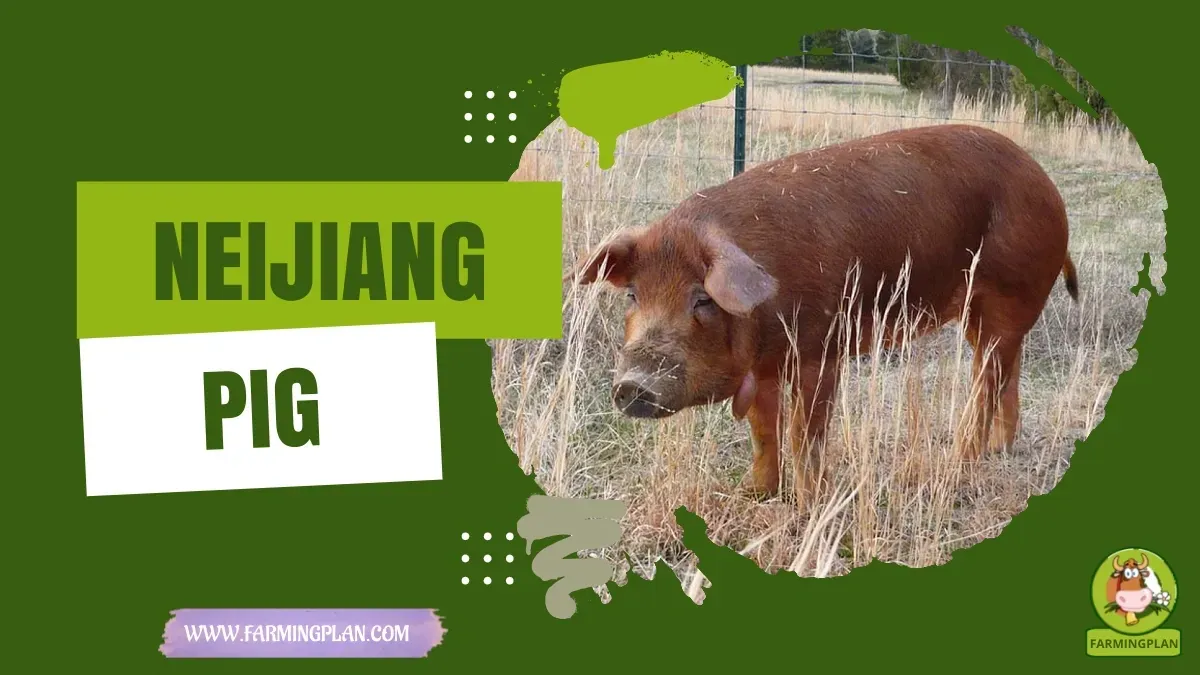
The physical appearance of the Neijiang pig is striking and unmistakable. It is a large, heavy-framed swine with a compact, deep-bodied torso. Mature boars weigh between 375 and 485 lbs (170 to 220 kg), while mature sows reach 330 to 420 lbs (150 to 190 kg). The back is wide and level or slightly concave, with a broad loin and well-developed rump. Selecting healthy foundation stock is the cornerstone of successful neijiang pig management.
The most iconic breed characteristic is the heavily folded, wrinkled head. Deep concentric skin wrinkles traverse the forehead and bridge of the snout, often resembling the Chinese character for “king” (王). The ears are medium in size, semi-pendulous, and droop forward over the sides of the head. The snout is short, broad, and slightly turned up, equipped with a strong cartilaginous rooting disk.
The skin and coat are uniformly jet black, with thick, glossy bristles that offer protection against insects and thorny brush. The limbs are sturdy, straight, and well-muscled, ending in robust, dark claws that support the animal’s considerable mass on both soft soil and firm surfaces. Good predator-proofing and dry bedding safeguard neijiang pig comfort in harsh weather.
Temperament, Maternal Qualities, and Grazing Behavior
Neijiang swine are celebrated for their calm, placid, and gentle disposition. Centuries of close handling in small family farmyards created an animal that is unhurried, patient, and easy to manage during daily feeding, grooming, and health assessments. Even mature breeding boars remain manageable with gentle stockmanship.
Sows exhibit outstanding maternal instincts. When approaching farrowing, they show quiet demeanor and arrange clean bedding carefully. During and after delivery, Neijiang sows display high awareness of their newborn piglets, lying down slowly and deliberately to prevent accidental crushing losses even in unconstrained farrowing pens. Monitoring water quality and mineral balance directly benefits neijiang pig vitality.
When turned out into pasture lots, Neijiang pigs exhibit an inquisitive, steady grazing pattern. They eagerly graze legumes, wild brassicas, and rooted tubers. Their placid nature translates into minimal aggression within social groups, allowing sows and gilts to be housed communally without frequent dominance sparring.
Nutritional Strategies: Fiber Fermentation, Rations, and Byproduct Feeding
The digestive anatomy of the Neijiang pig is uniquely optimized for high-roughage diets. An expansive cecal chamber and diverse bacterial microbiome allow Neijiang pigs to digest fibrous agricultural byproducts with significantly greater efficiency than imported Western breeds. Practical hands-on husbandry ensures consistent results when raising neijiang pig.
In practical farm management, growing pigs and dry sows perform admirably on rations composed of chopped sweet potato vines, alfalfa meal, wheat bran, and distillers spent grains balanced with modest protein meal. Overfeeding high-energy cereal grains should be avoided, as the breed will direct surplus dietary calories straight into subcutaneous lard.
Lactating sows should receive a 15% crude protein ration enriched with calcium, phosphorus, and essential vitamins to support heavy milk production. Access to fresh green forage or legume haylage stimulates digestive health and prevents constipation during confinement farrowing periods.
Housing Infrastructure, Moisture Control, and Wallow Management
Having evolved in the damp, muggy climate of the Sichuan Basin, Neijiang swine handle high humidity well but require excellent ventilation to maintain respiratory health. Barns should feature generous eave openings, adjustable side curtains, and sloped concrete floors with non-slip grooving to ensure rapid drainage. Early intervention at the first sign of lethargy protects overall neijiang pig flock or herd health.
Summer heat management requires providing shaded paddock access and clean mud wallows or overhead water sprinklers. Evaporative cooling through wallows keeps the pigs comfortable during peak daytime temperatures and preserves feed appetite. Farm setups designed alongside facilities like mulefoot pig lots offer ideal models for pasture drainage. To evaluate alternative bloodlines and practical management routines, check our Mora Romagnola Pig overview.
Housing pens should provide at least 35 to 45 square feet (3.2 to 4.2 square meters) of indoor floor space per mature sow, with outdoor exercise yards providing an additional 80 square feet. Sturdy fencing constructed from heavy-gauge panels or electric wire offsets ensures reliable boundary security. Structured culling and biosecurity protocols strengthen neijiang pig genetic quality.
Breeding Management, Prolific Farrowing, and Crossbreeding Applications
Neijiang pigs exhibit excellent reproductive longevity and dependable maternal prolificacy. Gilts achieve puberty between 5 and 6 months of age, though optimal breeding performance is achieved when initial service is delayed until 8 to 9 months, when body weight reaches approximately 200 lbs (90 kg).
Litter size averages 10 to 12 robust piglets per kindle, with mature sows frequently delivering 14 or more in later parities. Neijiang sows have 14 well-developed functional teats and generate copious, fat-rich milk, supporting rapid piglet weight gains up to weaning at 6 to 8 weeks. Maintaining clean feeders and sanitized equipment supports sustainable neijiang pig care.
In crossbreeding programs, Neijiang sows serve as superb maternal dams when crossed with lean terminal boars such as Duroc, Berkshire, or Yorkshire. The resulting crossbred market pigs display hybrid vigor, faster growth, and enhanced feed conversion while retaining superior meat tenderness and marbling. Diversifying with swine alongside dairy farming operations expands revenue stability across agricultural seasons.
Estimated Annual Budget & Maintenance Costs (USD)
Managing Neijiang swine offers favorable economic returns due to their efficient utilization of low-cost roughages and modest veterinary requirements. The following table outlines estimated annual operating expenses per mature breeding animal. Consistent daily observation helps keepers spot early changes in neijiang pig health and behavior.
| Budget Category | Operational Input & Specification | Estimated Annual Cost (USD) |
|---|---|---|
| Feed & Grain Concentrates | Balanced grower ration, wheat bran, and protein meals | $380 – $520 |
| Fiber, Forage & Byproducts | Sweet potato vines, distillers grains, chopped haylage | $110 – $180 |
| Veterinary & Vaccines | Routine deworming, erysipelas vaccination, iron supplements | $65 – $115 |
| Shelter Upkeep & Bedding | Clean dry straw, timber pen upkeep, ventilation maintenance | $85 – $145 |
| Fencing & Paddock Utilities | Woven wire maintenance, solar energizers, wallow drainage | $75 – $130 |
| Handling & Registration | Ear tagging, herd pedigree recording, breeding fees | $50 – $90 |
| Total Projected Cost | Estimated annual maintenance cost per mature breeding sow | $765 – $1,180 |
Integrating pastured pigs alongside multispecies operations such as raising sheep helps optimize paddock forage rotations and spreads overall property maintenance investments.
🐖 Neijiang Pig Swine Daily Feed Calculator
Calculate daily grower/finisher rations (lbs), monthly 50-lb feed bags, pen space, and water needs for your Neijiang Pig pigs.
Frequently Asked Questions (FAQ)
What is the significance of the deep facial wrinkles on the Neijiang pig?
The deep concentric facial wrinkles are the signature breed standard of the Neijiang pig, often forming a pattern resembling the character for ‘king’ (u738b). These folds reflect ancient Chinese landrace lineage and skin thickness adaptations.
How does the Neijiang pig perform on high-roughage diets?
The Neijiang pig has an enlarged cecum and specialized gut microbiome that ferments high-fiber feeds like sweet potato vines, alfalfa, and distillers grains with exceptional efficiency, reducing the need for expensive cereal grain rations.
What is the average mature weight of a Neijiang pig?
Mature Neijiang boars typically weigh 375 to 485 lbs (170 to 220 kg), while mature sows weigh 330 to 420 lbs (150 to 190 kg), classifying them as a large, heavy lard-type swine breed.
Can Neijiang pigs tolerate hot and humid climates?
Yes, having evolved in the subtropical Sichuan Basin, Neijiang pigs are naturally adapted to warm, humid environments, provided they have access to shaded shelters, ventilation, and clean wallows for evaporative cooling.
How many piglets do Neijiang sows farrow per litter?
Neijiang sows average 10 to 12 healthy piglets per kindle, with older sows regularly farrowing 14 or more. Their 14 functional teats and calm maternal temperament ensure excellent weaning survival rates.
Best Practices for Neijiang Husbandry and Meat Production
Successfully raising Neijiang swine hinges on managing their propensity for lard accumulation through controlled, fiber-rich feeding programs. Avoid ad-libitum access to concentrated grains, ensuring sows maintain lean body condition throughout gestation to optimize farrowing ease and piglet vitality. Clean housing, fresh water, and balanced nutrition remain essential for neijiang pig productivity.
Sanitation of facial skin folds is an important management practice in humid weather. Inspect wrinkles periodically during routine health checks to ensure debris and moisture do not cause localized fungal skin irritation. Utilizing durable handling equipment, consistent with standards used in poultry equipment and livestock facilities, streamlines regular herd care.
Marketing Neijiang pork to culinary artisans, specialty charcuterie curers, and heritage meat retailers enables farmers to capitalize on its rich marbling and traditional flavor. By preserving purebred genetics and implementing thoughtful husbandry, producers create a profitable, distinctive swine enterprise. Tracking feed intake and body condition supports long-term neijiang pig performance.
Agricultural economists and culinary historians document that the unique fatty acid profile of Neijiang lard provided an essential culinary cooking medium across traditional Sichuan cuisine. Its silky texture, low melting point, and delicate flavor profile allow high-heat wok cooking without smoking, imparting unparalleled aromatic complexity to regional stir-fries, braised pork dishes, and steamed pastries.
Modern selective breeding initiatives continue to monitor genealogical bloodlines across registered conservation farms to prevent inbreeding depression. Maintaining strict herd record-keeping, rotating unrelated boars across breeding families, and evaluating maternal nursing traits ensures that future generations of Neijiang swine retain their historical vigor, heavy milk production, and extraordinary roughage digestion efficiency.
📚Agricultural Reference & Scientific Citations
Standards and physiological data referenced in this guide comply with USDA APHIS Swine Health, FAO Domestic Animal Diversity Information System, and the American Veterinary Medical Association (AVMA).


