

⚡ Norwegian Landrace at a Glance: Key Specifications & Benchmarks
| Breed Registry / Lineage | Norwegian Landrace (Norsvin Landrace); established in Norway via systematic CT selection |
| Primary Agricultural Purpose | Premier maternal dam line, high-lean bacon production, commercial terminal crossbreeding |
| Mature Boar Weight Range | 600 – 750 lbs (270 – 340 kg) with exceptional length of loin and sound, strong legs |
| Mature Sow Weight Range | 500 – 620 lbs (225 – 280 kg) with spacious body capacity and high maternal docility |
| Coat & Skin Pigmentation | Solid pure white hair overlying pink skin; completely free of black or colored spots |
| Ear Conformation Trait | Heavy, drooped lop ears hanging forward parallel to the snout line |
| Average Farrowing Litter Size | 14 to 17 live, vigorous piglets per farrowing kindle; high piglet birth weights |
| Functional Teat Matrix | 14 to 16 well-spaced, functional teats with high sustained colostrum and milk flow |
| Feed Conversion Ratio (FCR) | Superior feed efficiency: 2.30 to 2.45 lbs feed per lb of liveweight gain |
| Global Health Status Trait | Bred within Norway’s pathogen-free closed SPF swine health environment |
The Norwegian Landrace pig represents the apex of modern quantitative genetics and scientific swine breeding. Developed and perfected by Norsvin—the world-renowned Norwegian swine breeding organization—this elite white landrace breed stands as an international industry benchmark for maternal prolificacy, structural leg soundness, feed conversion efficiency, and carcass uniformity. Tracking feed intake and body condition supports long-term norwegian landrace pig performance.
What sets the Norwegian Landrace distinctly apart from other global Landrace strains is Norway’s rigorous national breeding program. Decades of strict on-farm computerized tomography (CT) scanning of live breeding boars, combined with genomic selection and high-health biosecurity isolation, have sculpted a pig with superior lean meat yield, strong bone density, and unmatched maternal longevity. Following biosecurity best practices reduces disease risk in any norwegian landrace pig operation.
Whether utilized in high-tech commercial breeding nucleuses or managed within high-efficiency outdoor pig farming setups, Norwegian Landrace genetics deliver exceptional profitability. Commercial pork producers worldwide rely on Norwegian Landrace sows crossed with terminal sires to produce fast-growing, uniform market hogs with optimal feed conversion rates. Seasonal adjustments to shelter and diet keep norwegian landrace pig thriving year-round.
Origins, Norsvin Genetic Selection, and Global Breed Impact
The foundation of the Norwegian Landrace dates back to the early twentieth century, when native Norwegian swine were systematically upgraded through selective crosses with Danish and Swedish Landrace stock. In 1958, Norwegian swine producers unified their efforts to form Norsvin, establishing an innovative cooperative breeding structure based on objective data measurement rather than visual fashion. Proper record-keeping makes breeding and culling decisions easier for norwegian landrace pig keepers.
Norway’s unique geographical isolation and stringent national veterinary laws created one of the healthiest swine populations on earth. Free from major epizootic swine pathogens including PRRS, Aujeszky’s disease, and Mycoplasma, Norwegian Landrace herds were developed under pristine health parameters that enhanced their genetic expression. Providing adequate space and ventilation prevents common stress issues in norwegian landrace pig.
In 2008, Norsvin introduced commercial full-body CT scanning at its central boar testing station in Hamar, Norway. This groundbreaking technology enabled precise three-dimensional measurements of interior bone mineral density, organ size, lean meat percentage, and fat distribution in live candidate sires, accelerating genetic progress at unprecedented rates across the global pork industry. Understanding breed-specific traits helps maximize norwegian landrace pig longevity and output.
Breed Conformation, Anatomical Standards, and Carcass Structure
The Norwegian Landrace is a large, long-bodied pig engineered for commercial bacon and primal cut yield. Mature boars weigh between 600 and 750 lbs (270 to 340 kg), while mature sows average 500 to 620 lbs (225 to 280 kg). The breed exhibits an extended vertebral column featuring 16 or 17 pairs of ribs, providing extraordinary loin length and commercial belly yield. Routine preventive care saves time and lowers veterinary costs for norwegian landrace pig.
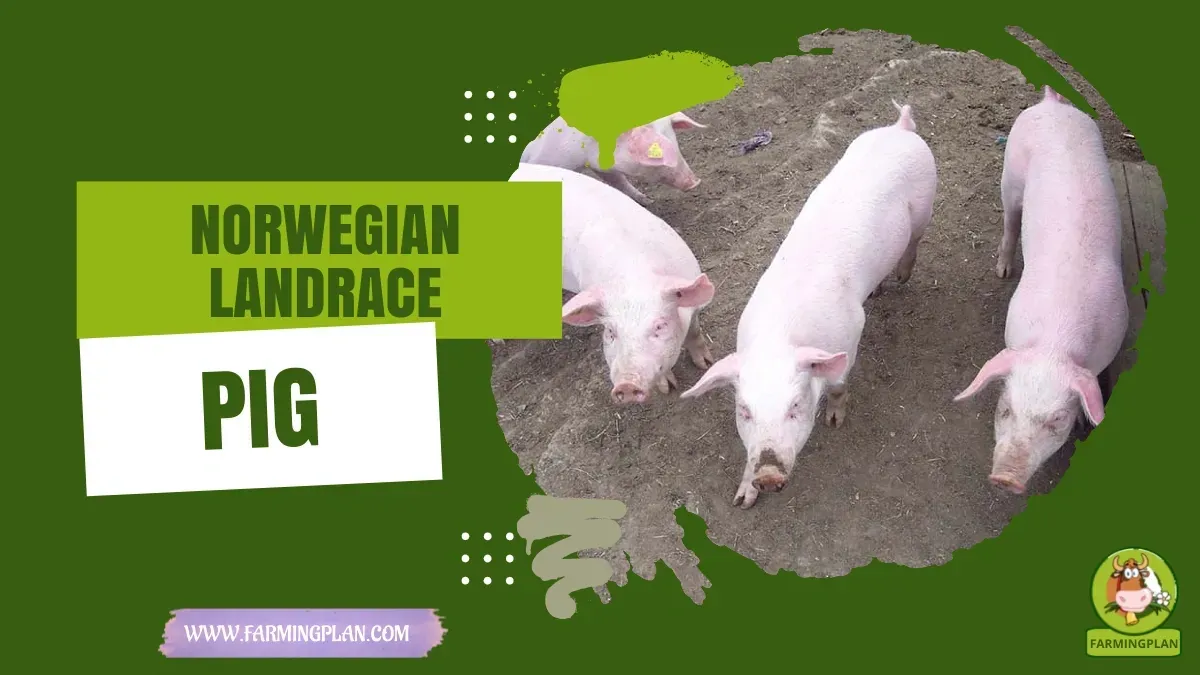
The coat is uniformly pure white, lying flat against clean pink skin. Any dark pigment spots or colored hairs are strictly disqualified under breed standards. The head is long and lean with a straight facial profile. The ears are large, heavy, and carried in a distinct forward-drooping lop position shielding the eyes.
Leg conformation is one of the standout triumphs of the Norwegian breeding program. Unlike traditional European Landrace breeds that occasionally struggled with weak pasterns and joint lesions under concrete housing, Norwegian Landrace stock possesses dense bone structure, strong pastern joints, and even claw symmetry that ensure exceptional herd longevity. Matching forage or ration quality to life stage optimizes norwegian landrace pig growth.
Temperament, Maternal Mothering, and Herd Behavior
Norwegian Landrace pigs are noted for their calm, tractable, and docile temperament. Generations of selection for ease of handling have eliminated flighty or aggressive behaviors, making both sows and mature boars easy to manage in modern group-housing systems. Gradual dietary transitions protect digestive stability in norwegian landrace pig.
Maternal temperament in Norwegian Landrace sows is exceptional. Sows exhibit deep responsiveness to piglet nursing cues, vocalizing softly during milk letdown to call young to the udder. When managed in dynamic group-farrowing or free-farrowing pens, sows demonstrate careful postural transitions, lying down cautiously to avoid crushing newborn piglets. Selecting healthy foundation stock is the cornerstone of successful norwegian landrace pig management.
In social group housing, sows form stable social hierarchies with minimal fighting. Their calm nature reduces social stress, which directly supports steady feed intake, high embryo implantation rates during early gestation, and consistent lactation performance. Good predator-proofing and dry bedding safeguard norwegian landrace pig comfort in harsh weather.
Nutritional Strategies: High Feed Efficiency, Phase Feeding, and Rations
Due to its high genetic potential for lean meat accretion, the Norwegian Landrace requires precise nutritional management to achieve optimum performance. The breed exhibits exceptional feed conversion ratios (FCR), often converting 2.30 to 2.45 pounds of balanced feed into a pound of live body gain during the grower-finisher phase. Monitoring water quality and mineral balance directly benefits norwegian landrace pig vitality.
A multiphase feeding regimen is recommended for growing stock. Grower rations (50 to 120 lbs / 23 to 55 kg) should provide 18% crude protein with an optimal standardized ileal digestible (SID) lysine level of 1.15%. Finisher diets (120 to 280 lbs / 55 to 127 kg) can taper to 15% to 16% crude protein, focusing on energy balance to ensure ideal backfat depth without over-fattening. Practical hands-on husbandry ensures consistent results when raising norwegian landrace pig.
Lactating sows require nutrient-dense diets formulated with 17% to 18% crude protein and high net energy to support litters of 14 or more vigorous piglets. Providing free-choice access to fresh water via high-flow nipple drinkers (delivering at least 2 liters per minute) is vital to support heavy lactation volume.
Housing Infrastructure, Biosecurity, and Flooring Design
Norwegian Landrace swine perform exceptionally well in climate-controlled indoor facilities as well as bedded hoop barns. Sows managed in loose group gestation systems require 26 to 32 square feet (2.4 to 3.0 square meters) of unobstructed floor area per animal, with dedicated deep-bedded rest areas and automated feeding stations. Smallholders comparing closely related stock can also review our detailed Ningxiang Pig guide. Early intervention at the first sign of lethargy protects overall norwegian landrace pig flock or herd health.
Ventilation systems must maintain clean air exchange while eliminating temperature swings and ammonia buildup. Relative humidity should be maintained between 55% and 70%, with winter ambient temperatures kept between 62°F and 68°F (17°C to 20°C). Integrating farm management practices with clean pasture lots seen in mulefoot pig setups offers versatile paddock rotation options. Structured culling and biosecurity protocols strengthen norwegian landrace pig genetic quality.
Strict farm biosecurity protocols—including Danish shower-in facilities, boot washes, and dedicated delivery vehicle sanitation—safeguard the high-health genetic status of Norwegian Landrace herds, ensuring long-term herd productivity and low mortality. Maintaining clean feeders and sanitized equipment supports sustainable norwegian landrace pig care.
Breeding Programs, CT Selection, and Terminal Sire Crossbreeding
The Norwegian Landrace is celebrated primarily as a premier F1 maternal dam line. When crossed with Yorkshire or Large White sires, the resulting maternal females possess incredible hybrid vigor, balanced mothering instincts, and long productive lives that frequently surpass 6 or 7 farrowing parities. Consistent daily observation helps keepers spot early changes in norwegian landrace pig health and behavior.
Gilts reach sexual maturity around 6 to 7 months of age, with initial artificial insemination recommended at 8 months when body weight surpasses 300 lbs (136 kg). Average litter sizes range from 14 to 17 liveborn piglets, with high piglet uniformity and strong birth weights exceeding 3.0 lbs (1.4 kg). Clean housing, fresh water, and balanced nutrition remain essential for norwegian landrace pig productivity.
Crossing Norwegian Landrace F1 females with heavy muscled terminal sires (such as Duroc or Pietrain) produces market hogs with exceptional meat percentage, rapid daily gain, and ideal fat-to-lean ratios. Integrating high-efficiency commercial swine alongside livestock ventures like dairy farming establishes multiple profitable revenue streams. Tracking feed intake and body condition supports long-term norwegian landrace pig performance.
Estimated Annual Budget & Maintenance Costs (USD)
Operating an efficient Norwegian Landrace commercial breeding unit requires budgeting for high-quality balanced nutrition, biosecure housing maintenance, and precision veterinary care. The following table provides an estimated annual budget per mature breeding sow.
| Budget Category | Operational Input & Specification | Estimated Annual Cost (USD) |
|---|---|---|
| Complete Balanced Feed Rations | Gestation and lactation diets, grain, soybean meal, amino acids | $520 – $710 |
| Biosecurity & Sanitation | Disinfectants, boot bath supplies, shower supplies, pest control | $85 – $140 |
| Veterinary & Herd Health | Vaccination schedules, parasite protocols, iron injections, ultrasound | $95 – $155 |
| Housing, Bedding & Climate Control | Ventilation electricity, deep straw or slats upkeep, heat lamps | $110 – $180 |
| Artificial Insemination & Genetics | Certified semen doses, AI catheters, genetic registry fees | $90 – $150 |
| Equipment & Facility Repairs | Feeder adjustments, nipple drinker maintenance, pen gating | $65 – $115 |
| Total Projected Cost | Estimated annual maintenance cost per mature breeding sow | $965 – $1,450 |
Producers coordinating multi-species operations alongside pastured livestock enterprises such as raising sheep achieve optimal farm resource utilization and spread equipment investments across complementary enterprises. Following biosecurity best practices reduces disease risk in any norwegian landrace pig operation.
🐖 Norwegian Landrace Pig Swine Daily Feed Calculator
Calculate daily grower/finisher rations (lbs), monthly 50-lb feed bags, pen space, and water needs for your Norwegian Landrace Pig pigs.
Frequently Asked Questions (FAQ)
What makes Norwegian Landrace genetics distinct from other Landrace strains?
Norwegian Landrace genetics are shaped by decades of computerized tomography (CT) scanning in live breeding boars, rigorous selection for leg soundness and feed efficiency, and development within Norway’s closed high-health SPF swine environment.
How many piglets do Norwegian Landrace sows typically farrow?
Norwegian Landrace sows consistently farrow litters of 14 to 17 live, vigorous piglets. Their 14 to 16 functional teats and abundant milk flow support high weaning weights across large litters.
What is the average mature weight of a Norwegian Landrace pig?
Mature Norwegian Landrace boars weigh between 600 and 750 lbs (270 to 340 kg), while mature sows weigh between 500 and 620 lbs (225 to 280 kg), representing a large, high-capacity commercial swine breed.
How does the Norwegian Landrace perform in terms of feed efficiency?
Norwegian Landrace hogs exhibit exceptional feed efficiency, achieving feed conversion ratios (FCR) of 2.30 to 2.45 pounds of feed per pound of live body gain during the grower-finisher growth stages.
How is the Norwegian Landrace utilized in commercial crossbreeding?
Norwegian Landrace pigs are primarily used as maternal dam lines, frequently crossed with Large White or Yorkshire stock to produce F1 maternal females that are subsequently bred to terminal Duroc or Pietrain boars for market pork production.
Best Practices for Commercial Production and Genetic Management
Maximizing the genetic potential of Norwegian Landrace stock requires disciplined nutritional formulation and consistent environmental controls. Producers should closely monitor gilt growth rates to avoid over-conditioning prior to first breeding, ensuring strong skeletal framework development. Seasonal adjustments to shelter and diet keep norwegian landrace pig thriving year-round.
Maintaining sanitary feeding systems, clean automated waterers, and biosecure farm access, modeled on principles common in high-density livestock systems including modern poultry equipment and swine barns, minimizes transmissible disease risks across age groups. Proper record-keeping makes breeding and culling decisions easier for norwegian landrace pig keepers.
Tracking sow longevity, farrowing ease, and 21-day litter weights provides actionable data for continuous herd improvement. By pairing premier Scandinavian genetics with top-tier husbandry, pork producers secure a competitive, highly efficient commercial operation. Providing adequate space and ventilation prevents common stress issues in norwegian landrace pig.
Advanced computerized breeding indexes utilized by Norsvin track structural longevity and leg soundness traits across thousands of commercial herds. By selecting breeding boars with superior bone density and claw symmetry, commercial producers significantly reduce involuntary sow culling and enhance lifetime herd productivity. Understanding breed-specific traits helps maximize norwegian landrace pig longevity and output.
Precision electronic sow feeding systems allow producers to tailor individual daily rations to exact gestation stages. Maintaining sows at optimal body condition scores prevents metabolic complications during farrowing and supports high sustained milk letdown throughout extended nursing periods. Routine preventive care saves time and lowers veterinary costs for norwegian landrace pig.
Routine biosecurity audits and closed-herd replacement strategies further reinforce the outstanding health advantages inherent in Norwegian Landrace seedstock, delivering dependable economic security across volatile market cycles.
📚Agricultural Reference & Scientific Citations
Standards and physiological data referenced in this guide comply with USDA APHIS Swine Health, FAO Domestic Animal Diversity Information System, and the American Veterinary Medical Association (AVMA).


