

⚡ Giant Homer Pigeon at a Glance: Key Specifications & Benchmarks
| Scientific Classification | Columba livia domestica (Heavy Utility Exhibition Columbid) |
| Breed Origin & Development | United States (Selected from Racing Homer & Runt crosses, 1920s) |
| Mature Adult Cock Weight | 30 to 36 oz (850 to 1,020 g) |
| Mature Adult Hen Weight | 27 to 32 oz (765 to 907 g) |
| Average Squab Dressed Weight | 18 to 22 oz (510 to 624 g) at 28 days |
| Nesting Compartment Standard | Spacious double-nest box (30 in wide by 18 in deep) |
| Annual Squab Productivity | 10 to 14 large marketable squabs per breeding pair |
| Primary Agricultural Purpose | Commercial meat squab production, exhibition utility class, aviary |
The Giant Homer pigeon stands as one of the most successful dual-purpose achievements in North American poultry history. Developed during the 1920s by commercial squab producers, this magnificent heavyweight breed was engineered by crossing muscular Racing Homers with massive European Runts and French utility pigeons. The objective was to combine the vigorous vitality and attentive parenting instincts of the homing pigeon with the massive meat yield of large utility breeds. Matching forage or ration quality to life stage optimizes Giant Homer Pigeon growth.
In our comprehensive pigeon and aviary guides, commercial columbid specialists emphasize that the Giant Homer revolutionized commercial squab production across the United States. Unlike delicate exhibition birds, Giant Homers are robust, docile, and exceptionally gentle. Pairs reliably hatch and brood their own young without requiring artificial incubators or specialized brooders, making them ideal for homesteaders seeking sustainable, high-protein meat self-sufficiency. Gradual dietary transitions protect digestive stability in Giant Homer Pigeon.
What sets the American Giant Homer apart is its remarkable conformation. The breed boasts a broad, deep chest carrying thick slabs of finely textured, all-dark breast meat. Squabs grow at an astonishing rate, reaching harvest weights between eighteen and twenty-two ounces in just twenty-eight days. This rapid growth cycle enables a single mated pair to generate steady, premium-grade poultry meat throughout the breeding season. Selecting healthy foundation stock is the cornerstone of successful Giant Homer Pigeon management.
Beyond commercial farm utility, the American Giant Homer Association (AGHA) maintains an active exhibition division. Fanciers across North America showcase champion cocks and hens evaluated on structural balance, tight feathering, and alert station. Their calm disposition makes them exceptionally easy to handle, whether inside a backyard family loft or on the competitive judging table. Good predator-proofing and dry bedding safeguard Giant Homer Pigeon comfort in harsh weather.
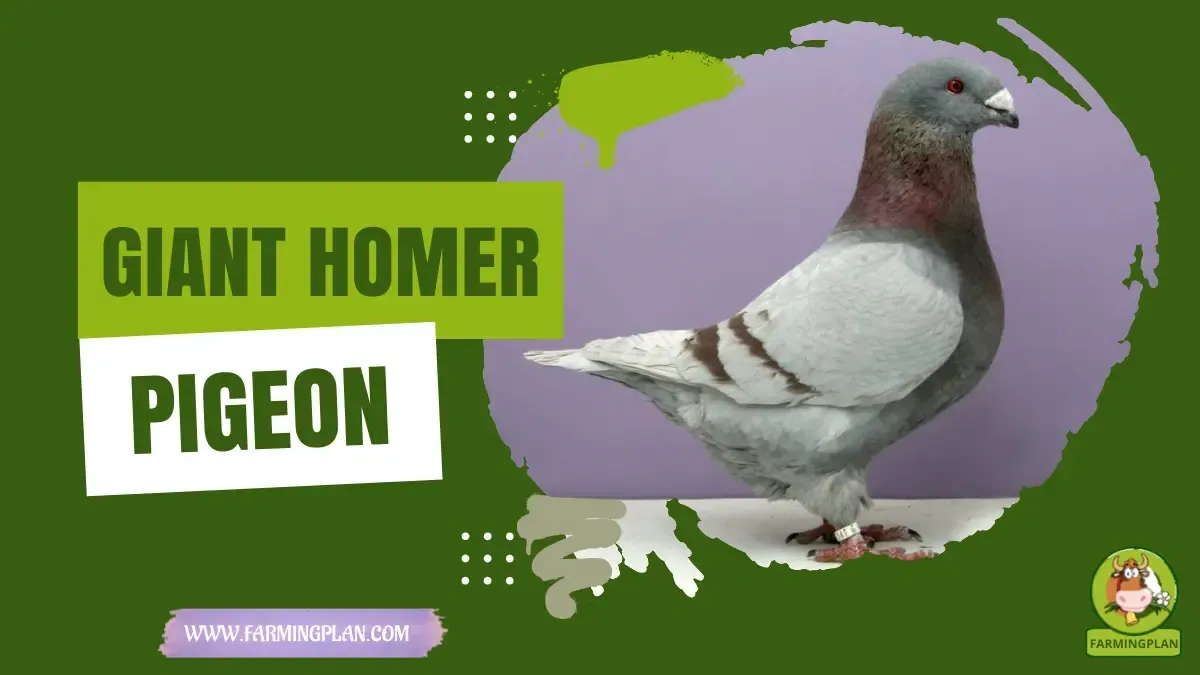
Physical Characteristics & Breed Standards
Official AGHA standards emphasize a powerful, compact, wedge-shaped body that conveys massive strength without appearing coarse or sluggish. Every physical dimension is scaled up significantly compared to traditional flying homers. Monitoring water quality and mineral balance directly benefits Giant Homer Pigeon vitality.
Body Mass, Keel Depth & Breast Conformation
Mature cocks average 32 to 34 ounces, with elite specimens reaching up to 36 ounces, while hens average 28 to 30 ounces. The breast is exceptionally wide, prominent, and well-rounded, extending forward with deep muscular fleshing. The keel bone is long, straight, and deep, providing a solid foundation for heavy pectoral meat deposition. Practical hands-on husbandry ensures consistent results when raising Giant Homer Pigeon.
The back is broad across the shoulders and flat, tapering cleanly toward a short, narrow tail that extends roughly one inch past the folded wing tips. Wing butts are heavy and prominent, while the primary flights are broad and held tightly against the body without slipping or sagging. Early intervention at the first sign of lethargy protects overall Giant Homer Pigeon flock or herd health.
Cranial Conformation, Eye Sign & Color Varieties
The head is large, broad, and powerfully curved, featuring an unbroken frontal sweep that rises smoothly from the beak to the skull crest. The beak is stout, blunt, and thick at the base, with powdery white wattles that remain smooth and free from coarse wrinkles. Structured culling and biosecurity protocols strengthen Giant Homer Pigeon genetic quality.
Eyes are bright, bold, and expressive, typically displaying a fiery red or rich orange iris surrounded by a neat, firm cere. Recognized plumage patterns include blue bar, check, solid white, self red, yellow, and mealy, with white-feathered lines widely favored for clean retail dressed carcass appearance. Maintaining clean feeders and sanitized equipment supports sustainable Giant Homer Pigeon care.
⚡ Giant Homer Pigeon Performance & Production Matrix
| Performance Benchmark | Commercial Meat Standard | Exhibition Show Standard |
|---|---|---|
| Mature Cock Weight | 30 to 34 oz (850 to 964 g) | 32 to 36 oz (907 to 1,020 g) |
| Mature Hen Weight | 26 to 30 oz (737 to 850 g) | 28 to 32 oz (794 to 907 g) |
| Squab Weight at 28 Days | 18 to 22 oz (510 to 624 g) | 16 to 20 oz (454 to 567 g) |
| Annual Squab Yield | 12 to 16 marketable squabs | 8 to 10 show-quality squabs |
| Keel Length & Straightness | Long, straight, deeply fleshed | Perfect midline symmetry |
| Nest Compartment Width | 30 inches (double-nest box) | 28 to 32 inches private box |
Breed History, Heritage & North American Development
During the early twentieth century, commercial squab farming boomed across California, New Jersey, and the Midwestern United States. Hotel dining rooms and upscale restaurants demanded tender, heavy young squabs, creating a lucrative market for commercial poultry breeders.
Existing breeds had notable limitations. Traditional Racing Homers were prolific breeders and devoted parents but produced squabs that were too light for market demand. Runts, on the other hand, were massive but reproduced slowly and were notoriously clumsy in the nest. Innovative American breeders crossed these distinct strains, selecting offspring that combined Runt size with Homer fertility. Consistent daily observation helps keepers spot early changes in Giant Homer Pigeon health and behavior.
The formation of the American Giant Homer Association in the 1920s established uniform breed standards and promotional registries. By the mid-twentieth century, Giant Homers supplied millions of dressed squabs annually to metropolitan markets. Today, the breed remains cherished by homesteaders and show fanciers as a premier example of practical American livestock breeding. Clean housing, fresh water, and balanced nutrition remain essential for Giant Homer Pigeon productivity.
Housing, Shelter Dimensions & Winter Hardiness
Because Giant Homers are heavy, ground-oriented birds, their housing infrastructure requires sturdier engineering than lofts designed for light flying breeds. Perches, nest boxes, and floor supports must easily bear the weight of these two-pound columbids. Tracking feed intake and body condition supports long-term Giant Homer Pigeon performance.
Loft floor space should allocate at least 5 to 6 square feet per adult bird. Overcrowding leads to broken eggs, soiled plumage, and territorial disputes between aggressive cocks. Double-nest boxes measuring 30 inches wide, 18 inches deep, and 16 inches high are mandatory, providing a partition so the hen can lay her second clutch while the cock feeds squabs in the adjacent bowl. Following biosecurity best practices reduces disease risk in any Giant Homer Pigeon operation.
Giant Homers exhibit outstanding cold tolerance, enduring freezing northern winters down to zero degrees Fahrenheit without supplemental heat, provided their shelter remains dry and draft-free. Floor bedding should consist of kiln-dried pine shavings or coarse dry sand, replaced regularly to manage moisture and maintain pristine air quality. Seasonal adjustments to shelter and diet keep Giant Homer Pigeon thriving year-round.
Nutritional Requirements, Daily Rations & Feeding Protocols
Feeding heavyweight utility pigeons requires an energy-rich, high-protein diet capable of supporting massive adult muscle maintenance and rapid squab growth. Pairs feeding two voracious four-week-old squabs consume substantial daily rations. Proper record-keeping makes breeding and culling decisions easier for Giant Homer Pigeon keepers.
A balanced commercial breeding ration must provide 16 to 18 percent crude protein. An optimal grain mixture includes 35 percent Canadian field peas, 25 percent clean yellow corn, 20 percent hard red wheat, 10 percent milo, and 10 percent safflower seed. During active squab rearing, high-protein pellets formulated for pigeons can be blended in at 20 percent of total feed. Providing adequate space and ventilation prevents common stress issues in Giant Homer Pigeon.
Unlike light performers like the Birmingham Roller pigeon that require restricted feed measurements, breeding Giant Homers should be fed twice daily all they will clean up in thirty minutes, or provided with hopper-fed grain during heavy squab brooding. Clean mineral grit with crushed oyster shell and trace minerals must remain accessible at all times to ensure thick eggshells and healthy digestion. Understanding breed-specific traits helps maximize Giant Homer Pigeon longevity and output.
Health Management, Common Diseases & Biosecurity Standards
Heavy utility lofts require consistent sanitary protocols to maintain high squab livability. Biosecurity guidelines from the USDA APHIS Avian Health division emphasize regular disinfection and strict pest exclusion to prevent the spread of salmonella and Newcastle disease.
Paratyphoid (salmonellosis) is an ever-present concern in breeding lofts. It causes joint swelling, wing lameness, infertile eggs, and sudden squab mortality. Maintain dry nesting conditions, sanitize drinkers daily, and keep wild rodents away from feed storage bins to break transmission chains. Routine preventive care saves time and lowers veterinary costs for Giant Homer Pigeon.
Annual vaccination against pigeon paramyxovirus (PMV-1) is essential for all breeding stock. Administer preventative treatments for canker (trichomoniasis) before pairing breeders in late winter. Wet canker rapidly spreads from parents to squabs via crop milk, making pre-breeding sanitation vital to high fledgling survival. Matching forage or ration quality to life stage optimizes Giant Homer Pigeon growth.
Breeding Management, Incubation & Brooding Offspring
Giant Homers are celebrated for their exceptional parenting instincts. Monogamous pairs bond deeply and manage the entire 17 to 19-day incubation period smoothly, with the cock sitting through midday and the hen covering the clutch overnight. Gradual dietary transitions protect digestive stability in Giant Homer Pigeon.
Upon hatching, parents feed squabs rich crop milk for the first four to five days before transitioning them to regurgitated softened grain. When comparing productivity with historic utility breeds like the Carneau pigeon, Giant Homers consistently match or exceed dressed squab meat yields while offering hardier disease resistance. Selecting healthy foundation stock is the cornerstone of successful Giant Homer Pigeon management.
Fit exhibition squabs with official seamless 10 mm AGHA aluminum leg bands between 6 and 9 days of age. If raised for meat, squabs are harvested at 26 to 28 days, right before they leave the nest bowl and begin exercising their wing muscles, ensuring tender, succulent table meat. Good predator-proofing and dry bedding safeguard Giant Homer Pigeon comfort in harsh weather.
US Ownership Budget & Annual Maintenance Costs
Operating an American Giant Homer breeding loft is a practical and economically viable enterprise. Because squabs command premium market prices among gourmet poultry buyers, a well-managed flock can offset its annual operating expenses quickly. Monitoring water quality and mineral balance directly benefits Giant Homer Pigeon vitality.
High-quality foundation pairs from reputable AGHA breeders cost between 75 and 175 dollars per pair. Feed expenses for an average flock of 10 breeding pairs total approximately 450 to 650 dollars annually due to the higher grain consumption of heavy utility birds. Practical hands-on husbandry ensures consistent results when raising Giant Homer Pigeon.
⚡ Estimated Annual Budget & Maintenance Costs (USD)
| Expense Category | Annual Cost Range (USD) | Management Notes & Specifications |
|---|---|---|
| High-Protein Utility Grains & Pellets | $460 – $660 | 16% CP grain mixes and pigeon pellets (50-lb sacks) |
| Mineral Grit, Oyster Shell & Calcium | $60 – $95 | Coarse red stone grit and breeding mineral cups |
| Heavy Bedding & Aviary Disinfectants | $70 – $120 | Kiln-dried pine shavings and sanitizing sprays |
| Preventative Vaccines & Canker Care | $75 – $140 | PMV-1 vaccines, canker treatments & dewormers |
| AGHA Membership & Seamless Bands | $35 – $65 | Official 10 mm leg bands and annual club registration |
| Nesting Bowls & Hardware Upkeep | $80 – $180 | Heavy ceramic nest bowls and wire flight repairs |
| Total Annual Operating Budget | $780 – $1,260 | Estimated for a working flock of 10 breeding pairs |
🕊️ Giant Homer Pigeon Loft & Grain Mix Calculator
Estimate daily grain ration (lbs), mineral grit, monthly 50-lb feed bags, and minimum indoor loft and outdoor aviary space (sq ft) for your Giant Homer Pigeon loft.
Frequently Asked Questions (FAQ)
Can Giant Homer pigeons fly outside the loft?
Giant Homers can fly short distances, but their heavy body weight prevents them from soaring or navigating long flights. They should not be free-flown outdoors because their slow takeoff makes them easy targets for ground predators and birds of prey.
How many squabs do Giant Homers produce per year?
A healthy, mature pair of Giant Homers produces between 10 and 14 large marketable squabs per year under proper management. Using a double-nest box system allows the hen to lay her next clutch while the cock finishes feeding older squabs.
What weight do Giant Homer squabs reach at butcher age?
Giant Homer squabs reach harvest weights between 18 and 22 ounces (510 to 624 grams) at four weeks of age. Harvest occurs right before squabs leave the nest and start flying, preserving maximum tenderness and juiciness.
What leg band size is required for Giant Homer pigeons?
Official AGHA exhibition standards require a 10 mm (Size 10) seamless aluminum leg band. Squabs must be banded between 6 and 9 days of age before their foot joints grow too large for the ring to slide on smoothly.
How long do Giant Homer pigeons live in captivity?
In a clean, predator-proof loft with balanced grain nutrition and regular veterinary care, Giant Homers routinely live 10 to 14 years. Breeding pairs remain productive meat and show producers for 6 to 8 years.
Expert Verdict & Next Steps for Giant Homer Keepers
The Giant Homer pigeon is a premier dual-purpose columbid that combines rapid squab growth with dignified exhibition presence. Success with this magnificent breed requires robust loft construction, double-nest compartments, and high-protein grain feeding. Homesteaders and aviculturalists who invest in quality bloodlines enjoy abundant meat yields and majestic show birds for years to come. Early intervention at the first sign of lethargy protects overall Giant Homer Pigeon flock or herd health.
To deepen your knowledge of large-scale meat and exhibition pigeons, examine classic European heavyweights like the King pigeon to compare squab production traits across breeds. Connect with the American Giant Homer Association, acquire certified breeding stock, and construct a secure, spacious loft to launch your homestead enterprise.
📚Agricultural Reference & Scientific Citations
Conformation benchmarks, veterinary biosecurity standards, and nutritional requirements cited in this guide adhere to verified standards from the USDA Animal and Plant Health Inspection Service, the American Poultry Association, and the American Giant Homer Association.


