

⚡ King Pigeon at a Glance: Key Specifications & Benchmarks
| Scientific Name | Columba livia domestica (Heavy Dual-Purpose Avian Subtype) |
| Breed Origin | New Jersey, United States (Synthesized late 1890s) |
| Official Registry | American King Club (AKC, Est. 1915) / National Pigeon Association (NPA) |
| Average Mature Weight | Show Kings: 30 to 37 oz (850 to 1,050 g); Utility: 24 to 30 oz (680 to 850 g) |
| Upright Station Standard | Stands at an impressive near-vertical 90-degree station angle |
| Primary Working Roles | Show exhibition, companion aviary pet, foster parenting, commercial squab production |
| Flight Agility Level | Heavy, limited low-level flight (under 4 to 6 ft); prefers ground walking |
| Average Healthy Lifespan | 10 to 15 years in well-ventilated, predator-proof lofts |
The King Pigeon stands as the indisputable gentle giant of the domestic pigeon world. Developed in the United States in the late 1890s by crossbreeding four distinct heritage breeds—the Duchess, Runt, Homer, and Maltese—the King Pigeon was engineered to produce a large, fast-growing utility squab bird with calm temperament and imposing physical presence. Over the subsequent century, dedicated fanciers refined the breed into two celebrated variations: the commercial Utility King and the magnificent, sculptured Show King. Exploring our comprehensive directory of domestic pigeon breeds reveals how the King Pigeon achieved status as one of America’s most successful avicultural innovations. Routine preventive care saves time and lowers veterinary costs for King Pigeon.
Today, while the Utility King remains a staple in commercial squab production, the Show King has become one of the premier attractions in competitive exhibition halls worldwide. With its regal, upright carriage, immense deep breast, and perfectly rounded skull, the Show King resembles a living avian marble sculpture. Beyond the show ring, King Pigeons have captured the hearts of companion bird enthusiasts who appreciate their calm, docile temperament, low-key indoor aviary compatibility, and affectionate responsiveness to human caregivers. Matching forage or ration quality to life stage optimizes King Pigeon growth.
Because King Pigeons are heavy-bodied birds weighing up to two and a half pounds, their housing, perching, feeding, and breeding needs differ substantially from smaller aerial flyer breeds. High perches cause foot bruising, narrow nest bowls lead to crushed eggs, and deficient mineral grit results in egg-binding. This authoritative management guide provides the exact husbandry guidelines, loft plans, nutritional programs, and preventative veterinary protocols needed to raise vigorous, competition-grade King Pigeons. Gradual dietary transitions protect digestive stability in King Pigeon.
Physical Characteristics & Breed Standards
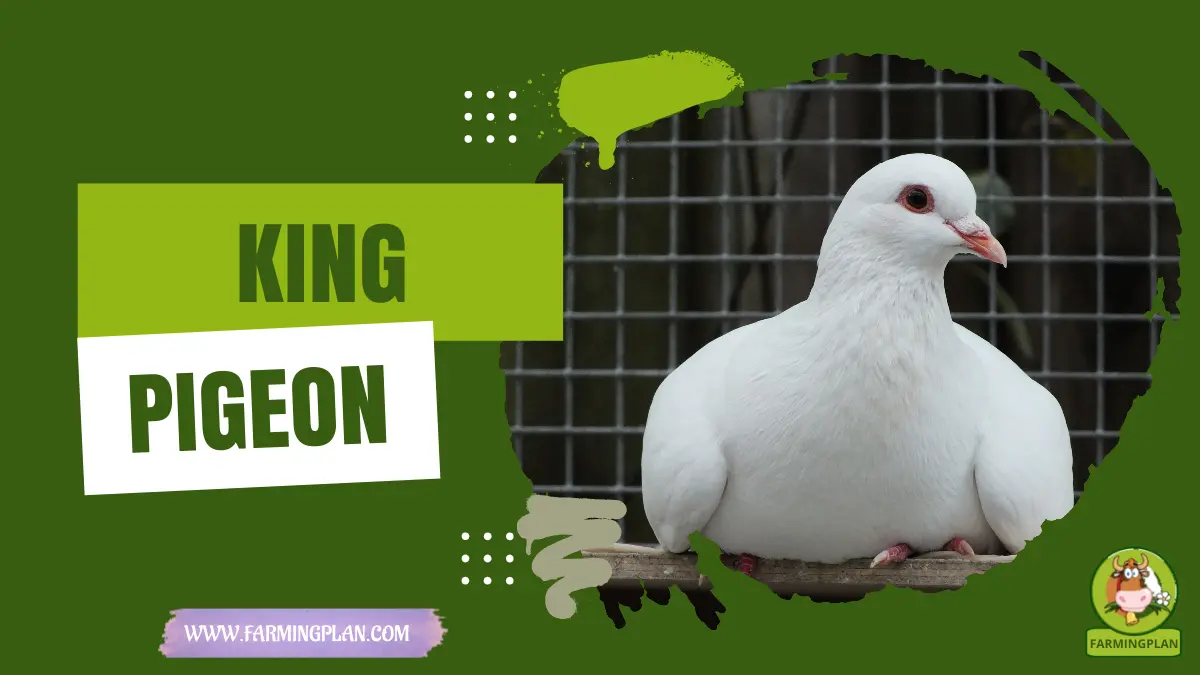
Conformationally, the King Pigeon is the epitome of power, symmetry, and architectural substance. The American King Club (AKC) standard requires the Show King to exhibit an upright, alert posture, standing proudly at an almost vertical angle. Mature show cocks weigh between 32 and 37 ounces (900 to 1,050 grams), while hens weigh slightly less at 30 to 34 ounces. The body is short, broad, and remarkably deep, presenting a compact, solid silhouette that feels dense and muscular in the hands.
The head is large, broad, and smoothly curved, showing no flatness on top or pinched cheeks. The beak is stout, medium-short, and flesh-colored (pinkish-white in white varieties), set cleanly beneath a smooth, powdery white cere. The eyes are bright and prominent, with the White King exhibiting rich, expressive dark bull eyes, while colored varieties display vivid pearl or orange irises encircled by fine, flesh-colored eye ceres. The neck is thick, arched, and tapers smoothly from the broad shoulders to the head. Selecting healthy foundation stock is the cornerstone of successful King Pigeon management.
Conformation Standards & Anatomical Structure
The breast of the King Pigeon is its most imposing feature: extremely broad, prominent, and carried high and forward. The wings are short, tightly folded, and rest neatly on top of a very short, compact tail that is carried slightly elevated off the floor. The legs are stout, straight, and set wide apart, featuring clean, bright red skin devoid of feathers (clean-legged). Good predator-proofing and dry bedding safeguard King Pigeon comfort in harsh weather.
Although the pure White King is the most iconic variety, Kings are successfully bred in self yellow, red, black, dun, blue bar, brown, and beautiful silver and almond patterns.
Size, Weight Benchmarks & Color Variations
Adult Show Kings reach 30 to 37 ounces in weight, standing 11 to 12 inches high when posed upright. Commercial Utility Kings average slightly lighter at 24 to 30 ounces, with a slightly longer body structure designed for rapid squab production. Monitoring water quality and mineral balance directly benefits King Pigeon vitality.
Their substantial body weight requires careful handling to prevent keel bone bruising and breast muscle strain. Practical hands-on husbandry ensures consistent results when raising King Pigeon.
⚡ King Pigeon Performance & Production Matrix
| Functional Benchmark | Operational Standard | Performance Metric | Practical Field Application |
|---|---|---|---|
| Exhibition Conformation Quality | Upright 90-degree stance, massive round breast | Superior (9.9/10) | Premier show breed; judged heavily on compact length, depth, and station. |
| Squab Growth & Parental Care | Reaches 20 to 24 oz squab weight in 28 days | Superior (9.8/10) | Exceptional squab producers; both parents provide abundant crop milk. |
| Flight & Ranging Ability | Heavy, limited low flight (under 4 to 6 feet) | Moderate (5.0/10) | Cannot evade aerial predators; requires secure enclosed aviary flights. |
| Docility & Companion Temperament | Exceptionally tame, calm, and quiet cooing | Superior (9.9/10) | Outstanding aviary pet; peaceful with human handlers and flock mates. |
| Feed Consumption & Conversion | 1.5 to 2.0 oz of mixed pigeon grain daily | Strong (8.8/10) | Larger grain intake than small breeds; requires quality peas and corn. |
| Nest Box & Perch Footprint | Requires 12×12 inch nest bowls & 4-inch wide perches | Specialized (8.5/10) | Heavy bodies require large, sturdy, low-mounted furniture to prevent injury. |
Breed History, Heritage & North American Development
The historical creation of the King Pigeon occurred in southern New Jersey during the 1890s, driven by an expanding urban consumer demand for high-quality squab meat in Philadelphia and New York City. Commercial pigeon raisers sought a breed that combined the rapid growth of the Homer, the massive size of the ancient Roman Runt, the upright grace of the Maltese, and the gentle domesticity of the Duchess. Through rigorous crossbreeding and ruthless culling for vitality and rapid squab weight gain, breeders established the White King as a pure breeding entity by 1895.
Recognizing the bird’s extraordinary physical beauty, exhibition fanciers formed the American King Club (AKC) in 1915, drafting a formal standard of perfection that prioritized compact conformation, upright carriage, and sculptured feather contours over purely commercial meat metrics. This split the breed into the larger, rounder Show King and the slightly longer, leaner Utility King. The National Pigeon Association (NPA) and international European avicultural federations embrace the King as one of the cornerstone fancy breeds of the modern era. Early intervention at the first sign of lethargy protects overall King Pigeon flock or herd health.
Avian scientists and livestock historians frequently study the King Pigeon as a prime example of successful multi-breed synthetic hybridization. Research programs referenced by agricultural institutions and the USDA Agricultural Research Service document how hybrid vigor and selective breeding can fix extreme body size and distinct skeletal proportions without undermining reproductive fertility or parental nurturing instincts. Explore contrasting flying lineages in our guide to performing Roller pigeons. Structured culling and biosecurity protocols strengthen King Pigeon genetic quality.
Housing, Shelter Dimensions & Winter Hardiness
Housing design for King Pigeons must accommodate their substantial size, limited flight agility, and heavy ground presence. Lofts should be spacious, dry, and exceptionally well-ventilated, allowing at least 4 to 5 square feet of floor space per adult breeding pair. Crowding heavy birds leads to broken tail feathers, soiling, and respiratory irritation.
Perches must be specifically designed for heavy feet. Standard narrow perches or inverted V-perches suitable for small flyers are uncomfortable and cause foot pressure sores (pododermatitis) in King Pigeons. Fanciers should install flat, wooden box perches or 4-inch wide horizontal wooden boards mounted no higher than 18 to 36 inches above the floor. Providing low ramps or stepped shelves helps heavy show birds reach mid-level perches without heavy landing impacts that bruise keel bones. Maintaining clean feeders and sanitized equipment supports sustainable King Pigeon care.
Spatial Density & Enclosure Engineering
Flooring must be kept immaculately dry. Clean wood shavings, chopped straw, or commercial hemp bedding over solid wooden floors provide excellent cushioning and absorb moisture. Consistent daily observation helps keepers spot early changes in King Pigeon health and behavior.
Outdoor flight pens should be covered with 1/2-inch galvanized hardware cloth to exclude wild sparrows, rodents, and predators, featuring a concrete or pea-gravel floor that can be easily disinfected. Full enclosure is mandatory, as King Pigeons cannot fly fast enough to escape neighborhood hawks, owls, cats, or raccoons.
Nutritional Requirements, Daily Rations & Feeding Protocols
Nutrition for King Pigeons must support their large skeletal framework, heavy muscle mass, and rapid squab production. A high-grade commercial pigeon grain ration containing 15 to 18 percent crude protein forms the foundation of their daily nutrition. This mix should feature large Canadian field peas, whole yellow and red corn, red milo, hard wheat, safflower seed, and small quantities of vetch and black oil sunflower seeds. Clean housing, fresh water, and balanced nutrition remain essential for King Pigeon productivity.
During the active breeding season, when parent birds are manufacturing copious quantities of crop milk and feeding rapidly growing squabs, increasing dietary protein toward 18 percent is vital. In addition, providing soaked grains or a high-protein commercial pigeon pellet (crumbles) can provide easily digestible calories for hard-working breeding pairs. In the winter resting period, protein can be dialed back to 14 to 15 percent by adding extra barley and wheat to prevent adult birds from becoming overly fat and sluggish. Compare with performance feeding protocols in our guide to racing homing pigeons. Tracking feed intake and body condition supports long-term King Pigeon performance.
Crude Protein Benchmarks Across Life Stages
Mineral supplementation is critical for King Pigeons, particularly for breeding hens. Due to their large size, laying hens demand substantial calcium reserves to produce thick, strong eggshells without depleting skeletal calcium. Fanciers must provide free-choice complete pigeon grit containing crushed granite, oyster shell, bone meal, red mineral stone, and trace salt, housed in a separate, dry mineral feeder. Following biosecurity best practices reduces disease risk in any King Pigeon operation.
Fresh, clean water must be provided daily in wide, stable gravity fountains that cannot be overturned by the birds’ heavy bodies.
Health Management, Common Diseases & Biosecurity Standards
Preventive healthcare for King Pigeons requires ongoing monitoring of respiratory health, internal parasites, and foot condition. Because they spend considerable time walking on loft floors, keeping bedding dry and free of damp droppings is the single most effective way to prevent coccidiosis, roundworms, and canker (trichomoniasis). Seasonal adjustments to shelter and diet keep King Pigeon thriving year-round.
Canker (Trichomonas gallinae) is an ever-present protozoal challenge in pigeon lofts, often transmitted through crop milk to squabs or shared drinking water. Fanciers should inspect squab throats weekly for yellowish necrotic lesions and treat with approved antiprotozoal medications (such as dimetridazole or metronidazole) under veterinary guidance when necessary. Proper record-keeping makes breeding and culling decisions easier for King Pigeon keepers.
Biosecurity Protocols & Veterinary Defenses
Routine vaccination against Pigeon Paramyxovirus (PMV-1) is mandatory, administered annually to protect the entire flock against lethal neurological paralysis.
Foot health requires regular observation. Due to their heavy weight, Kings can develop bumblefoot if forced to perch on damp, soiled surfaces or rough, sharp perches. Providing regular weekly bath pans with clean water and bathing salts allows birds to clean their plumage, moisturize their skin, and wash dust from their feet. Toenails should be inspected and clipped periodically if birds do not wear them down naturally on gravel floor runs. Providing adequate space and ventilation prevents common stress issues in King Pigeon.
Breeding Management, Reproductive Cycles & Offspring Care
Breeding King Pigeons requires oversized breeding accommodations to prevent egg breakage and ensure comfortable squab rearing. Standard pigeon breeding double-nest boxes measuring 24 inches wide are inadequate; King pairs require breeding pens measuring at least 30 to 36 inches wide, 24 inches deep, and 20 inches high. Each pen should house two large, heavy earthenware or plastic nest bowls measuring at least 10 to 12 inches in diameter, lined with thick felt nest pads and coarse pine straw. Understanding breed-specific traits helps maximize King Pigeon longevity and output.
The hen lays two eggs approximately 8 to 10 days after mating, with incubation lasting 17 to 19 days shared between the cock and hen. Because of their heavy bodies, clumsy or nervous parent birds can accidentally crush fragile eggs. Experienced breeders provide deep nest padding or use wooden dummy eggs during the laying interval, returning the real eggs once the clutch is complete. Squabs grow with astonishing speed, reaching 20 to 24 ounces within 28 days thanks to the parents’ rich, abundant crop milk.
Exhibition fanciers band squabs at seven to ten days of age using official size 10 mm (or size 11 mm) seamless aluminum bands issued by the NPA. Young show prospects are evaluated for upright station, neck fullness, skull curve, and tight, short wing carriage. Routine preventive care saves time and lowers veterinary costs for King Pigeon.
For fanciers seeking to explore companion and homing breeds, our guide on keeping pet pigeons provides practical advice for aviary management and companion bonding. Matching forage or ration quality to life stage optimizes King Pigeon growth.
US Ownership Budget & Annual Maintenance Costs
Establishing an operational homestead budget for the King Pigeon requires balancing initial infrastructure capital with predictable recurring annual maintenance expenses. Sourcing certified foundation stock, constructing predator-resistant housing, and investing in high-quality nutrition protects your long-term agricultural investment.
The comprehensive cost model below details typical initial investments alongside recurring annual expenses for maintaining healthy, productive King Pigeon stock on American acreage. Gradual dietary transitions protect digestive stability in King Pigeon.
💰 Estimated Annual Budget & Maintenance Costs (USD)
| Budget Category | Item Description & Scope | Initial Capital Outlay | Annual Recurring Expense |
|---|---|---|---|
| Championship Show Stock Pair | Registered AKC / NPA pedigreed Show Kings | $200 – $500 | $0 |
| Spacious Heavy-Bird Aviary | 8×12 ft walk-in loft with wide box perches | $1,200 – $2,200 | $75 / yr |
| High-Protein Pigeon Grain Mix | 16-18% crude protein grain (peas, corn, milo) | $0 | $160 – $240 / yr |
| Complete Mineral Grit & Salts | Calcium-rich grit, charcoal, bath salts | $0 | $50 – $75 / yr |
| PMV-1 Vaccine & Healthcare | Annual paramyxovirus vaccine, canker medication | $0 | $60 – $90 / yr |
| Oversized Earthenware Nests | Heavy 10-12 inch nest bowls & felt pads | $80 – $140 | $30 / yr |
| Absorbent Shavings Bedding | Kiln-dried pine wood shavings for floors | $0 | $100 – $150 / yr |
🕊️ King Pigeon Loft & Grain Mix Calculator
Estimate daily grain ration (lbs), mineral grit, monthly 50-lb feed bags, and minimum indoor loft and outdoor aviary space (sq ft) for your King Pigeon loft.
Frequently Asked Questions (FAQ)
Can King Pigeons fly?
King Pigeons can fly short distances, such as fluttering 4 to 6 feet up to a low perch or across an aviary. However, due to their heavy body weight (up to 2.5 lbs) and compact wing structure, they cannot achieve sustained high flight and cannot evade predators outdoors.
What is the difference between a Show King and a Utility King?
Show Kings are bred specifically for exhibition perfection, featuring an extreme upright 90-degree posture, massive deep breast, and compact rounded body weighing up to 37 ounces. Utility Kings are bred for commercial squab production, having a slightly longer body and more utilitarian build.
Do King Pigeons make good indoor companion pets?
Yes. King Pigeons make wonderful aviary and house pets. They are calm, gentle, do not bite, produce soft soothing coos rather than loud screeches, and can easily wear commercial pigeon pants (diapers) for indoor companionship.
How big should nest bowls be for King Pigeons?
Nest bowls for King Pigeons should be at least 10 to 12 inches in diameter, heavy enough not to tip over when an adult steps on the rim, and lined with thick felt or straw padding to prevent the parents’ heavy weight from cracking the eggs.
Expert Verdict & Next Steps for US Homesteaders
The King Pigeon represents a pinnacle of American avicultural achievement, combining imposing physical stature and sculptured exhibition beauty with an extraordinarily sweet and tranquil temperament. Whether showcased on the championship show bench, raised on a diversified farm for squab production, or cherished as a gentle companion in a backyard garden aviary, the King commands admiration from all who encounter it. Selecting healthy foundation stock is the cornerstone of successful King Pigeon management.
Raising King Pigeons successfully requires providing generous loft space, low, wide perches, oversized nest bowls, and high-protein, mineral-rich grain nutrition. By respecting their heavy build and protecting them from predators, breeders and hobbyists will be rewarded with years of calm companionship, vigorous squab production, and the quiet pride of stewarding America’s royal pigeon.
📚Agricultural Reference & Scientific Citations
Standards and physiological data referenced in this guide comply with American Poultry Association (APA), The Livestock Conservancy, and USDA APHIS Avian Biosecurity Standards.


