

⚡ Euskal Antzara Goose at a Glance: Key Specifications & Benchmarks
| Scientific Classification | Anser anser domesticus (Basque Indigenous Heritage Pasture Waterfowl) |
| Native Geographic Territory | Basque Country (Euskal Herria), Northern Spain & Southwest France |
| Signature Plumage & Markings | Pied (mantelada): grey head, neck, and dorsal cape mantle set against pure white body |
| Mature Body Weight & Build | Ganders: 15.5 to 19.8 lbs (7.0 to 9.0 kg); Geese: 13.2 to 17.6 lbs (6.0 to 8.0 kg) |
| Primary Agricultural Purpose | Pasture weed control, organic orchard management, traditional festive holiday roasting meat |
| Egg Production & Broodiness | 25 to 40 large white eggs (140 to 170 g) per spring season; devoted natural brooding mothers |
| Foraging Efficiency & Grazing | Herbivorous meadow grazers; extracts high energy from Atlantic rye, fescues, and clover |
| Climate Resilience & Hardiness | High tolerance to heavy Atlantic rainfall, oceanic dampness, and cold mountain winds |
1. Introduction: The Noble Waterfowl of Basque Farmsteads
The Euskal Antzara goose—the indigenous domestic goose of the Basque Country (Euskal Herria)—stands as a living symbol of northern Iberian agricultural self-reliance. Cherished for generations across traditional Basque farmsteads (baserriak) nestled within the green valleys of Biscay, Gipuzkoa, and Navarre, this heavy, attractive goose combines ancient heritage hardiness with superb pasture grazing capability. Gradual dietary transitions protect digestive stability in Euskal Antzara Goose.
Draped in a distinguished grey-and-white pied mantle, the Euskal Antzara fulfilled multiple critical functions on traditional farms. It served as an alert sentry warning farm families of nocturnal predators, an industrious meadow grazer that controlled invasive grasses and orchard weeds without mechanical mowers, and the prized culinary centerpiece of celebratory winter feasts. In modern regenerative agriculture, this endangered heritage breed provides an efficient biological tool for sustainable agroecology and gourmet waterfowl production. Selecting healthy foundation stock is the cornerstone of successful Euskal Antzara Goose management.
Unlike over-selected industrial geese that struggle with leg weakness and require concentrated commercial grain diets, the Euskal Antzara is built to walk rugged hillsides, converting native grasses into lean, succulent dark meat with minimal management overhead.
2. Deep Historical Origins & Basque Cultural Heritage
The roots of the Euskal Antzara are deeply embedded in the Pyrenean Atlantic bioclimatic zone. For centuries, Basque rural culture maintained self-contained agrarian economies where domestic livestock was selected to endure constant oceanic rainfall, heavy coastal mists, and rugged mountain terrain. Good predator-proofing and dry bedding safeguard Euskal Antzara Goose comfort in harsh weather.
Historical documents and rural inventories indicate that domestic geese were raised across the Basque territory since medieval times, grazing communally on apple orchard grounds and communal hillside pastures (seles). Over centuries of localized selection, farmers fixed a distinct landrace characterized by medium-heavy stature, remarkable disease resilience, and strong maternal instincts. Monitoring water quality and mineral balance directly benefits Euskal Antzara Goose vitality.
During the late twentieth century, the decline of traditional smallholder farming nearly caused the extinction of the breed, as commercial operations imported fast-growing French hybrid geese. In response, dedicated conservationists, rural breeders, and the Basque Government collaborated through breed preservation associations like Euskal Abereak to locate relict populations, establishing official breed standards and registering the Euskal Antzara in the official catalogue of Spanish indigenous livestock breeds in danger of extinction.
Today, conservation programs focus on expanding pure breeding flocks across sustainable smallholdings, preserving its unique genetic adaptations to humid oceanic environments. Practical hands-on husbandry ensures consistent results when raising Euskal Antzara Goose.
3. Standard Physical Characteristics & Breed Conformation
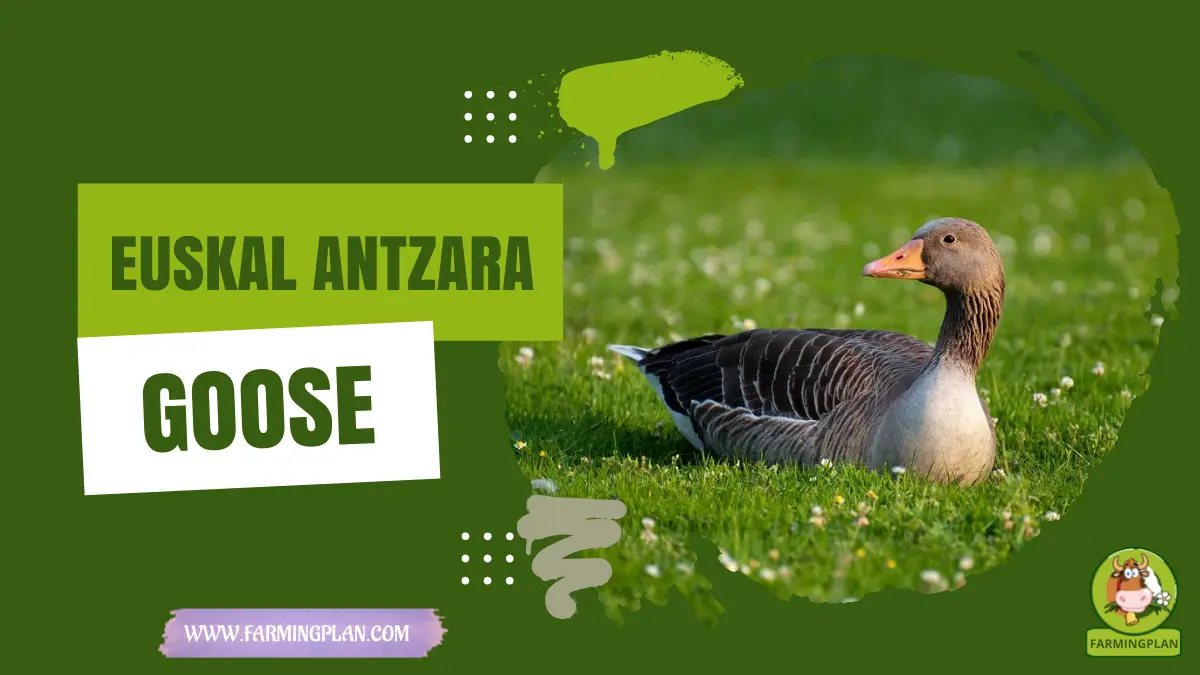
The morphology of the Euskal Antzara reflects its dual identity as a strong grazer and functional meat bird. The plumage pattern is predominantly pied or mantled (mantelada). The head, neck, and dorsal cape across the shoulders and back display a uniform, soft brownish-grey coloration, while the breast, belly, flanks, and underparts are immaculate snow-white. Early intervention at the first sign of lethargy protects overall Euskal Antzara Goose flock or herd health.
The head is strong, broad, and well-proportioned, carried proudly on a medium-long, gracefully curved neck. The bill is stout, straight, and orange in color, ending in a pale bean at the tip. The eyes are dark brown, surrounded by narrow orange or yellowish eyelids that reflect alertness. For additional husbandry benchmarks and feeding standards, explore our complete Faroese Goose care guide.
The body is voluminous, wide, and deep, with a well-rounded breast and a horizontal body posture that facilitates effortless pasture locomotion. The abdomen features a simple or double paunch (abdominal lobe) that remains well elevated above the ground. Ganders achieve mature weights between 15.5 and 19.8 lbs (7.0 to 9.0 kg), while mature geese weigh 13.2 to 17.6 lbs (6.0 to 8.0 kg). Structured culling and biosecurity protocols strengthen Euskal Antzara Goose genetic quality.
The shanks and large webbed feet are stout, powerful, and deep orange, built to navigate wet clay soils, slate outcroppings, and slippery hillsides without slipping or suffering joint fatigue.
4. Temperament, Flock Behavior & Guardian Instincts
Euskal Antzara geese exhibit a dignified, observant, and territorial temperament. While they show complete loyalty and trust toward their daily human caretakers, they remain deeply suspicious of strangers, predatory birds, foxes, and unfamiliar dogs. Maintaining clean feeders and sanitized equipment supports sustainable Euskal Antzara Goose care.
When an intruder enters the farm perimeter, ganders instantly sound resonant, trumpet-like honks while assuming an intimidating forward posture with outstretched necks. This natural alarm system alerts farm residents long before perimeter alarms or watchdogs respond, making them invaluable biological guardians for free-range poultry flocks. Consistent daily observation helps keepers spot early changes in Euskal Antzara Goose health and behavior.
Within the flock, social dynamics are harmonious and orderly. Ganders typically mate for life or manage harems of two to three geese with vigilant protective care, escorting females to prime grazing areas and standing guard while they rest or bathe.
5. Housing Systems, Space Requirements & Meadow Design
Having evolved in the high-precipitation climate of the Atlantic Pyrenees, adult Euskal Antzara geese are remarkably impervious to rain, fog, and cold damp conditions. Their dense underdown and oily contour plumage shed water effortlessly, requiring only basic, well-ventilated night shelters to protect them from nocturnal predators. Clean housing, fresh water, and balanced nutrition remain essential for Euskal Antzara Goose productivity.
A simple wooden shed or three-sided pole barn providing 8 to 10 square feet of dry, bedded floor space per bird is optimal. Floors should be bedded with clean wheat straw or wood shavings, refreshed frequently to absorb moisture. Fencing should be at least 36 to 42 inches in height, constructed of woven wire with tight bottom spacing to exclude foxes and badgers. Tracking feed intake and body condition supports long-term Euskal Antzara Goose performance.
Pasture is essential for health and economic performance. Allocate at least 150 to 200 square feet of productive green meadow per adult goose under rotational grazing management. Access to clean water troughs deep enough for birds to submerge their entire heads is necessary for eye health, nasal hygiene, and feather conditioning.
While swimming ponds are beneficial during the spring breeding season to promote comfortable copulation, small plastic stock tanks dumped and refilled daily serve well for everyday cleanliness. Following biosecurity best practices reduces disease risk in any Euskal Antzara Goose operation.
6. Nutritional Strategy, Forage Digestion & Grazing Management
The digestive anatomy of the Euskal Antzara goose is optimized for fibrous plant digestion. Equipped with a powerful muscular gizzard and extensive caeca containing cellulolytic bacteria, the breed can extract dense nutrition from pasture grasses that other poultry species cannot utilize.
From early spring through autumn, healthy pasture consisting of perennial ryegrass, white clover, meadow fescue, and dandelion can supply 80% to 90% of their total nutritional requirements. Their selective grazing habits allow them to clip tender grass blades while ignoring the fibrous woody stems and bark of fruit trees, making them ideal companions in cider apple orchards. Seasonal adjustments to shelter and diet keep Euskal Antzara Goose thriving year-round.
During the winter months and active spring breeding periods, pasture forage should be supplemented with 1/3 to 1/2 lb per bird daily of balanced grains (whole wheat, oats, cracked corn) or commercial waterfowl pellets containing 14% to 15% crude protein. Provide free-choice insoluble granite grit and crushed oyster shells to aid mechanical digestion and eggshell mineralization. Proper record-keeping makes breeding and culling decisions easier for Euskal Antzara Goose keepers.
Position clean, unfrozen drinking water adjacent to all dry feed hoppers, as geese must rinse their bills frequently while eating dry grain to avoid esophageal blockages.
7. Seasonal Breeding, Egg Laying & Gosling Brooding Protocols
Breeding activity in the Euskal Antzara commences in late winter as day lengths expand, typically beginning in February. Maintain breeding ratios of one active gander to two or three mature geese to ensure high egg fertility. Providing adequate space and ventilation prevents common stress issues in Euskal Antzara Goose.
The laying season extends from February to May. A mature goose produces between 25 and 40 large white eggs per year, each weighing 140 to 170 grams with smooth, dense shells. In traditional Basque cuisine, goose eggs are prized for their rich, velvety yolks and exceptional baking properties. Understanding breed-specific traits helps maximize Euskal Antzara Goose longevity and output.
Unlike commercial waterfowl strains that have lost maternal incubation traits, Euskal Antzara geese are dedicated, reliable broody mothers. After completing a clutch of 10 to 12 eggs in a straw-filled corner of the coop, the goose will sit faithfully for 28 to 30 days, rarely leaving the nest except for brief water and feeding breaks.
Goslings hatch vigorous and alert, covered in soft yellow down marked with grey patches on the crown and back. Keep goslings dry and warm under radiant heat for the first 10 days, providing unmedicated 20% protein waterfowl starter crumbs and clean, shallow water dishes that prevent accidental drowning. Routine preventive care saves time and lowers veterinary costs for Euskal Antzara Goose.
8. Traditional Roasting Meat Quality & Carcass Performance
The culinary prestige of the Euskal Antzara is celebrated in traditional Basque gastronomy. In the farmsteads of Euskadi, roasted goose was the crown of winter festival feasts, particularly during Christmas and Epiphany celebrations.
Pasture-raised young geese reach prime market roasting weights of 12 to 16 lbs (5.5 to 7.2 kg) between 20 and 26 weeks of age. Unlike heavy commercial geese that carry excessive abdominal fat pads, the active grazing lifestyle of the Euskal Antzara yields a well-proportioned, lean carcass with generous red breast meat and tender thighs. Matching forage or ration quality to life stage optimizes Euskal Antzara Goose growth.
Dressing yields average 68% to 72%. The rendered goose fat is prized as a culinary treasure, rich in oleic and linoleic fatty acids with a delicate flavor profile, used extensively in regional cooking for preserving meats and confits. Gradual dietary transitions protect digestive stability in Euskal Antzara Goose.
Down and body feathers collected during processing offer superior insulating loft, traditionally used to fill heirloom beddings and winter apparel across mountain farmsteads.
9. Preventative Healthcare, Parasite Control & Biosecurity
The Euskal Antzara is an extraordinarily hardy bird with natural resistance to most common poultry diseases. However, maintaining disciplined pasture sanitation and biosecurity protocols remains essential for flock longevity. Selecting healthy foundation stock is the cornerstone of successful Euskal Antzara Goose management.
Gapeworm (Cyathostoma bronchialis) and intestinal roundworms can affect pasture-grazed waterfowl. Implement rotational pasture resting every 3 to 4 weeks to allow parasite eggs to desiccate, administering veterinary-approved fenbendazole or flubendazole once in autumn and once in early spring prior to breeding. Good predator-proofing and dry bedding safeguard Euskal Antzara Goose comfort in harsh weather.
Provide deep water containers that allow geese to immerse their entire heads, which is critical for flushing dirt and feed residue from their eyes and nostrils to prevent conjunctivitis and sinusitis. Protect growing goslings from cold rains until their waterproof contour feathers emerge at 6 to 8 weeks.
Enforce biosecurity measures that prevent contact with wild migratory waterfowl to minimize exposure to Avian Influenza viruses, covering feed hoppers and keeping flock watering stations secure. Monitoring water quality and mineral balance directly benefits Euskal Antzara Goose vitality.
10. Economic Feasibility, Enterprise Budgets & Heritage Markets
The economics of raising Euskal Antzara geese are highly favorable for pasture-based smallholders due to low commercial feed dependencies. Because fresh forage constitutes the bulk of their diet during the growth cycle, production costs remain exceptionally modest.
A flock of 20 to 30 breeding geese producing 250 to 350 pasture-raised holiday roasting birds annually provides substantial seasonal farm income, particularly when marketed directly to high-end restaurants, farm-to-table culinary clubs, and ethnic holiday consumers who value authentic heritage breeds. Practical hands-on husbandry ensures consistent results when raising Euskal Antzara Goose.
Learn specialized waterfowl management in our goose farming guide, build optimal housing via our waterfowl housing guide, and master pasture rotations with our pasture management overview. Early intervention at the first sign of lethargy protects overall Euskal Antzara Goose flock or herd health.
11. Interactive Heritage Waterfowl Calculator
Estimate your required grazing acreage, seasonal gosling production, and festive meat harvest for Euskal Antzara geese using the interactive calculator below:
🦆 Euskal Antzara Goose Flock Feed & Water Intake Calculator
Estimate daily balanced feed (lbs), fresh drinking/rinsing water requirements (Gal), indoor shelter, and monthly 50-lb feed bags for your Euskal Antzara Goose flock.
12. Strategic Implementation Roadmap for Heritage Waterfowl Keepers
Establishing an authentic Euskal Antzara flock involves three progressive phases. In Phase 1, prepare securely fenced pasture paddocks, set up clean water stations, and construct a dry, predator-proof night shelter. Structured culling and biosecurity protocols strengthen Euskal Antzara Goose genetic quality.
In Phase 2, source certified purebred Euskal Antzara stock from registered conservation breeders affiliated with Euskal Abereak, verifying true pied feather markings and strong leg conformation. Brood goslings carefully and introduce green forage early. Maintaining clean feeders and sanitized equipment supports sustainable Euskal Antzara Goose care.
In Phase 3, deploy adult flocks into orchards and pastures for biological weed management, establish direct-to-consumer pre-orders for holiday roasting geese, and retain top maternal females to expand regional conservation breeding.
13. Frequently Asked Questions
What is the Euskal Antzara goose and where did it originate?
The Euskal Antzara is the traditional indigenous domestic goose of the Basque Country (Euskal Herria) in northern Spain and southwest France, historic for its grey-and-white mantled plumage, hardiness in damp Atlantic climates, and pasture grazing efficiency.
What does the plumage pattern of an Euskal Antzara look like?
The breed features a distinct pied or mantled pattern with a soft brownish-grey head, neck, and dorsal cape across the back, sharply contrasted against a pure snow-white chest, belly, flanks, and thighs, with bright orange beak and legs.
How many eggs do Euskal Antzara geese lay each year?
A mature Euskal Antzara goose produces between 25 and 40 large white eggs per year (weighing 140 to 170 grams) during the spring laying season from February through May, and makes a dedicated natural broody mother.
Can Euskal Antzara geese be used for orchard weed control?
Yes, they are strict pasture grazers that selectively consume tender grasses, clover, and dandelions while leaving mature fruit tree trunks and woody shrubs intact, making them ideal biological weeders in organic orchards and vineyards.
14. Conclusion & Next Steps for Sustainable Smallholders
The Euskal Antzara goose embodies the sustainable brilliance of traditional European farm heritage. Offering beautiful plumage, tireless meadow weed suppression, vigilant farm security, and succulent table meat, it is a magnificent addition to diversified agricultural homesteads. Consistent daily observation helps keepers spot early changes in Euskal Antzara Goose health and behavior.
To deepen your broader knowledge of commercial livestock and explore integrated animal management, visit our complete guide on commercial livestock management and invite these noble Basque sentinels onto your land.
📚Agricultural Reference & Scientific Citations
Standards and physiological data referenced in this guide comply with American Poultry Association (APA), The Livestock Conservancy, and USDA APHIS Avian Biosecurity Standards.