

⚡ Kholmogory Goose at a Glance: Key Specifications & Benchmarks
| Scientific Name | Anser anser domesticus (Russian Colossal Table Subtype) |
| Russian Breed Name | Kholmogorsky Gus (Холмогорский гусь) |
| Breed Origin | Kholmogory district, Arkhangelsk / Central Russia |
| Average Mature Gander Weight | 20.0 to 26.5 lbs (9.0 to 12.0 kg) |
| Average Mature Goose Weight | 16.5 to 20.0 lbs (7.5 to 9.0 kg) |
| Primary Production Purpose | Heavy exhibition showing, colossal roasting meat, luxury goose down |
| Distinctive Head Features | Massive basal skull knob on forehead and prominent throat dewlap |
| Average Lifespan | 18 to 25 years under structured waterfowl biosecurity and nutrition |
The Kholmogory goose, known natively as the Kholmogorsky Gus, is widely regarded as one of the oldest, largest, and most imposing heritage waterfowl breeds in global poultry history. Dating back to the eighteenth century in the central and northern regions of European Russia, this colossal domestic goose was bred by crossing native Russian landrace geese with imported Chinese knobbed geese and heavy Tula fighting stock. The result is an extraordinary waterfowl titan that combines prehistoric grandeur with tranquil, majestic barnyard composure. Monitoring water quality and mineral balance directly benefits Kholmogory Goose vitality.
Homesteaders exploring our comprehensive goose farming and waterfowl care resources will discover in the Kholmogory a truly spectacular exhibition and utility bird. Their physical presence is defined by a massive, fleshy protuberance (knob) on the forehead, a deep, pendulous throat dewlap hanging beneath the lower bill, and a deep double keel that sweeps low toward the ground.
Beyond dramatic physical ornamentation, the Kholmogory goose possesses extreme cold hardiness, having evolved in the harsh northern continental climate of Russia. They endure sub-zero blizzards with effortless composure, requiring only dry straw bedding and clean water to stay healthy throughout northern winters. Practical hands-on husbandry ensures consistent results when raising Kholmogory Goose.
Their calm, dignified disposition, long productive lifespan (often living over twenty years), and colossal roasting carcass make them a prestigious centerpiece for heritage poultry homesteads and exhibition aviaries.
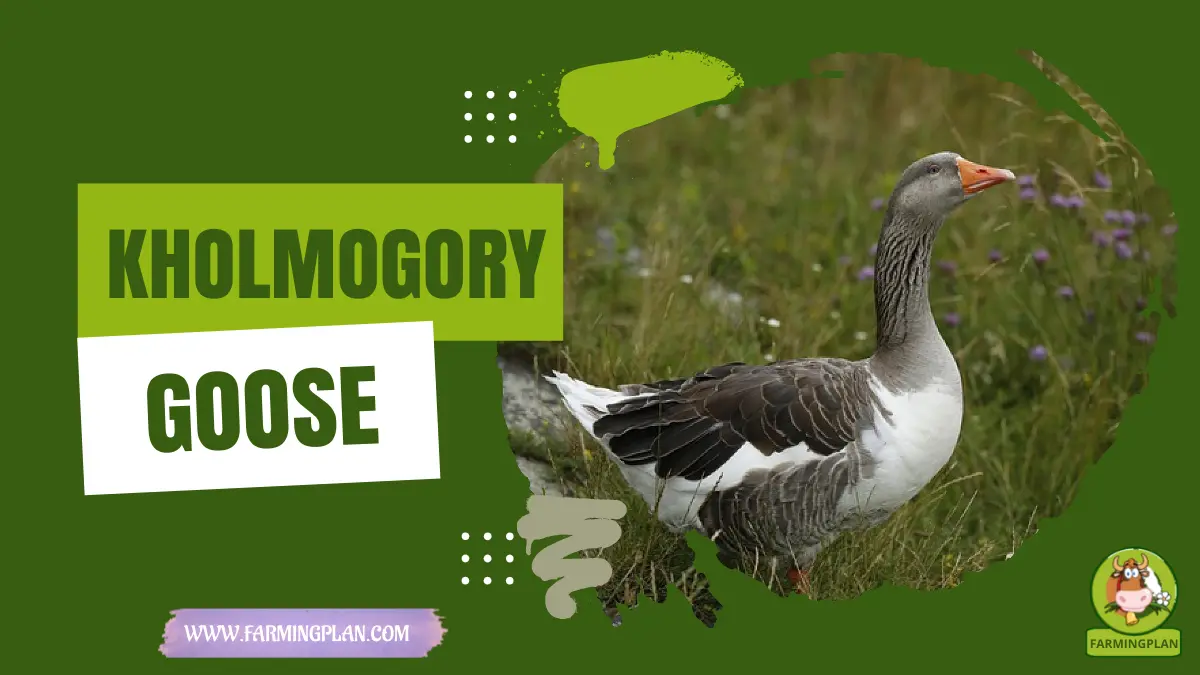
Physical Characteristics & Breed Standards
The Kholmogory goose presents a massive, broad, and deeply keeled body silhouette that conveys immense power and physical weight. The body is carried horizontally or slightly tilted upward, supported by short, thick-boned, widely spaced orange legs. Early intervention at the first sign of lethargy protects overall Kholmogory Goose flock or herd health.
The head is exceptionally large and broad, dominated by a large, rounded horn-like knob that rises prominently from the base of the skull at the forehead. Directly beneath the lower bill hangs a deep, fleshy throat dewlap (the ‘purse’) that extends down the upper throat.
Conformation Standards & Anatomical Structure
The bill is stout, curved downward, and bright orange-yellow, blending into the basal knob. The neck is long, thick, and carried proudly erect, flowing into colossal shoulders and a broad, deep breast.
The abdomen features a well-developed double paunch that hangs low between the legs, almost grazing the pasture turf. Wings are broad, powerful, and carried flat against the flanks, while the tail is short, wide, and carried horizontally. Structured culling and biosecurity protocols strengthen Kholmogory Goose genetic quality.
Size, Weight Benchmarks & Color Variations
Mature Kholmogory ganders reach colossal live weights of 20.0 to 26.5 lbs (9.0 to 12.0 kg), while mature geese weigh between 16.5 and 20.0 lbs (7.5 to 9.0 kg). Specimens in prime exhibition condition have been documented exceeding 28 pounds.
Plumage coloration occurs in three standard varieties: pure snow white, solid grey, and piebald (grey and white). Feathers are remarkably dense, soft, and lined with thick underdown that provides impermeable insulation against arctic cold. Maintaining clean feeders and sanitized equipment supports sustainable Kholmogory Goose care.
⚡ Kholmogory Goose Performance & Production Matrix
| Waterfowl Benchmark | Kholmogory Goose Standard | Commercial Embden Comparison | Exhibition Homestead Value |
|---|---|---|---|
| Mature Gander Mass | 20.0 – 26.5 lbs (9 – 12 kg) | 18.0 – 22.0 lbs | Colossal body weight and massive table carcass yield |
| Head Ornamentation | Basal forehead knob & dewlap | Plain smooth head | Prehistoric exhibition appeal commanding top breeding prices |
| Winter Hardiness Threshold | Extreme (tolerates -30°F) | Moderate cold hardiness | Thrives outdoors in freezing northern winter climates |
| Lifespan Longevity | 18 – 25 years | 10 – 15 years | Generations of reliable breeding and farmstead companionship |
| Temperament Rating | Dignified, calm, majestic | Active / noisy | Gentle giants that interact safely with family smallholders |
Breed History, Heritage & North American Development
The Kholmogory goose was first documented in Russian agricultural literature in the late 1700s, associated with the Kholmogory region in the Arkhangelsk governorate and surrounding central provinces. Russian nobles and peasant breeders selected for immense size, distinctive head knobs, and winter hardiness.
Throughout the nineteenth and twentieth centuries, the breed was celebrated at Russian agricultural expositions, recognized as the premier heavy domestic goose of the Russian Empire. Aristocratic breeders maintained pure bloodlines, prioritizing massive cranial knobs and deep throat purses.
Following World War II, dedicated state research farms in Vladimir and Moscow preserved pure nucleus flocks, ensuring that the Kholmogory’s unique genetics were safeguarded against commercial hybrid dilution. Consistent daily observation helps keepers spot early changes in Kholmogory Goose health and behavior.
Today, the Kholmogory goose is recognized by international waterfowl organizations, commanding high admiration from heritage poultry breeders in Europe, Asia, and North America who revere its ancient majesty.
Housing, Shelter Dimensions & Winter Hardiness
Housing Kholmogory geese requires providing clean, dry, and spacious ground shelters. Because they are heavy, colossal birds, high perches and narrow ramps are dangerous and must never be used. Clean housing, fresh water, and balanced nutrition remain essential for Kholmogory Goose productivity.
Provide a low, well-ventilated pole barn or three-sided shed offering at least 14 to 18 square feet of covered space per adult bird. The shelter must be deeply bedded with clean wheat straw or wood shavings to cushion their heavy breasts and prevent foot abrasions.
While Kholmogory geese can mate on land, providing access to a clean farm pond, swimming pool, or rubber stock tank is highly recommended. Water buoyancy significantly aids heavy ganders during mating, resulting in higher egg fertility.
Spatial Density & Enclosure Engineering
Pasture fencing requires sturdy 36-to-48-inch woven field wire or heavy poultry netting. Due to their immense weight, Kholmogory geese cannot fly, but fences must be predator-proof to exclude foxes, coyotes, and stray dogs. Tracking feed intake and body condition supports long-term Kholmogory Goose performance.
Pasture allocation averages 10 to 15 geese per acre on quality pasture. Provide shaded areas or open canopies to keep these heavy birds cool during hot summer afternoons.
Ensure water stations are placed at least twenty feet away from primary straw bedding areas so night quarters remain dry. Regularly rotating foraging paddocks prevents excessive soil compaction and allows perennial pasture grasses to recover vigorously. Following biosecurity best practices reduces disease risk in any Kholmogory Goose operation.
Nutritional Requirements, Daily Rations & Feeding Protocols
Due to their colossal frame size, Kholmogory geese require generous pasture grazing supplemented with quality waterfowl pellets and whole grains. Inadequate nutrition during the gosling stage leads to bone deformities and angel wing.
Reviewing waterfowl nutrition in our Toulouse goose care and feeding guide shows how heavy breeds manage protein and calcium. Clean grass pasture provides vital vitamins and natural digestive fiber.
Crude Protein Benchmarks Across Life Stages
During the spring laying season, provide adult geese with a 16% crude protein (CP) waterfowl breeder pellet free-choice, along with crushed oyster shell to ensure strong eggshells. During summer grazing, provide an evening feed of whole wheat, oats, and cracked corn (1/3 lb per bird daily). Seasonal adjustments to shelter and diet keep Kholmogory Goose thriving year-round.
Young goslings require a 20% crude protein non-medicated waterfowl starter crumb for the first three weeks, transitioning to a 16% grower pellet with abundant fresh tender grass.
Ensure continuous access to clean, fresh water in heavy, non-tip rubber tubs. An adult Kangan or Kholmogory goose drinks up to a half-gallon of water daily, using water to keep bills clean. Proper record-keeping makes breeding and culling decisions easier for Kholmogory Goose keepers.
Health Management, Common Diseases & Biosecurity Standards
Kholmogory geese are remarkably robust birds with powerful immune constitutions, but their heavy mass creates specific husbandry considerations. Floor dampness and rough surfaces can lead to bumblefoot (pododermatitis).
Flock biosecurity should adhere to the USDA Animal and Plant Health Inspection Service (APHIS) Waterfowl Health Guidelines to prevent avian influenza.
Quarantine newly introduced birds for at least 30 days in an isolated pen before integrating them into the resident flock. Providing adequate space and ventilation prevents common stress issues in Kholmogory Goose.
Biosecurity Protocols & Veterinary Defenses
Scrub water troughs weekly to eliminate algae and prevent bacterial growth. Rotate pastures every two weeks to prevent heavy gizzard worm (*Amidostomum anseris*) burdens.
Inspect webbed feet periodically for bumblefoot caused by rough gravel or thorns, treating early with antiseptic soaks and bandaging. Understanding breed-specific traits helps maximize Kholmogory Goose longevity and output.
Administer scheduled oral deworming during autumn and early spring, testing fecal samples periodically to monitor parasite loads. Regular inspections confirm flight feathers and dense down remain clean of waterfowl lice and quill mites.
Breeding Management, Large Eggs & Gosling Rearing
Kholmogory ganders are best mated in small harems of one gander to two geese to ensure high mating fertility. Breeding begins in late winter (February to March) as daylight increases.
Geese lay 25 to 40 colossal white eggs during spring, averaging 180 to 220 grams each. While some geese go broody, artificial incubation is widely practiced due to the risk of heavy geese accidentally crushing eggs. Routine preventive care saves time and lowers veterinary costs for Kholmogory Goose.
Incubate eggs at 99.5°F (37.5°C) and 55% humidity for 29 to 31 days, cooling and misting eggs daily from day 10 onward. Goslings hatch strong, feathering out rapidly under heat lamps, mirroring incubation protocols in our African goose breeding guide.
US Ownership Budget & Annual Maintenance Costs
Acquiring and maintaining a breeding pair of rare Kholmogory geese represents a premium investment in world-class heritage waterfowl. Below is an itemized annual budget in US dollars for a breeding pair. Matching forage or ration quality to life stage optimizes Kholmogory Goose growth.
💰 Estimated Annual Budget & Maintenance Costs (USD)
| Budget Category | Item Description & Scope | Initial Capital Outlay | Annual Recurring Expense |
|---|---|---|---|
| Breeding Pair (1 Gander, 1 Goose) | Pedigreed Kholmogory breeding stock from registered lines | $350 – $650 | Initial investment |
| Winter Grain & Breeder Pellets | Whole wheat, oats, corn, and breeder pellets (500 lbs) | $110 – $170 | $110 – $170 annually |
| Heavy Water Troughs & Ground Shelter | Rubber stock tanks, float valve, and open skid shelter | $130 – $240 | $30 – $50 maintenance |
| Pasture Fencing & Electric Netting | Heavy field wire or portable electric netting | $150 – $300 | $30 – $50 maintenance |
| Oyster Shell, Grit & Waterfowl First Aid | Calcium shell, gizzard grit, and electrolytes | $25 – $45 | $25 – $45 annually |
🦆 Kholmogory Goose Flock Feed & Water Intake Calculator
Estimate daily balanced feed (lbs), fresh drinking/rinsing water requirements (Gal), indoor shelter, and monthly 50-lb feed bags for your Kholmogory Goose flock.
Frequently Asked Questions (FAQ)
Why do Kholmogory geese have a knob on their head?
The large forehead knob is an ancient morphological trait inherited from historical crosses with Chinese swan geese, developing into a prominent rounded horn as birds mature.
How heavy does a Kholmogory goose get?
Mature Kholmogory ganders weigh between 20.0 and 26.5 lbs (9 to 12 kg), while mature geese weigh between 16.5 and 20.0 lbs (7.5 to 9 kg), making them one of the heaviest geese in the world.
Can Kholmogory geese live in cold climates?
Yes, developed in Central and Northern Russia, they possess dense down and thick skin that allows them to thrive outdoors in sub-zero weather down to -30°F with simple dry bedding.
Do Kholmogory geese need swimming water to breed?
While they can mate on land, providing access to a clean pond or swimming tank significantly improves mating fertility for these heavy birds by providing water buoyancy.
How long do Kholmogory geese live?
With proper nutrition, predator protection, and clean water, Kholmogory geese are long-lived birds that frequently live between 18 and 25 years.
Expert Verdict & Next Steps for Colossal Waterfowl Fanciers
The Kholmogory goose stands at the pinnacle of domestic waterfowl majesty, combining colossal body mass, magnificent cranial knobs and dewlaps, extreme winter hardiness, and gentle, dignified demeanor. For heritage poultry breeders seeking an awe-inspiring centerpiece for their homestead, this Russian titan delivers unmatched prestige.
Before acquiring stock, erect predator-proof field fencing, install heavy rubber water tubs or ponds, and designate clean pasture paddocks. Comparing flock dynamics with other classic heavy breeds like the Embden goose care guide will help you build a profitable, sustainable waterfowl flock. If you are balancing utility output and herd resilience, take a look at our Han Tah Pra Goose reference guide.
📚Agricultural Reference & Scientific Citations
Standards and physiological data referenced in this guide comply with American Poultry Association (APA), The Livestock Conservancy, and USDA APHIS Avian Biosecurity Standards.


