

⚡ Egyptian Mau Cat at a Glance: Key Specifications & Benchmarks
| Scientific Classification | Felis catus (Only naturally spotted domestic feline breed) |
| Ancient Heritage & Roots | Nile River Valley, Egypt (Depicted in pharaonic tomb murals 3,000+ years ago) |
| Adult Body Weight | Males: 9 to 14 lbs (4.1 to 6.4 kg); Females: 7 to 10 lbs (3.2 to 4.5 kg) |
| Signature Anatomy | Cheetah-like primordial belly flap enabling sprint speeds up to 30 mph (48 km/h) |
| Coat Architecture | Medium-length, lustrous spotted coat with striking mascara facial markings |
| Eye Color Requirement | Distinctive “gooseberry green” eyes set in an alert, worried expression |
| Average Lifespan | 13 to 16 years with attentive preventative dental and renal healthcare |
| Homestead Vermin Aptitude | Lightning-fast apex hunter of rodents, snakes, and fast-flying insects |
The Egyptian Mau stands as a breathtaking living artifact of ancient pharaonic history. As the only naturally spotted domestic cat breed in the world—its striking spots developed through natural selection rather than human hybridization—the Mau is believed to descend directly from the sacred felines worshipped along the fertile banks of the Nile River over 3,000 years ago. Structured culling and biosecurity protocols strengthen Egyptian Mau Cat genetic quality.
For homesteaders and rural companion animal keepers exploring our feline breed and homestead cat care guides, the Egyptian Mau offers an extraordinary combination of fierce predatory agility, high intelligence, and deeply devoted loyalty. They are the fastest domestic felines on earth, capable of reaching sprint bursts of 30 miles per hour. Maintaining clean feeders and sanitized equipment supports sustainable Egyptian Mau Cat care.
This astonishing sprint speed is facilitated by a unique anatomical trait: a loose flap of skin extending from the flank to the hind knee, identical to the primordial pouch found in wild cheetahs. This flap allows their hind legs to stretch far forward beneath the abdomen, generating incredible stride length and leaping power. Consistent daily observation helps keepers spot early changes in Egyptian Mau Cat health and behavior.
However, rural property owners must appreciate their sensitive, independent nature. While fiercely loving toward their chosen family, Maus are cautious around strangers and sensitive to sudden loud noises. They thrive in attentive farmhouses where their keen hunting drive finds safe, enriching outlets. Clean housing, fresh water, and balanced nutrition remain essential for Egyptian Mau Cat productivity.
Physical Characteristics & Breed Standards
The Cat Fanciers Association (CFA) standard depicts a cat of graceful, athletic substance, with a muscular, medium-long body that balances slender oriental elegance with solid power. Hind legs are noticeably longer than forelegs, giving the Mau a gentle forward stance built for rapid acceleration. Tracking feed intake and body condition supports long-term Egyptian Mau Cat performance.
The Natural Spotted Pattern & Mascara Markings
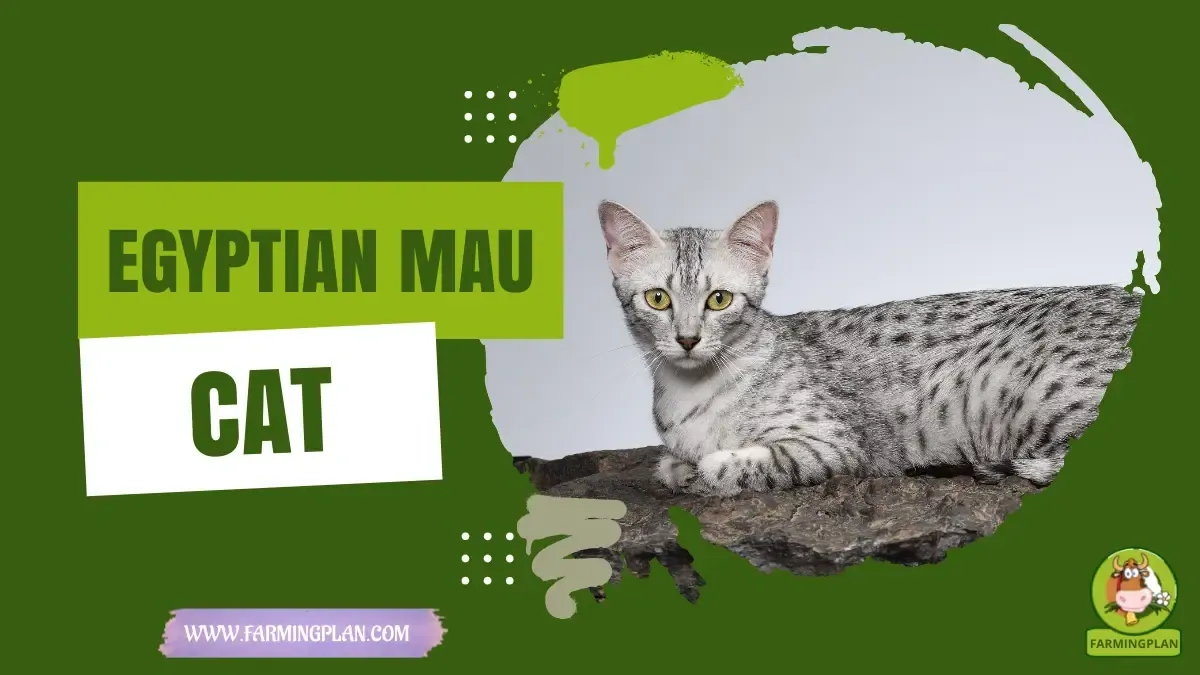
The spots are randomly distributed across the torso, varying in shape and size, with dark pigment penetrating to the skin. The forehead displays the iconic “scarab beetle” or “M” marking. The cheeks feature dramatic “mascara lines” tracing back from the eyes. The eyes are large, almond-shaped, and must exhibit luminous “gooseberry green” coloration. Following biosecurity best practices reduces disease risk in any Egyptian Mau Cat operation.
The coat is medium in length with a lustrous sheen. In the silver variety, the texture is dense and resilient; in the bronze and smoke varieties, it is silky and fine. Recognized colors include Silver (charcoal spots on pale silver), Bronze (dark brown to black spots on warm bronze), and Smoke (jet black spots on smoky charcoal ground). Seasonal adjustments to shelter and diet keep Egyptian Mau Cat thriving year-round.
⚡ Egyptian Mau Cat Performance & Production Matrix
| Color Variety | Background Ground Tone | Spot Pigment Density | Homestead Hunting & Agility Drive |
|---|---|---|---|
| Silver Spotted | Pale silvery-white with charcoal tipping | Dense black spots with sharp contrast | Elite 30 mph sprinter; rapid vermin eradication |
| Bronze Spotted | Warm coppery bronze shading to tawny | Rich dark brown to pitch black spots | Tenacious tracking of rodents & snakes |
| Smoke Spotted | Silvery undercoat shading to slate smoke | Jet black spots visible under bright light | Stealthy night hunter of insects & mice |
| Solid Black (Non-Show) | Solid ebony (ghost spots in sunlight) | Carries authentic Mau speed genetics | Affectionate companion; excellent mouser |
Breed History, Heritage & North American Development
Ancient Egyptian tomb frescoes at Thebes and Beni Hasan dating to 1400 BC clearly depict spotted felines retrieving waterfowl from papyrus marshes and wearing ornamental collars. The word “Mau” is the ancient Egyptian word for cat, reflecting both its sacred status and its role as the living representation of the sun god Ra. Proper record-keeping makes breeding and culling decisions easier for Egyptian Mau Cat keepers.
The modern breed was rescued and introduced to the Western world by Russian exiled Princess Nathalie Troubetskoy. While living in Rome in the early 1950s, she acquired spotted kittens originating from Cairo. Troubetskoy emigrated to the United States in 1956, bringing three foundation Maus—Baba, Jojo, and Liza—and establishing the celebrated Fatima Cattery. Providing adequate space and ventilation prevents common stress issues in Egyptian Mau Cat.
The Cat Fanciers Association granted championship status to the Egyptian Mau in 1977. In the 1980s, breeders imported additional wild-sourced cats from Egypt and India to broaden the gene pool, ensuring genetic health and preserving authentic ancestral vigor.
Today, the Egyptian Mau is celebrated globally for its authentic wild appearance, extraordinary sprint velocity, and sweet domestic loyalty. Homesteaders admire how these historic felines maintain primitive hunting acumen. Understanding breed-specific traits helps maximize Egyptian Mau Cat longevity and output.
Housing, Living Environment & Climate Adaptation
Originating in the warm, arid climate of North Africa, Egyptian Maus have natural heat tolerance and are sensitive to damp, freezing cold. They must reside in warm, draft-free farmhouses maintained at 70°F to 75°F. Routine preventive care saves time and lowers veterinary costs for Egyptian Mau Cat.
Speed Runways & Vertical Climbing Towers
Egyptian Maus require space to run. With their 30 mph sprint capability, a cramped apartment leads to frustration. Long farmhouse hallways, open floor plans, and sturdy vertical cat towers reaching 7 to 8 feet allow them to burn off boundless energy. Matching forage or ration quality to life stage optimizes Egyptian Mau Cat growth.
Maus are fascinated by running water. They will regularly dip their front paws into water bowls, paddle in shallow sinks, and observe running faucets with intense focus. Ensure outdoor livestock water tanks are securely covered so an adventurous cat does not accidentally fall in. Gradual dietary transitions protect digestive stability in Egyptian Mau Cat.
Outdoor access should remain strictly restricted to enclosed predator-proof catios built with heavy wire mesh. An Egyptian Mau allowed to roam free can easily chase wildlife onto roads or fall victim to coyotes. Selecting healthy foundation stock is the cornerstone of successful Egyptian Mau Cat management.
Nutritional Requirements, Daily Rations & Feeding Protocols
Maintaining the explosive sprint musculature and glossy spotted coat of the Egyptian Mau requires an animal-protein-dense feeding regimen. Because they maintain high metabolic burn rates, their diet must emphasize bioavailable meat proteins. Good predator-proofing and dry bedding safeguard Egyptian Mau Cat comfort in harsh weather.
High-Protein Carnivore Rations & Hydration
Feed adult Egyptian Maus a premium carnivore diet supplying 38% to 45% crude protein and 16% to 20% crude fat on a dry matter basis. High-quality poultry and rabbit proteins provide the amino acids essential for lean muscular development. For broader feline dietary principles, review our exotic feline nutritional management guide. Monitoring water quality and mineral balance directly benefits Egyptian Mau Cat vitality.
Caloric intake should range between 200 and 260 kcal daily for active adults. Divide daily food into two or three measured meals rather than leaving open food bowls out. Wet canned food should comprise at least half the daily intake to support kidney function and urinary health. Practical hands-on husbandry ensures consistent results when raising Egyptian Mau Cat.
Provide circulating water fountains to encourage frequent hydration. Supplemental dietary moisture helps prevent urinary crystals and supports optimal renal health. Early intervention at the first sign of lethargy protects overall Egyptian Mau Cat flock or herd health.
Health Management, Genetic Screening & Anesthesia Sensitivity
The Egyptian Mau is an inherently hearty, sound breed with high genetic vigor, but specific physiological sensitivities require veterinary awareness.
Anesthetic Sensitivity & Pyruvate Kinase Deficiency
Veterinarians should note that Egyptian Maus can be unusually sensitive to anesthetics and sedatives. Dosages should be calculated carefully based on lean body mass rather than gross weight. Pyruvate Kinase Deficiency (PK-Def) and Progressive Retinal Atrophy (PRA) must be screened via DNA testing to ensure clean breeding stock. Structured culling and biosecurity protocols strengthen Egyptian Mau Cat genetic quality.
Dental health requires vigilance, as domestic felines can develop tartar accumulation and periodontal inflammation. Schedule regular dental checkups and practice home brushing. Review official health protocols via the American Veterinary Medical Association (AVMA) Feline Clinical Guidelines. Maintaining clean feeders and sanitized equipment supports sustainable Egyptian Mau Cat care.
Grooming requires minimal effort. A gentle brushing once or twice weekly with a soft bristle brush or rubber mitt keeps the coat glossy and free of loose hairs. Maintain monthly veterinarian-approved flea and heartworm preventatives. Consistent daily observation helps keepers spot early changes in Egyptian Mau Cat health and behavior.
Breeding Management, Reproduction & Gestation Length
Egyptian Mau queens are attentive, protective mothers who handle delivery smoothly. Queens typically mature between 8 and 12 months, with maiden breedings best scheduled after 12 months of age. Clean housing, fresh water, and balanced nutrition remain essential for Egyptian Mau Cat productivity.
Extended Gestation & Kitten Development
A fascinating biological quirk of the Egyptian Mau is their unusually long gestation period. While standard felines gestate for 63 to 65 days, Egyptian Mau queens frequently gestate for 68 to 72 days. Veterinarians unfamiliar with the breed must avoid premature Cesarean interventions. Tracking feed intake and body condition supports long-term Egyptian Mau Cat performance.
Litters average 4 to 6 vigorous kittens born with distinct spots. Eye color transitions from pale blue at birth to amber around 8 weeks, with true “gooseberry green” developing between 4 and 18 months of age. For comparative reproductive care, consult our Somali cat breeding and care guide. Following biosecurity best practices reduces disease risk in any Egyptian Mau Cat operation.
Wean onto high-protein growth wet food at 5 weeks. Kittens should remain with the queen until at least 12 to 14 weeks of age to ensure full social confidence and complete core vaccinations before rehoming. Seasonal adjustments to shelter and diet keep Egyptian Mau Cat thriving year-round.
US Ownership Budget & Annual Maintenance Costs
Budgeting for a pedigree Egyptian Mau involves initial kitten acquisition from certified catteries, premium nutrition, regular veterinary wellness checkups, and enriching cat furniture. Below is an itemized annual budget forecast. Proper record-keeping makes breeding and culling decisions easier for Egyptian Mau Cat keepers.
⚡ Estimated Annual Budget & Maintenance Costs (USD)
| Expense Category | Estimated Annual Cost Range (USD) | Cost Management Strategy |
|---|---|---|
| Kitten Purchase / Registered Line | $1,200.00 – $2,400.00 (One-time) | Source from CFA/TICA catteries providing PK-Def DNA clear test results |
| Premium Carnivore Nutrition | $450.00 – $720.00 annual | Buy commercial cases of quality meat-first wet rations directly from wholesalers |
| Veterinary Care & Preventatives | $280.00 – $550.00 annual | Maintain scheduled annual wellness visits and practice regular home dental hygiene |
| Cat Furniture, Catio & Bedding | $180.00 – $380.00 annual | Build sturdy timber climbing shelves; provide cozy plush fleece beds |
| Grooming Supplies & Litter | $100.00 – $180.00 annual | Single coat requires only a soft brush; buy natural unscented litter in bulk |
🐈 Egyptian Mau Cat Daily Nutrition & Care Calculator
Calculate daily metabolizable calories (kcal), dry/wet food portions, clean water intake (fl oz), litter box minimums, and monthly care cost for your Egyptian Mau Cat.
Frequently Asked Questions (FAQ)
How fast can an Egyptian Mau run?
The Egyptian Mau is the fastest domestic cat breed, capable of sprinting up to 30 miles per hour (48 km/h). Their extreme speed is enabled by long hind legs and a loose primordial flap of skin extending from flank to hind knee that permits massive stride extension.
Are Egyptian Mau spots natural or man-made?
The Egyptian Mau is the only naturally spotted domestic cat breed. Unlike Bengal or Savannah cats, which were created by outcrossing domestic cats with wild felines, the Mau’s spots developed naturally through thousands of years of evolution in North Africa.
What color should an Egyptian Mau’s eyes be?
The breed standard strictly calls for ‘gooseberry green’ eyes. While kittens are born with blue eyes that transition to amber around two months of age, the true vivid green color develops gradually between 4 and 18 months of age.
Do Egyptian Mau cats like water?
Yes, many Egyptian Maus display a strong fascination with water. They often dip their paws into water dishes, play in bathroom sinks, and watch running faucets intently, reflecting adaptations from their ancestral origins along the Nile River.
What is the average lifespan of an Egyptian Mau?
With appropriate high-protein nutrition, routine dental cleanings, and protected indoor living, the Egyptian Mau enjoys an average lifespan of 13 to 16 years, retaining an energetic and playful spirit well into their senior years.
Expert Verdict & Next Steps
The Egyptian Mau represents an extraordinary synthesis of ancient pharaonic majesty, cheetah-like sprint velocity, and tender companion devotion. For rural homesteaders seeking an active, highly intelligent cat that will protect the farmhouse from pests while offering fierce affection, the Mau is an unmatched choice. Providing adequate space and ventilation prevents common stress issues in Egyptian Mau Cat.
Before bringing a kitten home, connect with a reputable CFA- or TICA-registered cattery that provides written health guarantees and PK-Def DNA clearances. Prepare vertical climbing runways and rich carnivore rations. To explore additional naturally athletic felines, review our guide on the Somali fox-like companion cat.
📚Agricultural Reference & Scientific Citations
Standards and physiological data referenced in this guide comply with USDA Animal and Plant Health Inspection Service (APHIS), American Veterinary Medical Association (AVMA), and the FAO Domestic Animal Diversity Information System.


