

⚡ Champagne d’Argent Rabbit at a Glance: Key Specifications & Benchmarks
| Scientific Classification | Oryctolagus cuniculus (Heritage Commercial Meat & Fur Rabbit) |
| Breed Origin & Heritage | Champagne province of France; documented since the early 17th century |
| Mature Senior Buck Weight | 9.0 to 11.0 lbs (4.1 to 5.0 kg) |
| Mature Senior Doe Weight | 9.5 to 12.0 lbs (4.3 to 5.4 kg) |
| ARBA Body Conformation Type | Commercial body type with full shoulders, deep loin, and rounded hindquarters |
| Primary Homestead Function | Commercial fryers, high-value silver pelts, exhibition breeding stock |
| Dressing Percentage Range | 58% to 62% clean dressed carcass weight at 10 to 12 weeks |
| Average Expected Lifespan | 7 to 10 years under sound nutritional and hutch management |
The Champagne d’Argent rabbit is one of the oldest and most celebrated heritage domestic rabbit breeds in agricultural history. Originating in the Champagne province of northeast France during the early seventeenth century, this distinguished breed was refined by French rabbit farmers as a dual-purpose meat and luxury fur animal prized across European gourmet markets. Gradual dietary transitions protect digestive stability in Champagne d'Argent Rabbit.
Characterized by a striking silvered coat that French breeders describe as the shade of “skimmed milk over a dark surface,” the Champagne d’Argent combines commercial meat production efficiency with an exceptionally docile, calm temperament. In our dedicated homestead meat rabbit guides, small-scale producers recognize this heritage breed as an ideal foundation for backyard meat sustainability. Selecting healthy foundation stock is the cornerstone of successful Champagne d'Argent Rabbit management.
Unlike modern hyper-selected hybrid meat rabbits that frequently suffer from high stress levels and nesting difficulties, Champagne d’Argent does are renowned for their exceptional mothering abilities, abundant milk yields, and calm handling in nesting boxes. They consistently kindle large litters of vigorous kits that grow rapidly on forage and standard grain pellets. Good predator-proofing and dry bedding safeguard Champagne d'Argent Rabbit comfort in harsh weather.
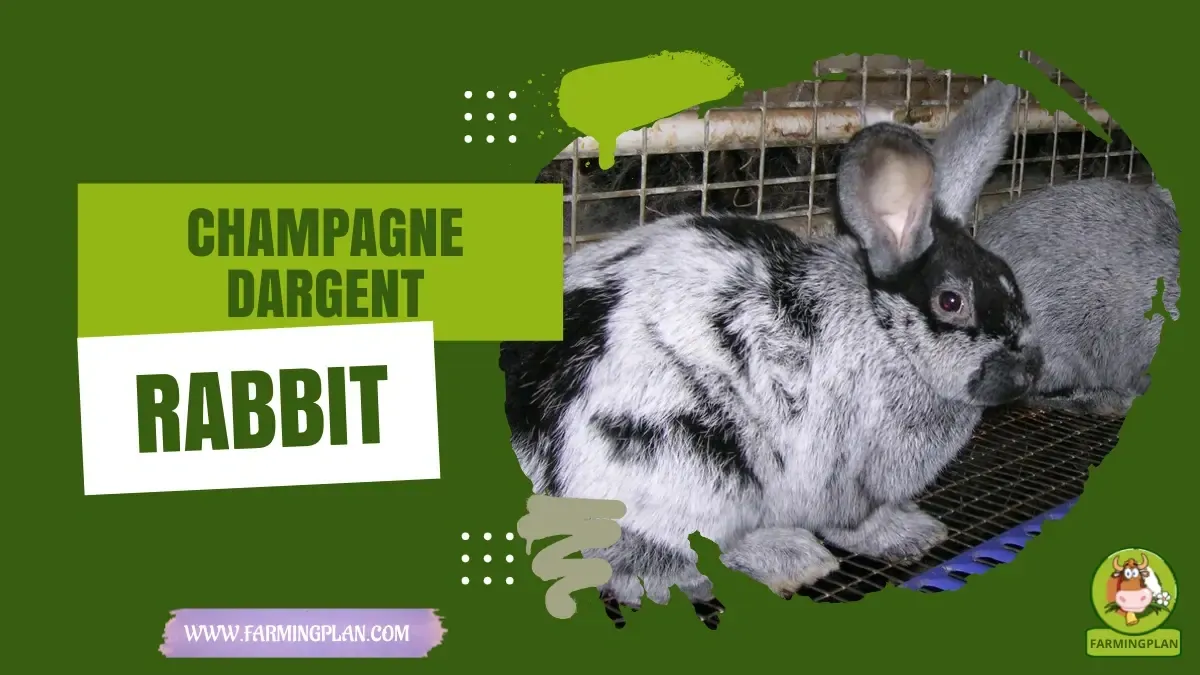
A fascinating biological feature of the breed is that kits are born completely solid black. The signature silver hairs emerge gradually between 6 and 12 weeks of age, finishing into an unbroken, uniform silver mantle as the rabbit reaches reproductive maturity around six months. Monitoring water quality and mineral balance directly benefits Champagne d'Argent Rabbit vitality.
Physical Characteristics & ARBA Breed Standards
The American Rabbit Breeders Association (ARBA) classifies the Champagne d’Argent as a commercial body type breed. Standard judging criteria reward compact muscularity, deep loins, well-filled hindquarters, and a uniform silvering distribution that covers the body from head to hocks. Practical hands-on husbandry ensures consistent results when raising Champagne d'Argent Rabbit.
Silvering Genetics, Flyback Fur & Slate Undercolor
The breed’s unique coloration is controlled by the recessive silvering gene (si). When fully developed, the coat consists of dense, silky flyback fur approximately one inch in length. An ideal pelt exhibits dark slate-blue undercolor next to the skin, interspersed evenly with silver-white guard hairs that impart a luminous metallic sheen.
The head is strong and medium-length, held alert on well-fleshed shoulders. Ears are sturdy, carried erect in a narrow V-shape, and measure 4.5 to 5 inches. Does feature a modest, neatly formed dewlap that provides soft nesting fur during seasonal kindling. Early intervention at the first sign of lethargy protects overall Champagne d'Argent Rabbit flock or herd health.
Bone density is substantial without being coarse, supporting high meat-to-bone yield ratios. Senior does outweigh senior bucks slightly, averaging 10.5 pounds compared to 10 pounds for mature males, making them one of the heaviest commercial silver breeds recognized in North America. Structured culling and biosecurity protocols strengthen Champagne d'Argent Rabbit genetic quality.
⚡ Heritage Commercial Meat Rabbits: Performance Comparison
| Production Parameter | Champagne d’Argent | New Zealand White | Californian |
|---|---|---|---|
| Senior Weight Range | 9.0 to 12.0 lbs (4.1 to 5.4 kg) | 9.0 to 12.0 lbs (4.1 to 5.4 kg) | 8.5 to 10.5 lbs (3.9 to 4.8 kg) |
| Fryer Slaughter Age | 10 to 12 weeks | 8 to 10 weeks | 8 to 10 weeks |
| Carcass Dressing Out % | 58% to 62% clean dressed | 60% to 65% clean dressed | 60% to 64% clean dressed |
| Pelt Market Value | Premium (High-value silver fur) | Standard white commercial pelt | Standard white pelt with dark points |
| Maternal Temperament | Calm, docile, excellent foster mothers | High milk output, moderate nervous drive | Commercial efficiency, calm handling |
Breed History, French Heritage & Global Spread
Historical documents record the presence of silver rabbits in the Champagne valley of France as early as the reign of Louis XIV. French peasants bred these rabbits in earthen warrens and stone cottages, selling prime dressed meat to Parisian butchers and marketing luxurious pelts to garment furriers. Maintaining clean feeders and sanitized equipment supports sustainable Champagne d'Argent Rabbit care.
The breed was formally introduced to England in the 1910s under the name “Argente de Champagne.” British breeders refined the coat uniformity and developed related color strains, including the Creme d’Argent, Argenté Brun, and Argenté Noir. Consistent daily observation helps keepers spot early changes in Champagne d'Argent Rabbit health and behavior.
Imported to the United States around 1912, American rabbit ranchers quickly adopted the Champagne d’Argent for commercial meat production. During the mid-twentieth century, the breed ranked as the primary commercial meat rabbit in the United States before albino New Zealand Whites dominated large-scale industrial factory farms.
Today, the Livestock Conservancy lists the Champagne d’Argent as a recovering heritage breed. Homesteaders appreciate the breed’s ability to maintain high productivity on pasture-supplemented feeds while producing delicious, fine-grained white meat. Clean housing, fresh water, and balanced nutrition remain essential for Champagne d'Argent Rabbit productivity.
Housing, Hutch Construction & Environmental Engineering
Because Champagnes are large commercial rabbits reaching up to 12 pounds, spacious, sanitary housing is vital to prevent sore hocks and respiratory distress. Tracking feed intake and body condition supports long-term Champagne d'Argent Rabbit performance.
Cage Dimensions, Wire Mesh & Resting Boards
Individual breeding cages must measure at least 36 inches wide by 30 inches deep and 18 inches high. Use heavy 14-gauge 1/2-inch by 1-inch galvanized welded wire for flooring, and 1-inch by 2-inch wire for cage sides. Provide textured plastic resting pads to relieve footpad pressure and prevent ulcerative pododermatitis (sore hocks). Following biosecurity best practices reduces disease risk in any Champagne d'Argent Rabbit operation.
Rabbits tolerate winter cold down to 0°F if shielded from drafts, but they suffer acutely in summer heat. Temperatures above 85°F cause heat exhaustion and induce temporary sterility in breeding bucks. Install misting fans, frozen water bottles, and solid insulated roofing in rabbitries during warm months. Seasonal adjustments to shelter and diet keep Champagne d'Argent Rabbit thriving year-round.
Maintain proper indoor ventilation to prevent ammonia accumulation from urine pans. Empty dropping pans twice weekly and treat them with agricultural lime or zeolite crystals to preserve clean respiratory airways.
Nutritional Requirements & Daily Feeding Protocols
Like all lagomorphs, Champagne d’Argents possess a delicate hindgut fermentation digestive system that requires high-fiber forage to maintain healthy gut motility and prevent fatal cecal stasis. Proper record-keeping makes breeding and culling decisions easier for Champagne d'Argent Rabbit keepers.
Pellet Rations, Hay Forage & Fresh Greens
Supply free-choice high-quality timothy or orchard grass hay 24 hours a day. Long-stem fiber wears down continually growing rabbit teeth and keeps peristalsis moving smoothly. Review feed balancing protocols in our homestead livestock feed guide. Providing adequate space and ventilation prevents common stress issues in Champagne d'Argent Rabbit.
Feed a commercial extruded pellet formulated with 16% to 18% crude protein and 18% to 22% crude fiber. Mature dry bucks and non-lactating does need 5 to 7 ounces of pellets daily. In contrast, pregnant does, lactating mothers, and growing fryers should receive free-choice pellets to support rapid milk synthesis and tissue gain. Understanding breed-specific traits helps maximize Champagne d'Argent Rabbit longevity and output.
Supplement with fresh dark leafy greens like romaine lettuce, dandelion greens, and cilantro in moderation. Always provide unrestricted access to fresh water via nipple water valves or heavy ceramic crock bowls, as lactating does consume over a quart of water daily. Routine preventive care saves time and lowers veterinary costs for Champagne d'Argent Rabbit.
Health Management, Biosecurity & Disease Prevention
Maintaining high biosecurity and strict daily sanitation protects the rabbitry against infectious pathogens that spread rapidly through commercial colonies.
Snuffles, GI Stasis & Ear Mite Eradication
Monitor stock daily for signs of Pasteurella multocida (snuffles), characterized by white nasal discharge, sneezing, and matted inner forepaws. Culling chronic carriers is necessary, as pasteurellosis spreads airborne throughout confined sheds. Matching forage or ration quality to life stage optimizes Champagne d'Argent Rabbit growth.
Prevent gastrointestinal stasis by avoiding sudden feed changes and ensuring constant fiber intake. Treat ear mite (Psoroptes cuniculi) infestations at the earliest crusting signs with a few drops of mineral oil or topical ivermectin administered under veterinary guidance. Gradual dietary transitions protect digestive stability in Champagne d'Argent Rabbit.
Adhere to rabbit health biosecurity standards from the USDA Animal and Plant Health Inspection Service, maintaining quarantine barriers for new breeding acquisitions for at least 30 days before integrating them into production herd sheds. Selecting healthy foundation stock is the cornerstone of successful Champagne d'Argent Rabbit management.
Breeding Management, Kindling & Fryer Production
Champagne d’Argents reach breeding age at 6 months for does and 6 to 7 months for bucks. As induced ovulators, does can breed throughout the year, but reproductive cycles are most fertile during spring and autumn cool periods. Good predator-proofing and dry bedding safeguard Champagne d'Argent Rabbit comfort in harsh weather.
Mating Protocols & Nest Box Management
Always bring the doe to the buck’s cage for mating, never the reverse. Does are territorial and may attack an intruding buck in their own cage. A successful mating is confirmed when the buck falls over on his side with a characteristic grunt.
The gestation period lasts 28 to 32 days, with 31 days being standard. Introduce a wooden nest box lined with clean pine shavings and soft hay on day 28. The doe will pull fur from her chest and belly to construct a warm, insulated nest for her litter of 6 to 9 kits. Monitoring water quality and mineral balance directly benefits Champagne d'Argent Rabbit vitality.
Kits double their birth weight within a week and begin eating solid hay at 3 weeks of age. Wean litters at 6 to 8 weeks, transferring fryers to grow-out pens where they reach a prime slaughter weight of 4.5 to 5.5 pounds by 10 to 12 weeks. For comparisons with other livestock meat operations, explore our guide on Lowline Angus cattle production. Practical hands-on husbandry ensures consistent results when raising Champagne d'Argent Rabbit.
US Ownership Budget & Commercial Economics
Establishing a breeding trio (one buck and two does) of pedigree Champagne d’Argents provides a self-sustaining source of lean protein and show income. Initial capital costs are modest, offering fast financial returns within six months. Early intervention at the first sign of lethargy protects overall Champagne d'Argent Rabbit flock or herd health.
⚡ Estimated Annual Budget & Maintenance Costs (USD)
| Expense Category | Estimated Annual Cost Range (USD) | Management Strategy |
|---|---|---|
| Pedigree Breeding Trio (1B, 2D) | $150.00 – $300.00 initial purchase | Acquire purebred stock from ARBA-registered heritage breeders with production records |
| All-Wire Hutches & Rest Pads | $220.00 – $450.00 setup | Build or buy 36x30x18-inch galvanized cages with drop pans and urine guards |
| Extruded Pellets & Grass Hay | $320.00 – $520.00 per year | Purchase 50-lb commercial 16% feed sacks in bulk alongside local second-cut timothy bales |
| Nipple Waterers & J-Feeders | $45.00 – $90.00 setup | Install automatic PVC gravity-fed nipple drinker lines and galvanized metal sifter feeders |
| Wooden Nest Boxes & Bedding | $40.00 – $80.00 setup | Construct plywood nest boxes with wire mesh bottoms; use kiln-dried pine shavings |
| Veterinary Care & First Aid Kit | $50.00 – $120.00 per year | Maintain styptic powder, mineral oil, wound ointment, and critical care electrolyte powder |
🐇 Champagne D'Argent Rabbit Daily Hay & Pellet Calculator
Calculate daily Timothy hay (unlimited bulk), pellet rations, fresh greens, and clean water intake for your Champagne D'Argent Rabbit.
Frequently Asked Questions (FAQ)
Why are Champagne d’Argent kits born solid black?
Kits are born black because the recessive silvering gene develops progressively as young rabbits mature. Silver-tipped guard hairs begin appearing at 6 weeks and finish by 6 months.
What is the average meat dress-out percentage for this breed?
Champagne d’Argents dress out between 58% and 62% clean carcass weight, yielding tender, fine-grained meat with excellent meat-to-bone ratios at 10 to 12 weeks of age.
Are Champagne d’Argent does good mothers?
Yes, Champagne d’Argent does are celebrated for their calm temperament, large milk supply, and attentive maternal care, routinely raising litters of 7 to 9 healthy kits.
How cold or hot can Champagne d’Argent rabbits tolerate?
They thrive in winter temperatures down to freezing with dry draft-free bedding, but suffer above 85°F. Summer heat requires fans, shade, and ice bottles to prevent fatal heatstroke.
What is the price of a Champagne d’Argent rabbit in the US?
Pedigree breeding stock from ARBA exhibitors typically costs $50 to $120 per rabbit depending on pedigree quality, while unpapered homestead meat stock sells for $30 to $50.
Expert Verdict & Next Steps
The Champagne d’Argent rabbit represents the pinnacle of heritage livestock breeding, combining magnificent silver fur, heavy commercial meat yields, and unmatched docility. For homesteaders seeking high feed conversion efficiency and dependable self-reliance, this French classic remains an outstanding choice. Structured culling and biosecurity protocols strengthen Champagne d'Argent Rabbit genetic quality.
Begin by sourcing registered stock from experienced ARBA breeders who select for body fleshing and sound maternal lines. For comparative poultry meat production on small acreages, explore our management guide on the Carneau squab pigeon.
📚Agricultural Reference & Scientific Citations
Standards and physiological data referenced in this guide comply with American Rabbit Breeders Association (ARBA), USDA APHIS Animal Health, and the FAO Domestic Animal Diversity Information System.