

⚡ Canadian Plush Lop Rabbit at a Glance: Key Specifications & Benchmarks
| Scientific Classification | Oryctolagus cuniculus (Miniature Rex-Coated Lop Fancy Breed) |
| Origin & Primary Developer | North America / Canada; developed by Devie D’anniballe in the late 1990s |
| Signature Coat & Fur Type | Plush Rex fur (approx. 0.5 inch length); upright, dense, velvety texture without guard hair protrusion |
| Mature Body Weight & Build | 3.5 to 5.5 lbs (1.6 to 2.5 kg); compact, cobby, muscular frame with broad shoulders |
| Ears & Head Carriage | Lopped ears hanging gracefully beside cheeks; prominent basal crown cartilage |
| Primary Role & Purpose | Exhibition fancy show rabbit, docile indoor companion pet, animal-assisted therapy |
| Housing & Enclosure Setup | Spacious indoor playpen or custom hutch (minimum 12 sq ft total active living space) |
| Average Lifespan & Health | 9 to 12 years; requires high-fiber grass hay, gentle weekly grooming, and ear inspections |
1. Introduction: The Ultimate Velveteen Lop Companion
The Canadian Plush Lop rabbit is widely celebrated as one of the most charming, tactilely delightful, and affectionate breeds ever developed in the fancy lagomorph world. Combining the sweet, rounded aesthetics of a miniature lop-eared rabbit with the ultra-dense, upright velveteen coat of a Rex, this breed offers an enchanting physical presence paired with an extraordinarily calm and sociable temperament. Proper record-keeping makes breeding and culling decisions easier for Canadian Plush Lop Rabbit keepers.
Developed with the explicit goal of creating the ideal domestic companion, the Canadian Plush Lop avoids the extreme structural exaggerations that often plague show rabbits. Instead, it possesses a balanced, robust physique, a naturally friendly disposition that seeks out human companionship, and a luxurious coat that feels like sheared silk. Whether welcoming a pair into an indoor homestead environment or managing a selective exhibition breeding program, understanding this breed’s unique attributes ensures rewarding companionship. Providing adequate space and ventilation prevents common stress issues in Canadian Plush Lop Rabbit.
Pet parents and exhibition fanciers alike appreciate the breed’s clean indoor habits. Its keen intelligence makes it exceptionally receptive to litter training, clicker training, and household living, bridging the gap between small farm livestock and devoted family pets. Understanding breed-specific traits helps maximize Canadian Plush Lop Rabbit longevity and output.
2. Deep Historical Origins & Breeding Foundation
The history of the Canadian Plush Lop began in the late 1990s through the dedicated breeding vision of Devie D’anniballe in North America. The objective was clear: unite the plush, upright, guard-hair-free fur of the Standard and Mini Rex with the gentle, docile disposition and lopped ears of the Holland Lop and Mini Lop, while incorporating the hardiness of the Velveteen Lop.
Achieving this harmonious union required multiple generations of disciplined backcrossing and stringent phenotypic selection. The recessive rex gene (r) had to be stabilized to ensure 100% true-breeding plush coats, while ear carriage, skull curvature, and friendly temperament were carefully preserved across each generation. Routine preventive care saves time and lowers veterinary costs for Canadian Plush Lop Rabbit.
Over the past two decades, dedicated breed clubs in Canada and the United States have refined the breed, producing a genetically stable animal that consistently breeds true for its signature velveteen coat, compact cobby frame, and docile personality. Today, the Canadian Plush Lop enjoys enthusiastic followings across international companion animal communities. Matching forage or ration quality to life stage optimizes Canadian Plush Lop Rabbit growth.
The continuous genetic stewardship of the breed has emphasized structural vitality, ensuring that nasal airways remain unobstructed and lopped ear canals maintain open ventilation, mitigating common respiratory and auditory issues found in more exaggerated dwarf varieties. Gradual dietary transitions protect digestive stability in Canadian Plush Lop Rabbit.
3. Standard Physical Characteristics & Rex Coat Genetics
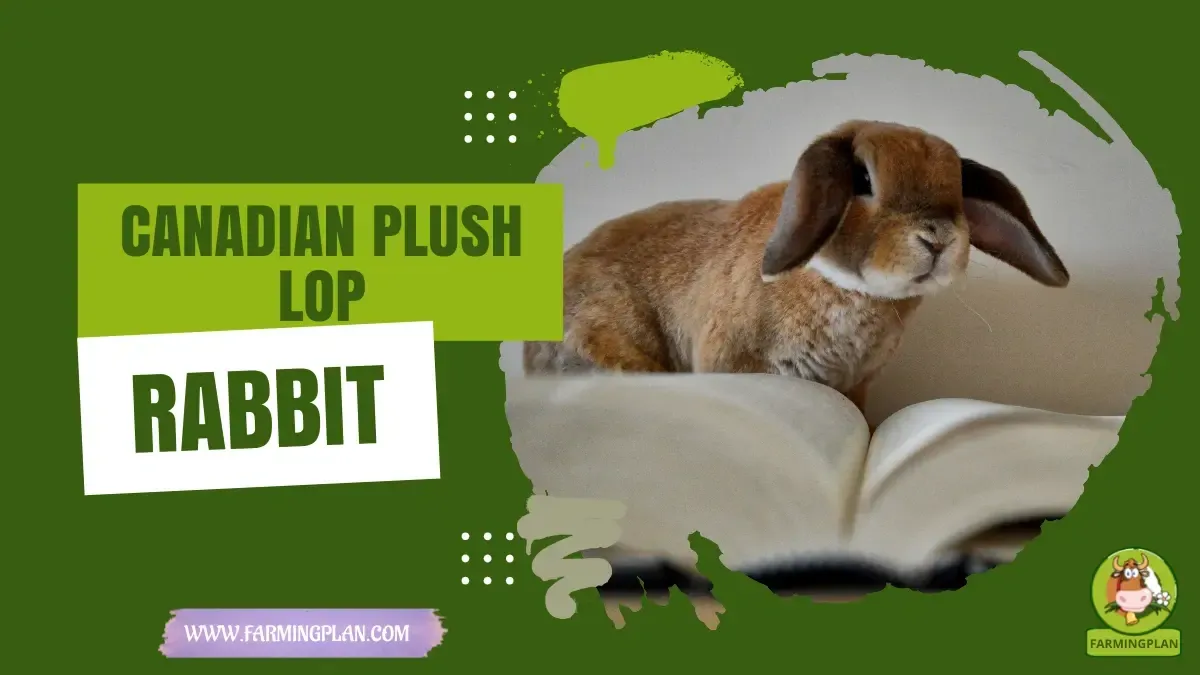
The defining physical feature of the Canadian Plush Lop is its plush Rex coat. In normal rabbit fur, long guard hairs project noticeably beyond the soft undercoat. In the Canadian Plush Lop, homozygous recessive rex alleles cause the guard hairs and undercoat to grow to the exact same length—approximately 1/2 inch (1.3 cm)—and project perpendicular to the body. This creates an unbelievably dense, springy, and velvety texture that rebounds instantly when stroked against the grain.
The body is compact, cobby, and well-muscled throughout. The shoulders are broad and equal in width to the hindquarters, giving the rabbit a solid, rounded silhouette. Mature adult weights range between 3.5 and 5.5 lbs (1.6 to 2.5 kg), representing a medium-miniature scale that is easy for adults and older children to lift and support safely. For additional husbandry benchmarks and feeding standards, explore our complete Czech Spot Rabbit care guide. Selecting healthy foundation stock is the cornerstone of successful Canadian Plush Lop Rabbit management.
The head is boldly set on a short neck, with a broad forehead, rounded muzzle, and full cheeks. A distinct basal crown of dense cartilage sits across the top of the skull, from which the ears lopped downward naturally. The ears hang vertically beside the cheeks, extending approximately 0.5 to 1 inch below the jawline, well-furred and rounded at the tips. Good predator-proofing and dry bedding safeguard Canadian Plush Lop Rabbit comfort in harsh weather.
The breed occurs in a broad array of stunning coat colors and patterns, including solid self colors (black, blue, chocolate, lilac, ruby-eyed white), shaded patterns (sable point, seal, Siamese sable), agouti varieties (chestnut, opal, chinchilla), and eye-catching broken patterns. Monitoring water quality and mineral balance directly benefits Canadian Plush Lop Rabbit vitality.
4. Temperament, Social Behavior & Companion Dynamics
The Canadian Plush Lop is renowned for its extraordinarily sweet, docile, and inquisitive disposition. While some rabbits view human hands with instinctive fear, Plush Lops typically run forward to greet their caregivers, nudging ankles for attention, head scratches, and interactive play.
Their placid nature makes them exceptional candidates for animal-assisted emotional support, nursing home therapy visits, and calm household companionship. They rarely scratch or nip, reacting to gentle handling by sinking comfortably into a handler’s lap and grinding their teeth softly in contented purring vibrations. Practical hands-on husbandry ensures consistent results when raising Canadian Plush Lop Rabbit.
Like all domestic rabbits, they are social creatures that thrive in the company of bonded conspecifics. A neutered male and spayed female pair often forms an inseparable bond, grooming each other’s ears and snuggling together throughout afternoon naps, reducing separation anxiety and boredom-induced chewing behaviors. Early intervention at the first sign of lethargy protects overall Canadian Plush Lop Rabbit flock or herd health.
5. Housing Systems, Space Requirements & Indoor Habitat Design
Because the Canadian Plush Lop was bred primarily as an indoor companion and homestead fancy breed, traditional wire-bottom outdoor cages are strongly discouraged. The lack of protective coarse guard hairs on the hocks makes Rex-coated rabbits particularly susceptible to ulcerative pododermatitis (sore hocks) if kept on abrasive wire mesh. Structured culling and biosecurity protocols strengthen Canadian Plush Lop Rabbit genetic quality.
The optimal habitat setup is a spacious indoor exercise pen (x-pen) or a multi-level custom condo providing at least 12 square feet of continuous flat floor space, complemented by daily free-roam access in a rabbit-proofed room. Flooring must be padded with soft, non-slip surfaces such as low-pile rugs, washable fleece liners, or puzzle-foam flooring overlaid with cotton towels.
Rabbit-proofing the home environment is mandatory. Encase all electrical cords in rigid plastic conduit tubing, block access behind heavy entertainment centers, and provide legal chewing outlets such as untreated willow balls, applewood twigs, and cardboard tunnel mazes to redirect natural exploratory gnawing. Maintaining clean feeders and sanitized equipment supports sustainable Canadian Plush Lop Rabbit care.
Keep the indoor environment comfortably temperature-controlled between 60°F and 72°F (15°C to 22°C). High summer temperatures over 80°F (27°C) pose severe health risks, requiring central air conditioning or ceramic cooling tiles during hot spells. Consistent daily observation helps keepers spot early changes in Canadian Plush Lop Rabbit health and behavior.
6. Nutritional Strategy, Fiber Intake & Digestive Health
The gastrointestinal tract of the Canadian Plush Lop is a delicate biological system that depends entirely on continuous digestive motility driven by indigestible plant fiber. Fresh, aromatic grass hay—such as second-cut Timothy, orchard grass, brome, or meadow grass—must be supplied ad libitum and make up at least 80% to 85% of total daily food consumption. Clean housing, fresh water, and balanced nutrition remain essential for Canadian Plush Lop Rabbit productivity.
To prevent obesity, provide a strictly measured ration of high-fiber, timothy-based commercial pellets. An adult Canadian Plush Lop weighing 4.5 lbs needs no more than 1/8 to 1/4 cup of plain pellets daily (14% crude protein, >22% crude fiber). Avoid colorful seed and corn muesli mixes, which cause selective eating, dental disease, and lethal cecal dysbiosis.
Complement the hay diet with a daily assortment of fresh leafy greens, offering roughly one packed cup of greens per 2 lbs of body weight. Cilantro, parsley, basil, mint, dill, and romaine lettuce are excellent choices. Fresh water should be provided in a heavy, wide-rimmed ceramic crock, which encourages higher hydration levels than hanging ball-valve water bottles. Tracking feed intake and body condition supports long-term Canadian Plush Lop Rabbit performance.
Reserve sugary treats such as fresh apple slices, bananas, and blueberries for occasional training rewards, offering no more than one teaspoon per day to protect cecal microbial balance. Following biosecurity best practices reduces disease risk in any Canadian Plush Lop Rabbit operation.
7. Grooming Care, Molting Management & Ear Hygiene
The velvety Rex coat requires minimal but consistent maintenance. Because the fur lacks protruding guard hairs, it sheds very little on a day-to-day basis compared to standard coated breeds, making the Canadian Plush Lop popular among individuals with mild animal dander sensitivities. Seasonal adjustments to shelter and diet keep Canadian Plush Lop Rabbit thriving year-round.
During the primary seasonal molts in spring and autumn, brush the coat once or twice weekly using a soft rubber curry brush or a fine-toothed zoom groom, stroking gently in the direction of hair growth. Stroking the coat with slightly damp hands is also remarkably effective at collecting loose undercoat fibers before the rabbit ingests them during self-grooming.
Check their lopped ears bi-weekly. Because lopped ear canals have less air circulation than erect ears, wax and moisture can occasionally accumulate. Inspect the ear canal for redness, foul odor, or dark crusts indicative of ear mites (Psoroptes cuniculi), wiping the outer pinna with a damp cotton ball if necessary, never inserting swabs into the ear canal. Proper record-keeping makes breeding and culling decisions easier for Canadian Plush Lop Rabbit keepers.
Trim the toenails every 4 to 6 weeks using specialized scissor-style claw clippers, ensuring the vascular quick is avoided to prevent bleeding and discomfort. Providing adequate space and ventilation prevents common stress issues in Canadian Plush Lop Rabbit.
8. Breeding Protocols, Gestation & Kit Development
Breeding Canadian Plush Lops requires disciplined genetic knowledge to maintain proper coat texture, skull structure, and ear drop. Does reach reproductive maturity between 5 and 6 months of age, while bucks are fully active by 6 to 7 months. Understanding breed-specific traits helps maximize Canadian Plush Lop Rabbit longevity and output.
The gestation period averages 30 to 32 days. Prepare a spacious wooden nesting box lined with clean pine shavings and soft meadow hay on day 27 of gestation. Does typically kindle litters of 4 to 6 kits, pulling dense clouds of velvety belly fur to keep the hairless newborns warm.
At birth, kits are naked and blind, but by day 5 to 7, their velvety plush coat begins emerging. Interestingly, the ears of young Plush Lop kits are born upright; they gradually begin to break at the crown and lop downward over the cheeks between 4 and 10 weeks of age as the basal cartilage matures and relaxes. Routine preventive care saves time and lowers veterinary costs for Canadian Plush Lop Rabbit.
Wean kits at 8 weeks of age after ensuring they are consuming solid hay and pellets robustly. Early handling by gentle human caregivers between weeks 2 and 8 ensures that kits develop into calm, human-loving companions. Matching forage or ration quality to life stage optimizes Canadian Plush Lop Rabbit growth.
9. Preventative Healthcare, Disease Prevention & Biosecurity
Routine veterinary care from an exotic animal specialist is essential for long-term vitality. Spaying and neutering at 5 to 7 months of age is critically important: uterine adenocarcinoma affects up to 60% to 80% of intact female rabbits past age four, making preventative ovariohysterectomy a life-saving procedure. Gradual dietary transitions protect digestive stability in Canadian Plush Lop Rabbit.
Vaccination against Rabbit Hemorrhagic Disease Virus (RHDV-2) is imperative across North America and Europe. Even strictly indoor house rabbits can be infected via mosquitoes, biting flies, contaminated hay, or footwear worn indoors.
Monitor your rabbit’s fecal output daily. Healthy fecal pellets are large, round, dry, and composed of compressed digested fiber. If fecal production slows or stops for more than 10 to 12 hours, suspect gastrointestinal stasis—a veterinary emergency requiring immediate sub-Q fluids, gut motility medications, and pain relief. Selecting healthy foundation stock is the cornerstone of successful Canadian Plush Lop Rabbit management.
Keep a clean environment by using paper-based unscented litter pellets in the litter box, changing bedding every 2 to 3 days to eliminate ammonia fumes and moisture. Good predator-proofing and dry bedding safeguard Canadian Plush Lop Rabbit comfort in harsh weather.
10. Economic Feasibility, Enterprise Budgets & Companion Demand
The economic dynamics of the Canadian Plush Lop center entirely on high-value fancy companion stock and specialty exhibition breeding rather than meat production. Because of their rare velveteen coat and sought-after pet temperament, healthy pedigree kits command premium prices among companion enthusiasts. Monitoring water quality and mineral balance directly benefits Canadian Plush Lop Rabbit vitality.
A boutique breeding program maintaining 2 to 3 selective breeding pairs can easily recoup operational costs—including premium organic hays, veterinary checkups, genetic certifications, and enrichment supplies—through dedicated companion reservations and show stock sales.
Explore comprehensive housing setups in our practical rabbit farming guide, build indoor enclosures with our rabbit hutch plans, and master daily health in our pet rabbit care guide. Practical hands-on husbandry ensures consistent results when raising Canadian Plush Lop Rabbit.
11. Interactive Companion Rabbit Care Calculator
Calculate your daily hay requirements, pellet rations, enclosure space, and annual care budgets for Canadian Plush Lop rabbits using the interactive calculator below: Early intervention at the first sign of lethargy protects overall Canadian Plush Lop Rabbit flock or herd health.
🐇 Canadian Plush Lop Rabbit Daily Hay & Pellet Calculator
Calculate daily Timothy hay (unlimited bulk), pellet rations, fresh greens, and clean water intake for your Canadian Plush Lop Rabbit.
12. Strategic Implementation Roadmap for Companion Breeders
Establishing a premier Canadian Plush Lop breeding program or family habitat requires systematic execution across three progressive phases. In Phase 1, prepare a climate-controlled indoor living environment equipped with soft-padded pens, ceramic dishes, and hay racks. Structured culling and biosecurity protocols strengthen Canadian Plush Lop Rabbit genetic quality.
In Phase 2, source breeding stock from established, reputable breeders who can verify true homozygous Rex coat genetics, sound ear crowns, and clear pedigrees free from genetic dental malocclusions (malocclusion/mandibular prognathism). Schedule baseline veterinary exams and RHDV-2 vaccinations.
In Phase 3, build a selective breeding program focused on genetic vigor, calm pet temperaments, and show standard conformation, offering comprehensive care education and ongoing support to every companion adoptive home. Maintaining clean feeders and sanitized equipment supports sustainable Canadian Plush Lop Rabbit care.
13. Frequently Asked Questions
What makes the Canadian Plush Lop coat feel like velvet?
The Canadian Plush Lop carries the recessive rex gene mutation, which causes the protective guard hairs to grow to the exact same length as the undercoat (about 0.5 inches) and stand perpendicular to the skin. This creates a dense, plush, springy texture that feels like sheared velvet or silk.
What is the typical weight and size of a Canadian Plush Lop?
Mature Canadian Plush Lops weigh between 3.5 and 5.5 lbs (1.6 to 2.5 kg). They possess a compact, cobby, muscular build with wide shoulders, a broad head, a well-formed cartilage crown, and gracefully lopped ears.
Are Canadian Plush Lop rabbits good for people with allergies?
While no rabbit is 100% hypoallergenic, the Canadian Plush Lop sheds significantly less dander and loose guard hairs than standard rabbit breeds due to its dense rex coat structure, making it much easier to tolerate for many mild allergy sufferers.
Can Canadian Plush Lop rabbits be kept in outdoor wire cages?
No, wire-bottom outdoor cages are strongly discouraged for this breed. The lack of coarse guard hairs on their hocks makes them vulnerable to sore hocks on wire floors. They thrive best in indoor padded exercise pens or custom condos with soft carpeting or fleece bedding.
14. Conclusion & Next Steps for Companion Rabbit Lovers
The Canadian Plush Lop rabbit is a sensational blend of elegance, endearing personality, and tactile luxury. With its docile nature, plush velveteen coat, and intelligent indoor demeanor, it enriches any home willing to provide the space, high-fiber nutrition, and love it deserves. Consistent daily observation helps keepers spot early changes in Canadian Plush Lop Rabbit health and behavior.
To deepen your understanding of domestic pet care and farm companion management, browse our resources on farm animals and pets and begin your journey with these marvelous velvety companions.
📚Agricultural Reference & Scientific Citations
Standards and physiological data referenced in this guide comply with American Rabbit Breeders Association (ARBA), USDA APHIS Animal Health, and the FAO Domestic Animal Diversity Information System.


