

⚡ Britannia Petite Rabbit at a Glance: Key Specifications & Benchmarks
| Scientific Classification | Oryctolagus cuniculus |
| ARBA Breed Class & Type | Full Arch Body Type (One of the smallest recognized breeds) |
| British Equivalent Name | Polish Rabbit (British Rabbit Council BRC standard) |
| Maximum Senior Weight (ARBA) | Under 2.5 lbs (1.13 kg); ideal show weight 2.0 to 2.25 lbs |
| Ear Length & Carriage | Short, upright, touching along edges; under 2.5 inches |
| Body Conformation | Slender, athletic arch with daylight visible beneath the belly |
| Recognized Color Varieties | Ruby-Eyed White (REW), Black, Chestnut Agouti, Sable Marten, Blue-Eyed White, Otter |
| Temperament & Energy | Spirited, alert, highly energetic, inquisitive, requires gentle handling |
| Dietary Foundation | Unlimited Timothy hay (80%), measured pellets (15%), fresh greens (5%) |
| Primary Purpose | Exhibition showmanship, specialty companion, agility jumping |
| Gestation Period | 28 to 32 days (average 31 days) |
| Average Lifespan | 7 to 10 years with proper indoor or climate-controlled hutch care |
The Britannia Petite Rabbit holds a unique place in the exhibition rabbit fancy as one of the smallest and most dynamic breeds recognized by the American Rabbit Breeders Association (ARBA). Known across Britain as the Polish rabbit, this tiny, spirited lagomorph is renowned for its distinctive full-arch body type, upright posture, and vibrant personality that captivates show judges and dedicated fanciers alike. Matching forage or ration quality to life stage optimizes Britannia Petite Rabbit growth.
Homesteaders and hobbyists exploring small-scale lagomorph production through our comprehensive rabbit farming guide appreciate the Britannia Petite’s minimal space footprint and light feed consumption. Weighing under two and a half pounds at maturity, they require a fraction of the dietary resources needed for commercial meat breeds like New Zealands or Californians.
However, unlike docile, laid-back dwarf breeds, the Britannia Petite is an alert, lively athlete with quick reflexes and an independent spirit. Raising them successfully demands gentle, confident daily handling, secure hutch engineering, and strict high-fiber nutritional protocols to support their delicate digestive systems. Gradual dietary transitions protect digestive stability in Britannia Petite Rabbit.
Their spirited nature makes them exciting show competitors that pose naturally on the judging table, displaying an elegant arch with clear daylight beneath the abdomen. For fanciers seeking a striking, high-energy show rabbit, the Britannia Petite offers unmatched exhibition appeal.
Physical Characteristics & Exhibition Standards
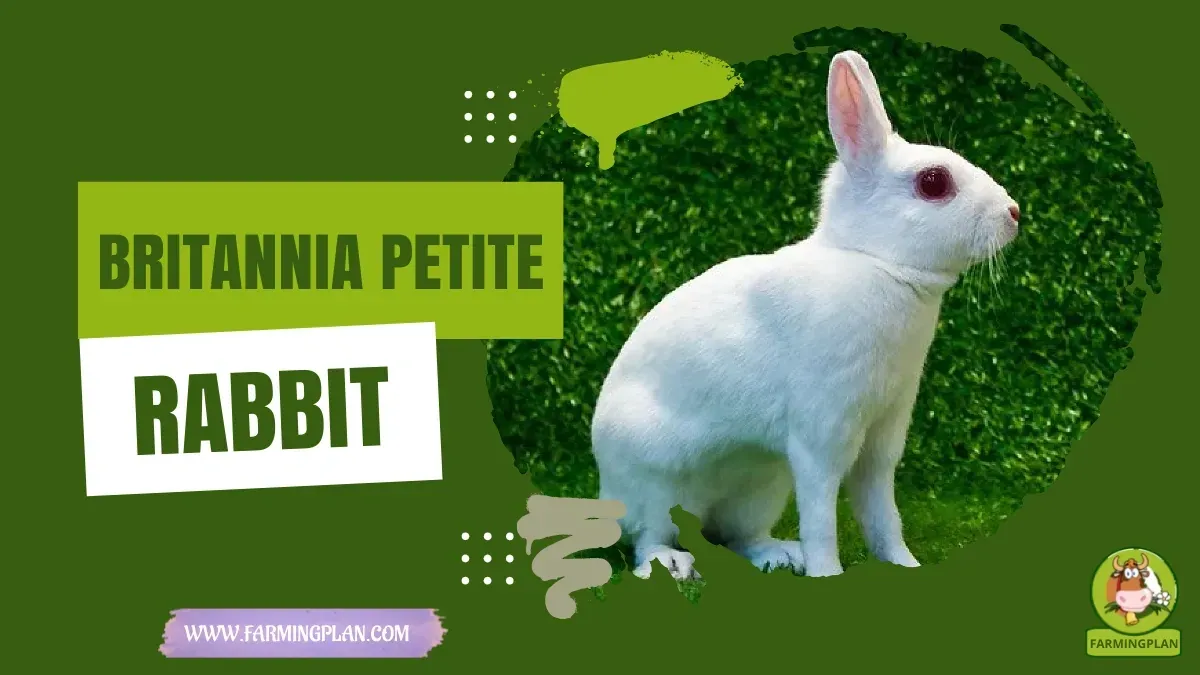
The Britannia Petite Rabbit is defined by its dramatic “full arch” body type, sharing this rare conformation with larger breeds like the Belgian Hare and Checkered Giant, but in a miniature scale. When posed on the judging table, the rabbit stands upright on its toes, displaying a continuous, graceful arch from the nape of the neck over the shoulders, loin, and rounded hindquarters, allowing daylight to show clearly beneath the belly.
Head, Ears & Color Varieties
The head is wedge-shaped with prominent, alert eyes. In the foundation Ruby-Eyed White (REW) variety, the eyes are striking luminous ruby red, while Blue-Eyed Whites (BEW) feature brilliant sky-blue irises. The ears are remarkably short, measuring under 2.5 inches, held erect and touching closely from base to tip without flaring outward. Selecting healthy foundation stock is the cornerstone of successful Britannia Petite Rabbit management.
The coat is classified as flyback fur, short, dense, and glossy, snapping crisply back into position when brushed against the grain. ARBA recognizes several striking color varieties, including Ruby-Eyed White, Black, Chestnut Agouti, Sable Marten, Otter, and Blue-Eyed White, each judged for depth, uniformity, and sheen.
⚡ Britannia Petite Rabbit Exhibition & Physical Matrix
| Conformation Trait | ARBA Standard Requirement | Exhibition Fault / Disqualification |
|---|---|---|
| Maximum Senior Weight | Under 2.5 lbs (1.13 kg); ideal 2.0 to 2.25 lbs | Over 2.5 lbs is an automatic disqualification |
| Body Carriage & Arch | Full arch; upright stance on forelegs with daylight | Compact or commercial body shape; flat topline |
| Ear Length & Set | Under 2.5 inches; touching and erect | Ears exceeding 2.5 inches or wide V-shaped splay |
| Eye Color Match | Ruby red (REW), bright blue (BEW), deep brown (selfs) | Mismatched iris pigment or cloudy eye lenses |
| Fur Texture & Density | Short, resilient flyback fur with brilliant luster | Soft, woolly, rollback, or patchy shedding coat |
| Bone & Leg Structure | Fine, straight bone; slender front legs | Bowed legs, heavy cow hocks, or thick foot pads |
Breed History, Heritage & Transatlantic Development
The origins of the Britannia Petite Rabbit date back to 19th-century England, where small white rabbits with ruby eyes were bred under the name “Polish” rabbit. Despite the geographic moniker, historical evidence suggests these diminutive bunnies were developed by English fanciers through selective miniaturization of small domestic Dutch and common hutch rabbits.
When the English Polish rabbit was imported into the United States during the early 20th century, American breeders adopted a different selection pathway, transforming the US Polish into a compact, rounded dwarf breed. To preserve the original athletic, upright, arched English type, visionary fanciers led by Frank W. D’Amelio formed the Britannia Petite breed club, gaining official ARBA recognition in 1977. Good predator-proofing and dry bedding safeguard Britannia Petite Rabbit comfort in harsh weather.
For decades, only the Ruby-Eyed White variety was recognized in America. However, patient outcrossing programs introduced black, agouti, marten, and blue-eyed varieties without compromising the breed’s signature fiery temperament and arched silhouette, establishing a vibrant following among dedicated North American exhibitors.
Housing, Hutch Dimensions & Temperature Control
Because the Britannia Petite Rabbit is a high-energy miniature breed with virtually zero insulating fat reserves, housing must prioritize draft-free temperature moderation and secure wire spacing. Temperatures above 85°F (29°C) pose severe heatstroke risks, while damp winter drafts trigger rapid respiratory illness.
Hutch Dimensions & Footing Safety
Provide an indoor cage or climate-controlled hutch measuring at least 24×24 inches or 24×30 inches with a minimum height of 18 inches to accommodate their upright perching posture. Wire floor spacing must be narrow (1/2 x 1/2 inch 16-gauge galvanized wire) to prevent tiny hocks from slipping through, always supplemented with a solid plastic or resting board to prevent sore hocks. Monitoring water quality and mineral balance directly benefits Britannia Petite Rabbit vitality.
Cage doors and latches must be escape-proof. These curious bunnies can squeeze through openings as small as 1.5 inches. Maintain clean kiln-dried pine shavings or paper-based bedding in drop pans, replacing bedding every 3 days to keep ammonia fumes strictly below 5 ppm. Compare housing setups with our practical rabbit housing blueprints. If you are balancing utility output and herd resilience, take a look at our Cuban Brown Rabbit reference guide.
Nutritional Requirements, High-Fiber Diets & GI Stasis Prevention
The digestive system of the Britannia Petite Rabbit is exceptionally sensitive to dietary imbalances. Like all lagomorphs, they depend on continuous cecal fermentation of long-strand insoluble fiber to maintain peristalsis and prevent deadly gastrointestinal (GI) stasis. Practical hands-on husbandry ensures consistent results when raising Britannia Petite Rabbit.
Timothy Hay Foundation & Pellet Control
Provide unlimited, fresh, dust-free Timothy or orchard grass hay daily, representing at least 80% of their total food intake. Insoluble fiber stimulates gut motility and naturally wears down continuously growing incisors and molars. Measure commercial high-fiber pellets strictly: feed only 1.5 to 2 tablespoons (approx. 1/8 cup) of a 16% to 18% crude fiber pellet daily to prevent obesity and cecotrope slacking.
Never feed sugary fruit treats, corn, seeds, or high-carbohydrate snacks, which cause explosive cecal bacterial blooms. Provide clean, fresh water via a ceramic crock or ball-point sipper bottle cleaned daily. Review comprehensive dietary formulations in our complete rabbit feed and nutrition guide.
Health Management, Common Diseases & Biosecurity Standards
Due to their fine bone structure and energetic temperament, Britannia Petites require careful handling to prevent spinal lumbar fractures caused by kicking while improperly restrained. Never allow unsupervised children to handle these quick, delicate rabbits. Early intervention at the first sign of lethargy protects overall Britannia Petite Rabbit flock or herd health.
Malocclusion & GI Stasis Surveillance
Inspect front incisors monthly for malocclusion (genetic misalignment where teeth fail to wear properly and overgrow). Monitor daily fecal pellet output: any reduction in pellet size or absence of droppings for 12 hours signals imminent GI stasis, requiring immediate veterinary intervention with simethicone, subcutaneous fluids, and critical care syringe feeding.
Vaccinate against Rabbit Hemorrhagic Disease Virus (RHDV2) where authorized by state veterinarians. For official veterinary wellness protocols, consult the House Rabbit Society Veterinary Care Guidelines. Review disease prevention and biosecurity in our rabbit disease treatment and biosecurity manual.
Breeding Management, Nesting & Kit Care
Breeding the Britannia Petite Rabbit presents unique challenges due to small litter sizes and high maternal energy. Does reach breeding age at 5 to 6 months (weighing at least 2.0 lbs), while bucks are active sires by 6 months. Always take the doe to the buck’s cage for mating to prevent territorial fights. Structured culling and biosecurity protocols strengthen Britannia Petite Rabbit genetic quality.
The gestation period is 31 days. Provide a small wooden nesting box lined with clean wood shavings and soft straw on day 28. Litters are small, typically consisting of 2 to 4 tiny kits weighing less than an ounce at birth. Keep the nursery area quiet and dim, as nervous does can scatter or abandon litters if startled by loud barking or sudden movement.
Wean kits at 8 weeks onto quality Timothy hay and measured starter pellets. Contrast exhibition management and body scales with massive giant meat rabbits such as the British Giant rabbit to observe opposite ends of the lagomorph spectrum.
US Ownership Budget & Annual Maintenance Costs
Because they consume very little feed and require modest hutch hardware, Britannia Petite rabbits are highly economical to keep. The budget matrix below itemizes typical startup and annual recurring expenses for a pair of exhibition rabbits in the US. Maintaining clean feeders and sanitized equipment supports sustainable Britannia Petite Rabbit care.
⚡ Estimated Annual Budget & Maintenance Costs (USD)
| Expense Category | Budget Scope & Resource Allocation | Initial Capital Outlay | Annual Recurring Expense |
|---|---|---|---|
| Show Stock Acquisition | Pedigreed ARBA show-quality breeding pair | $150 – $300 | $0 (show stock investment) |
| Indoor Hutch & Setup | 24×30-inch wire cage, resting pads, heavy ceramic crocks | $90 – $160 | $15 – $25 (pan upkeep) |
| Premium Timothy Hay | High-fiber western Timothy hay (approx. 6 small bales/yr) | $25 | $80 – $120 |
| High-Fiber Pellets | 16% crude fiber rabbit pellets (approx. 3 bags/yr) | $20 | $55 – $75 |
| Bedding & Grooming | Kiln-dried pine shavings, nail trimmers, flea comb | $25 | $40 – $60 |
| Veterinary & RHDV2 | Annual wellness checkup and RHDV2 vaccination | $40 | $60 – $100 |
| Total 2-Rabbit Budget | Complete exhibition hobbyist investment model | $350 – $665 | $250 – $380 / year |
🐇 Britannia Petite Rabbit Daily Hay & Pellet Calculator
Calculate daily Timothy hay (unlimited bulk), pellet rations, fresh greens, and clean water intake for your Britannia Petite Rabbit.
Frequently Asked Questions (FAQ)
What is a Britannia Petite Rabbit?
The Britannia Petite Rabbit is one of the smallest rabbit breeds recognized by ARBA, weighing under 2.5 lbs and famous for its spirited personality, upright carriage, and graceful full-arch body type.
Is the Britannia Petite Rabbit the same as the Polish rabbit?
In Britain, the breed is called the Polish rabbit. In America, the Britannia Petite retained the original English full-arch arched type, while the American Polish developed into a compact dwarf breed.
What is the temperament of a Britannia Petite Rabbit?
They are lively, alert, energetic, and curious. They are more active than other dwarf rabbits and require confident, gentle handling from experienced rabbit owners.
What should you feed a Britannia Petite Rabbit?
Feed unlimited fresh Timothy hay (80% of diet), strictly measured high-fiber pellets (1.5 to 2 tablespoons daily), fresh leafy greens, and clean water to prevent deadly GI stasis.
How long do Britannia Petite Rabbit rabbits live?
With proper indoor housing, predator security, high-fiber nutrition, and veterinary care, Britannia Petite rabbits live between 7 and 10 healthy years.
Are Britannia Petite Rabbit rabbits good pets for young children?
No, due to their fine bone structure, rapid movements, and spirited nature, they can easily be injured or panic if mishandled. They are best suited for teens, adults, and show fanciers.
Expert Verdict & Next Steps for Exhibition Fanciers
The Britannia Petite Rabbit offers lagomorph fanciers an exhilarating combination of miniature elegance, fiery athletic charm, and dramatic showmanship. Their dynamic poses on the judging table and minimal feed requirements make them an enduring favorite in the exhibition show arena.
Success with this petite athlete hinges on calm handling, predator-safe housing, and strict Timothy hay dietary protocols. Discover foundational breeding and care advice in our rabbit farming guide to begin your exhibition journey.
📚Agricultural Reference & Scientific Citations
Standards and physiological data referenced in this guide comply with American Rabbit Breeders Association (ARBA), USDA APHIS Animal Health, and the FAO Domestic Animal Diversity Information System.


